Coral Bleaching
Coral reefs depend on a remarkable partnership between coral animals and tiny photosynthetic algae called zooxanthellae. These algae live inside coral tissues and supply the coral with sugars produced during photosynthesis. These sugars contain carbon, hydrogen, and oxygen - key ingredients for building amino acids and many other carbon-based molecules. In return, the coral supplies the algae with nitrogen, phosphorus, and sulfur, along with a safe habitat.
Amino acid and protein synthesis in coral requires more than just sugars. While the algae supply carbon-rich glucose, the coral must acquire nitrogen, sulfur, and phosphorus from seawater. Nitrogen is required to form amino groups (–NH) in amino acids, sulfur is used to build amino acids such as cysteine and methionine, and phosphorus is important for ATP and regulation of metabolic pathways. Coral tissues combine these elements with carbon skeletons from glucose to form amino acids and proteins needed to build the coral’s tissues and the protein matrix that helps form its calcium carbonate skeleton.
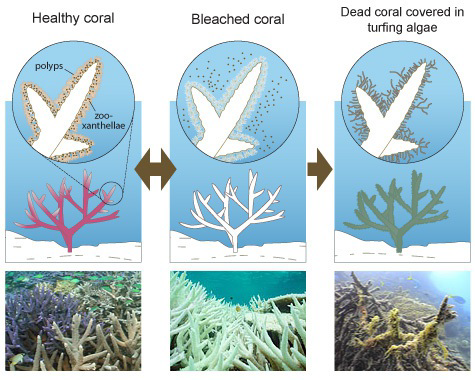
Under healthy conditions, corals maintain high densities of symbiotic algae, which supply a steady stream of sugars. This constant sugar delivery supports high rates of amino acid synthesis and protein formation, allowing corals to grow, reproduce, and repair tissues. However, when environmental stress - often heat - disrupts this partnership, corals eject their algae. Without the algae, sugar delivery collapses. Even if nitrogen, sulfur, and phosphorus are present in seawater, corals lack enough carbon skeletons to sustain amino acid and protein synthesis.
This process is known as coral bleaching, and it severely weakens coral organisms. Protein synthesis drops dramatically, coral growth slows, and the skeletal structure becomes more fragile. Over time, the coral may die if algae do not return. Without carbon-based molecules from sugars, organisms cannot combine elements like nitrogen, sulfur, and phosphorus to form amino acids and carbon-based biomolecules.
Coral–algae symbiosis shows how the assembly of complex molecules depends on the flow of carbon-rich sugars and mineral nutrients. The breakdown of this system during bleaching highlights the interconnected chemistry that sustains life.
Table 1.
Symbiont Density (cells/mg tissue) | Sugar Translocation (ug glucose/mg/hr) | Amino Acid Synthesis (umol/g/hr) |
|---|
0 | 0.5 | 1.2 |
2000 | 2.1 | 5.8 |
4000 | 4.4 | 11.4 |
8000 | 7.9 | 20.3 |
12000 | 10.2 | 27.5 |
Graph of Information - Figure 1.
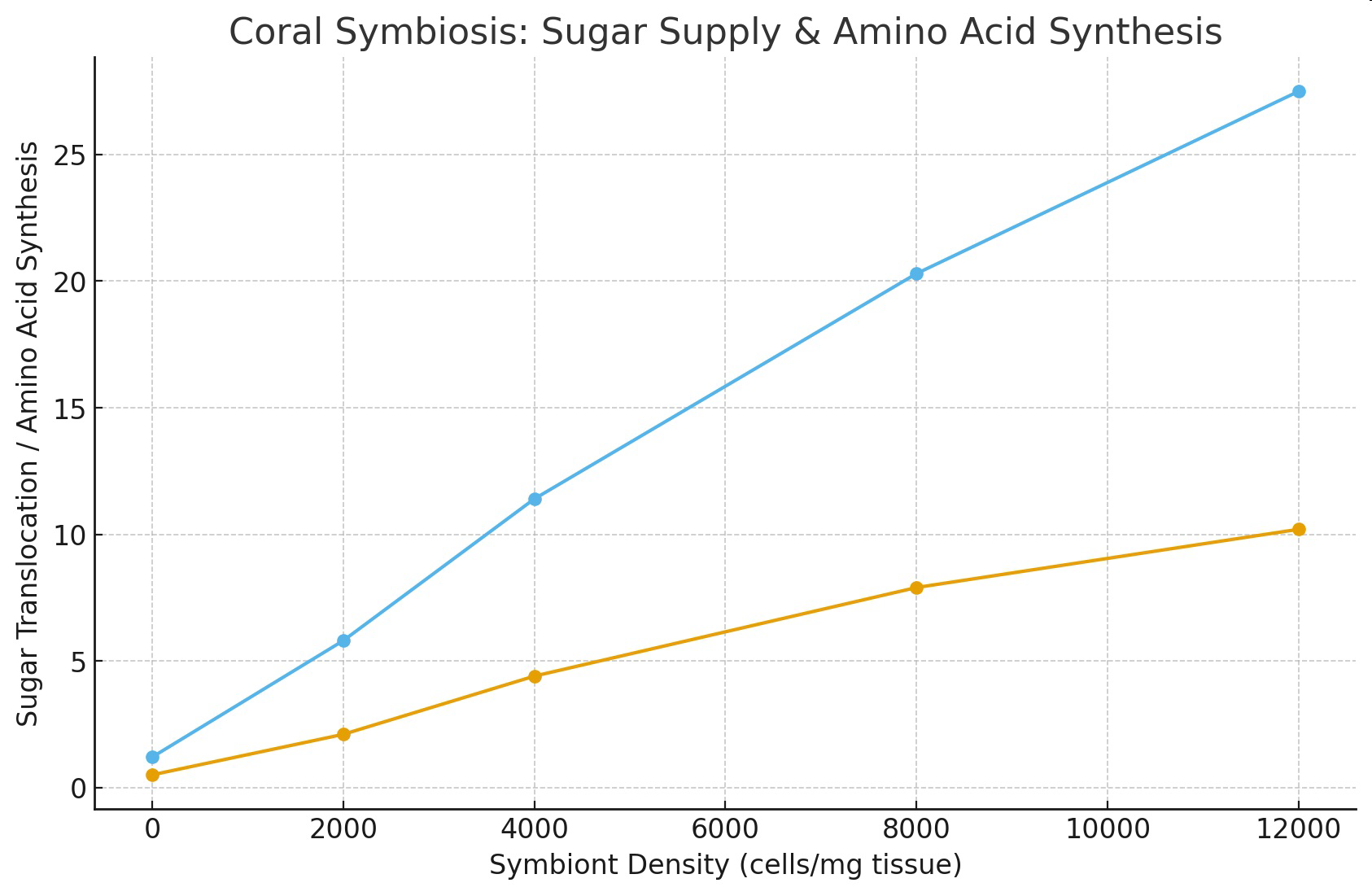
Table 2.
Nutrient Level (uM,N+P) | Protein Synthesis Rate (mg/g/hr) | Coral Growth (mg CaCO3 /day) |
|---|
0 | 0.8 | 0.9 |
1 | 2.4 | 2 |
2 | 5.9 | 4.4 |
4 | 10.8 | 6.1 |
6 | 13.5 | 7.3 |
Graph of Information - Figure 2.
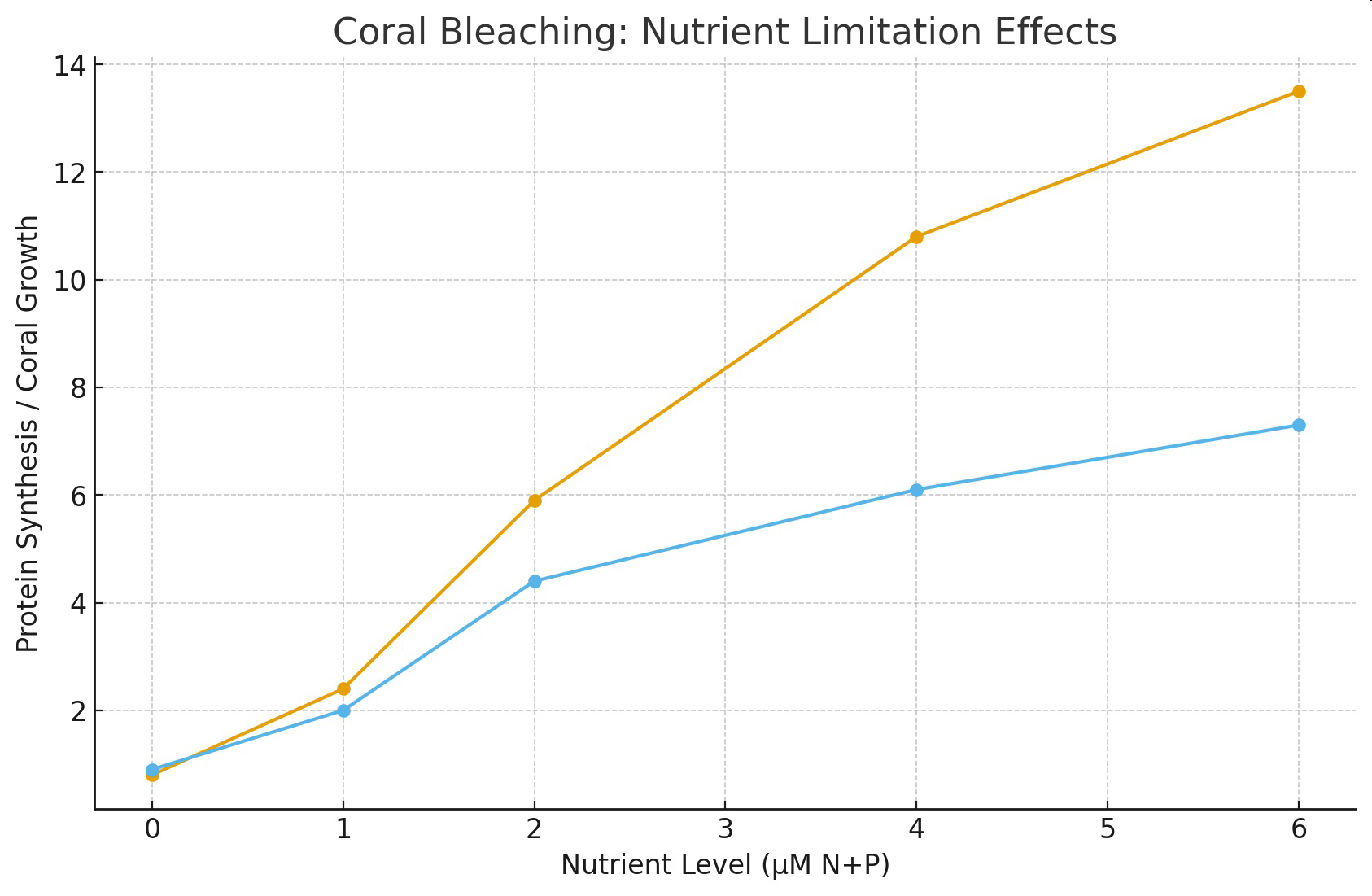
Figure 3.
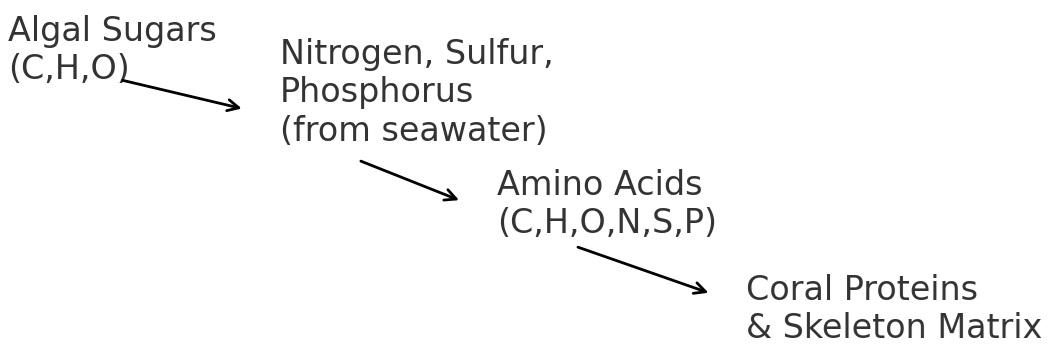
Figure 4.
 Source: https://greatbarrierreefissues.weebly.com/coral-bleaching.html