Decomposition on the Forest Floor
Diagram 1.
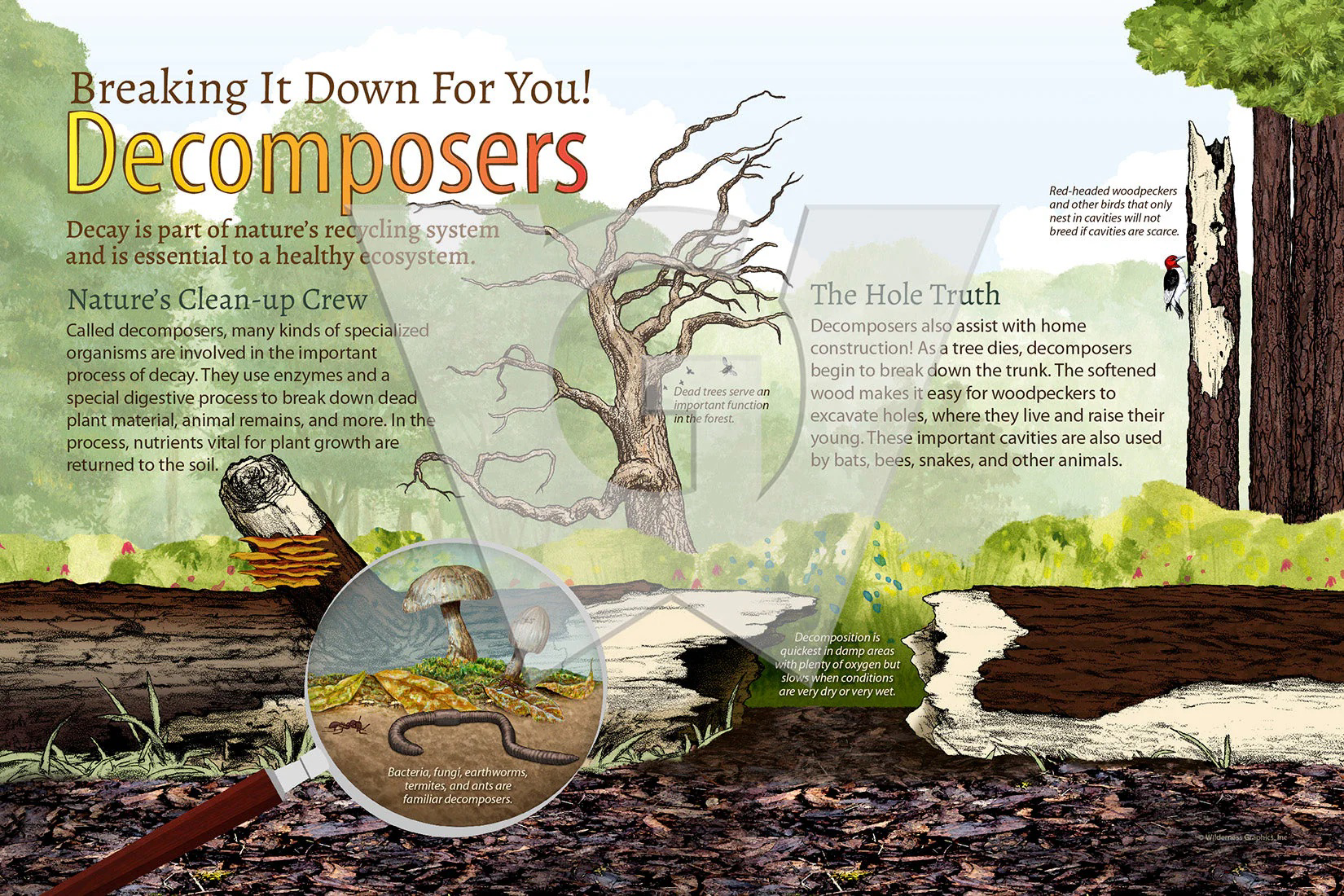 Source: https://wildernessgraphics.com/products/decomposers-standard-sign
Diagram 2.
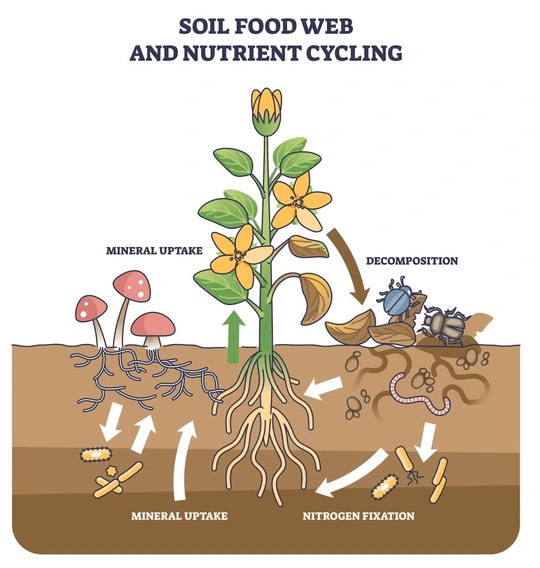 Source: https://fity.club/lists/suggestions/d%C3%A9composeurs-clipart/
On a forest floor, thousands of leaves, twigs, and pieces of organic matter fall each year. Although this material appears lifeless, it fuels one of the most important processes in any ecosystem: decomposition. Decomposition connects producers, decomposers, consumers, and abiotic factors in a loop that continually cycles matter and transfers energy.
Leaf litter contains stored chemical energy and essential nutrients such as nitrogen, phosphorus, and potassium. When it falls to the ground, decomposers – primarily bacteria and fungi – begin breaking it down. These organisms use the organic molecules in the litter as a food source, performing cellular respiration to release energy. During decomposition, chemical bonds in complex organic molecules are broken and simplified into inorganic forms that can be reused by plants.
Temperature strongly affects decomposition rates. In warm environments, enzymes function more efficiently, and microbial respiration increases. This leads to faster mass loss of leaf litter and more rapid nutrient release. In cooler environments, decomposition slows, reducing the amount of nutrients available to plants. Moisture, oxygen availability, and soil chemistry also play significant roles.
As decomposers process organic matter, they release carbon dioxide back into the atmosphere and convert complex molecules into mineral nutrients that enrich the soil. These nutrients are then absorbed by plant roots, supporting new growth. The carbon, nitrogen, and other atoms have completed a cycle: plants → dead organic matter → decomposers → soil → plants again.
Energy, however, moves differently. The chemical energy stored in dead leaves is used by decomposers to fuel their metabolism. But because cellular respiration releases energy as heat, the system gradually loses energy to the environment. This is why energy cannot cycle in the same way matter does.
The forest floor therefore provides a clear, observable example of how ecosystems rely on both matter cycling and energy flow. Without decomposers returning nutrients to the soil, plant growth would slow, herbivore populations would decline, and higher trophic levels would be affected. Decomposition links every part of the ecosystem together and drives the recycling of life’s essential elements.
Table 1.
Day | Mass Remaining 10 C (%) | Mass Remaining 20 C (%) | Mass Remaining 30 C (%) |
|---|
0 | 100 | 100 | 100 |
15 | 92 | 85 | 80 |
30 | 84 | 70 | 62 |
45 | 78 | 58 | 45 |
60 | 71 | 47 | 33 |
90 | 63 | 35 | 22 |
Graph of Information - Figure 1.
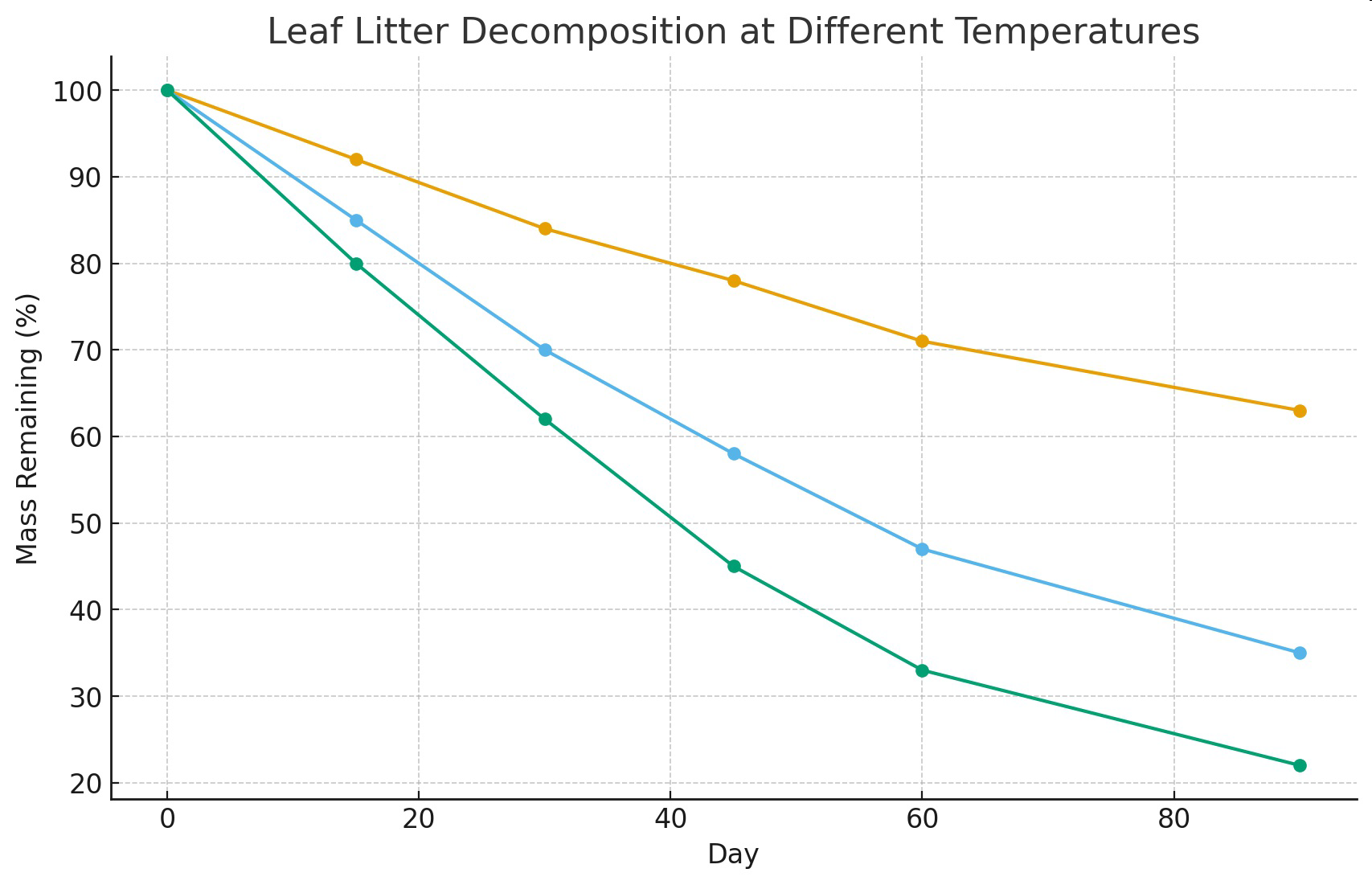
Table 2.
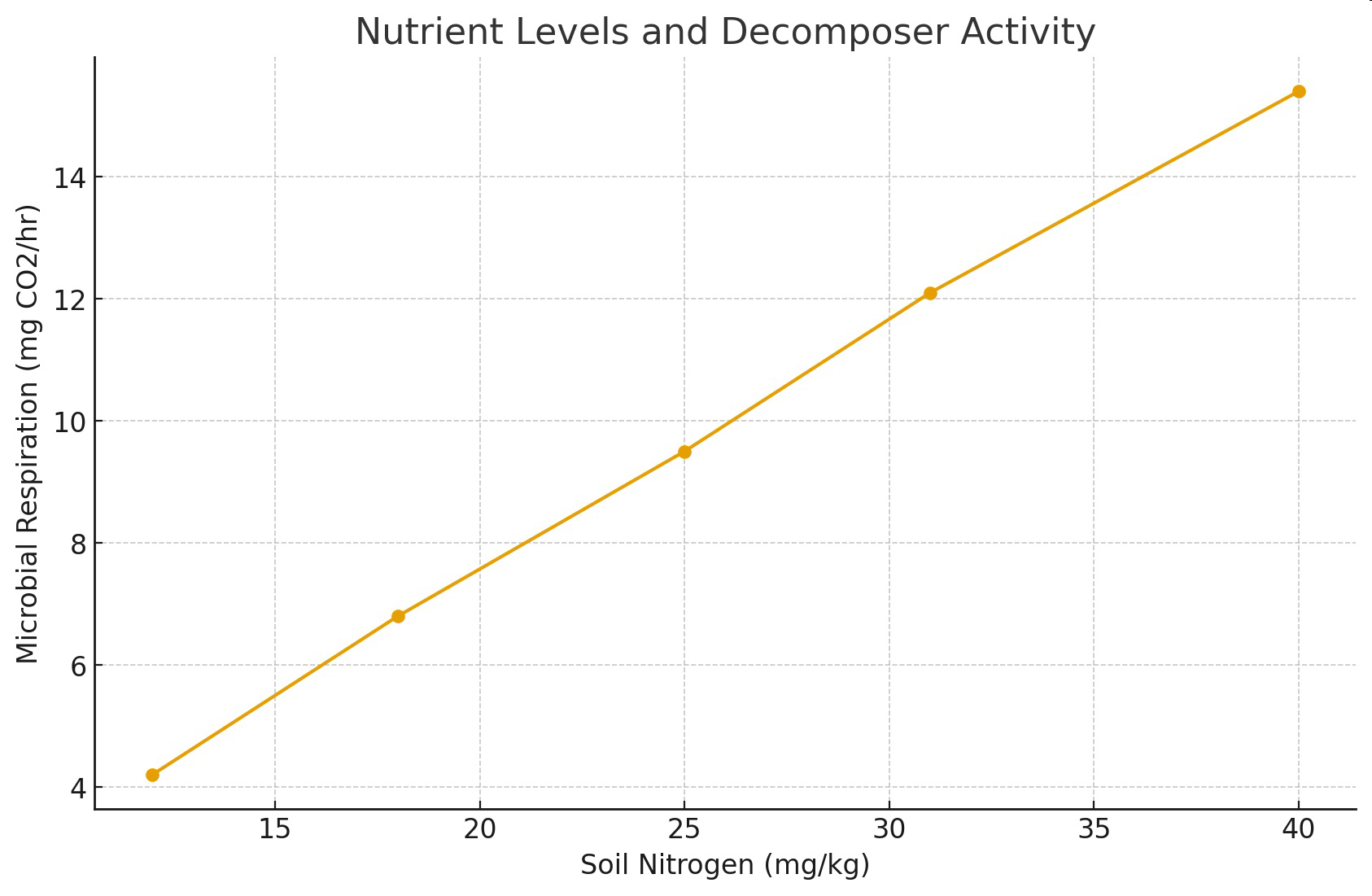
Plot | Soil Nitrogen (mg/kg) | Microbial Respiration (mg CO2 /hr) |
|---|
A | 12 | 4.2 |
B | 18 | 6.8 |
C | 25 | 9.5 |
D | 31 | 12.1 |
E | 40 | 15.4 |
Graph of Information - Figure 2.