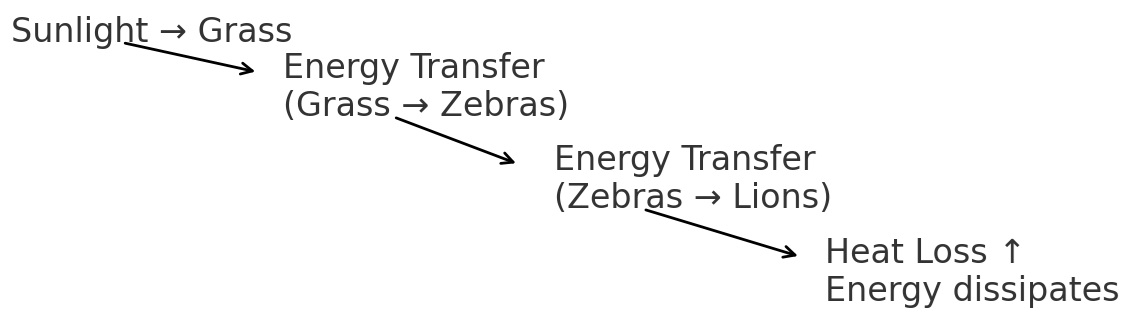
Energy Transfer and Matter Cycling in a Savannah Food Web
African savannah ecosystems are structured around a predictable pattern: abundant sunlight supports huge expanses of grasses, which in turn support grazing herbivores like zebras, which then support predators like lions. This classic three-tier food web provides an ideal demonstration of how energy flows directionally through trophic levels while matter cycles continuously between organisms and the environment.
At the base of the system, grasses use sunlight to convert carbon dioxide and water into glucose and other carbon-based molecules. This photosynthetic activity stores large amounts of chemical energy in plant tissues and incorporates essential matter such as nitrogen and phosphorus. Herbivores such as zebras consume this biomass, transferring both energy and matter into the next trophic level. However, only a small portion of the energy stored in grasses becomes available to zebras. Much of the energy is lost as heat during metabolism, movement, and cellular respiration. Matter, though, is preserved - carbon, nitrogen, and other atoms move into zebra tissues or return to the environment through waste.
When lions hunt zebras, the same pattern repeats. Lions gain only a fraction of the energy originally stored in grass biomass, because energy is lost at every trophic transfer. This is why top predators are always less numerous than herbivores and why ecosystems contain far more plant biomass than animal biomass. Energy flows in one direction, eventually dissipating as heat.
Matter, however, continues to cycle. When plants or animals die, decomposers break down the organic material, returning nutrients such as nitrogen and phosphorus to the soil. These nutrients are then taken up by grasses, completing the matter cycle. The carbon cycle also runs through all trophic levels, with carbon atoms moving from plants to zebras to lions and finally returning to the atmosphere through respiration or to the soil through decomposition.
By examining this food web, students can clearly see that energy decreases but matter remains in the system, supporting the concepts that:
Energy flows through ecosystems and is eventually lost as heat.
Matter cycles through trophic levels and between the biotic and abiotic components of the environment.
The efficiency of energy transfer shapes population sizes and ecosystem structure.
Diagram 1.
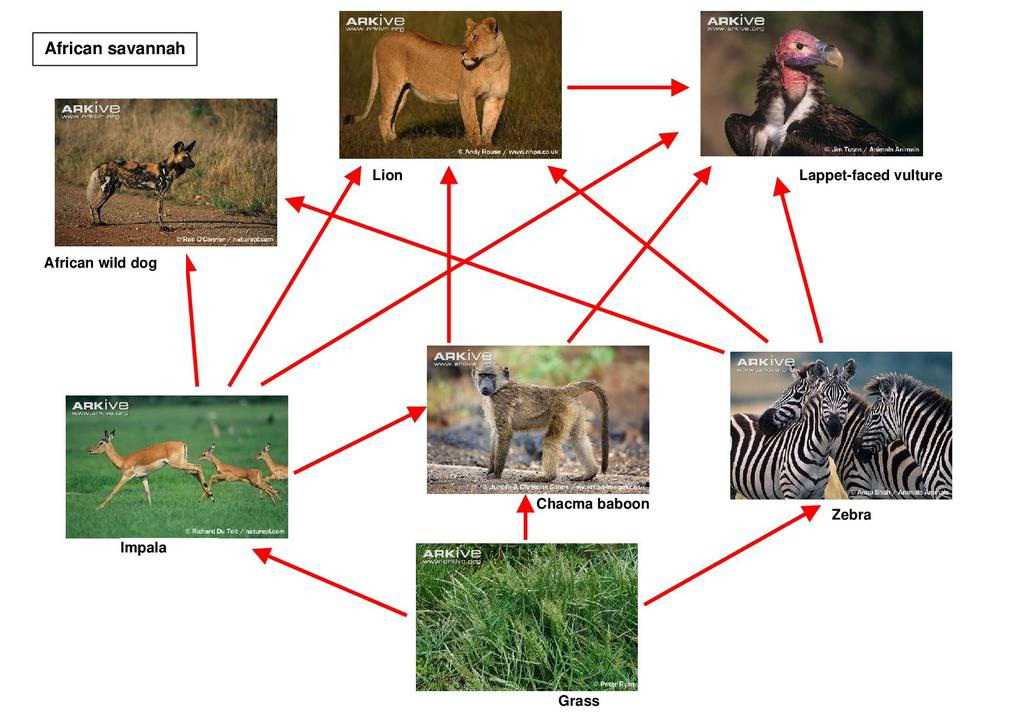 Source:
https://animalia-life.club/qa/pictures/african-grasslands-food-web
Diagram 2.
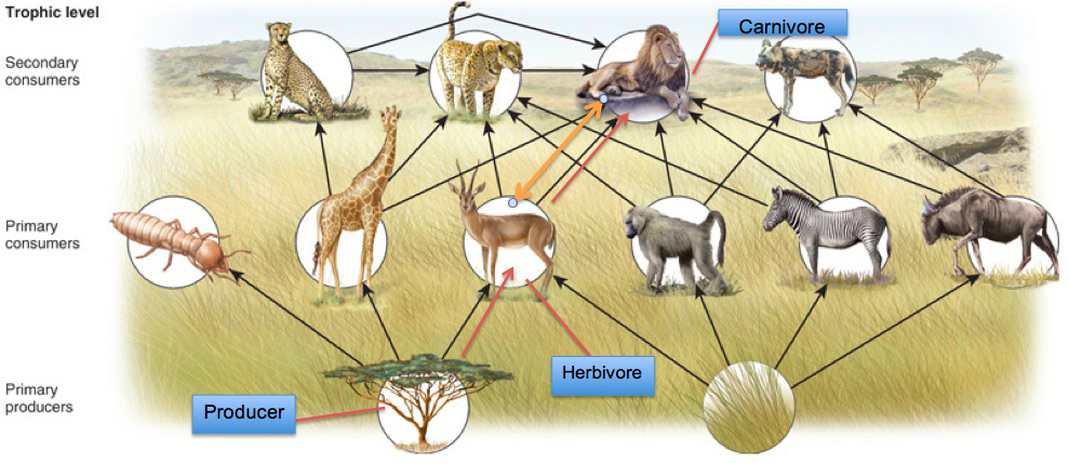 Source: https://tropicalgrasslandzblomer.weebly.com/food-chain-and-web.html
Table 1.
Trophic Level | Energy Available (kJ/m2 /yr) |
|---|
Grass (Producers) | 20000 |
Zebras (Herbivores) | 2200 |
Lions (Carnivores) | 180 |
Graph of Information - Figure 1.
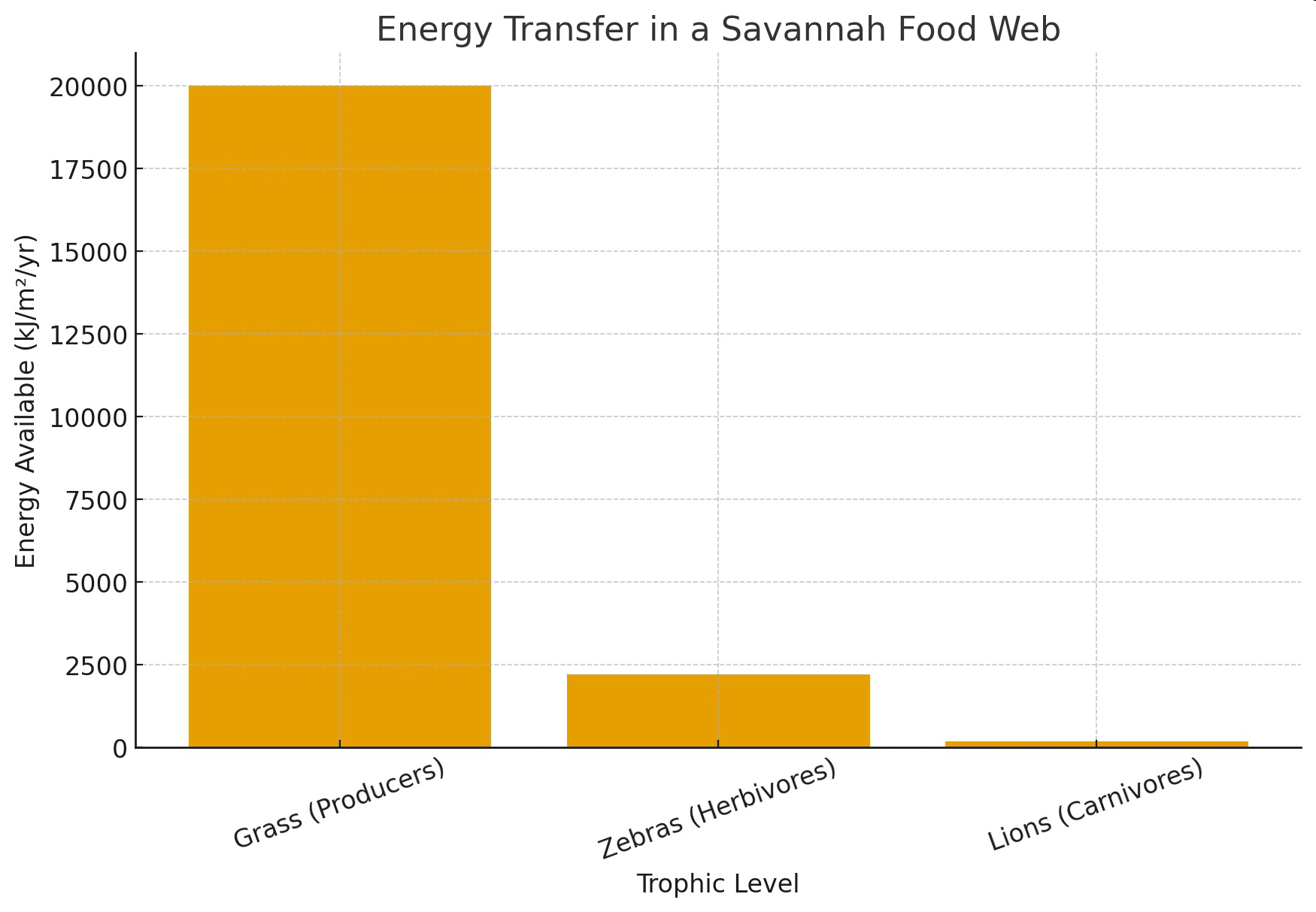
Table 2.
Year | Grass Biomass (kg/ha) | Zebra Population | Lion Population |
|---|
2000 | 5200 | 3100 | 140 |
2005 | 4800 | 2900 | 130 |
2010 | 4500 | 2600 | 110 |
2015 | 5000 | 2800 | 120 |
2020 | 5400 | 3000 | 130 |
Graph of Information - Figure 2.
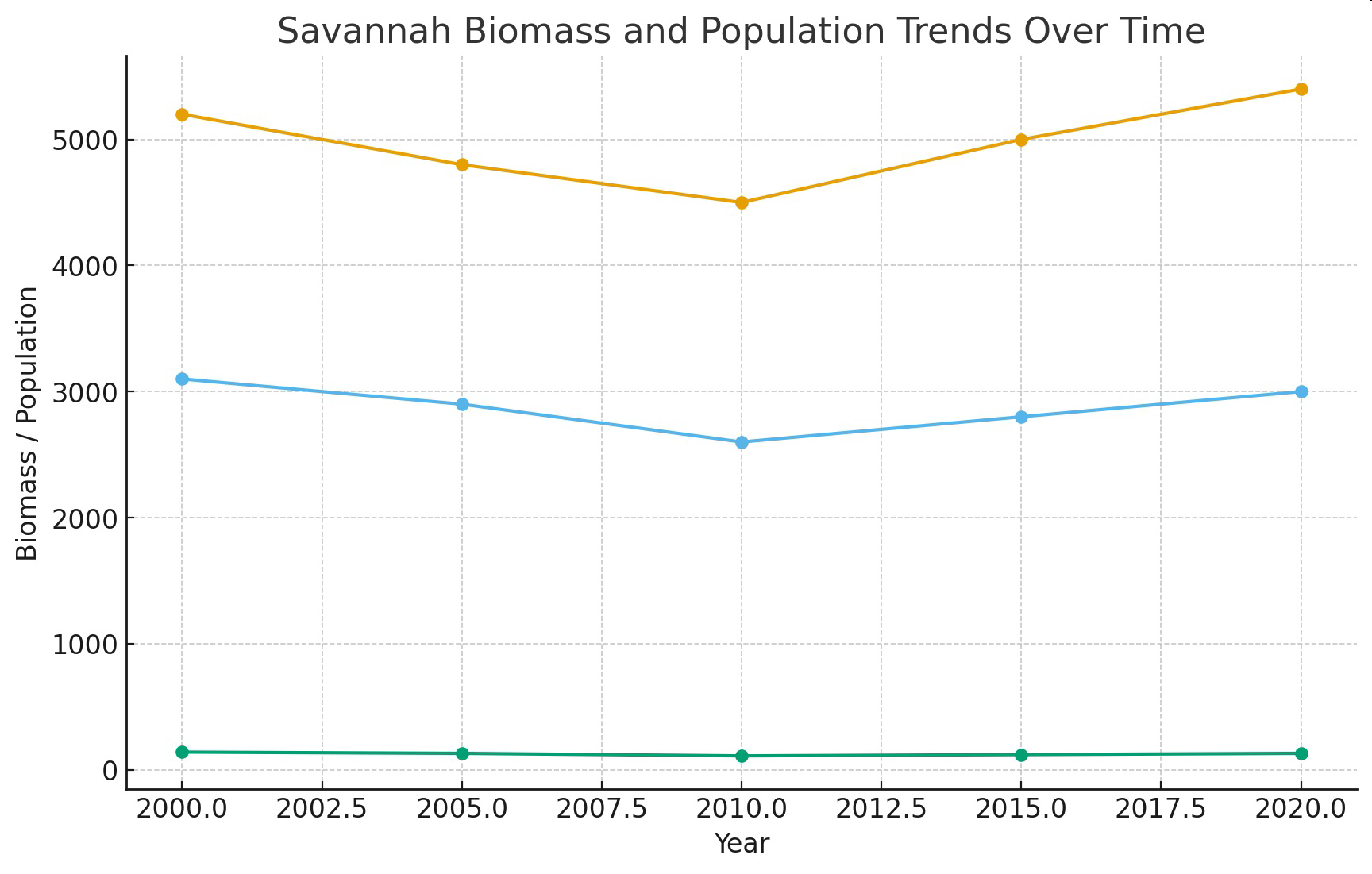
Diagram 3.
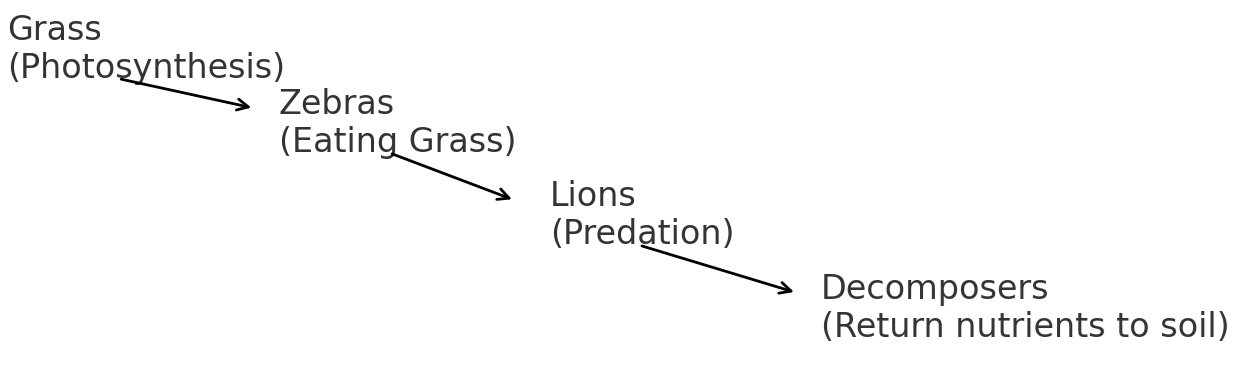
Diagram 4.