Energy Transfer in the Serengeti Migration
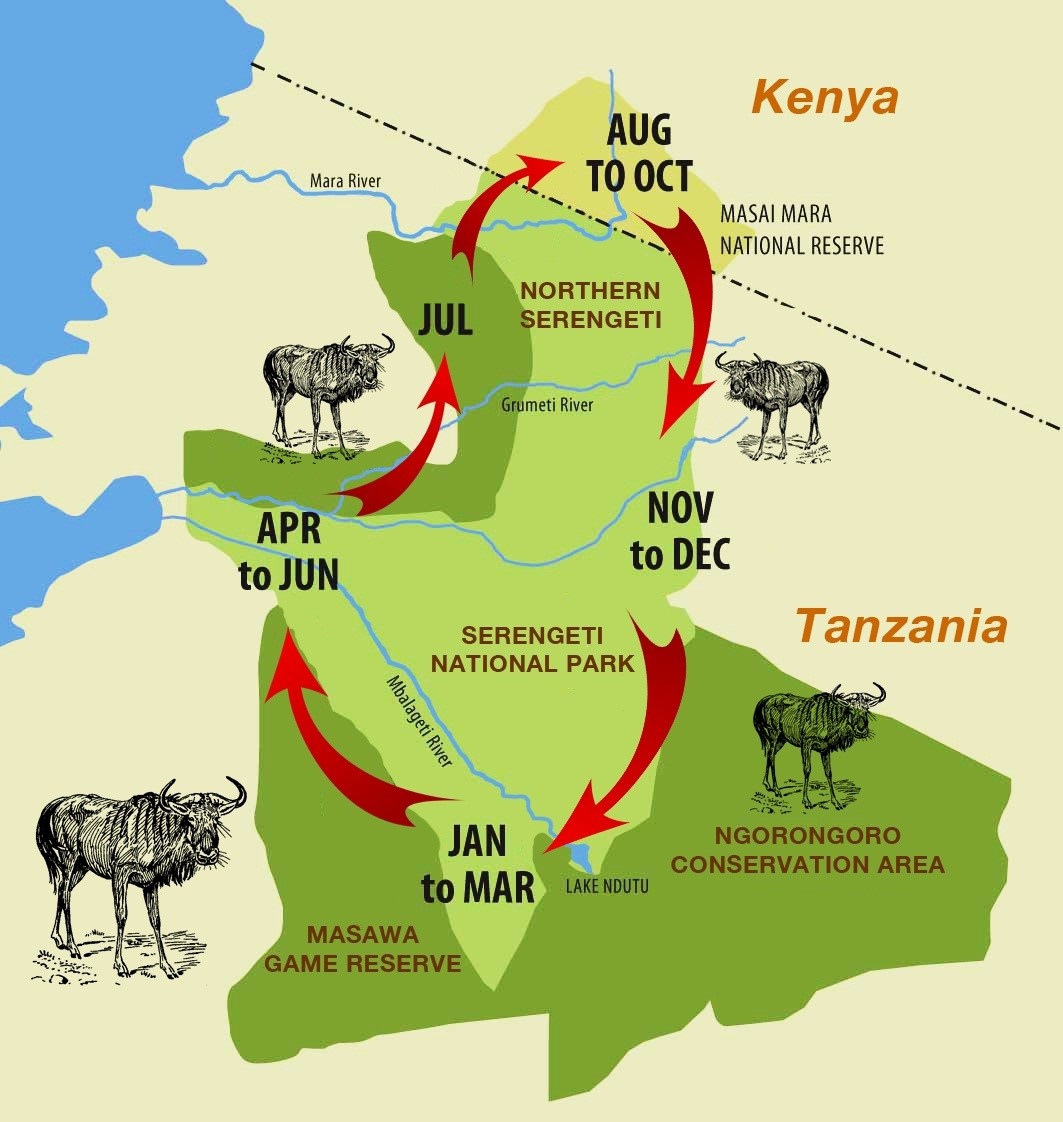
Every year, more than a million wildebeest migrate across the Serengeti, following seasonal rainfall and fresh grass growth. This massive movement of animals represents one of the world’s largest examples of energy flow through an ecosystem. The Serengeti migration is also a powerful real-world model because it shows clear mathematical relationships in how energy and matter move among producers, herbivores, and carnivores.
At the base of the food web, Serengeti grasses capture sunlight and convert it into chemical energy through photosynthesis. This energy appears as biomass - stored carbon-based molecules in plant tissues. The total energy available at the producer level far exceeds what will be available to herbivores or predators. This predictable reduction in energy availability follows the 10% rule, where only about one-tenth of the biomass energy at one trophic level becomes available to the next.
Wildebeest consume vast amounts of grass each year, but only a small fraction of the energy in the grass becomes herbivore biomass. Most of the energy is lost as heat during metabolism, movement, and body maintenance. Mathematical data from Serengeti studies show that out of approximately 30,000 kJ/m²/year in grasses, only around 3,200 kJ/m²/year is incorporated into wildebeest tissues. When lions feed on wildebeest, even less energy - around 310 kJ/m²/year - becomes available at the carnivore level.
Matter, however, cycles continuously. Carbon and nitrogen from grasses enter wildebeest tissues, move into lions, and eventually return to the soil when organisms excrete waste or decompose. Nutrients recycled by decomposers support new plant growth, completing the matter cycle. Even during migration, spatial patterns of grazing and nutrient deposition shape soil composition and vegetation growth rates.
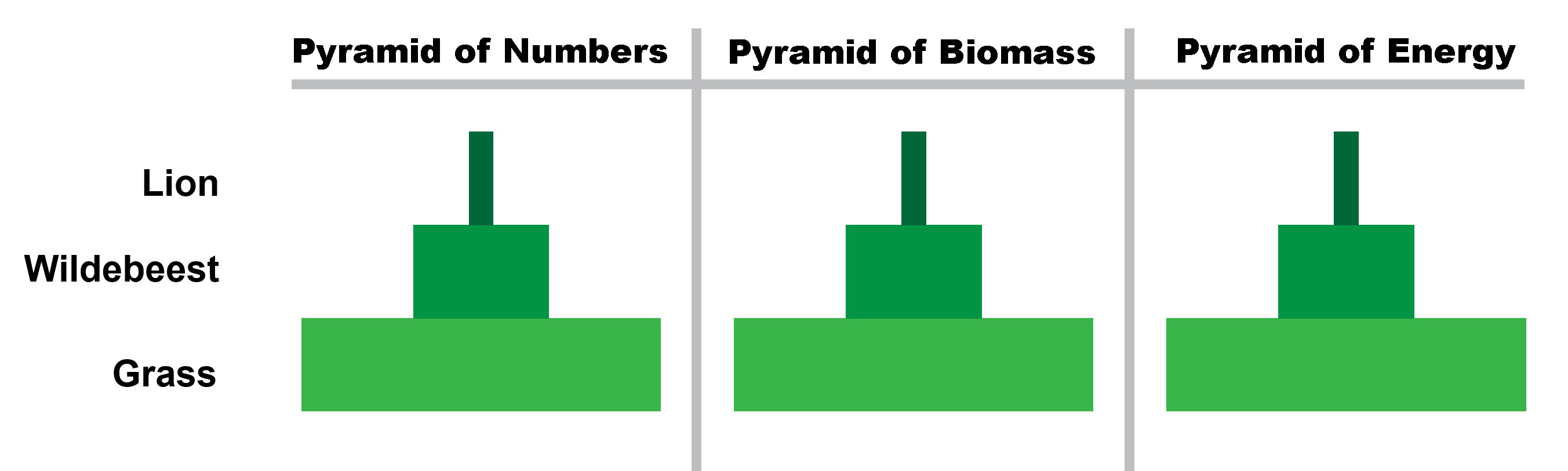
Population patterns also match mathematical expectations. Because energy decreases sharply at each trophic level, producer biomass is highest, herbivore numbers are lower, and carnivore numbers are far smaller. These patterns are clearly reflected in long-term Serengeti monitoring data.
Diagram 1.
 Source: https://www.exploretanzaniatours.com/serengeti-wildebeest-migration/
Table 1.
Trophic Level | Energy Available $\text{kJ/m}^2/\text{yr}$ |
|---|
Grass (Producers) | 30000 |
Wildebeest (Herbivores) | 3200 |
Lions (Carnivores) | 310 |
Graph of Information - Figure 1.
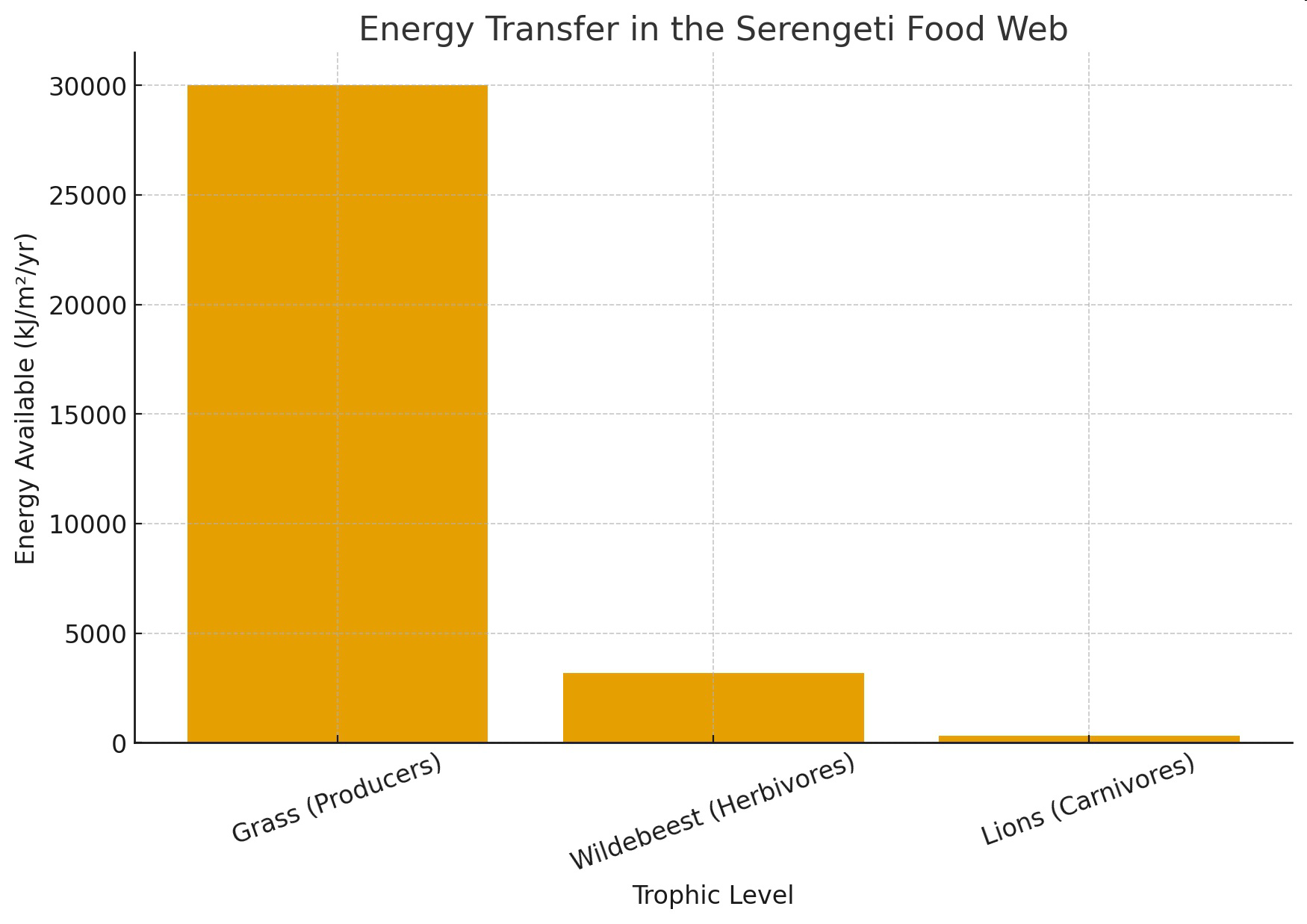
Table 2.
Year | Grass Biomass kg/ha | Wildebeest Population | Lion Population |
|---|
2000 | 6200 | 1250000 | 3100 |
2005 | 5800 | 1200000 | 2950 |
2010 | 5400 | 1120000 | 2800 |
2015 | 6000 | 1180000 | 2900 |
2020 | 6400 | 1230000 | 3050 |
Graph of Information - Figure 2.
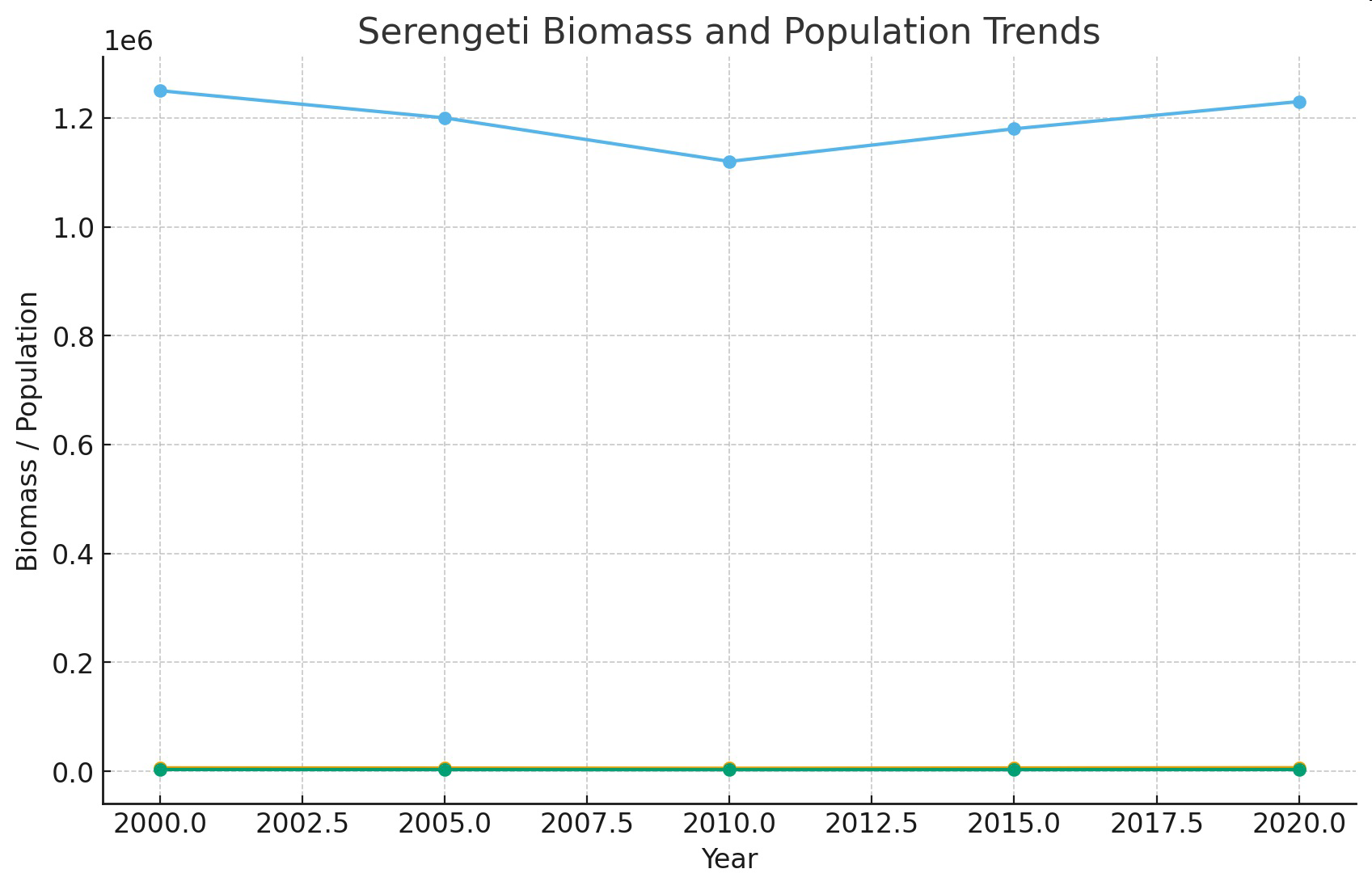
Diagram 2.
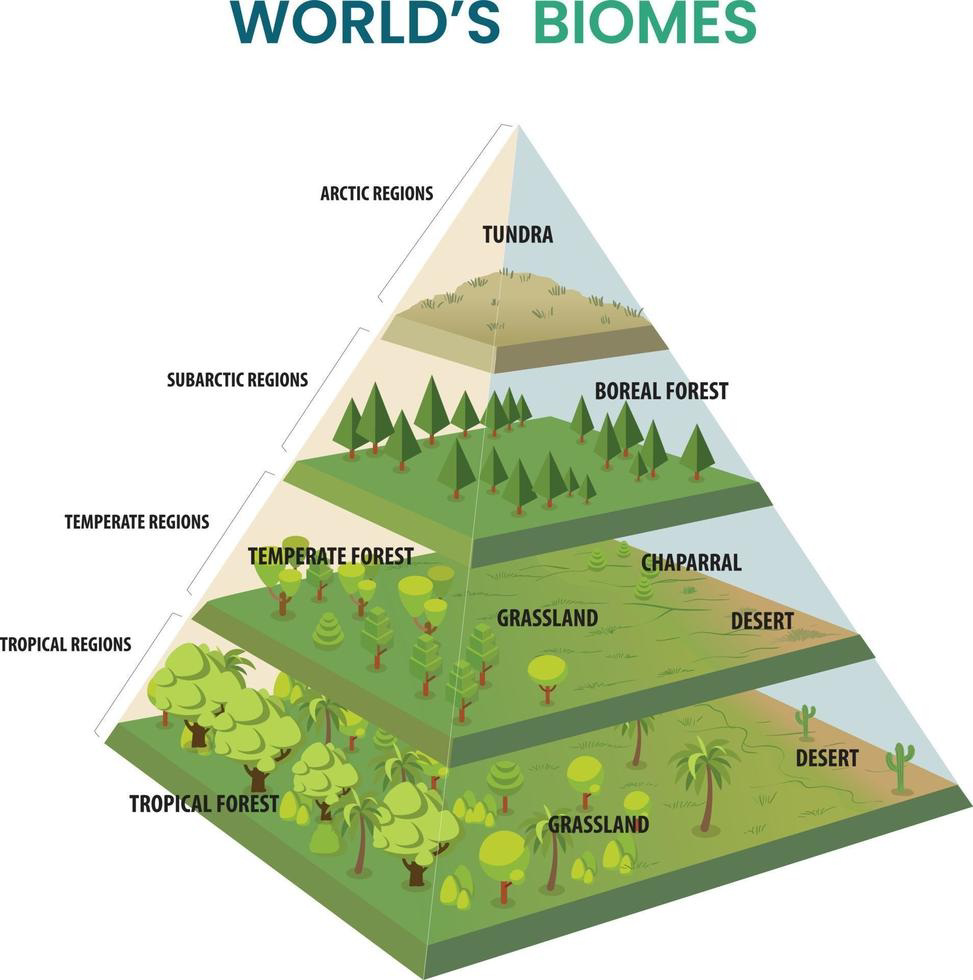 Source: https://ar.inspiredpencil.com/pictures-2023/biomass-pyramid-desert