How Different LED Light Spectra Affect Photosynthesis and Energy Storage in Plants
Photosynthesis depends on the ability of chlorophyll molecules inside chloroplasts to absorb specific wavelengths of light. This absorbed energy is converted into ATP and NADPH, which power the Calvin cycle to build glucose. Modern hydroponic and vertical farming systems use specialized LED lighting to optimize this process. LED technologies allow growers to precisely adjust the wavelengths plants receive, making them ideal for studying how different colors of light influence the energy transformation process.
Chlorophyll a and b absorb mostly red light (around 660 nm) and blue light (around 450 nm). These wavelengths are particularly effective at driving electron transport in the light reactions, which maximize ATP and NADPH production. Green light (around 550 nm), in contrast, is mostly reflected rather than absorbed, which is why leaves appear green. As a result, plants grown under green LEDs show much lower photosynthetic activity.
Figure A.
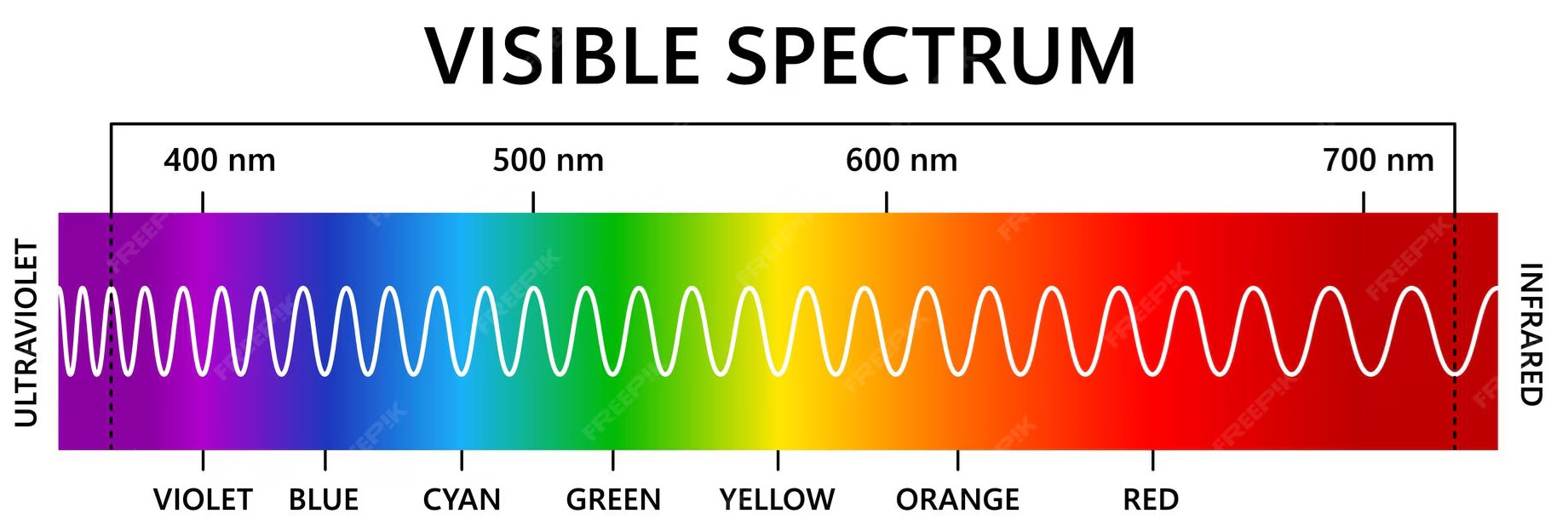
Source: https://www.freepik.com/premium-vector/visible-light
Hydroponic crops grown under red LEDs tend to show rapid stem elongation and high photosynthetic rates, because red light strongly drives the light reactions and supports energy-rich glucose production. Blue LEDs stimulate leaf expansion, chlorophyll formation, and compact plant architecture, but support slightly lower rates of glucose synthesis compared to red light alone. Many growers therefore use full-spectrum LED systems combining red and blue wavelengths to maximize overall photosynthetic efficiency and biomass gain.
The transformation of light energy into chemical energy becomes clear when comparing plant growth under different LED colors. Red and full-spectrum conditions produce the highest levels of oxygen output - a direct indicator of photosynthesis - and result in significantly higher biomass accumulation over time. Because the Calvin cycle relies on the products of the light reactions, more absorbed red and blue light means more ATP/NADPH available to support glucose synthesis.
Table 1.
Light Spectrum | Photosynthesis Rate (mg O$_2$/g/hr) |
|---|
Red (660 nm) | 11.2 |
Blue (450 nm) | 9.5 |
Green (550 nm) | 3.8 |
Full Spectrum | 12.4 |
Graph of Information - Figure 1.
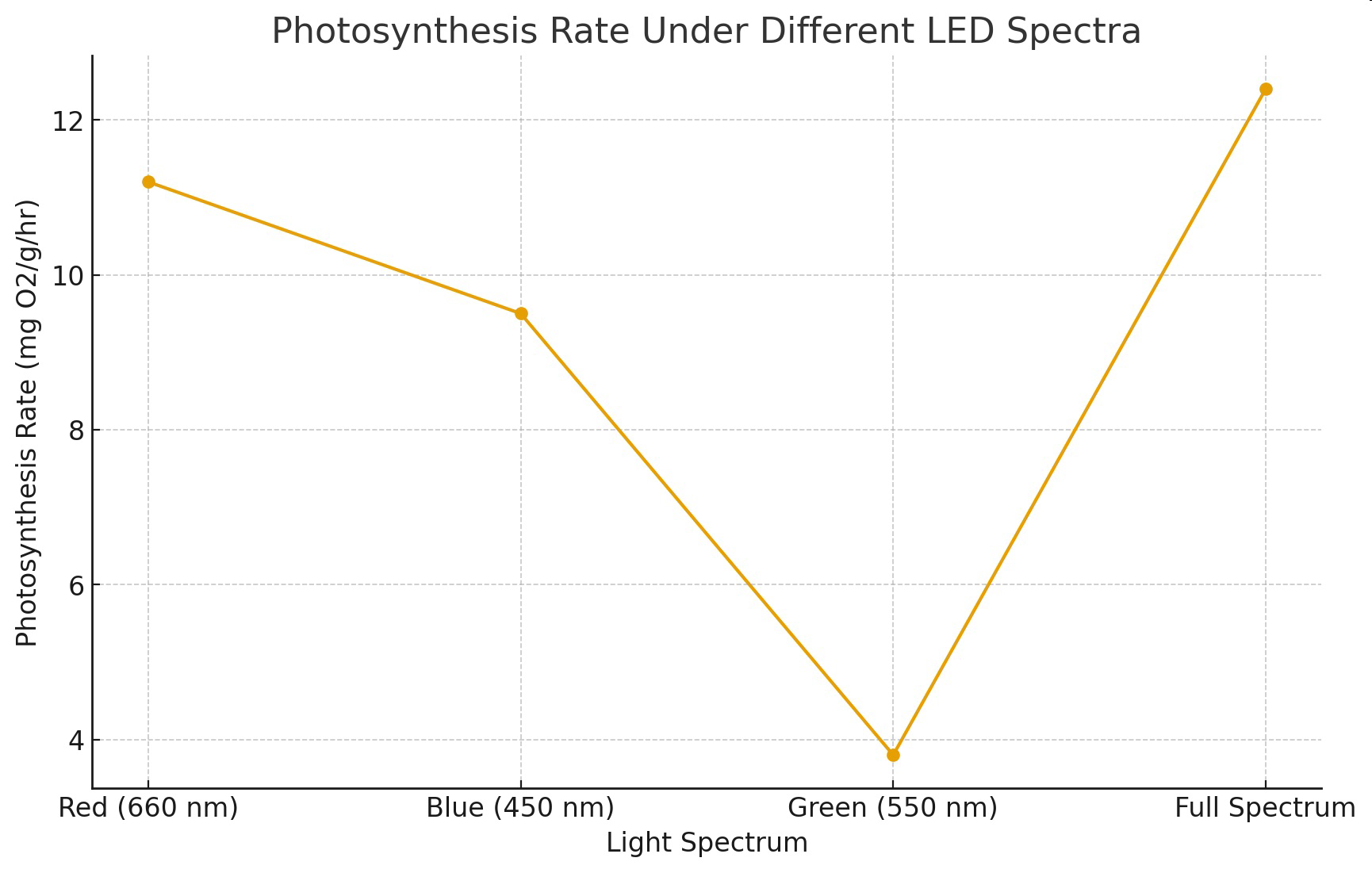
Table 2.
Week | Red LED Biomass (g) | Blue LED Biomass (g) | Full Spectrum Biomass (g) |
|---|
1 | 1 | 1 | 1 |
2 | 1.9 | 1.7 | 2.1 |
3 | 3.1 | 2.6 | 3.5 |
4 | 4.4 | 3.4 | 5 |
5 | 5.9 | 4.2 | 6.6 |
6 | 7.3 | 5.1 | 8.2 |
Graph of Information - Figure 2.
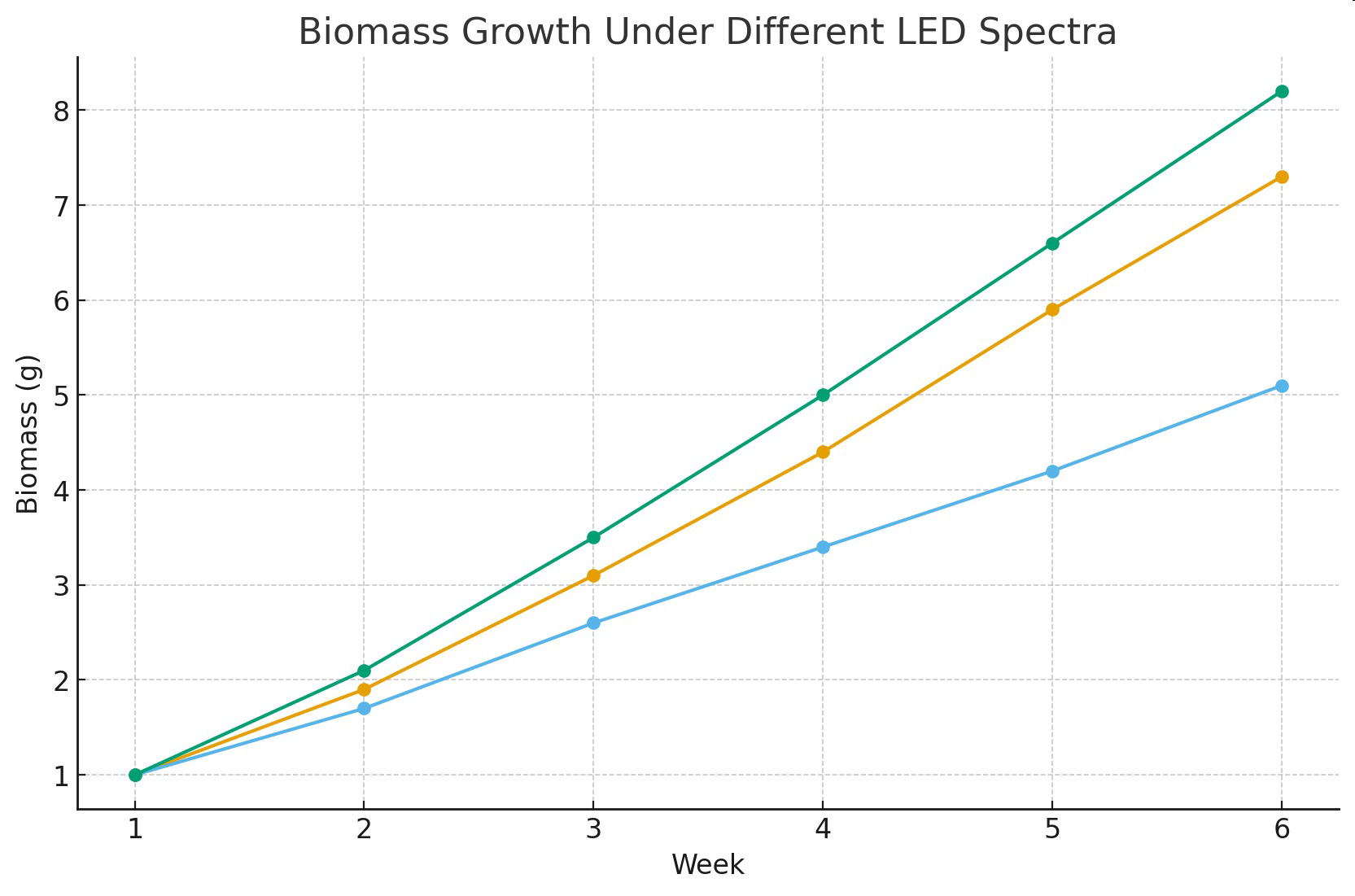
Figure 3.
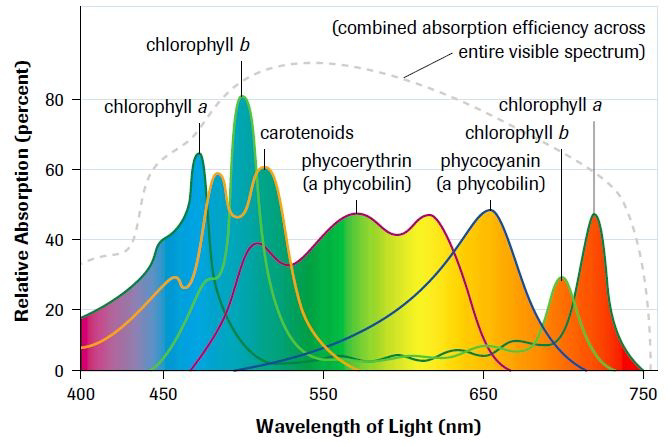 Source: https://sbi4u3.weebly.com/photosynthesis.html
Figure 4.
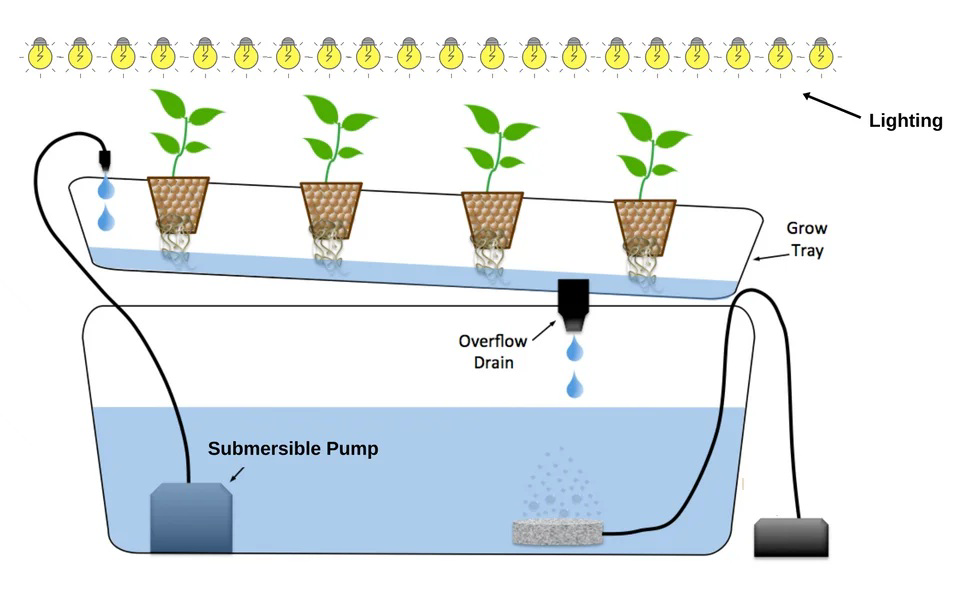
Source:
https://springpot.com/how-to-grow-hydroponics/