How Glucose Combines to Build Amino Acids and Muscle Proteins After Exercise
During exercise, muscle fibers undergo microscopic damage that triggers the body to repair and rebuild muscle tissue. This rebuilding process requires the synthesis of amino acids, which are then linked together to form new muscle proteins. To build these amino acids, cells combine elements from different nutrient sources - carbon, hydrogen, and oxygen from glucose, and nitrogen, sulfur, and phosphorus from dietary proteins and other molecules.
Glucose, commonly consumed through carbohydrate-rich foods, plays two essential roles after exercise. First, it provides energy, powering cellular processes required for protein synthesis. Second, its carbon skeletons serve as building blocks for the backbone of many amino acids. Through pathways such as glycolysis and the citric acid cycle, glucose is broken down into smaller carbon-based molecules that serve as precursors for amino acid synthesis.
To complete these amino acids, cells must add nitrogen, which is incorporated through amine (–NH) groups. Nitrogen typically comes from the breakdown or intake of dietary proteins. When nitrogen enters a muscle cell, enzymes attach it to carbon skeletons built from glucose, forming amino acids such as alanine, serine, and glutamate. Some amino acids also require sulfur (e.g., cysteine and methionine) or phosphorus (used in metabolic regulation and ATP production). These elements are integrated into amino acid side chains or into the nucleotides that help regulate protein assembly.
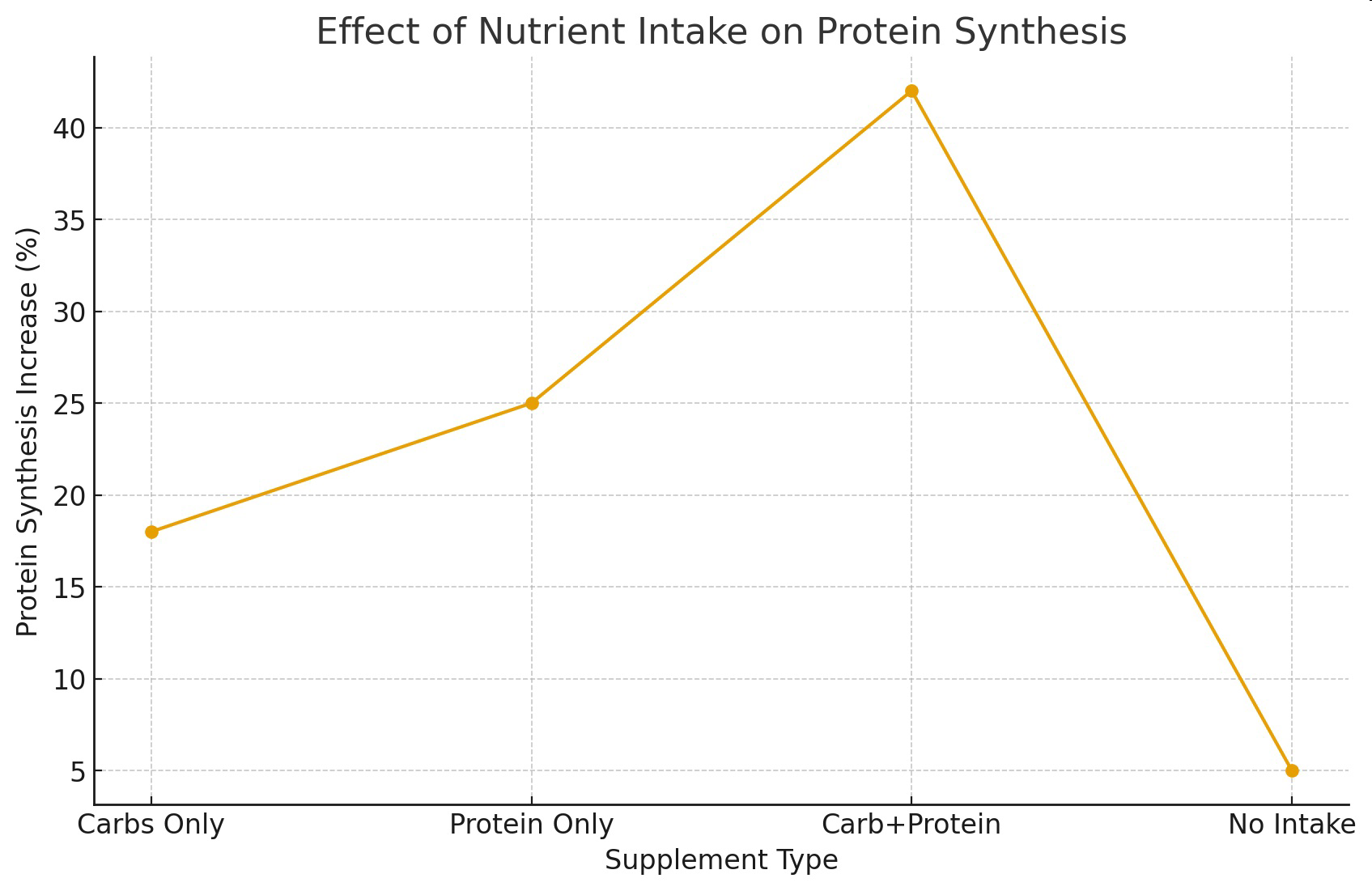
After exercise, muscle cells increase their uptake of both glucose and amino acids. This coordinated uptake accelerates protein synthesis, allowing damaged fibers to repair and grow. Research shows that consuming carbohydrates and proteins together enhances this process: carbohydrates stimulate insulin, which increases amino acid transport into muscle cells, while protein provides the nitrogen required to build new amino acids.
Amino acids are then linked by peptide bonds to form polypeptides, which fold into functional proteins used for muscle repair, enzyme production, and structural support. This process demonstrates how atoms from glucose, proteins, and other dietary components combine to form complex biomolecules required for life.
Muscle regeneration after exercise provides a clear real-world example of how carbon-based molecules are constructed: glucose provides the carbon backbone, and nitrogen, sulfur, and phosphorus contribute essential functional groups needed to build amino acids and muscle proteins.
Table 1.
Time After Exercise (minutes) | Glucose Uptake (mg/100g muscle/min) | Amino Acid Synthesis ($\mu mol/g/hr$) |
|---|
0 | 0.8 | 12 |
30 | 2.5 | 28 |
60 | 3.1 | 35 |
90 | 2.4 | 30 |
120 | 1.7 | 22 |
Graph of Information - Figure 1.
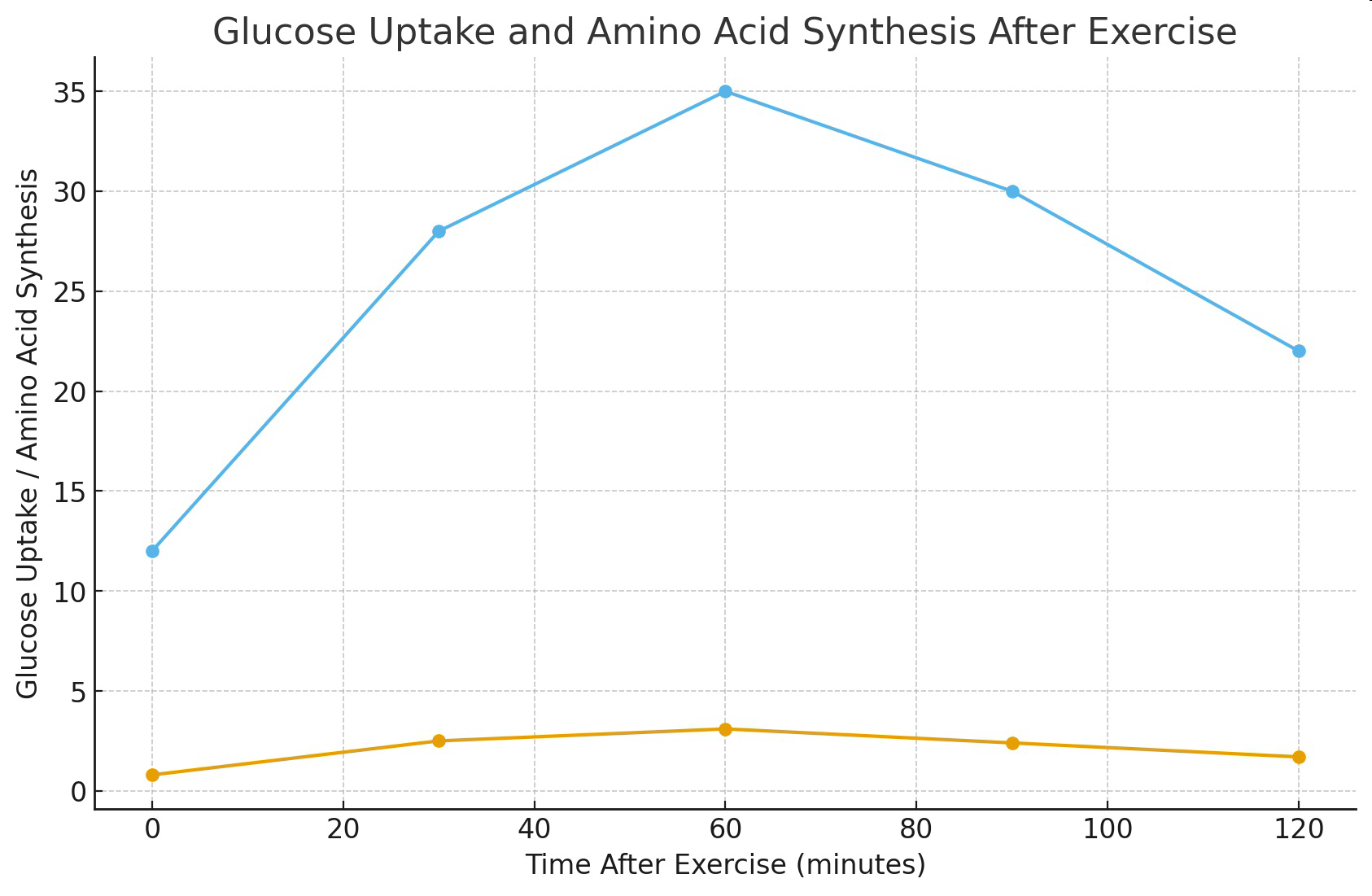
Table 2.
Supplement Type | Protein Synthesis Increase (%) |
|---|
Carbs Only | 18 |
Protein Only | 25 |
Carb+Protein | 42 |
No Intake | 5 |
Graph of Information - Figure 2.