How Light Intensity Affects Sugar Production in Plants
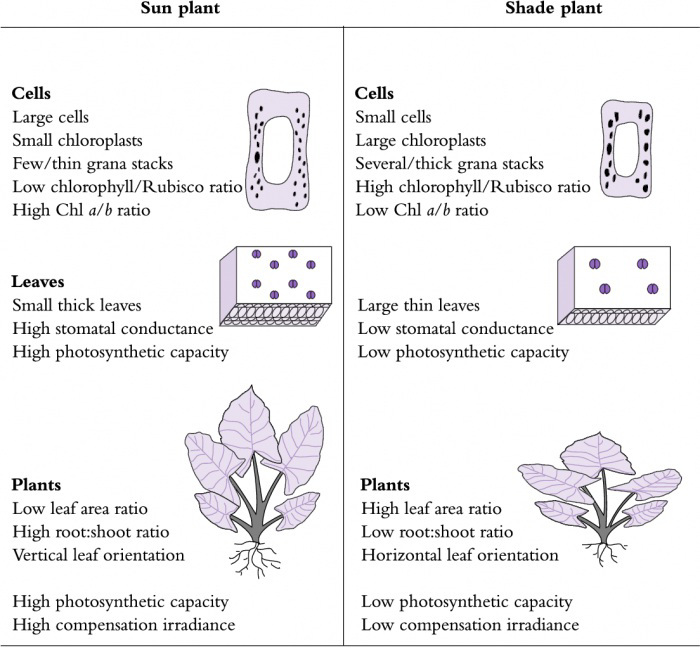
Photosynthesis is the key process that transforms light energy from the sun into stored chemical energy inside plant cells. This transformation occurs in the chloroplasts - organelles packed with chlorophyll pigments that absorb specific wavelengths of light. The rate at which plants convert sunlight into sugars depends heavily on the intensity and quality of available light, which explains why sun-grown and shade-grown plants differ in appearance, physiology, and sugar production.
Shade-grown plants grow beneath forest canopies or in low-light agricultural systems. Because they receive less intense light, their chloroplasts adjust to capture energy more efficiently at low light levels. These plants often have broader, thinner leaves with fewer layers of palisade mesophyll cells. This structure maximizes light absorption but results in overall lower photosynthetic capacity.
In contrast, sun-grown plants receive abundant light. Their chloroplasts contain more chlorophyll and more photosynthetic machinery, allowing them to reach higher rates of carbohydrate production. Their leaves tend to be thicker with additional palisade cell layers to handle bright light without becoming damaged. These adaptations allow sun-grown plants to produce more sugars per hour, translating into faster biomass accumulation.
Photosynthesis occurs in two major stages. The light reactions capture light energy and convert it into ATP and NADPH - molecules that temporarily store energy. The Calvin cycle then uses ATP and NADPH to build glucose from carbon dioxide. Glucose can be stored as starch, converted to cellulose for growth, or transported as sucrose to other parts of the plant.
Light intensity directly affects this system. At low light levels, chloroplasts cannot generate enough ATP and NADPH to run the Calvin cycle at a high rate. As light intensity increases, sugar production rises - up to a point. Once a plant reaches light saturation, additional light does not increase sugar output. Sun-grown plants reach this saturation point at much higher intensities than shade plants.
Photosynthesis transforms incoming light energy into stored chemical energy, and environmental conditions influence how efficiently plants perform this transformation. Measuring sugar production and biomass accumulation in sun-grown and shade-grown plants offers real-world evidence of how energy moves from the environment into plant tissues.
Table 1.
Light Intensity (µmol/m²/s) | Sugar Production (mg glucose/g leaf/hour) |
|---|
50 | 1.2 |
150 | 3.5 |
300 | 6.8 |
600 | 10.2 |
900 | 11 |
Graph of Information - Figure 1.
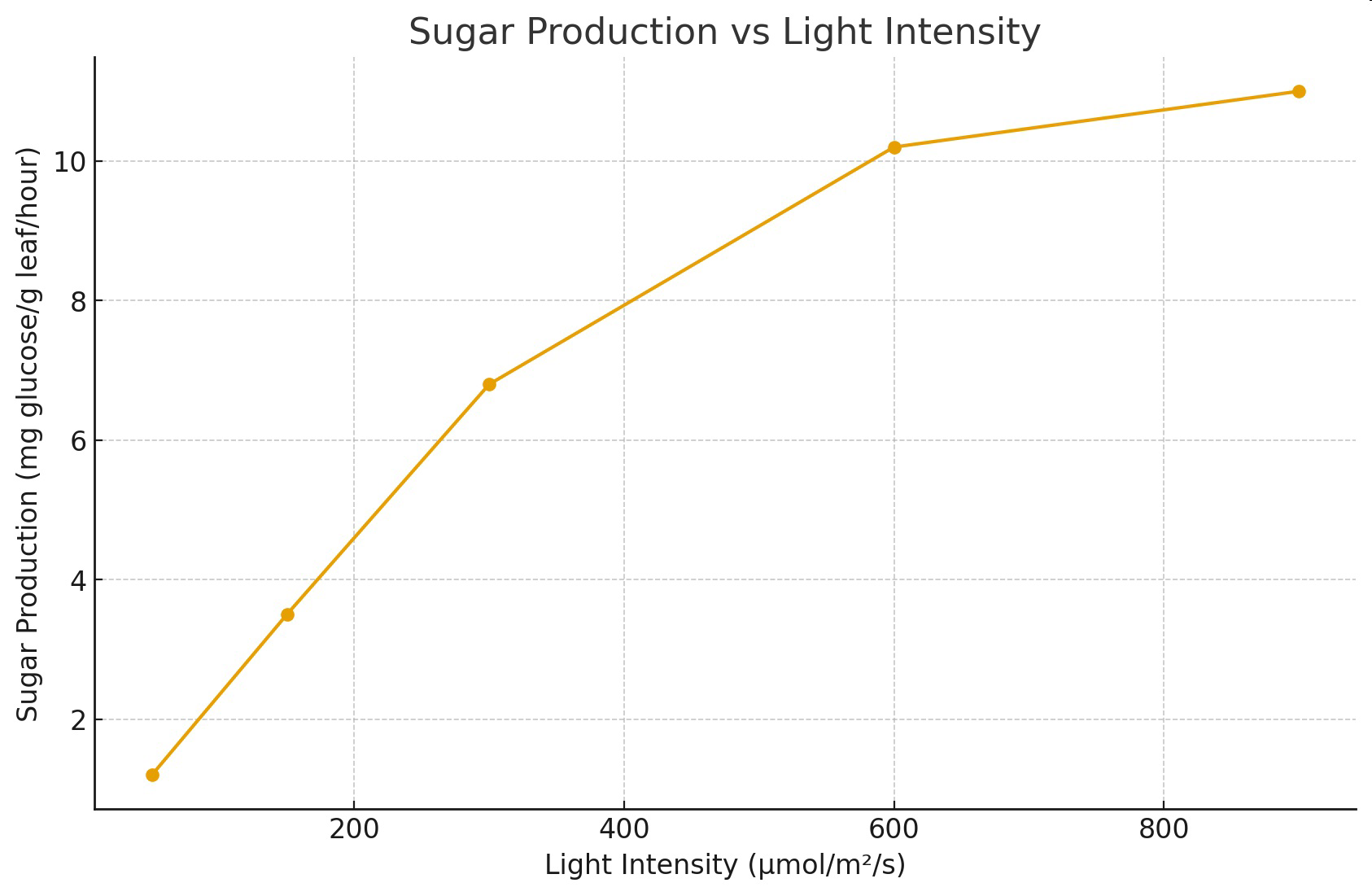
Table 2.
Week | Sun Grown Biomass (g) | Shade Grown Biomass (g) |
|---|
1 | 1 | 1 |
2 | 1.8 | 1.4 |
3 | 2.7 | 1.9 |
4 | 3.9 | 2.3 |
5 | 5 | 2.8 |
6 | 6.2 | 3.2 |
Graph of Information - Figure 2.
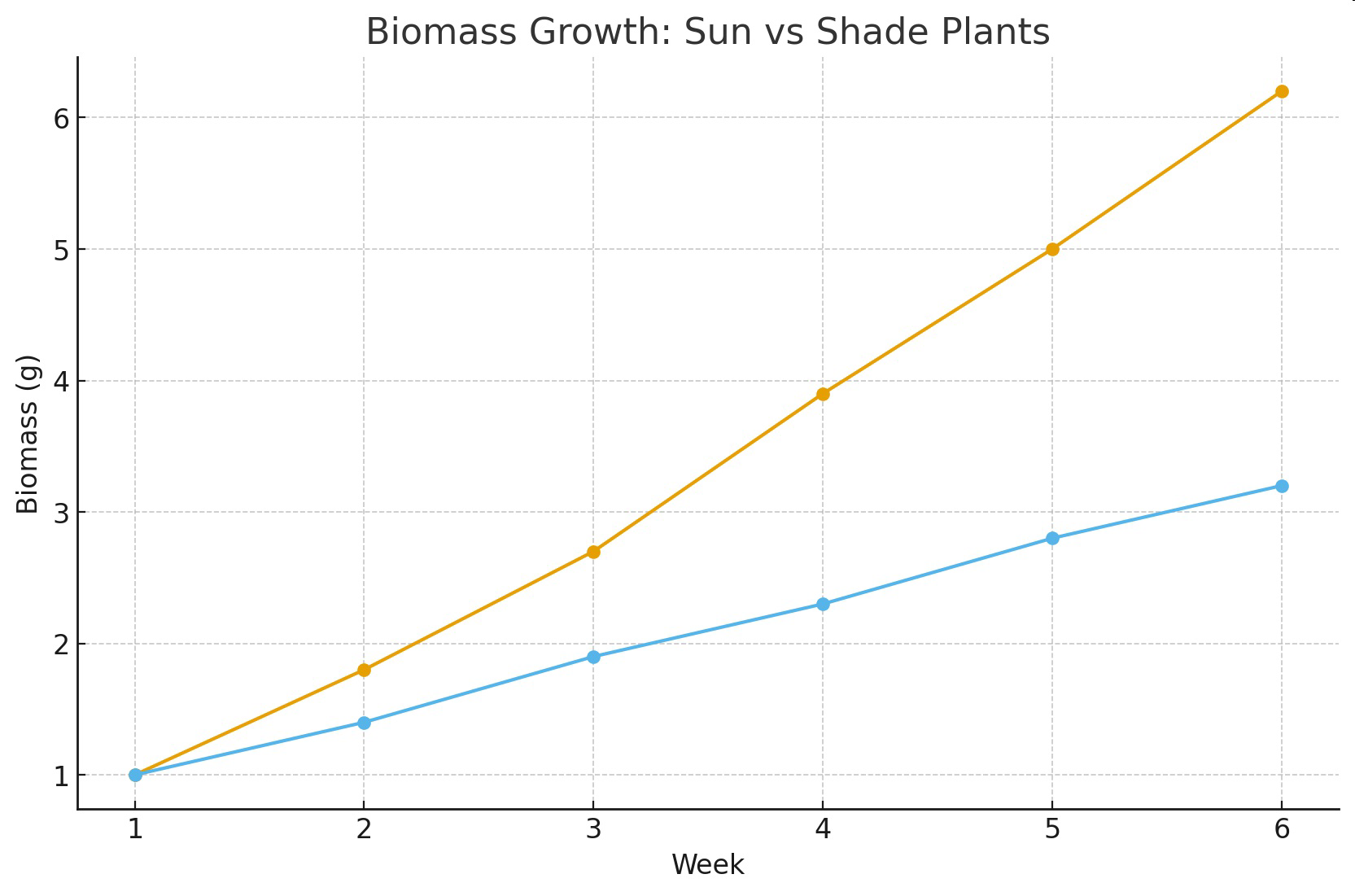
Figure 3.
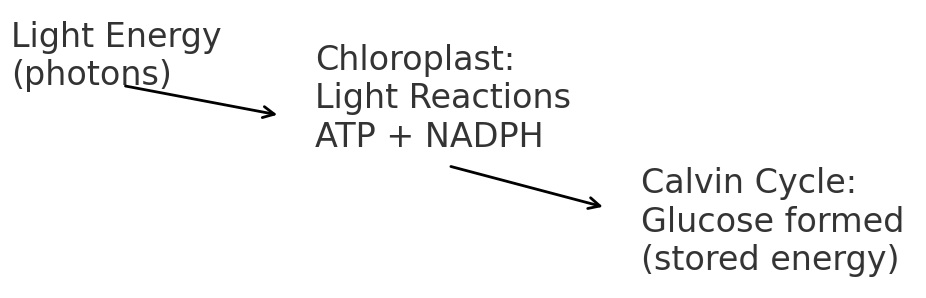
Figure 4.