How Temperature Affects Aerobic Cellular Respiration in Ectotherms
Cold-blooded (ectothermic) animals such as reptiles, amphibians, fish, and many insects rely heavily on environmental temperatures to regulate their body processes. Unlike mammals and birds, ectotherms cannot generate enough internal heat to maintain a constant body temperature. As their environment cools, their internal biochemical reactions - including aerobic cellular respiration - slow significantly. This slowdown in respiration reduces ATP production, causing animals to move more slowly or become temporarily inactive.
Aerobic cellular respiration is a chemical process in which the bonds of glucose and oxygen molecules are broken, and new bonds form in carbon dioxide and water. This bond rearrangement releases energy, which cells capture in the form of ATP. Each step of this process - glycolysis, the citric acid cycle, and the electron transport chain - depends on enzymes that function best within certain temperature ranges.
At warmer temperatures, enzyme molecules move faster and collide with their substrates more often, increasing the rate of reaction. The breaking of chemical bonds in glucose occurs more quickly, oxygen is consumed at a higher rate, and more ATP is produced. Ectotherms at warm temperatures therefore have higher metabolic rates, allowing faster muscle contractions, quicker escape responses, and more active foraging.
When temperatures fall, however, enzyme activity decreases. The molecules move more slowly, resulting in fewer successful collisions between enzymes and substrates. This reduces the rate at which the chemical bonds in glucose are broken and slows the formation of new bonds in carbon dioxide and water. With less ATP being produced, the organism’s muscles receive less energy. This leads to the characteristic sluggishness observed in cold-blooded animals during cold conditions.
This relationship explains behaviors such as reptiles basking on rocks in the sun or seeking warm microhabitats. By raising their body temperature, they speed up enzymatic activity, boosting cellular respiration and increasing ATP production.
Table 1.
Temperature (oC) | ATP Production (mmol ATP/g/hr) | Oxygen Consumption (mL O2 /g/hr) |
|---|
5 | 2.1 | 0.4 |
10 | 4.5 | 0.9 |
15 | 7.8 | 1.6 |
20 | 11.2 | 2.3 |
25 | 13 | 2.8 |
30 | 12.5 | 2.6 |
Graph of Information - Figure 1.
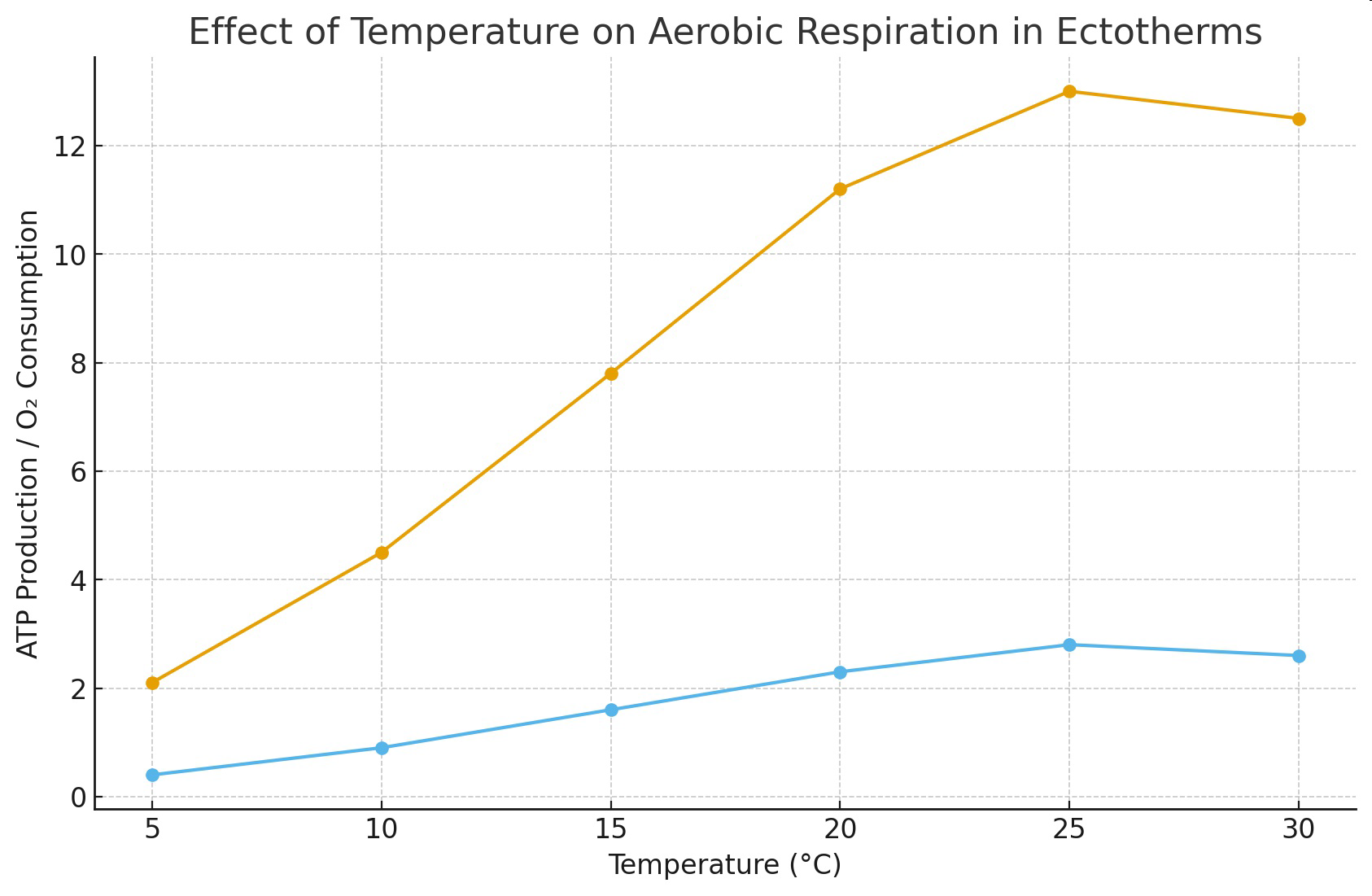
Table 2.
Temperature (°C) | Enzyme Activity (% max) | CO2 Production (mg CO2 /hr) |
|---|
5 | 12 | 1.5 |
10 | 28 | 3.2 |
15 | 55 | 6.8 |
20 | 82 | 10.9 |
25 | 100 | 14.1 |
30 | 91 | 13.3 |
Graph of Information - Figure 2.
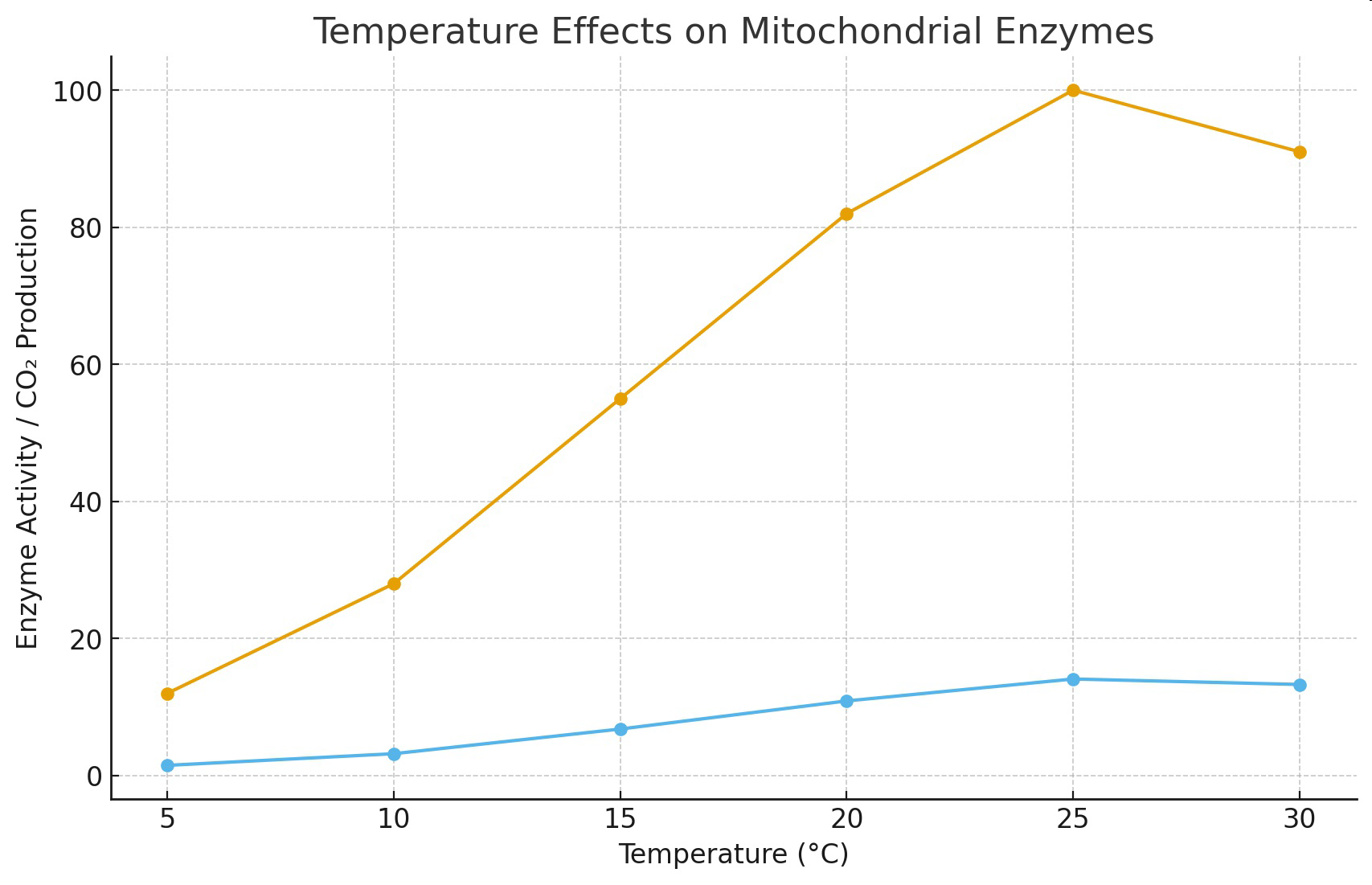
Figure 3.
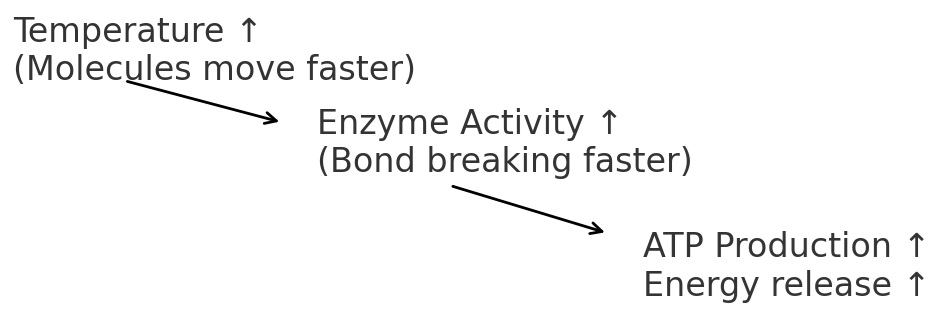
Figure 4.
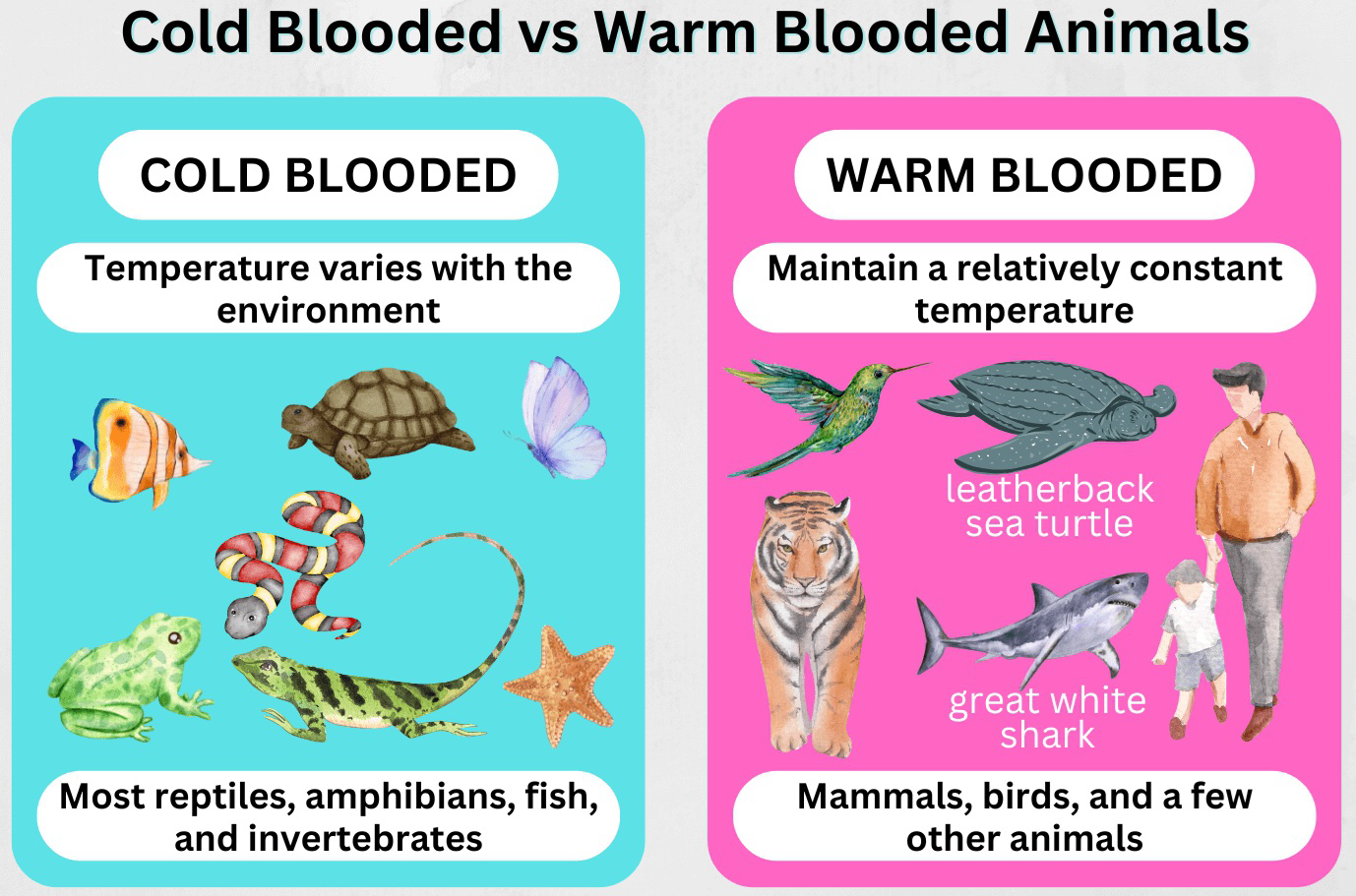 Source: https://sciencenotes.org/endothermic-vs-ectothermic-cold-blooded-vs-warm-blooded-animals/