Nitrogen Deficiency in Plants
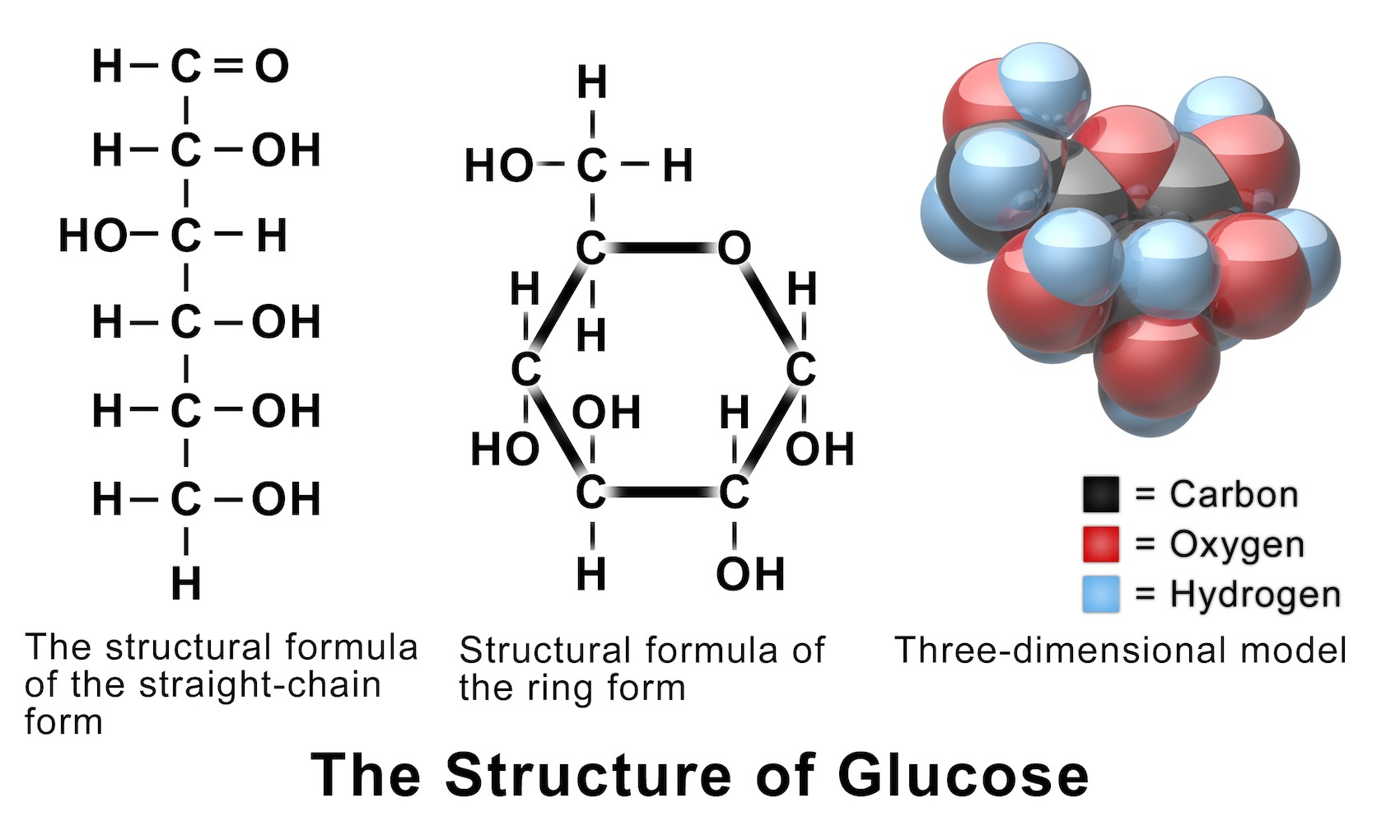
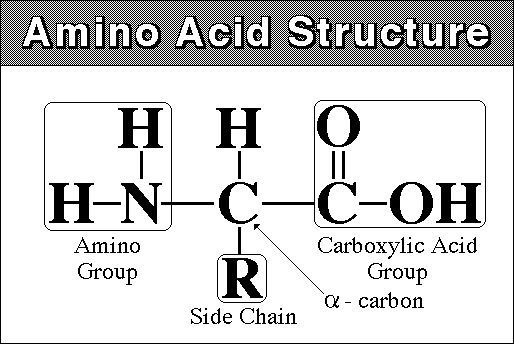
Plants depend on photosynthesis to produce sugars made of carbon, hydrogen, and oxygen. These sugars act not only as energy sources, but also as carbon skeletons for constructing more complex molecules such as amino acids, nucleotides, and proteins. For amino acids to form, plants must combine the carbon-based backbones from glucose with key additional elements - including nitrogen (N), sulfur (S), and phosphorus (P). Nitrogen is especially critical because it forms the amino group $-NH$ found in every amino acid.
When nitrogen levels in the soil are sufficient, plants readily absorb nitrate and ammonium. Inside plant cells, enzymes attach nitrogen to carbon skeletons derived from glucose, creating essential amino acids such as glutamate, serine, and cysteine. Some amino acids also incorporate sulfur, while phosphorus contributes to the regulation of metabolic pathways that allow amino acids to be assembled into proteins. These proteins make up enzymes, structural fibers, chlorophyll-binding complexes, and many other cellular components.
However, when a plant experiences nitrogen deficiency, this biochemical assembly line stalls. The plant continues to produce sugars through photosynthesis - sometimes at even higher levels because growth slows and sugar transport is reduced - but it cannot convert these sugars into amino acids. Without nitrogen, sulfur, or phosphorus, the plant cannot complete amino acid structures, preventing protein synthesis. As a result, sugar levels rise while protein levels fall.
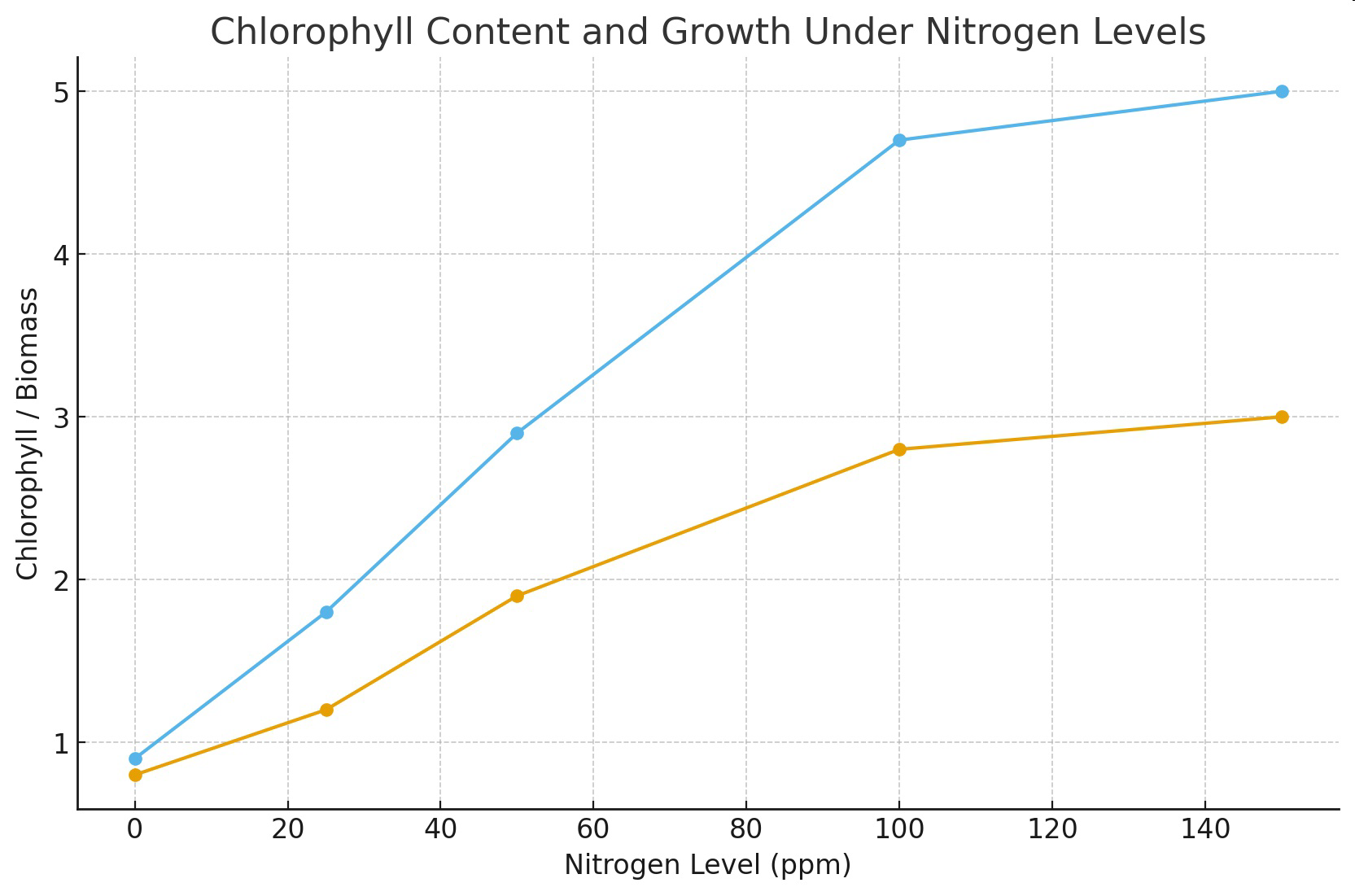
A major visible symptom is chlorosis, or yellowing of leaves. Chlorophyll itself contains nitrogen, so low nitrogen levels reduce chlorophyll production, limiting the plant’s ability to capture light. Nitrogen-deficient plants also exhibit stunted growth, thin stems, and reduced biomass because proteins are required for producing new cells and maintaining metabolic reactions.
Diagram 1.
 Source: https://www.visionlearning.com/en/library/Chemistry/
Diagram 2.
 Source: https://ccrma.stanford.edu/~woojecho/220a/fp.html
Table 1.
Nitrogen Level (ppm) | Leaf Sugar (% dry mass) | Leaf Protein (% dry mass) |
|---|
0 | 18.2 | 4.1 |
25 | 15.1 | 6.2 |
50 | 11.6 | 9.5 |
100 | 8.4 | 14.8 |
150 | 7.9 | 15.6 |
Graph of Information - Figure 1.
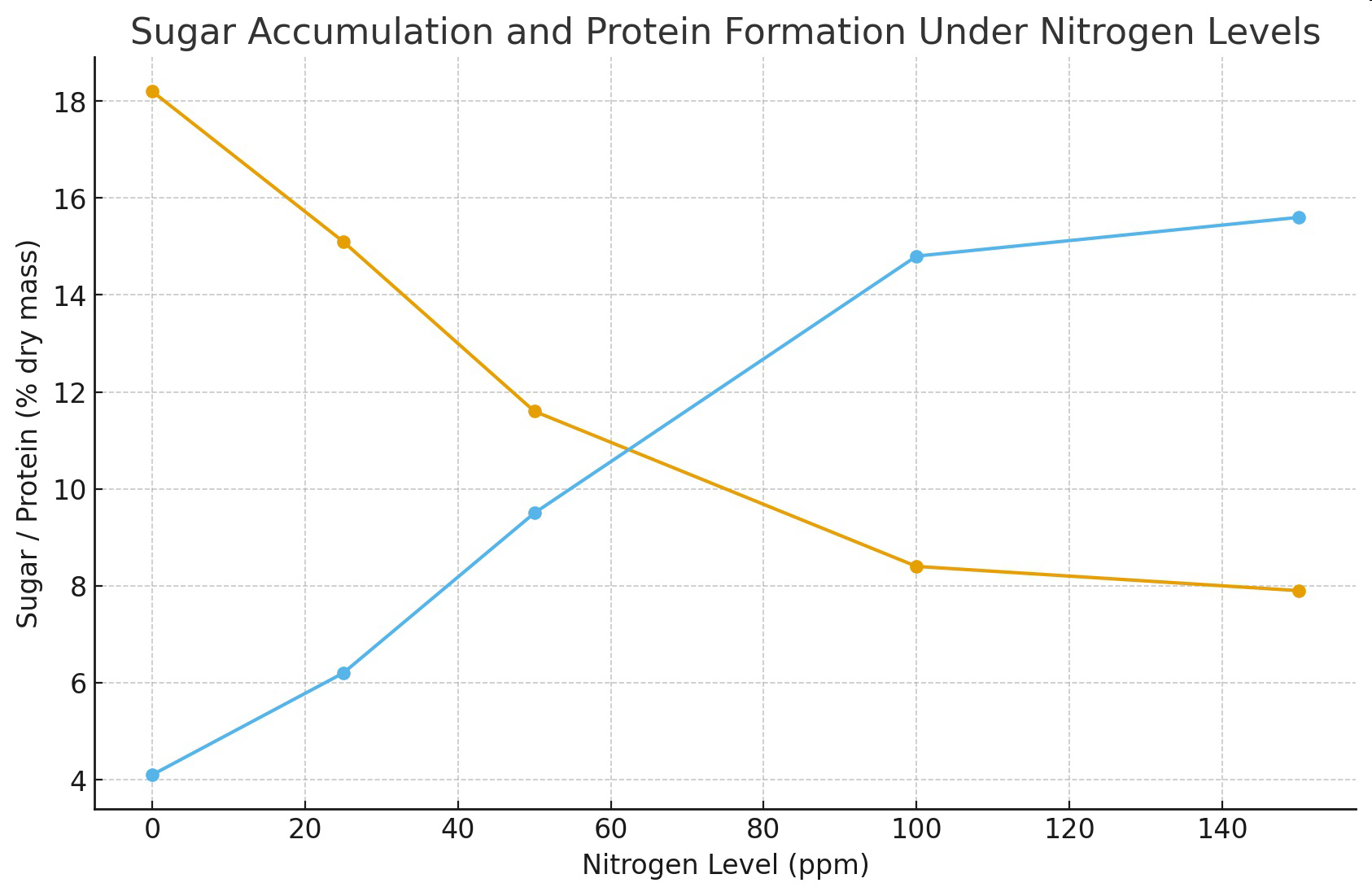
Table 2.
Nitrogen Level (ppm) | Chlorophyll Content (mg/g) | Plant Biomass (g) |
|---|
0 | 0.8 | 0.9 |
25 | 1.2 | 1.8 |
50 | 1.9 | 2.9 |
100 | 2.8 | 4.7 |
150 | 3 | 5 |
Graph of Information - Figure 2.