Seasonal Light Changes and Leaf Sugar Accumulation
Photosynthesis allows plants to transform light energy into stored chemical energy, mainly in the form of glucose. During the growing season, long summer days provide abundant sunlight, allowing plants to maximize photosynthesis. As the seasons change and daylength shortens, the rate of photosynthesis decreases. These shifts in environmental energy supply drive major biochemical changes inside leaves - especially sugar storage and pigment changes - which become visible in autumn foliage.
In summer, chlorophyll is abundant in leaf chloroplasts, giving leaves their green color. Chlorophyll absorbs blue and red wavelengths, powering the light reactions of photosynthesis. These reactions produce ATP and NADPH, which fuel the Calvin cycle. As long as sunlight is plentiful, plants convert energy efficiently and store excess glucose as starch or transport it to other tissues.
As daylength decreases in late summer and early autumn, the amount of incoming light energy declines. Lower light reduces ATP and NADPH production, slowing the Calvin cycle. Trees begin to break down chlorophyll molecules because they are energetically expensive to maintain. As green pigments fade, other pigments - anthocyanins and carotenoids - become visible, giving rise to red, orange, and yellow leaves.
At the same time, shorter days and cooler temperatures cause sugar transport out of leaves to slow. As a result, sugars accumulate in leaf cells. Increased sugar concentration triggers the formation of anthocyanins, red pigments that protect leaf tissues from excess light and oxidative damage during the final stages of photosynthesis.
Because photosynthesis depends on sunlight to build glucose, seasonal data provide clear evidence that light energy directly influences how much chemical energy plants can store. In summer, high photosynthetic rates generate large amounts of sugar. In autumn, sugar concentrations may rise even as photosynthesis slows due to reduced export from leaves.
Table 1.
Month | Day Length (hours) | Leaf Sugar (% dry mass) |
|---|
June | 15.2 | 8.5 |
July | 14.8 | 9.1 |
August | 13.7 | 10.4 |
September | 12.1 | 12.8 |
October | 10.5 | 16.3 |
Graph of Information - Figure 1.
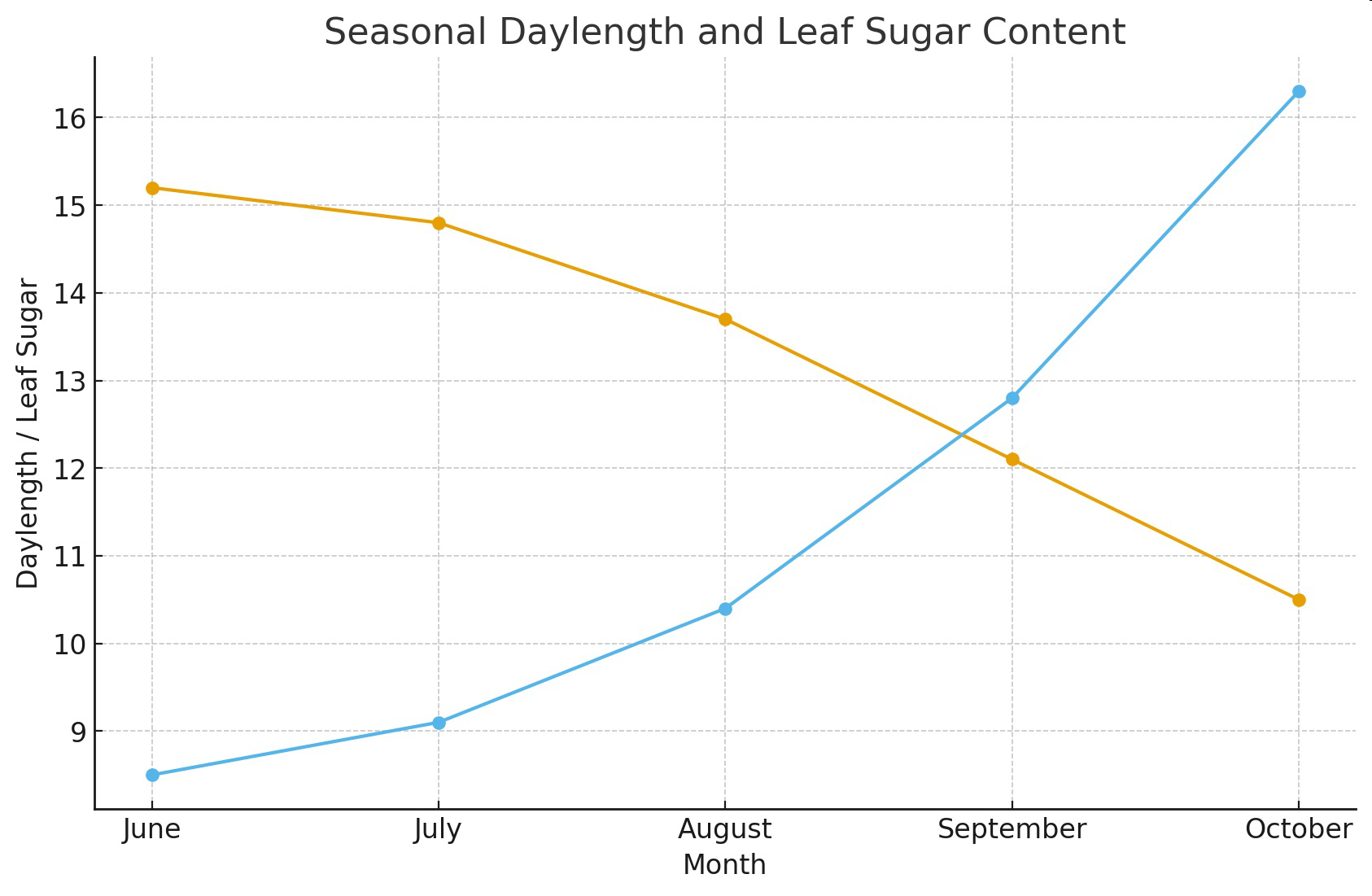
Table 2.
Month | Chlorophyll (mg/g) | Anthocyanin (mg/g) |
|---|
August | 4.8 | 0.5 |
September | 3.1 | 1.7 |
October | 1.2 | 3.4 |
Graph of Information - Figure 2.
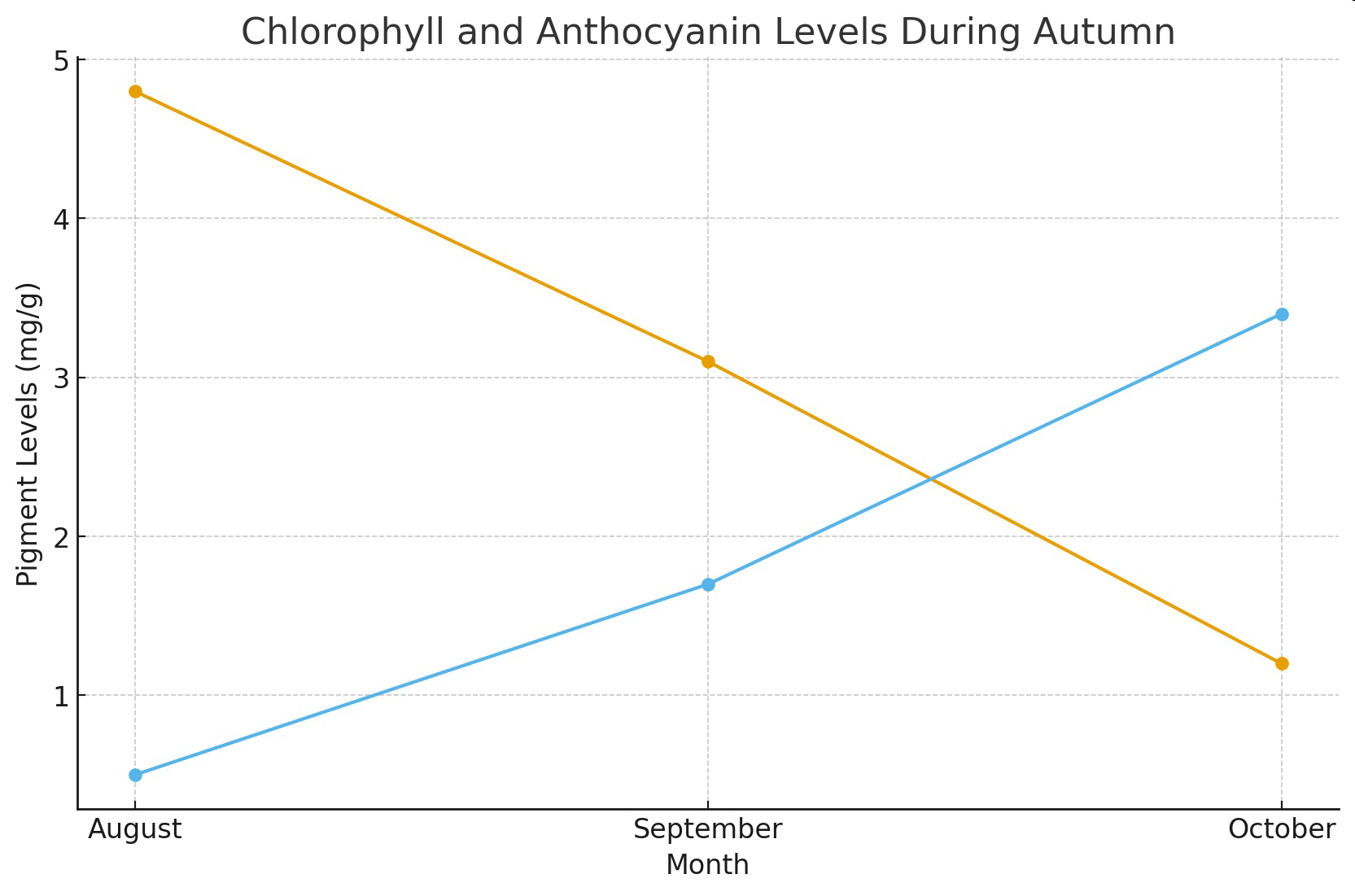
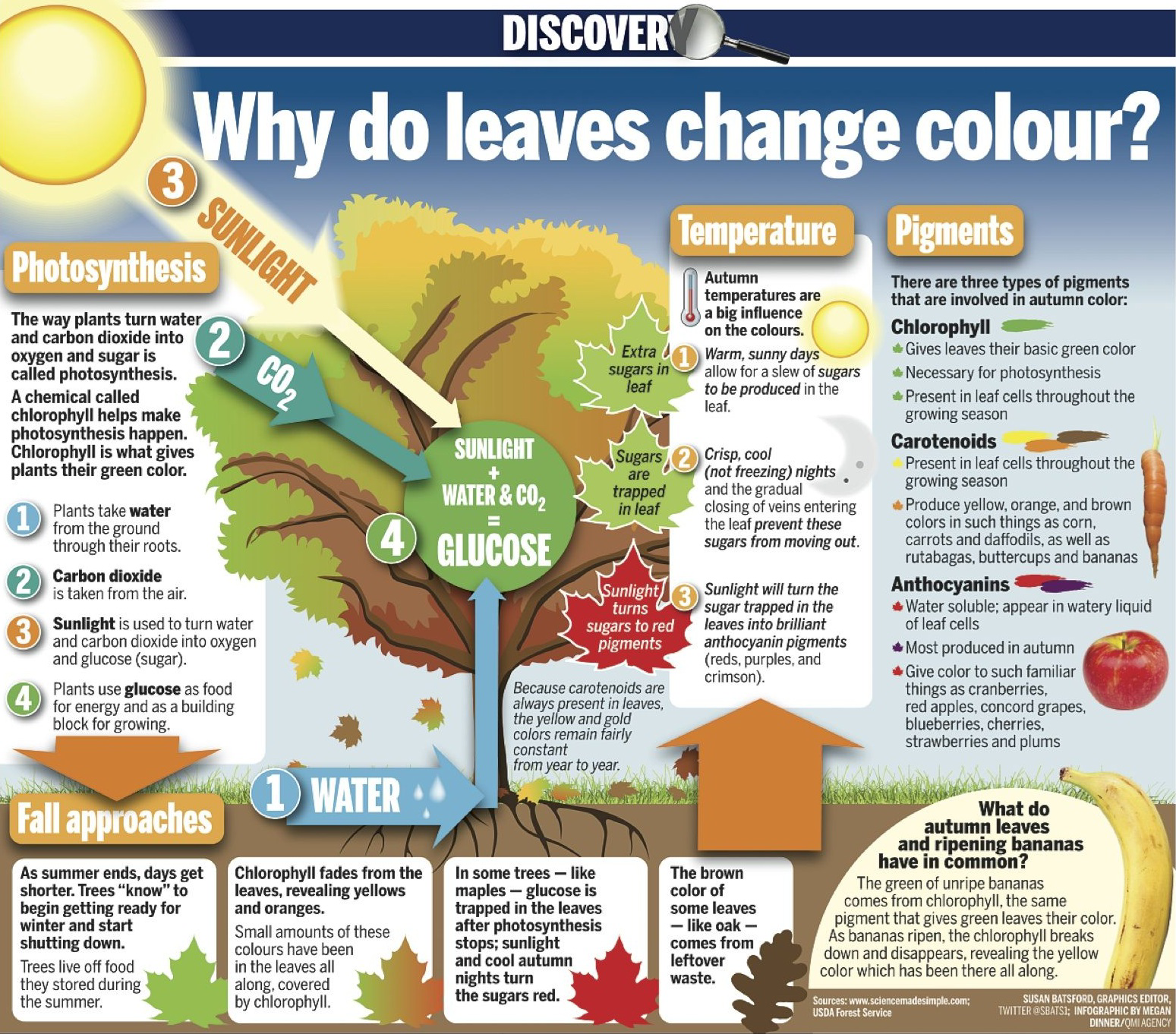
Figure 3.
 Source:
www.sciencemadesimple.com