Antibiotic Resistance in MRSA
Staphylococcus aureus is a common bacterium found on human skin and in nasal passages. While most strains are harmless or cause only mild infections, some have evolved resistance to multiple antibiotics - creating methicillin-resistant Staphylococcus aureus, or MRSA. MRSA is a well-documented example of how natural selection leads to adaptation in populations.
Before the widespread use of antibiotics, MRSA did not exist. Most S. aureus cells were susceptible to drugs such as methicillin and penicillin. However, genetic variation was always present within the population. A small number of individual bacteria carried mutations that altered their cell-wall-producing enzymes, preventing antibiotics from binding effectively. These mutations were rare, but they were heritable, meaning they could be passed on when the bacteria reproduced.
Diagram 1.
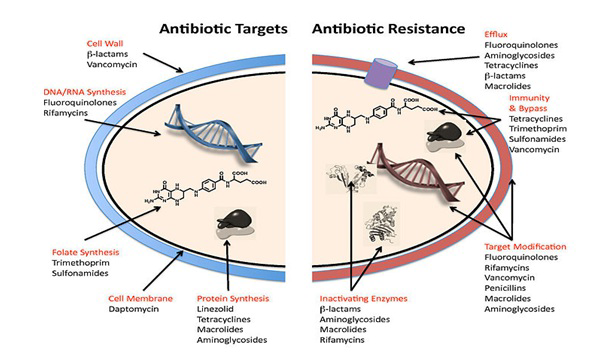 Source:
https://fity.club/lists/m/mrsa-bacteria-diagram/
When antibiotics were introduced, they created a powerful selective pressure. Susceptible bacteria were killed, while resistant bacteria survived the treatment. The surviving bacteria then reproduced rapidly, filling the environment with offspring that inherited the resistance trait. Over many bacterial generations - sometimes in just days - the population shifted from mostly susceptible cells to predominantly resistant ones.
Natural selection explains this shift. The four key components of natural selection are all visible in MRSA evolution:
Variation: Some bacteria possessed genetic mutations that made them resistant.
Heritability: These mutations passed from parent cells to daughter cells.
Differential survival: Resistant individuals survived antibiotic exposure; susceptible ones did not.
Differential reproduction: Resistant cells left more offspring, increasing the frequency of the trait.
As resistant bacteria gained an advantage, the population became dominated by cells carrying resistance genes such as $mecA$, which produces an alternative penicillin-binding protein (PBP2a). This adaptation allows bacteria to maintain cell-wall synthesis even in the presence of methicillin.
Hospitals and community environments further amplify this process. When antibiotics are overused or improperly prescribed, selective pressure intensifies, accelerating the spread of resistant strains. Over time, MRSA has evolved multiple resistance mechanisms, including the ability to survive desiccation, form protective biofilms, and evade immune responses. These adaptations make MRSA a continuing public health concern.
Diagram 2.
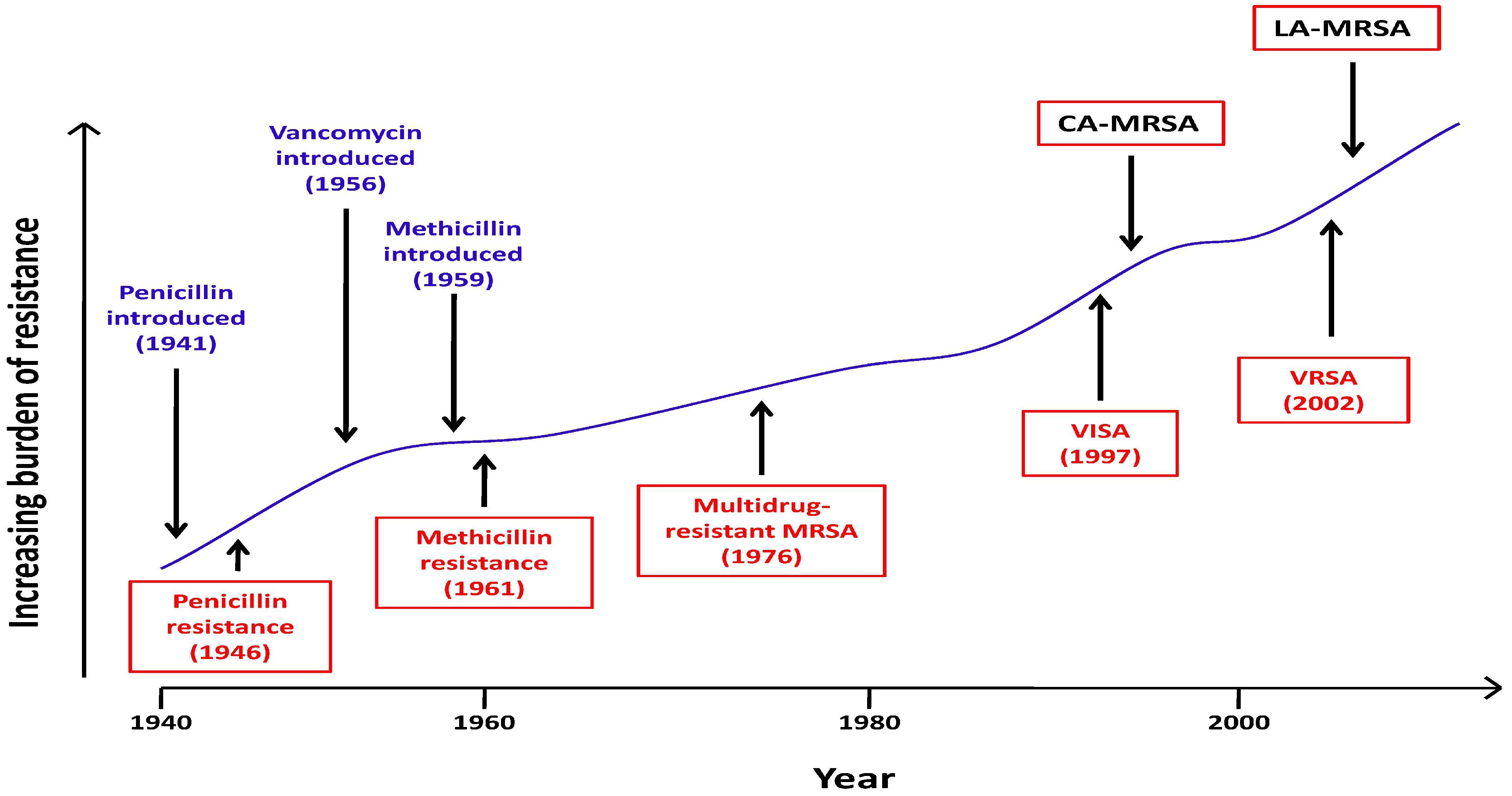 Source: https://www.intechopen.com/chapters/49455
Table 1.
Year | MRSA Isolates (%) | Non-Resistant Isolates (%) |
|---|
2005 | 22 | 78 |
2008 | 28 | 72 |
2011 | 36 | 64 |
2014 | 42 | 58 |
2017 | 47 | 53 |
2020 | 53 | 47 |
2023 | 61 | 39 |
Graph of Information - Figure 1.
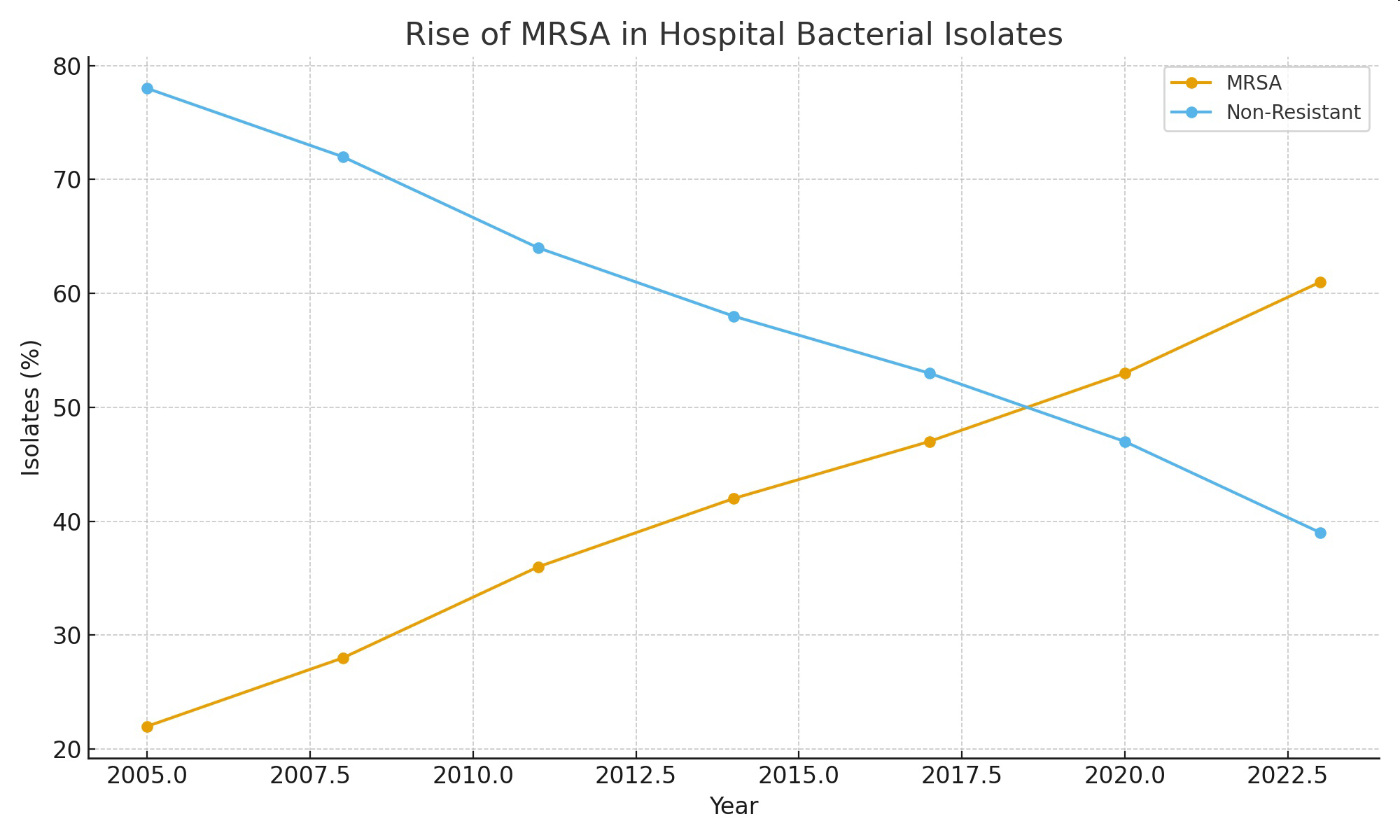
Table 2.
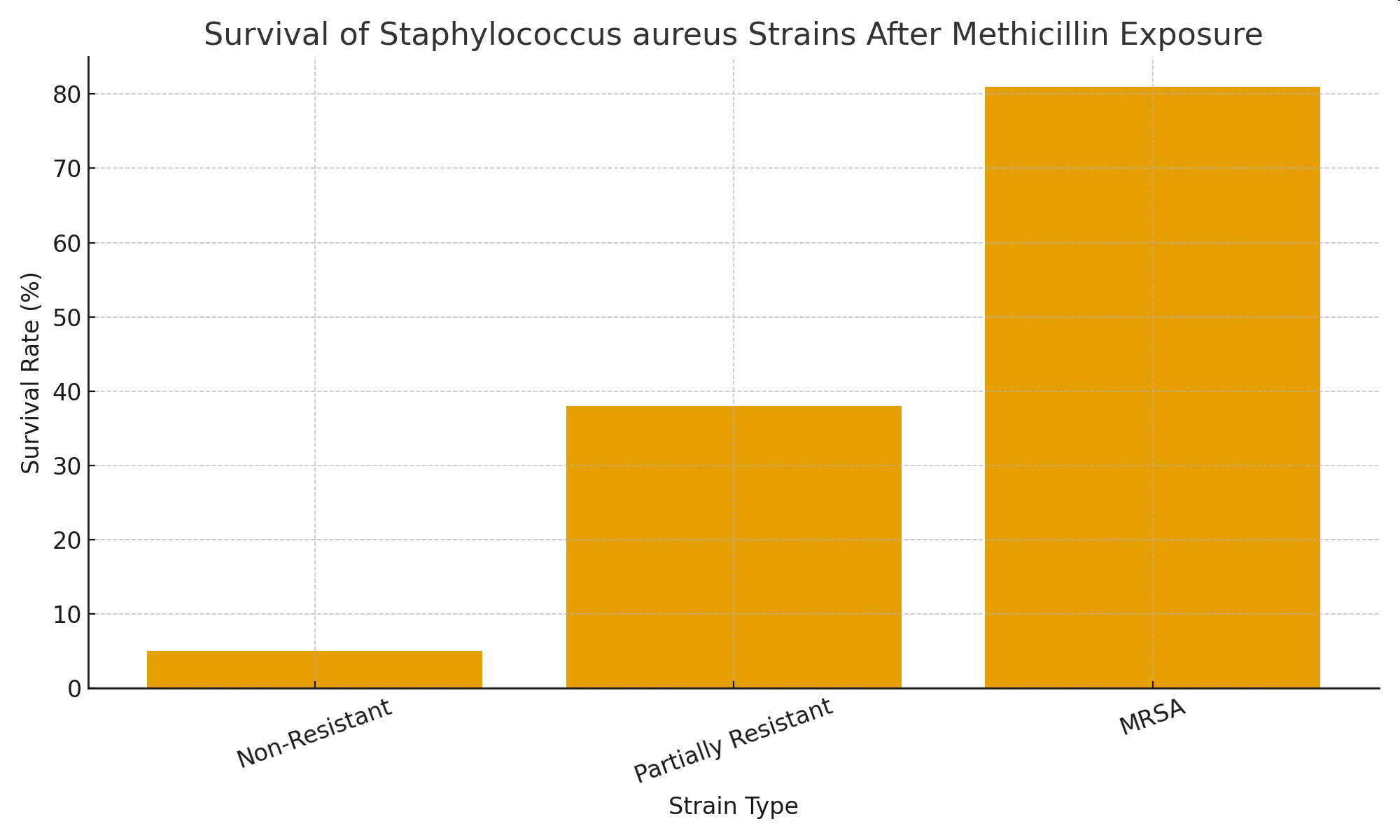
Strain Type | Survival Rate After Methicillin (%) |
|---|
Non-Resistant | 5 |
Partially Resistant | 38 |
MRSA | 81 |
Graph of Information - Figure 2.