Bird Feather Microstructures and Dinosaur Fossils
Modern birds are the only living descendants of theropod dinosaurs, and multiple lines of empirical evidence support this evolutionary relationship. Fossils discovered over the last several decades - including Archaeopteryx, Microraptor, and Anchiornis - demonstrate clear structural links between ancient dinosaurs and living birds. These connections are supported by fossil morphology, microscopic feather structures, and molecular analyses, all of which point to a shared common ancestry.
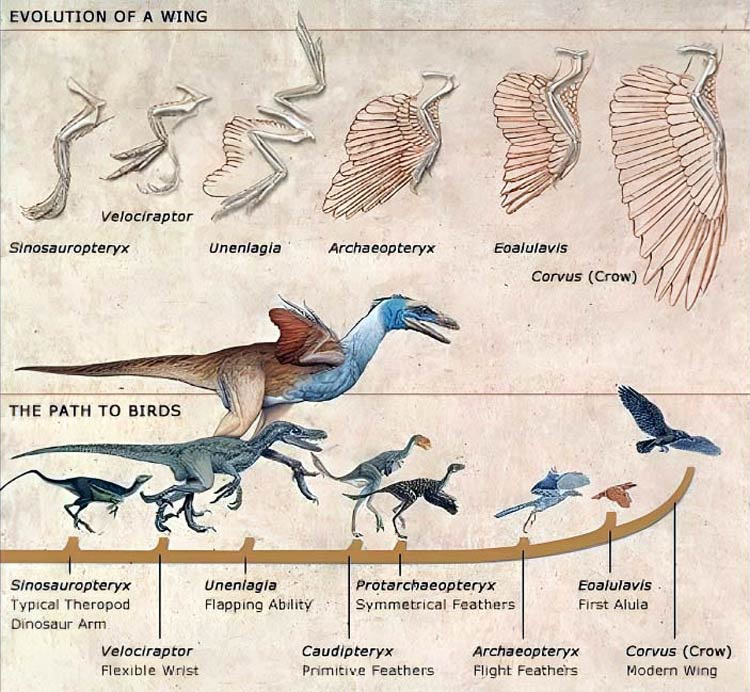
One major line of evidence comes from fossils with preserved feathers. Early feathered dinosaurs had filament-like structures that resembled primitive feathers. Later fossils show increasingly complex feathers, including branched structures called barbs and even asymmetrical flight feathers similar to those in modern birds. The sequence of feather evolution in the fossil record demonstrates a gradual increase in complexity, consistent with evolutionary predictions rather than sudden appearance.
Diagram 1.
 Source: https://dinoanimals.com/dinosaurs/evolution-of-feathers/
Another powerful line of evidence is the study of melanosomes, the microscopic pigment-containing organelles in feathers. When scientists examine fossilized feathers under electron microscopes, they find melanosome shapes and arrangements that match those found in modern bird feathers. For example, elongated, rod-shaped melanosomes are associated with black coloration in extant birds, and these same structures appear in the feathers of Anchiornis, indicating similar coloration patterns. Statistical comparisons of fossil melanosomes and modern bird melanosomes reveal strong overlap, suggesting shared pigmentation pathways inherited from common ancestors.
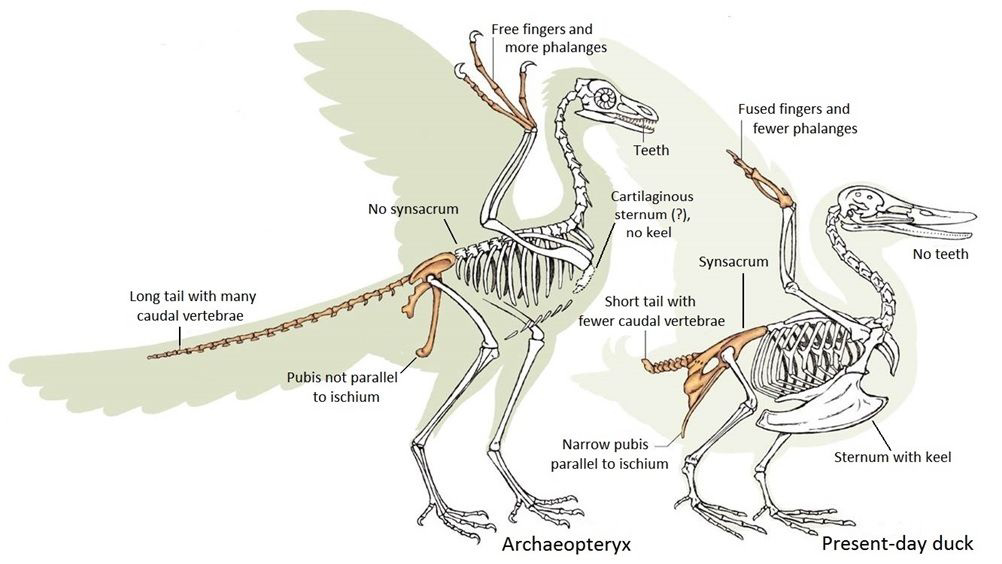
Skeletal anatomy provides additional support. Many theropod dinosaurs share features with modern birds, including hollow bones, a wishbone (furcula), three-fingered limbs, and similar hip structures. Cladistic analyses of skeletal traits consistently place birds within the theropod branch of the dinosaur family tree. These analyses use large datasets of morphological characters to quantify similarity and construct evolutionary relationships using statistical algorithms.
Diagram 2.
Source:
https://guideofgreece.com/
Finally, molecular evidence contributes to the picture. Although ancient DNA rarely survives fossilization, scientists have recovered preserved proteins, including collagen, from some dinosaur fossils. Comparisons of these protein fragments with modern species show that the closest matches occur with birds rather than reptiles or mammals.
Table 1.
Sample | Rod-Shaped (%) | Spherical (%) |
|---|
Fossil Feather A | 65 | 35 |
Fossil Feather B | 70 | 30 |
Modern Crow | 80 | 20 |
Modern Sparrow | 60 | 40 |
Graph of Information - Figure 1.
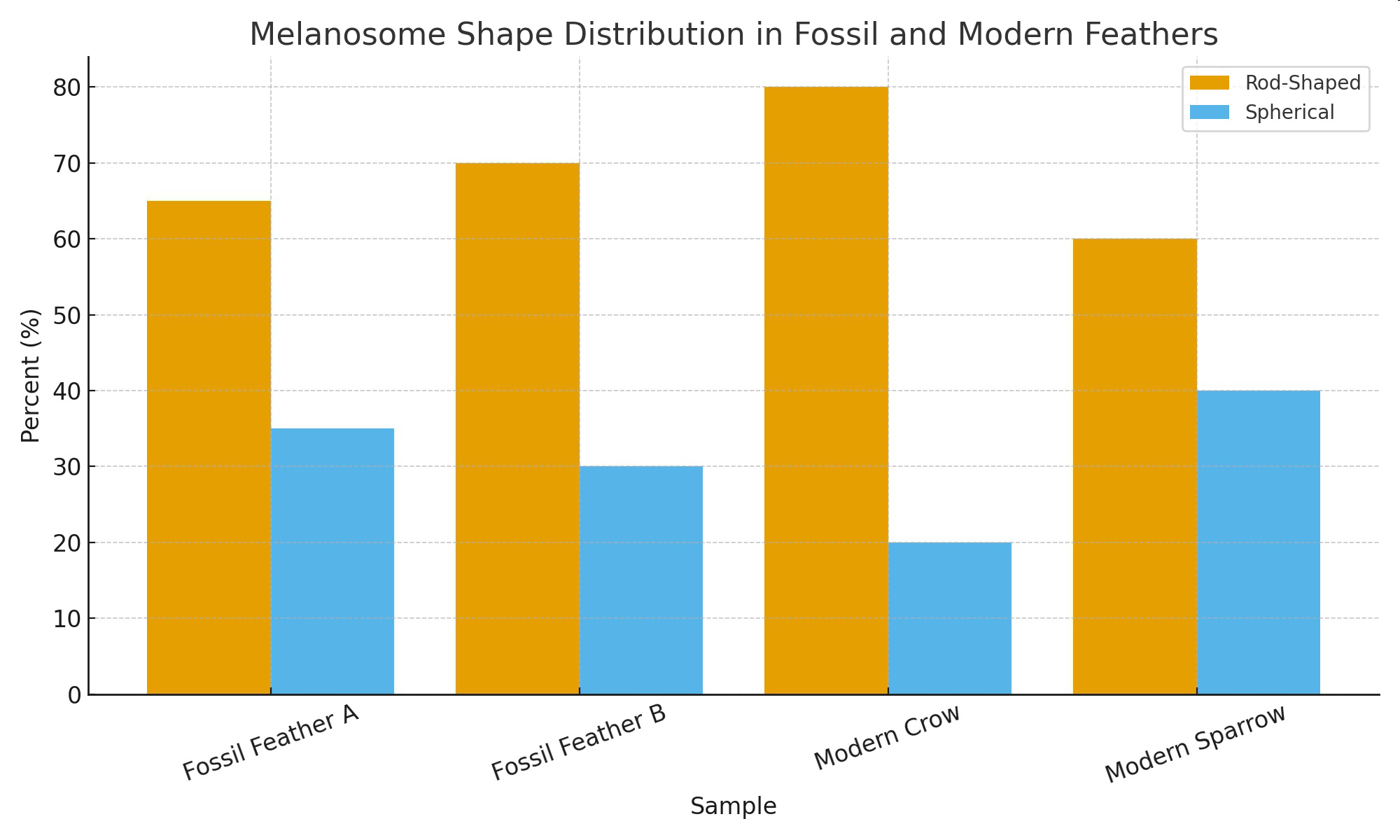
Table 2.
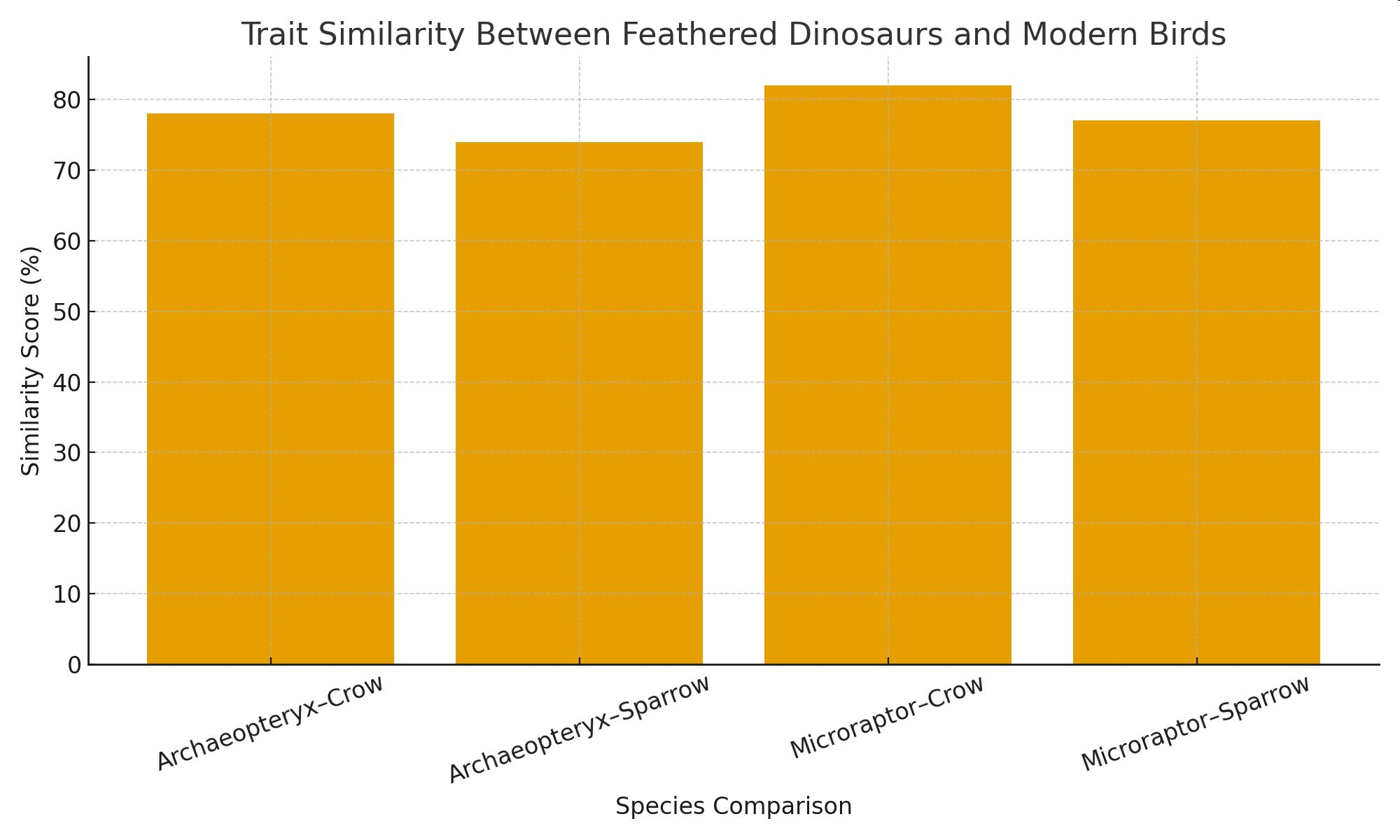
Comparison | Trait Similarity Score (%) |
|---|
Archaeopteryx to Crow | 78 |
Archaeopteryx to Sparrow | 74 |
Microraptor to Crow | 82 |
Microraptor to Sparrow | 77 |
Graph of Information - Figure 2.