Cichlid Radiations in East African Rift Lakes
The cichlid fishes of East Africa’s Rift Lakes - particularly Lakes Victoria, Malawi, and Tanganyika - represent one of the most dramatic examples of how environmental changes can lead to increases in population size, the emergence of new species, and the extinction of others. These lakes contain hundreds of closely related cichlid species, many of which evolved in a relatively short period of time.
Millions of years ago, tectonic activity created deep freshwater lakes throughout the Rift Valley. These new aquatic environments offered open ecological space with little competition. As cichlids colonized the lakes, they encountered numerous unoccupied niches - different food sources, depths, habitats, and spawning sites. This ecological opportunity allowed natural selection to act on existing variation, pushing populations toward specialization. Over time, ancestral cichlid species split into multiple lineages, each adapting to different roles within the lakes. This process, known as adaptive radiation, explains how hundreds of species emerged from relatively few ancestors.
Environmental conditions continue to shape cichlid diversity today. For instance, changes in water clarity due to pollution or algal blooms can affect mate choice, which historically relied on bright coloration patterns. When waters become murky, females have difficulty distinguishing among male color variants. This can lead previously isolated species to interbreed, reducing diversity. In contrast, when environmental conditions stabilize and improve, species may again diversify based on visual cues.
Some cichlid species have increased dramatically in number under changing conditions. For example, species that thrive in warm, shallow, algae-rich water often explode in population when eutrophication increases their preferred resources. Meanwhile, deeper-water species with narrow habitat requirements decline when oxygen levels fall or when invasive species alter food webs. These changes demonstrate how environmental pressures can favor certain traits while disadvantaging others.
Historical lake-level changes - periods when lakes dried partially or merged - also played a major role in both speciation and extinction. When water levels fell, populations became isolated in smaller basins, accelerating divergence. When levels rose again, these newly formed species sometimes reconnected but remained distinct enough to maintain separate identities.
Diagram 1.
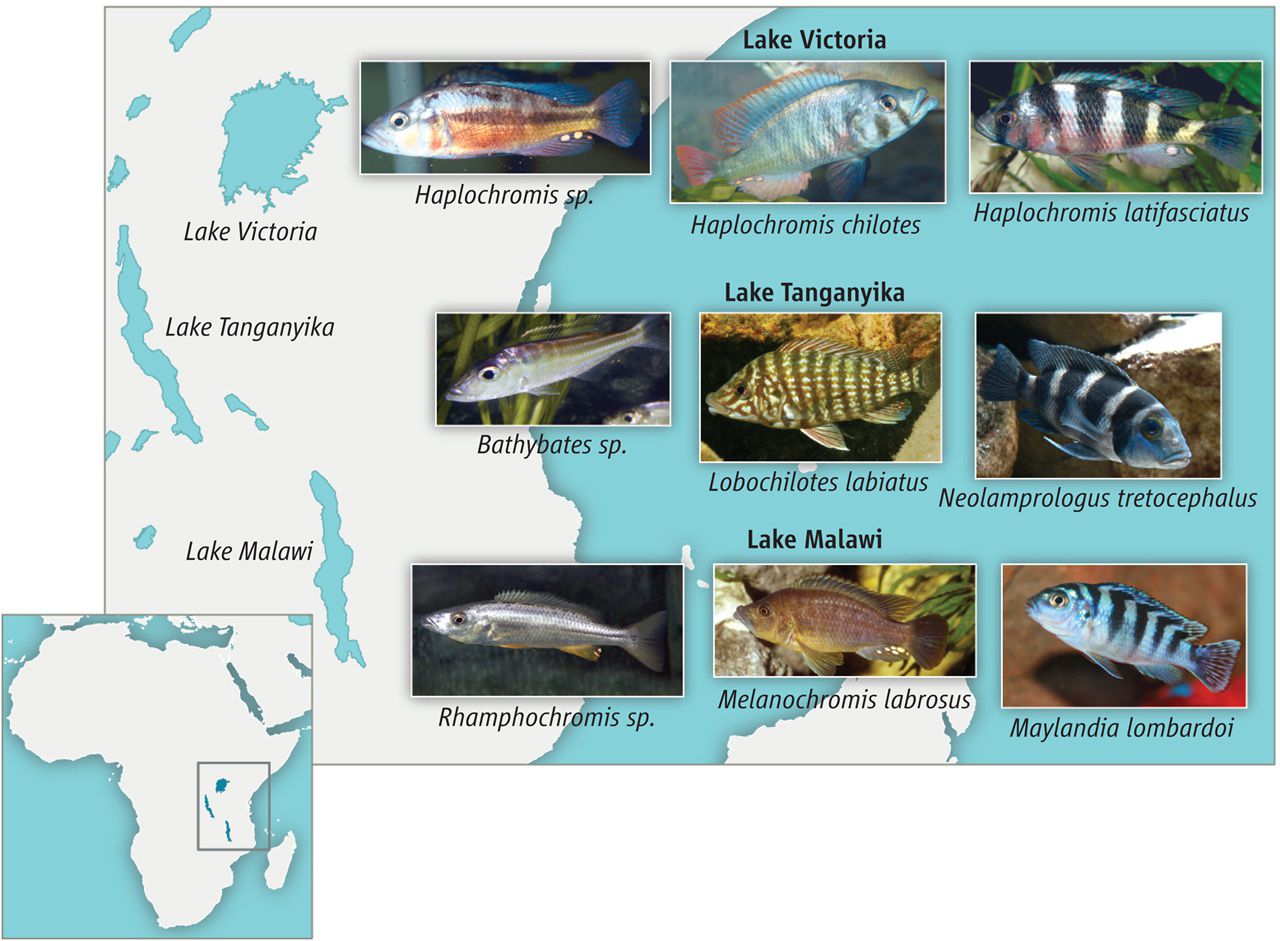 Source: https://ar.inspiredpencil.com/pictures-2023/adaptive-radiation-cichlids
Table 1.
Lake | Estimated Age (million years) | Number of Cichlid Species |
|---|
Lake Victoria | 0.015 | 500 |
Lake Malawi | 1.5 | 800 |
Lake Tanganyika | 9 | 250 |
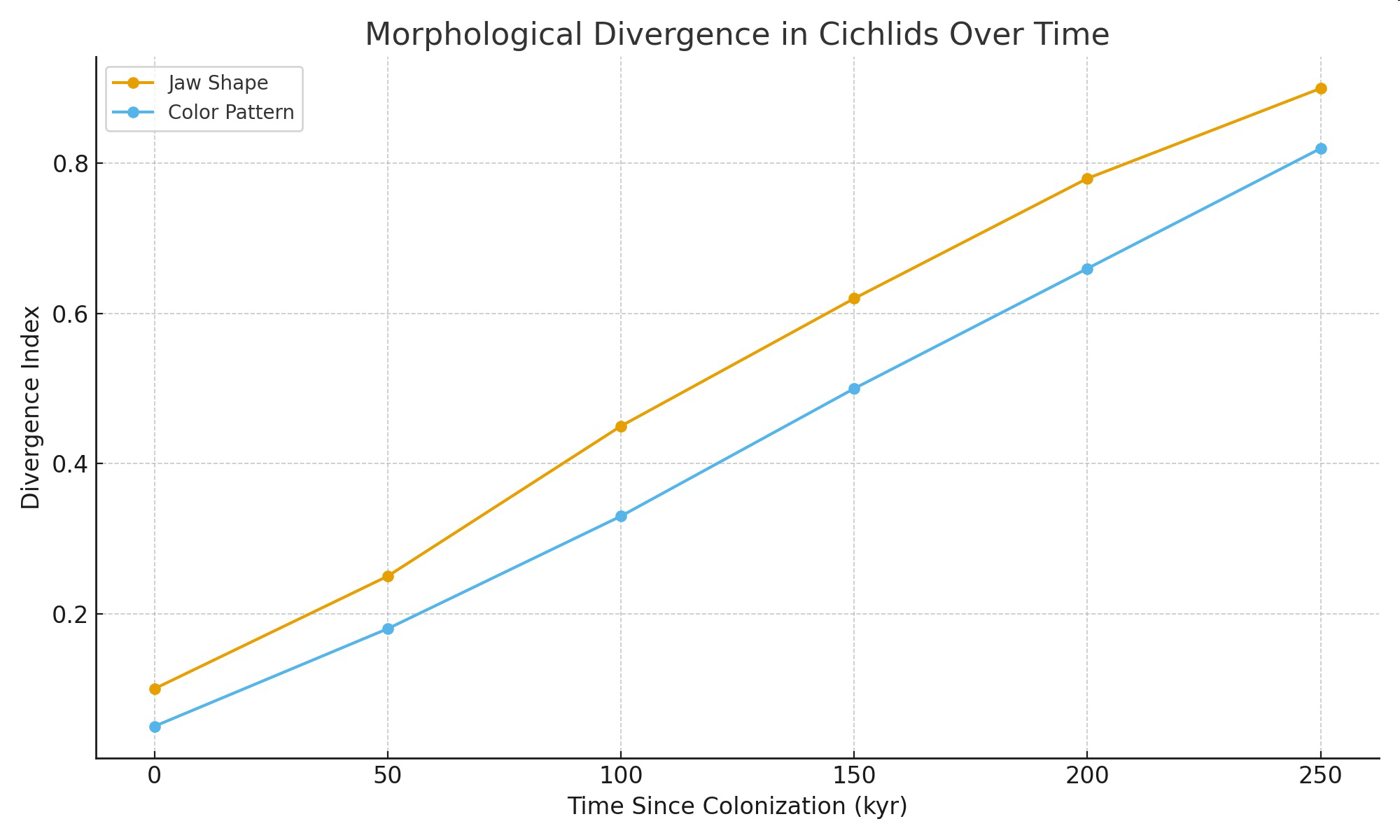
Table 2.
Time Since Colonization (kyr) | Jaw Shape Divergence Index | Color Pattern Divergence Index |
|---|
0 | 0.1 | 0.05 |
50 | 0.25 | 0.18 |
100 | 0.45 | 0.33 |
150 | 0.62 | 0.5 |
200 | 0.78 | 0.66 |
250 | 0.9 | 0.82 |
Graph of Information - Figure 2.