Darwin’s Finches: Beak Variation, Competition, and Survival
Darwin’s finches on the Galápagos Islands are one of the clearest real-world examples demonstrating the four factors that drive evolution. These finches vary in beak size and shape, and those differences affect how well each bird can access food resources such as seeds, insects, or cactus nectar. Because the islands experience unpredictable environmental changes, especially periodic droughts, competition for food often becomes intense. Tracking finch populations over multiple years provides strong evidence for how potential reproduction, heritable variation, competition, and differential survival interact to drive evolutionary change.
Diagram 1.
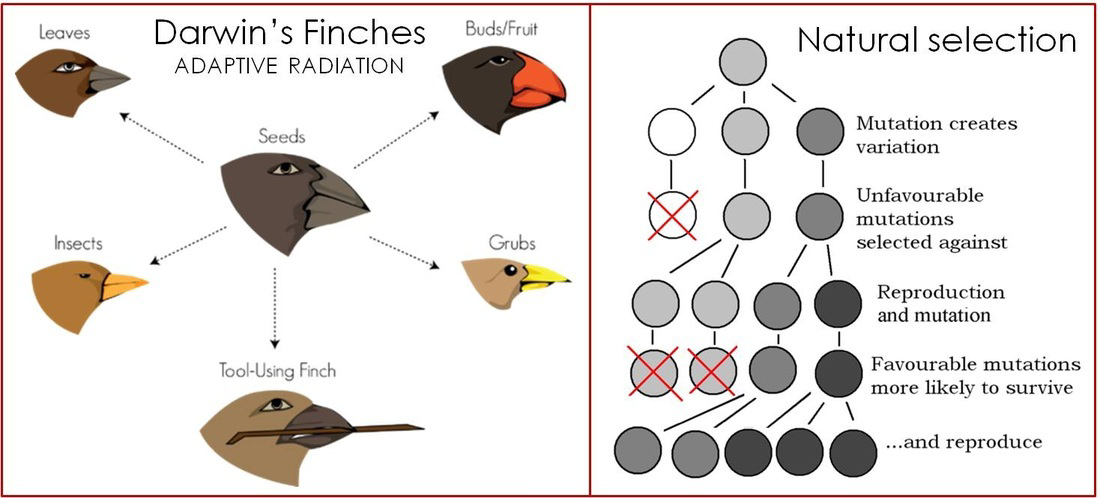 Source: https://loretocollegebiology.weebly.com/evolution--natural-selection.html
Finches have a high potential to increase in number. Each breeding pair can produce several offspring per year, but only a fraction survive to adulthood. This difference between potential reproduction and actual survival is essential: it creates competition, because more offspring are produced than the environment can support.
Finches also exhibit heritable genetic variation, especially in beak depth and width. These traits are influenced by multiple genes, and parents pass these variations to their offspring. Because beak size affects the ability to crack certain seed types, variation directly impacts survival. In years with abundant small seeds, finches with smaller beaks thrive. However, during drought conditions, when only large, tough seeds remain, birds with larger beaks survive at higher rates.
This leads to the third factor: competition for limited resources. In drought years, when food becomes scarce, individuals compete intensely for the remaining seeds. Observational data show that birds with deeper, stronger beaks win this competition more often, giving them better chances of surviving and reproducing.
Finally, evolution occurs when organisms better suited to the environment leave more offspring. After drought events, the proportion of large-beaked finches increases noticeably. Their survival advantage results in greater reproductive success and a gradual shift in the population. Over multiple generations, these shifts accumulate, demonstrating how natural selection produces measurable evolutionary change.
Long-term studies of Darwin’s finches show that beak-size distribution can shift dramatically after just one severe drought. Data collected over decades confirm that these shifts are repeatable, consistent, and genetically based.
Diagram 2.
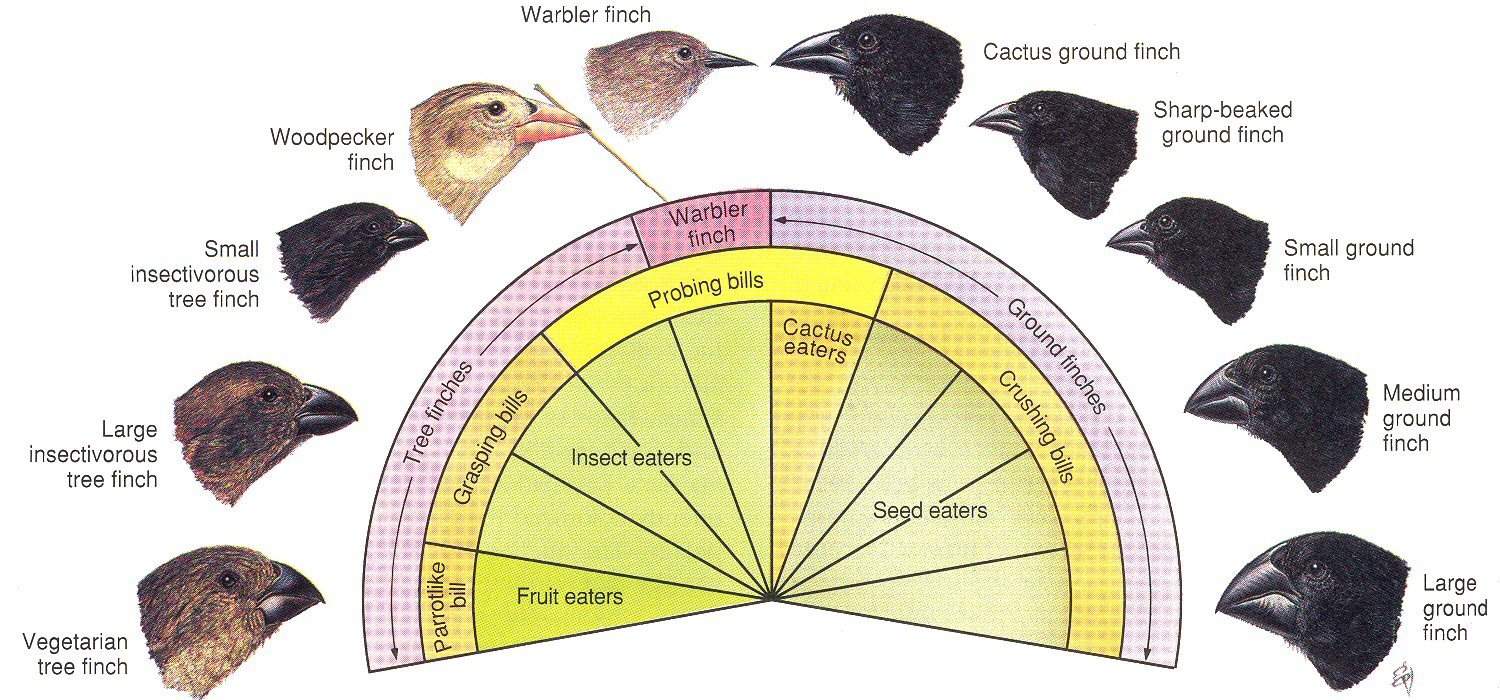
Source: https://www.mun.ca/biology/scarr/Adaptation_in_Darwins_Finches.html
Table 1.
Generation | Allele X Frequency (%) | Allele Y Frequency (%) |
|---|
1 | 10 | 90 |
2 | 12 | 88 |
3 | 15 | 85 |
4 | 18 | 82 |
5 | 22 | 78 |
6 | 25 | 75 |
Graph of Information - Figure 1.
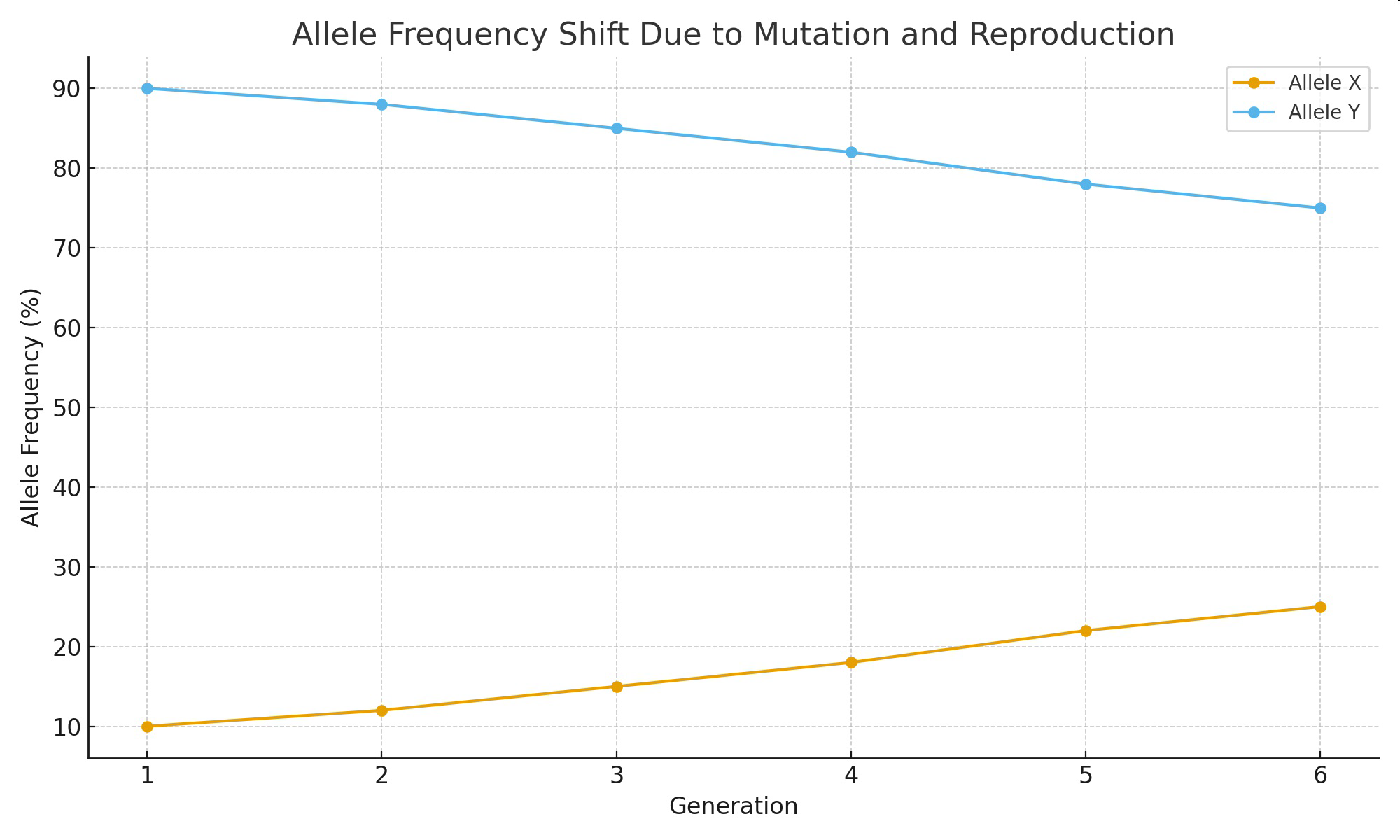
Table 2.
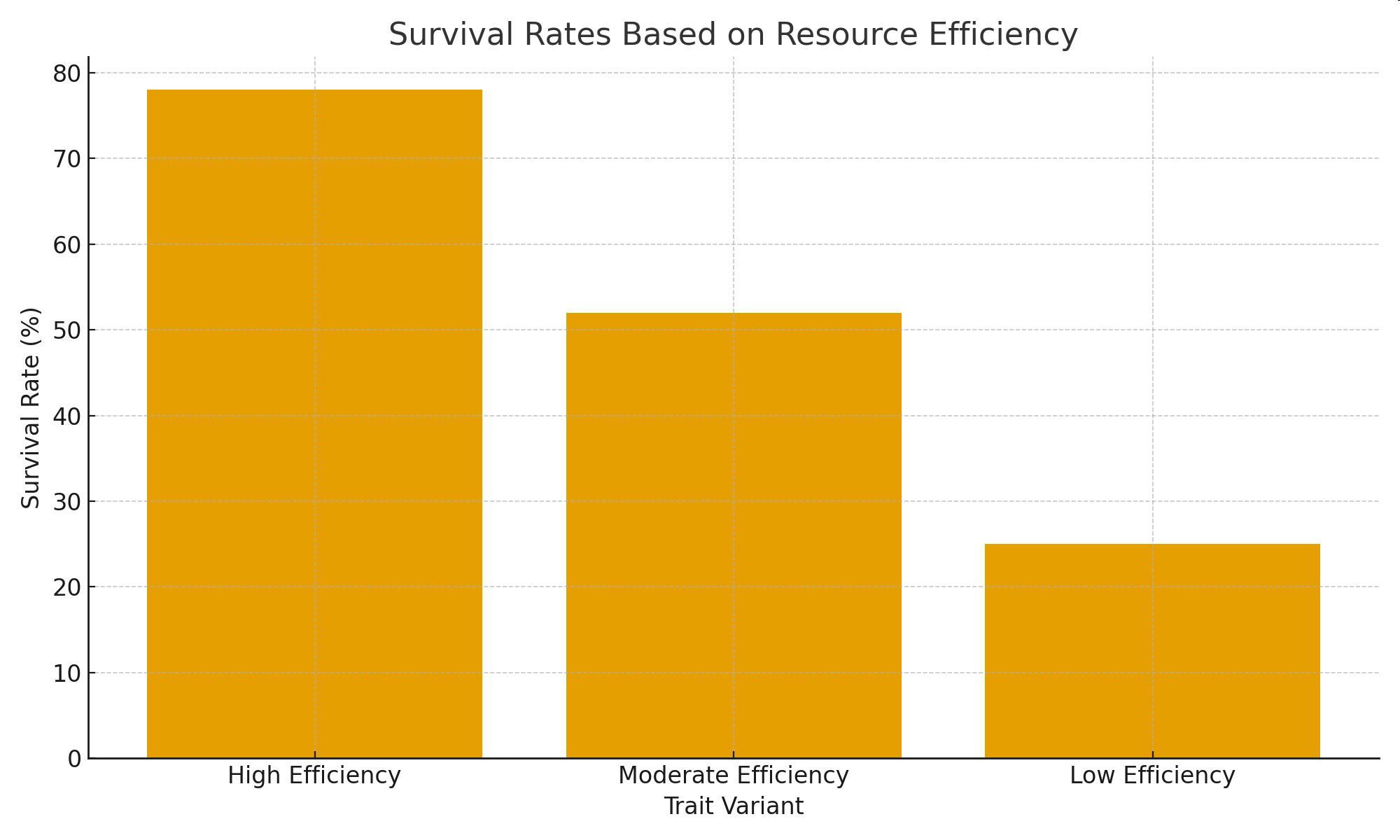
Trait Variant | Survival Rate (%) |
|---|
High Efficiency | 78 |
Moderate Efficiency | 52 |
Low Efficiency | 25 |
Graph of Information - Figure 2.