Evolution of Seasonal Influenza
Influenza viruses evolve rapidly, making them one of the clearest real-world examples of how advantageous heritable traits increase in frequency within a population. When a flu virus infects a person, it replicates extremely quickly, producing thousands of copies within hours. Because the virus lacks high-fidelity proofreading, mutations frequently occur in the genes that code for hemagglutinin (H) and neuraminidase (N), the proteins that sit on the virus’s surface. These proteins are important because they allow the virus to bind, enter, and exit human cells.
Diagram 1.
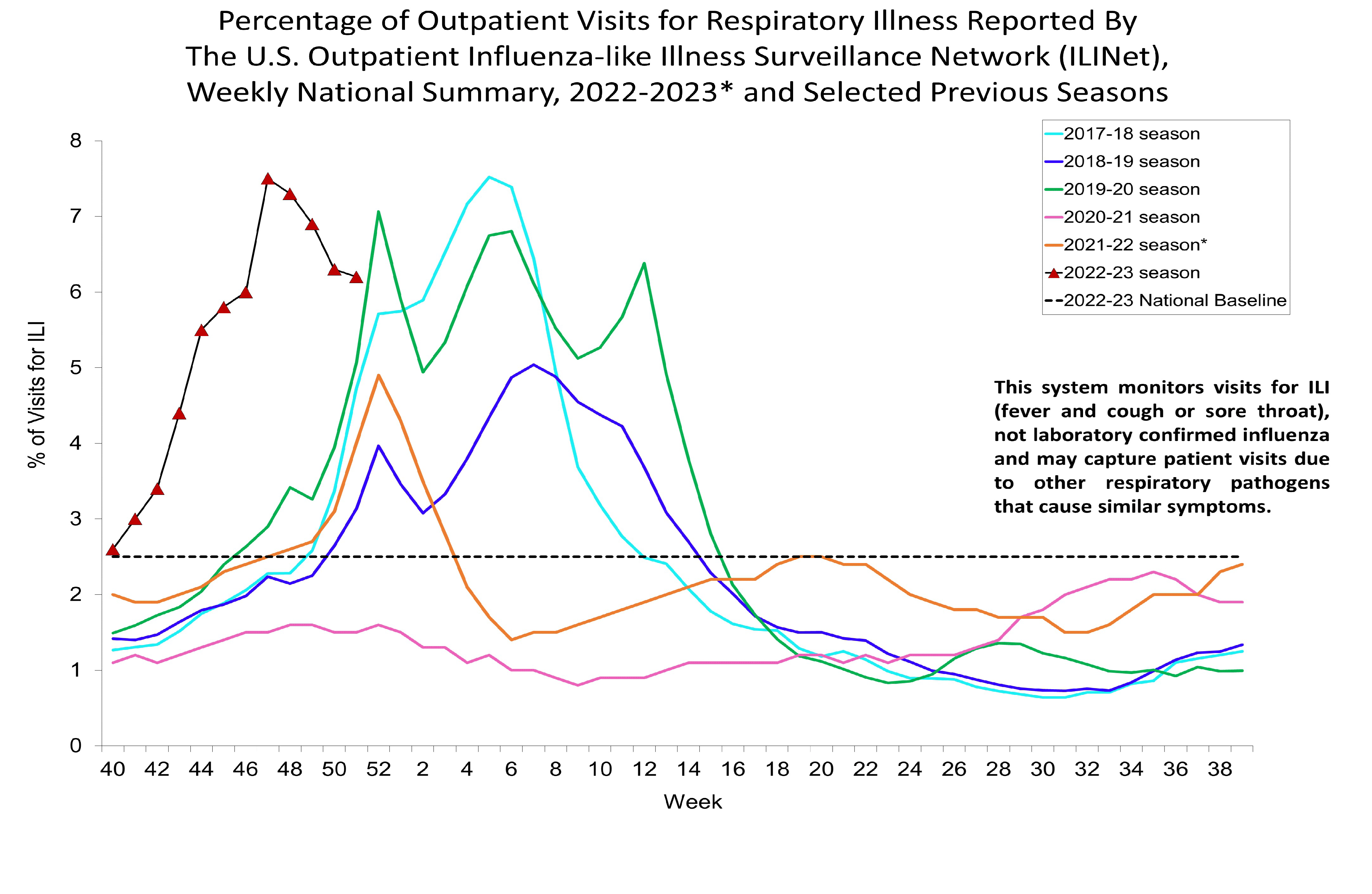 Source: https://www.cdc.gov/flu/weekly/weeklyarchives2022-2023/ILI51.html
Most mutations either do nothing or weaken the virus, lowering its chance of spreading. But occasionally, a mutation alters the H or N protein in a way that helps the virus survive the human immune system. This advantage occurs because people’s immune systems recognize older flu strains more easily. A mutated virus strain that looks “new” to the immune system is less likely to be neutralized, giving it a higher probability of successful infection and transmission.
As flu viruses spread through human populations, different strains compete for hosts. Data show that strains with mutations allowing faster replication, more efficient transmission, or immune evasion begin to increase in frequency relative to other strains. Over several weeks of a flu season, the proportion of a successful strain may rise dramatically. This phenomenon is known as antigenic drift, and it is the primary reason why flu vaccines must be updated each year.
Statistical tools help scientists analyze these shifts. By sequencing viral samples collected from patients over time, researchers measure how often a particular strain appears. When charts show that one strain’s frequency rises while another declines, it provides strong evidence that the successful strain has a selective advantage. Probability models help predict which traits will spread based on their observed growth rates and transmissibility.
Because influenza populations are enormous and reproduce quickly, small advantages compound rapidly. A strain that transmits even 10% better can become the dominant variant within weeks. Similar patterns are found across continents, where the global spread of successful strains aligns closely with statistical predictions.
Diagram 2.
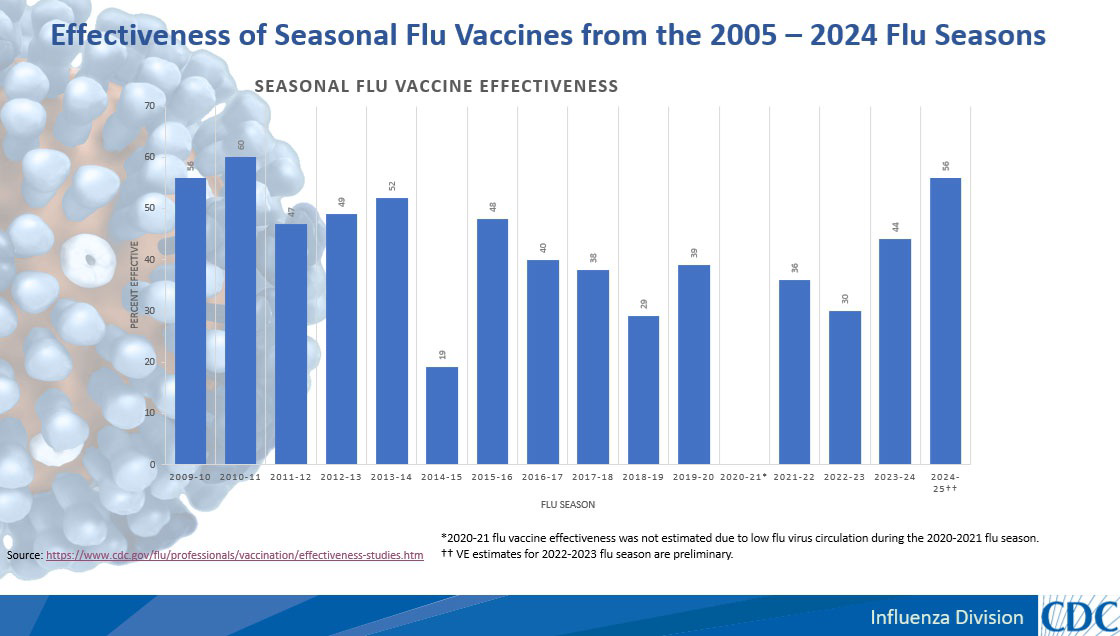
Source: https://www.massgeneralbrigham.org/en/about/newsroom/articles/annual-flu-shot
Table 1.
Flu Season | Strain A H1N1 (%) | Strain A H3N2 (%) | Strain B (%) |
|---|
2016 - 17 | 30 | 55 | 15 |
2017 - 18 | 42 | 48 | 10 |
2018 - 19 | 38 | 50 | 12 |
2019 - 20 | 45 | 40 | 15 |
2020 - 21 | 52 | 33 | 15 |
2021 - 22 | 57 | 30 | 13 |
2022 - 23 | 63 | 25 | 12 |
Graph of Information - Figure 1.
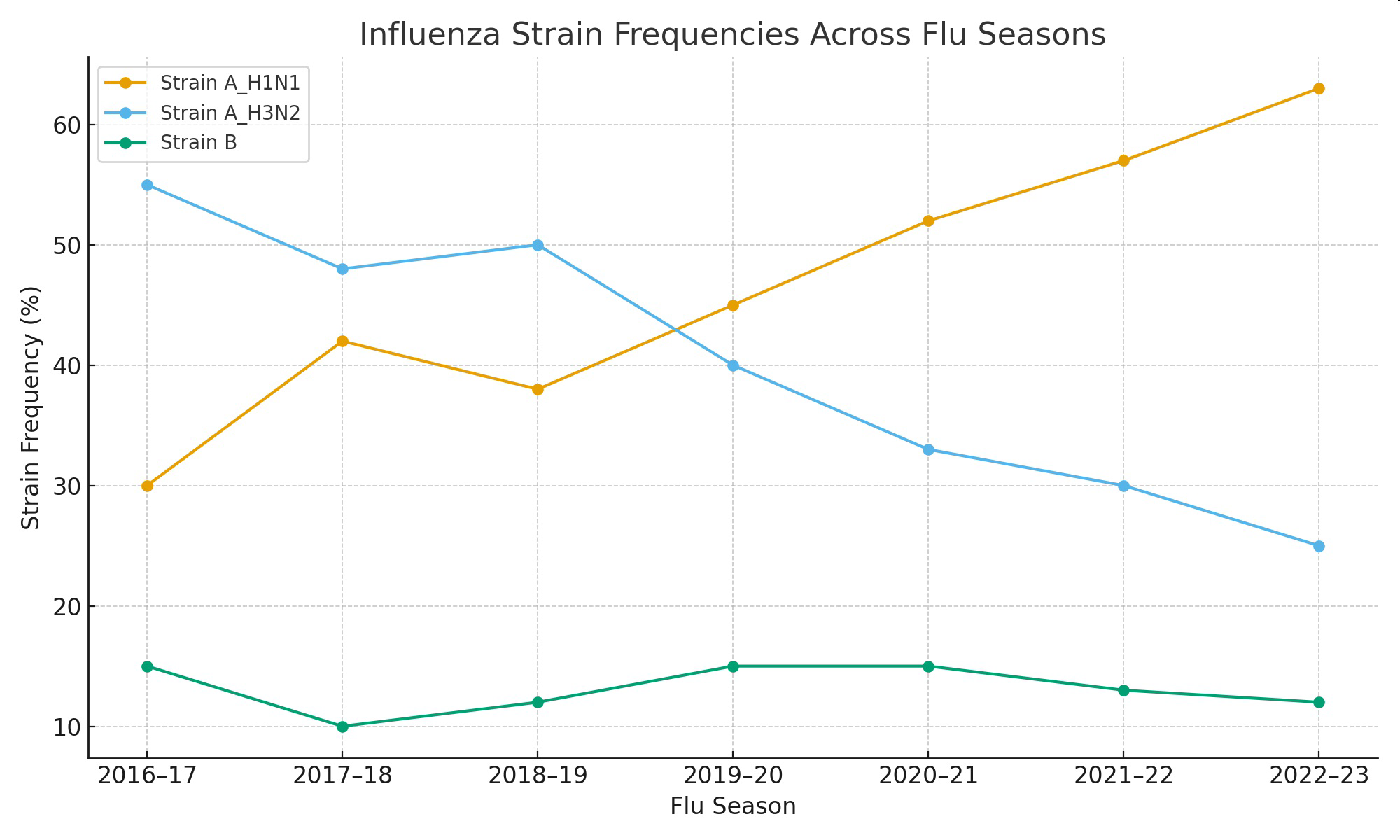
Table 2.
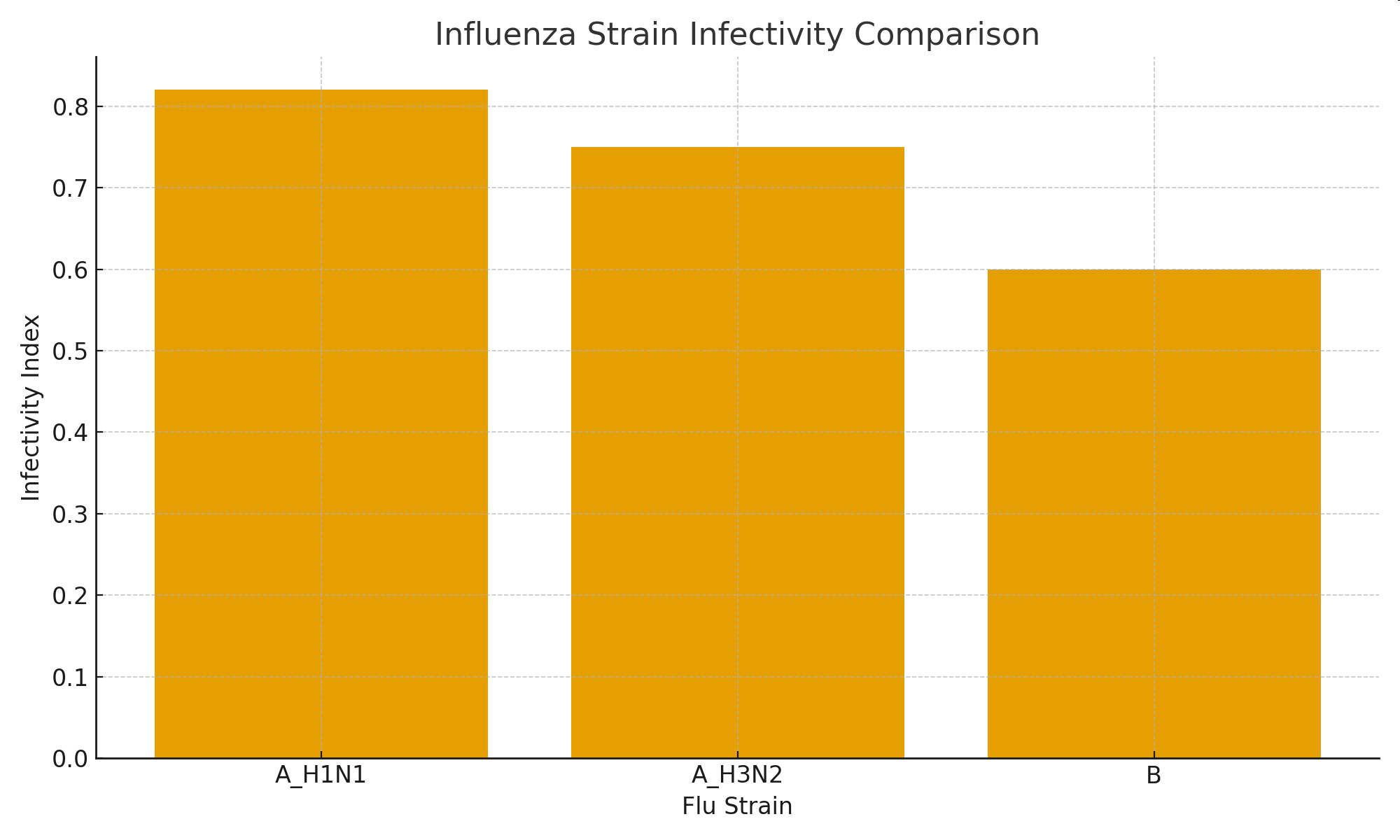
Flu Strain | Infectivity Index | Immune Escape Score |
|---|
A H1N1 | 0.82 | 0.78 |
A H3N2 | 0.75 | 0.65 |
B | 0.6 | 0.5 |
Graph of Information - Figure 2.