Herbicide-Resistant Weeds in Crop Fields
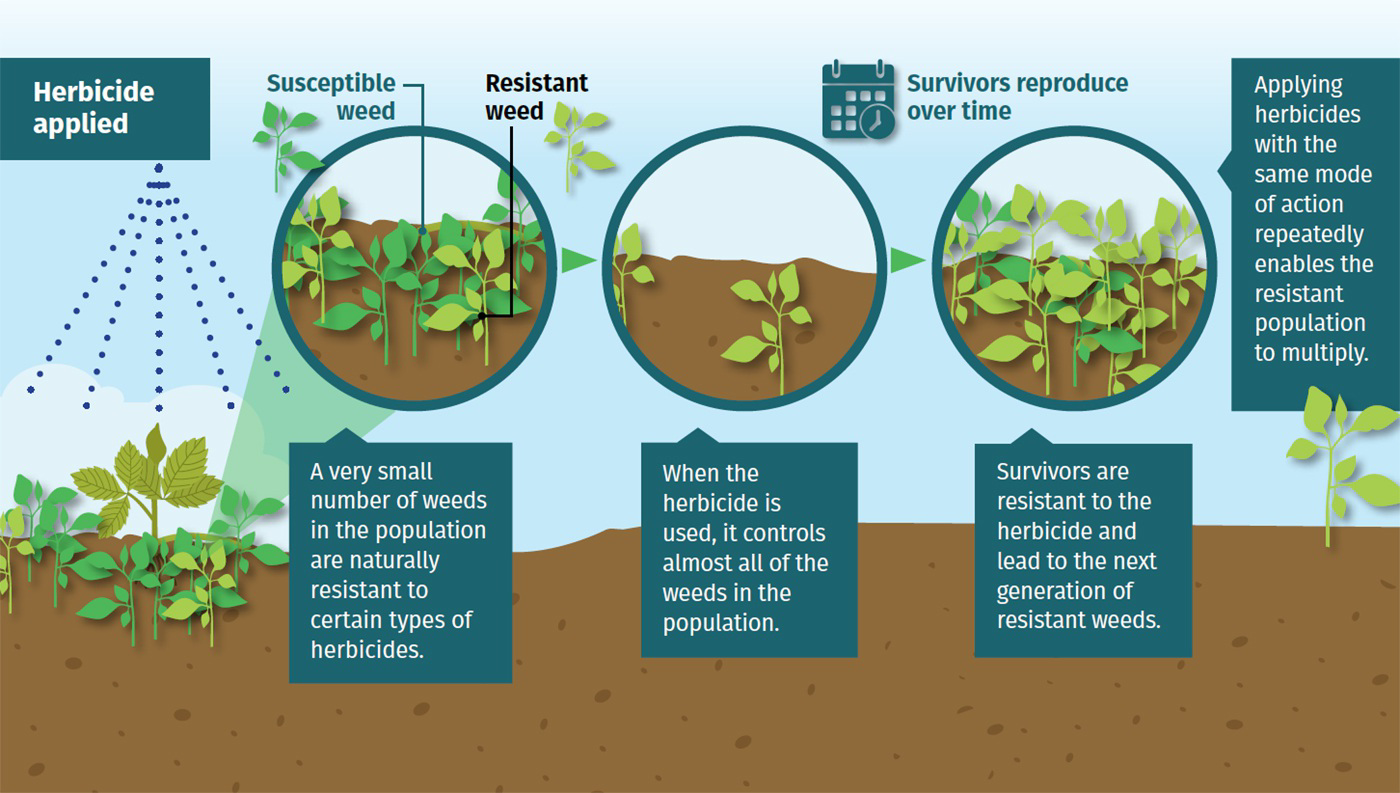
Diagram 1.
Source:
https://manageresistancenow.ca/weeds/wfs-herbicide-resistance-101/
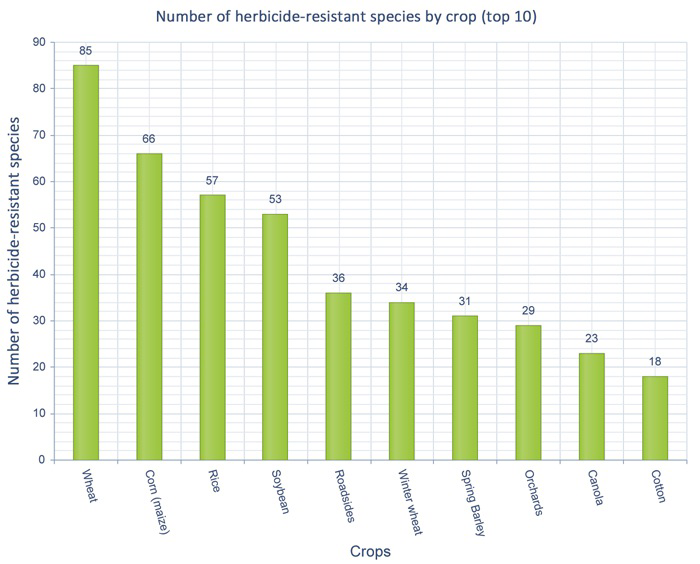
In modern agriculture, farmers often rely on herbicides to control weeds that compete with crops for light, water, and nutrients. One widely used class is glyphosate-based herbicides, sprayed over large fields to kill most broadleaf plants. When glyphosate was first introduced, it was extremely effective, and weed populations declined sharply. However, over time, some weed species - such as Palmer amaranth and ragweed - evolved herbicide resistance. This real-world case shows how organisms with an advantageous heritable trait can increase in proportion compared to those lacking the trait.
Diagram 2.
Source:
https://sagrainmag.co.za/2024/03/04/best-practice-to-curb-herbicide-resistant-weeds/
Within any large weed population, there is usually some genetic variation due to mutation and sexual reproduction. Even before herbicide use, a few individual plants may carry alleles that make them less sensitive to glyphosate – for example, by slightly altering the herbicide’s target protein, increasing detoxification, or changing how the chemical is taken up. Initially, these resistant individuals are rare, and their frequency in the population is low.
When farmers apply herbicide, the environment changes dramatically. Most susceptible plants die, while individuals with resistance alleles are more likely to survive and produce seeds. As they reproduce, their offspring inherit the resistance trait. Over several generations of repeated spraying, the proportion of resistant plants in the field increases. Eventually, farmers may notice that the herbicide “doesn’t work as well” because resistant weeds now make up a large share of the population.
Scientists study these changes using statistics and probability. By sampling fields each year, they can estimate the frequency of resistant and susceptible plants. Line graphs can show resistant plants increasing from a small fraction (for example, 2–5%) to a majority (over 60–70%) within a decade. Researchers may also compare fields with heavy herbicide use to fields where herbicide is rarely used; resistant weeds are much more common where selection pressure is strong.
Probability helps explain why resistant plants become more common. In each generation, individuals with the resistance trait have a higher probability of surviving and reproducing than susceptible individuals. This difference changes the expected proportion of each trait in the next generation. Over time, the repeated advantage for resistant plants leads to a predictable shift in trait frequencies.
Table 1.
Year of Herbicide Use | Resistant Weeds (%) | Susceptible Weeds (%) |
|---|
1 | 5 | 95 |
2 | 8 | 92 |
3 | 12 | 88 |
4 | 20 | 80 |
5 | 32 | 68 |
6 | 45 | 55 |
7 | 60 | 40 |
8 | 74 | 26 |
Graph of Information - Figure 1.
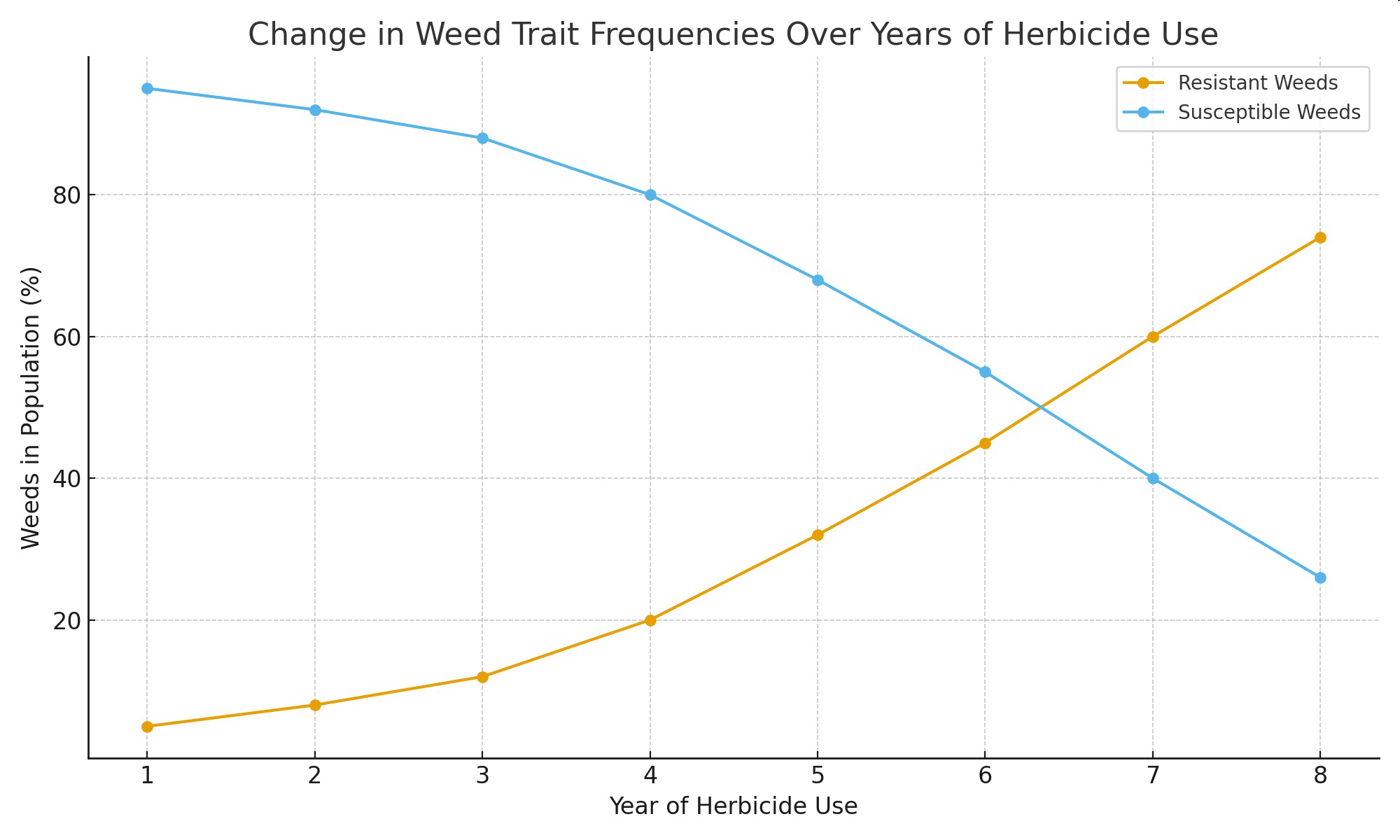
Table 2.
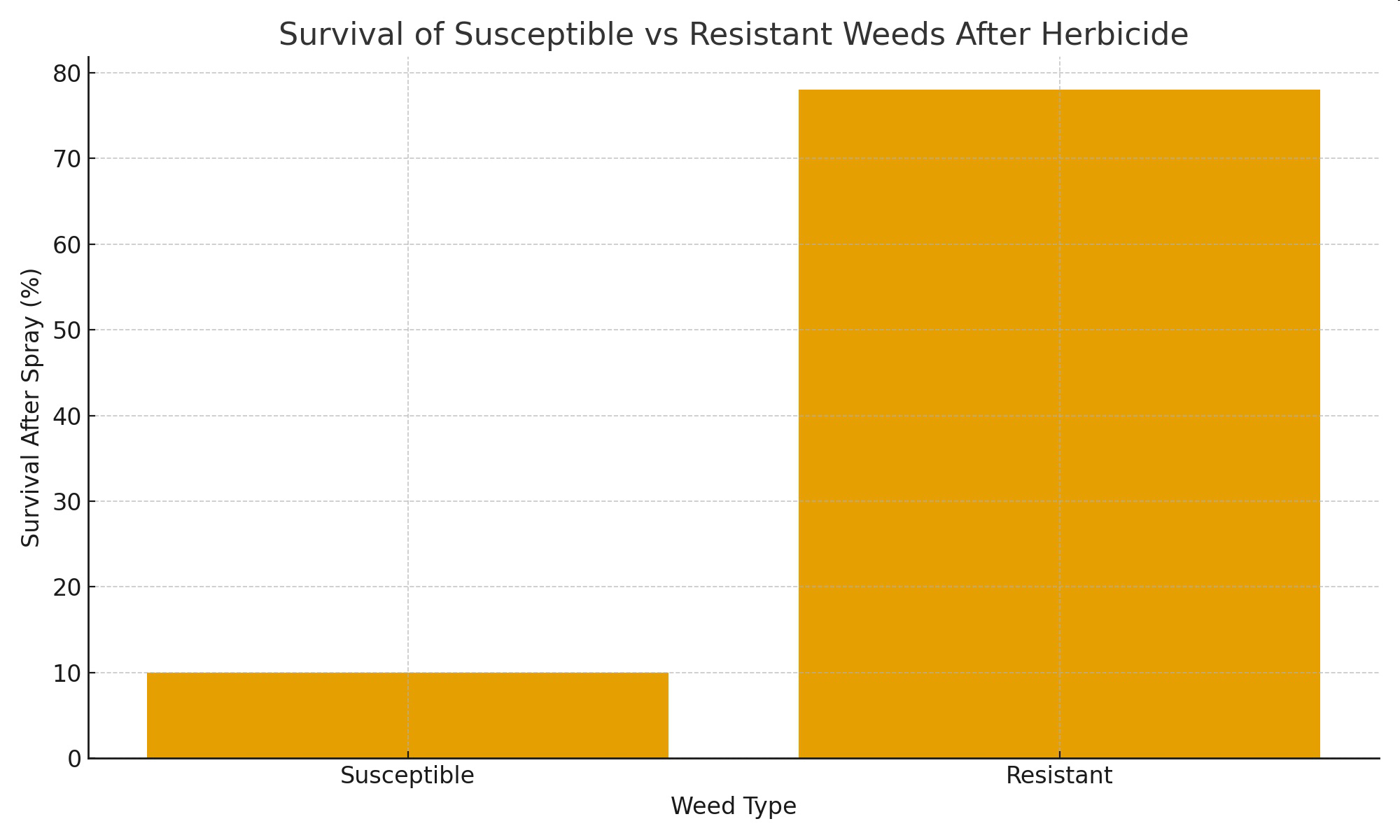
Weed Type | Survival After Spray (%) | Average Seeds per Plant |
|---|
Susceptible | 10 | 50 |
Resistant | 78 | 180 |
Graph of Information - Figure 2.