Human & Chimpanzee Chromosome Fusion
One of the strongest pieces of genetic evidence supporting the common ancestry of humans and other primates is the structure of human chromosome 2. Humans have 46 chromosomes, while chimpanzees, gorillas, and orangutans each have 48. For many years, scientists questioned why humans had fewer chromosomes than our closest relatives. The discovery that human chromosome 2 is actually the result of a fusion between two ancestral ape chromosomes provided a major line of empirical evidence for human–chimpanzee shared ancestry.
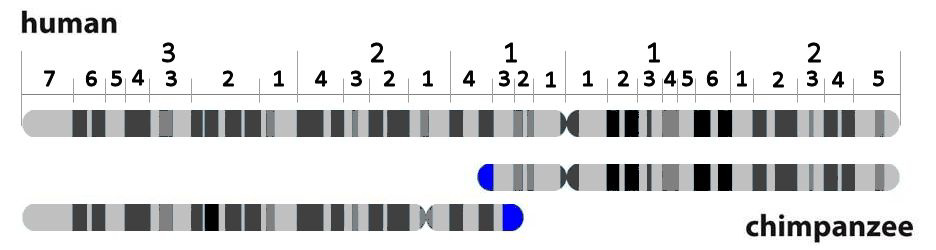
Diagram 1.
 Source:
https://chimpanzee.onrender.com/human-vs-chimp-chromosomes.html
Chromosomes in primates have specific banding patterns, gene arrangements, and structural markers. When researchers compared human chromosome 2 to chimpanzee chromosomes, they noticed that two chimpanzee chromosomes – 2A and 2B – aligned nearly perfectly with different halves of human chromosome 2. This indicates that humans did not lose a chromosome; instead, two chromosomes fused end-to-end in a past ancestor.
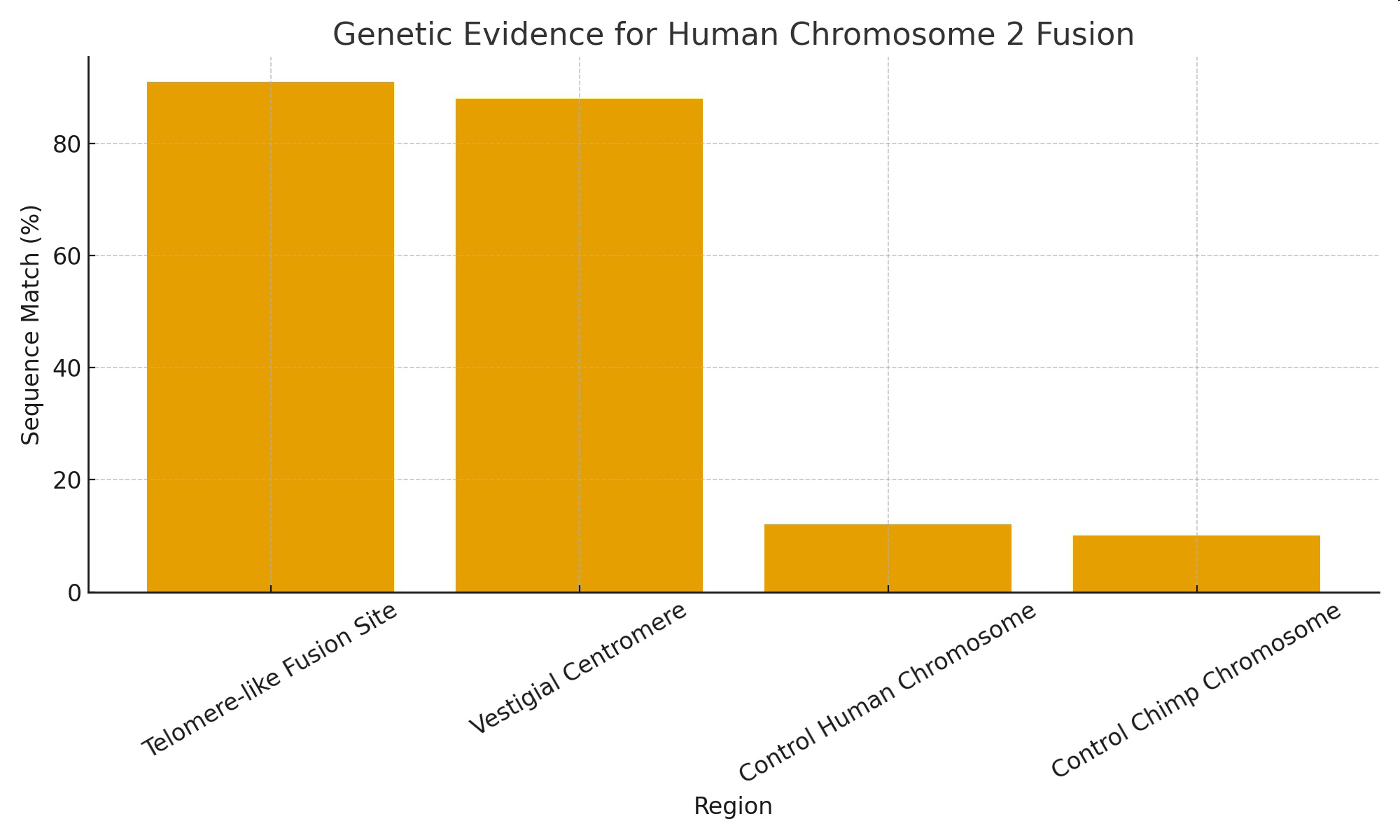
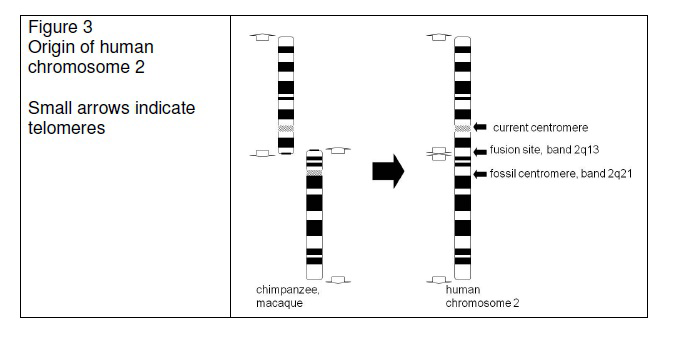
Further examination revealed additional evidence. At the fusion site in the center of human chromosome 2, scientists found telomere-like repeating sequences. Telomeres normally appear at chromosome ends, not in the middle. Their presence in internal regions of chromosome 2 suggests that two chromosome ends were joined together in an ancient fusion event.
Another key piece of evidence is the presence of a vestigial second centromere. Chromosomes typically have only one centromere, but human chromosome 2 contains a primary, functional centromere as well as remnants of a second, inactive one – exactly what would be expected if two ancestral chromosomes fused.
Diagram 2.
 Source:
https://mbsbio2.blogspot.com/2013/09/dna-and-choromosomal-evidence-in-chimps.html
Genetic sequencing strengthens this conclusion even more. Humans and chimpanzees share approximately 98–99% DNA similarity, and when researchers compare gene order and sequence around the fusion region, they find near-identical alignment with chimpanzee chromosomes 2A and 2B. The arrangement of genes, regulatory sequences, and markers all match, confirming shared ancestry.
Table 1.
Comparison | Chromosome 2 Banding Similarity (%) |
|---|
Human to Chimp | 98 |
Human to Gorilla | 94 |
Chimp to Gorilla | 95 |
Graph of Information - Figure 1.
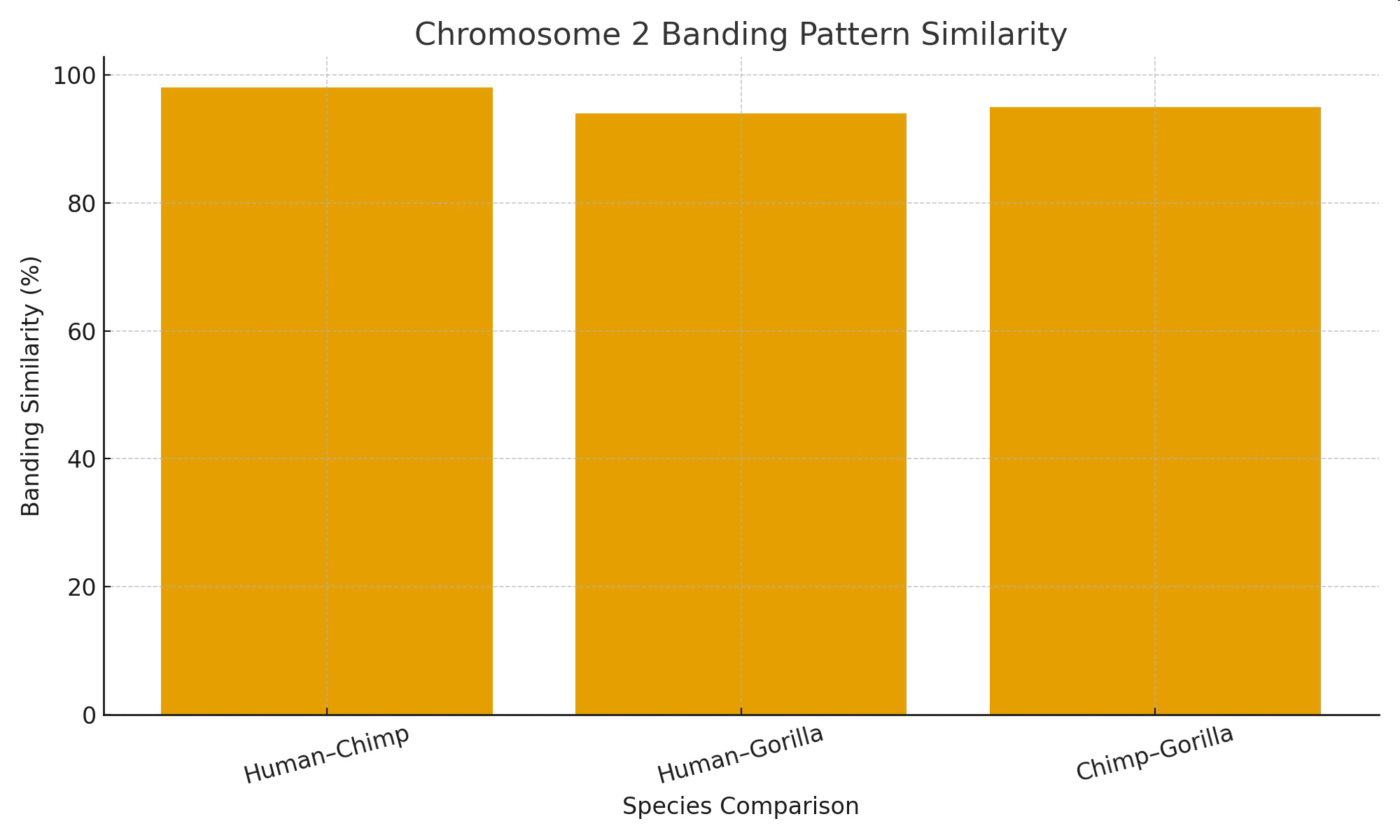
Table 2.
Region | Sequence Match to Expected Fusion Pattern (%) |
|---|
Telomere-like Fusion Site | 91 |
Vestigial Centromere | 88 |
Control Human Chromosome | 12 |
Control Chimp Chromosome | 10 |
Graph of Information - Figure 2.