Insecticide Resistance in Mosquito Populations
Mosquito populations provide a clear real-world example of how evolution results from the interaction of four factors: the potential for species to increase in number, genetic variation, competition for limited resources, and differential survival and reproduction. In many regions, mosquito control programs use insecticides to reduce populations and limit the spread of diseases such as malaria, dengue, and West Nile virus. However, mosquito numbers often rebound because some individuals possess heritable traits that allow them to survive exposure to insecticides. Over generations, this leads to a measurable increase in insecticide-resistant mosquitoes.
Mosquitoes have extremely high reproductive potential. A single female can lay hundreds of eggs in her lifetime, and populations can grow exponentially under favorable conditions. This creates large populations with high genetic diversity. Mutations, along with the reshuffling of alleles during sexual reproduction, produce individuals with slightly different traits - including differences in detoxification enzyme activity, cuticle thickness, or nerve-cell receptor structure that affect insecticide sensitivity.
When an insecticide is applied, many mosquitoes die, but not all. Individuals with genetic variants that help them detoxify or tolerate the chemical survive at higher rates. Because resources such as breeding sites and food become more available after insecticide application reduces population density, survivors experience less competition. This gives resistant individuals an even greater reproductive advantage.
Over time, the proportion of resistant mosquitoes increases. Scientists measure this by tracking allele frequencies and survival rates across generations. Population genetics data often show a steady rise in resistance-associated alleles following repeated insecticide exposures. This demonstrates the fourth factor of evolution: organisms better able to survive and reproduce in their environment proliferate.
Multiple lines of evidence support this process. Biological assays show higher survival rates in resistant strains compared to susceptible ones. Molecular studies identify specific mutations - such as kdr (knockdown resistance) mutations - linked to reduced insecticide sensitivity. Field surveys reveal geographic patterns where resistance increases in areas with heavy insecticide use. Together, these findings demonstrate how evolution is driven by genetic variation, population growth, resource limitation, and differential reproductive success.
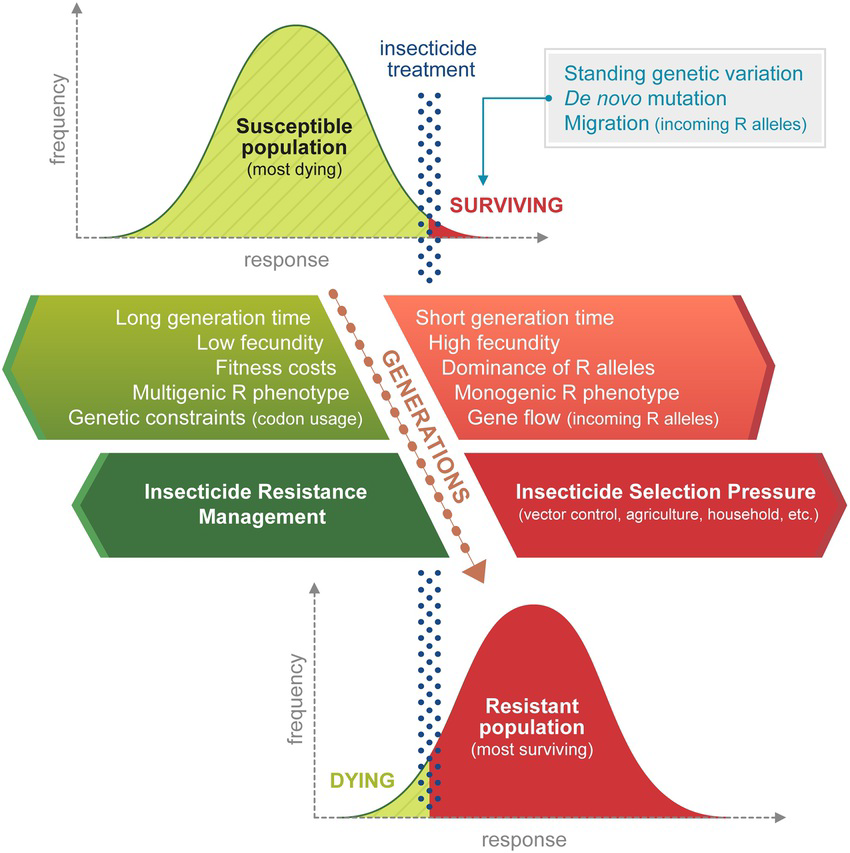
Diagram 1.
 Source:
https://www.researchgate.net/figure/Factors-affecting-the-selection-of-insecticide-resistance-in-insect-populations
Table 1.
Generation | Resistant Allele Frequency (%) | Non-Resistant Allele Frequency (%) |
|---|
1 | 5 | 95 |
2 | 9 | 91 |
3 | 15 | 85 |
4 | 24 | 76 |
5 | 38 | 62 |
6 | 55 | 45 |
7 | 71 | 29 |
Graph of Information - Figure 1.
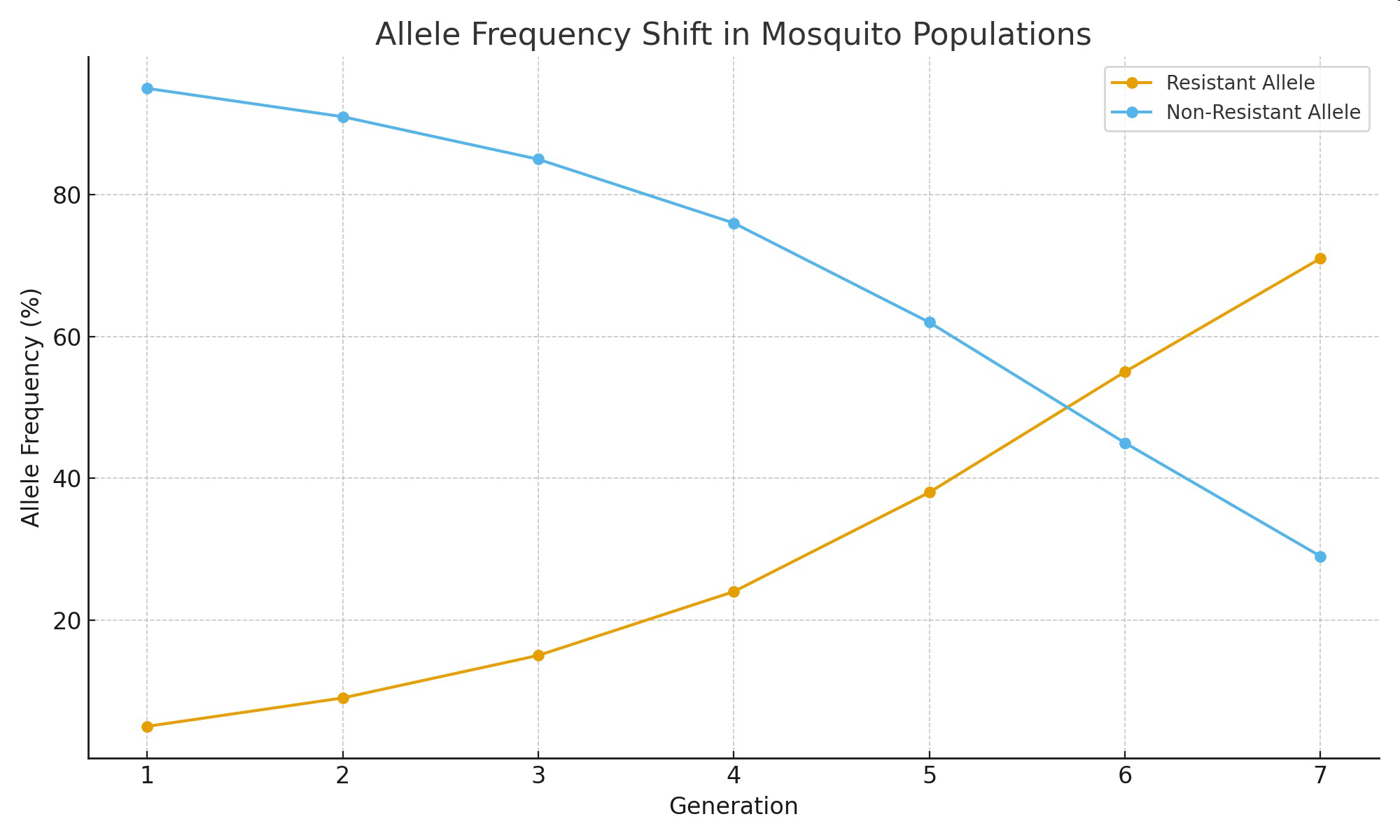
Table 2.
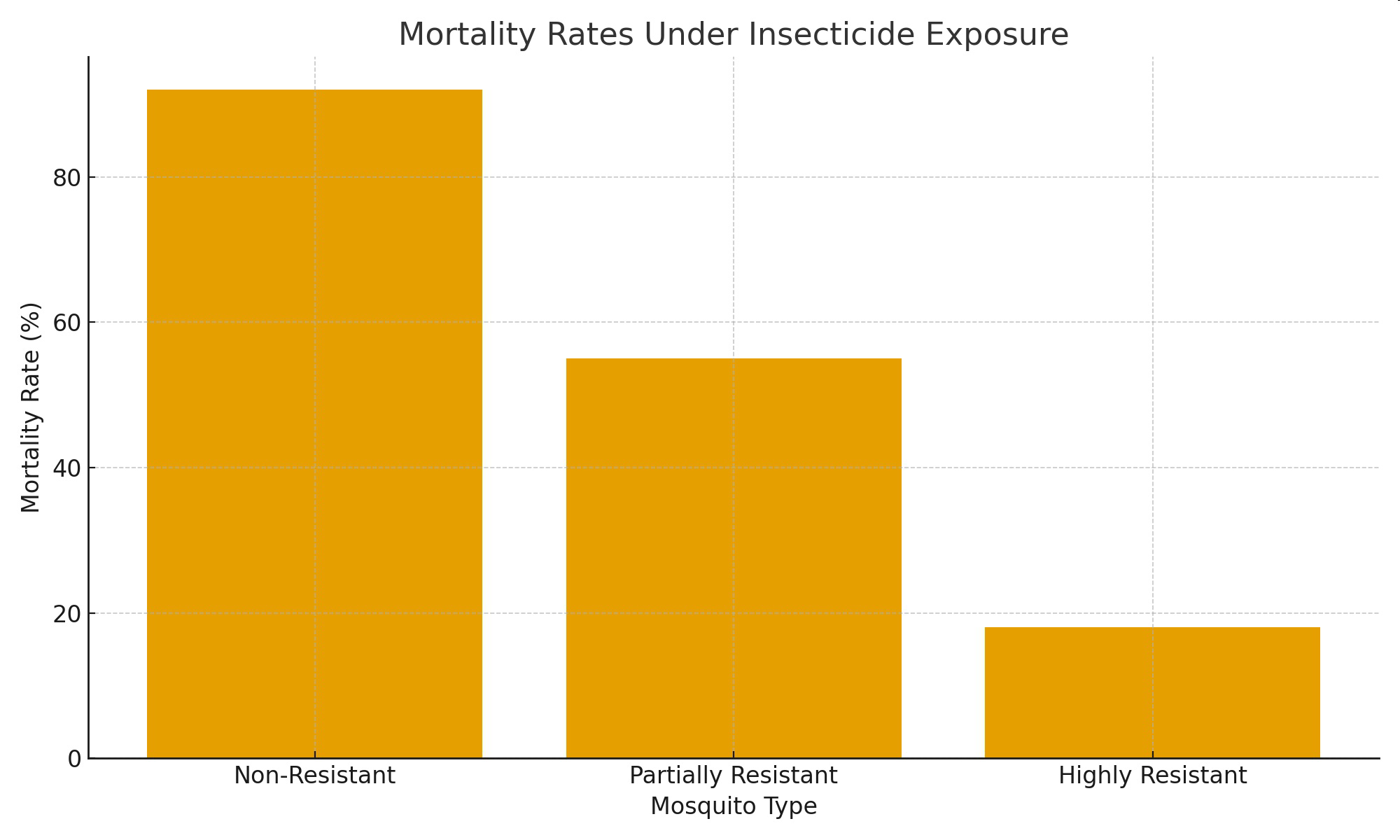
Mosquito Type | Mortality Rate (%) |
|---|
Non - Resistant | 92 |
Partially Resistant | 55 |
Highly Resistant | 18 |
Graph of Information - Figure 2.