Twa kɔ nsɛm atitiriw so
Log in
Sign up for FREE
arrow_back
Laabri

First Semester Review Diagnostic

star
star
star
star
star
Last updated 2 months ago
77 Nsɛmmisa
Hyɛ no nsow a efi ɔkyerɛwfo no hɔ:

This is a set of questions to serve as a first semester benchmark for a high school biology class. This can help you to know what students remember toward the end of the year when you are getting ready to spend review time with the students for state testing.

1
1
1
1
1
1
1
1
1
1
1
1
1
1
1
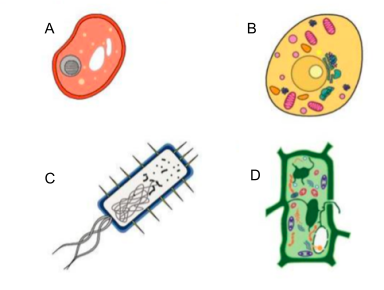
Which of the following images depicts a plant cell? (U2:LT2)

Four cell diagrams labeled A, B, C, and D.

1
1
1
1
1
1
1
1
1
1
1
1
1
1
1
1
1
1
1
1
1
1
1
1
1
1
1
1
1
1
1
1
1
1
1
1
Asemmisa {{asɛmmisaAhyɛnsode}}
1.

All organic molecules are based around this element (U1:LT1)

Asemmisa {{asɛmmisaAhyɛnsode}}
2.

Which of the following is NOT one of the six elements of life (U1:LT1)

Asemmisa {{asɛmmisaAhyɛnsode}}
3.

Water molecules can stick to other water molecules. This is due to ________ bonding (U1:LT2)

Asemmisa {{asɛmmisaAhyɛnsode}}
4.

Water molecules can stick to other water molecules. This property is called: (U1:LT2)

Asemmisa {{asɛmmisaAhyɛnsode}}
5.

Which of these defines hydrophobic (U1:LT2)

Asemmisa {{asɛmmisaAhyɛnsode}}
6.

When cohesion and adhesion work together to bring water to the top of a tree, this property is called (U1:LT2)

Asemmisa {{asɛmmisaAhyɛnsode}}
7.

Organic compounds that are composed of carbon, hydrogen, and oxygen in a 1:2:1 ratio are called: (U1:LT3)

Asemmisa {{asɛmmisaAhyɛnsode}}
8.

Nucleic Acids are made up of chains of: (U1:LT3)

Asemmisa {{asɛmmisaAhyɛnsode}}
9.

The macromolecule that stores genetic coded information about how to run the cell is called: (U1:LT3)

Asemmisa {{asɛmmisaAhyɛnsode}}
10.

Which of the following is for LONG TERM energy storage in both plants and animals? (U1:LT3)

Asemmisa {{asɛmmisaAhyɛnsode}}
11.

Which type of lipid is usually found in plants, is an oil (liquid) at room temperature and has at least one double bond between its carbons? (U1: LT3)

Asemmisa {{asɛmmisaAhyɛnsode}}
12.

What are the four groups of organic compounds (macromolecules) found in living things? (U1:LT3)

Asemmisa {{asɛmmisaAhyɛnsode}}
13.

Muscles and enzymes are all examples of (U1:LT3,4)

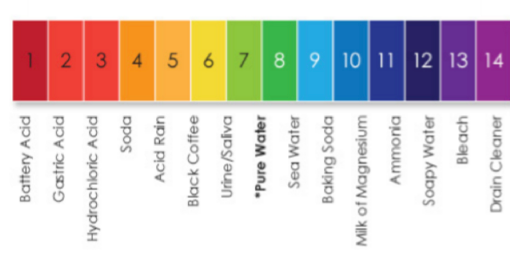
For question 14 use the pH scale below.

pH scale from 1 to 14 with common substances labeled

1
Asemmisa {{asɛmmisaAhyɛnsode}}
14.

Which of the following items is the most acidic? (U1:LT4)

Asemmisa {{asɛmmisaAhyɛnsode}}
15.

pH measures the concentration of: (U1:LT4)

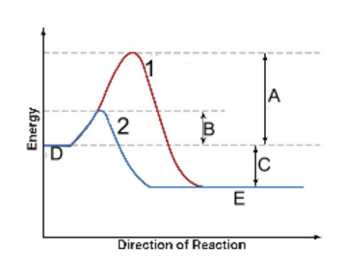
For questions 16-18 use the graph below.

Energy vs Direction of Reaction graph with two curves labeled 1 and 2 and points A, B, C, D, E

1
Asemmisa {{asɛmmisaAhyɛnsode}}
16.

Which curve in the graph above shows the reaction that uses the enzyme? (U1:LT4)

1

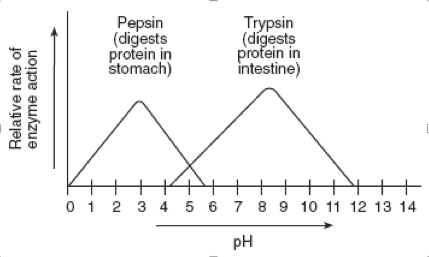
Use the graph below to help you with question 18.

Graph showing relative rate of enzyme action of pepsin and trypsin at different pH values

1
Asemmisa {{asɛmmisaAhyɛnsode}}
18.

Based on the graph above, what is the optimal (best) environment for Pepsin? (U1:LT4)

Asemmisa {{asɛmmisaAhyɛnsode}}
19.

Which of the following does not belong in the cell theory? (U2:LT1)

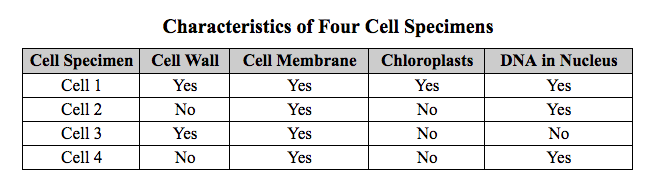
A group studied four different cell specimens under a microscope and recorded information about each cell in this table:

Table titled Characteristics of Four Cell Specimens showing presence or absence of cell wall, cell membrane, chloroplasts, and DNA in nucleus for Cell 1 through Cell 4.

1
Asemmisa {{asɛmmisaAhyɛnsode}}
20.

Which cell studied (in the table above) is a prokaryote? (U2:LT2)

Asemmisa {{asɛmmisaAhyɛnsode}}
21.

Which of the following is a function of the nucleus? (U2:LT2)

Asemmisa {{asɛmmisaAhyɛnsode}}
22.

These organelles are the site for protein synthesis. They also make the Rough Endoplasmic Reticulum rough: (U2:LT2)

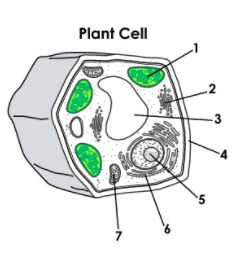
Labeled diagram of a plant cell with structures numbered 1 through 7

1
Asemmisa {{asɛmmisaAhyɛnsode}}
23.

Which of the following structures from the diagram above is responsible for photosynthesis? (U2:LT2)

Asemmisa {{asɛmmisaAhyɛnsode}}
24.

A scientist isolates a number of prokaryotes that do not use photosynthesis. Which structure would be found in these cells? (U2:LT2)

Asemmisa {{asɛmmisaAhyɛnsode}}
25.

Which part of the cell membrane allows small uncharged molecules such as oxygen and carbon dioxide to diffuse into and out of the cell? (U2:LT3)

Asemmisa {{asɛmmisaAhyɛnsode}}
26.

Which of the following is a function of the cell membrane? (U2:LT3)

Asemmisa {{asɛmmisaAhyɛnsode}}
27.

What is the process that cells use to regulate internal environment, such as temperature and pH? (U2:LT3)

Asemmisa {{asɛmmisaAhyɛnsode}}
28.

The cell membrane contains channels and pumps that help move large or charged materials from one side of the membrane to the other. What are these channels and pumps made of? (U2:LT3)

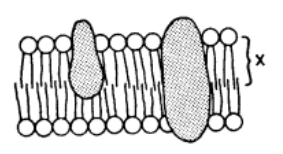
The diagram shown below represents a portion of the plasma membrane. What does structure X represent? (U2:LT3)

Diagram of a portion of the plasma membrane labeled X

1
Asemmisa {{asɛmmisaAhyɛnsode}}
29.

What does structure X represent? (U2:LT3)

Asemmisa {{asɛmmisaAhyɛnsode}}
30.

In the process of diffusion, particles move from areas of ________ concentration to areas of ________ concentration. (U2:LT4)

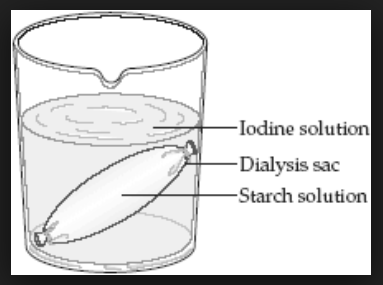
A student filled a bag of dialysis tubing with a milk-white starch solution and placed the bag in a beaker of iodine-water as shown in the diagram below. An hour later, the student observed that the starch solution had turned blue-black (positive test for starch).

Beaker containing iodine solution with a dialysis sac filled with starch solution submerged inside.

1
Asemmisa {{asɛmmisaAhyɛnsode}}
31.

What is the most probable explanation for the change? (U2:LT4)

Asemmisa {{asɛmmisaAhyɛnsode}}
32.

Which process requires cellular energy to move molecules across the cell membrane from a region of lower concentration to a region of higher concentration? (U2:LT4)

34-35 A student prepared three different red blood samples as follows. Red blood cells and blood fluid naturally have a salt content of 0.9% which is in equilibrium (isotonic). Use the following table to help you answer questions.

Solution

Contents

A

Red blood cells + normal blood fluid

B

Red blood cells + 10% salt solution

C

Red blood cells + distilled water

1
Asemmisa {{asɛmmisaAhyɛnsode}}
33.

Which solution, when viewed under a microscope, would contain red blood cells that were wrinkled and reduced in volume? (U2:LT4,5)

1
Asemmisa {{asɛmmisaAhyɛnsode}}
35.

Which of the following processes require the help of a membrane protein and do not require an input of energy? (U2:LT4,5)

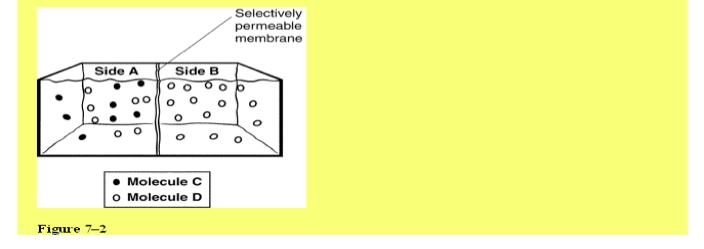
Diagram of a selectively permeable membrane with Side A and Side B containing molecules C and D.

Use this diagram above to answer questions. In this diagram, molecule C is salt, molecule D is water, the membrane is permeable to water, but not salt.

1
Asemmisa {{asɛmmisaAhyɛnsode}}
36.

Which side of the membrane above would be considered hypertonic? (U2:LT5)

1
Asemmisa {{asɛmmisaAhyɛnsode}}
37.

Which side will likely gain water? (U2:LT5)

Asemmisa {{asɛmmisaAhyɛnsode}}
38.

Energy is released from ATP when (U3:LT1)

Asemmisa {{asɛmmisaAhyɛnsode}}
39.

Organisms such as plants that make their own food are called (U3:LT1)

Asemmisa {{asɛmmisaAhyɛnsode}}
40.

Which of following is a true statement about ATP? (U3:LT1)

Asemmisa {{asɛmmisaAhyɛnsode}}
41.

Most plants appear green because: (U3:LT2)

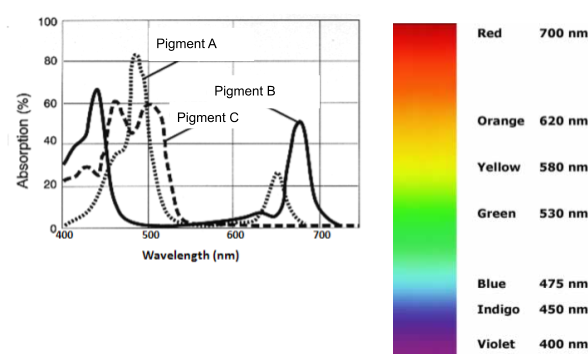
Use the graph below to answer question 42.

Graph showing absorption spectra for pigments A, B, and C across wavelengths compared with visible light colors.

1
Asemmisa {{asɛmmisaAhyɛnsode}}
42.

Based on the figure above, pigment A absorbs which colors of light the best? (U3:LT2)

Asemmisa {{asɛmmisaAhyɛnsode}}
43.

Plants absorb light energy from the sun using molecules called ____________, such as chlorophyll and carotene. (U3: LT2)

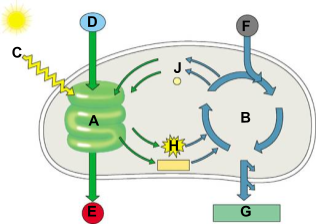
For questions 44 - 46 use the diagram below.

Diagram showing parts of photosynthesis labeled A through J

1
Asemmisa {{asɛmmisaAhyɛnsode}}
44.

Which process is illustrated by the diagram? (U3: LT2,3)

1
1
Asemmisa {{asɛmmisaAhyɛnsode}}
47.

During photosynthesis, light energy from the sunlight is converted into what form of energy stored in the cell? (U3:LT3)

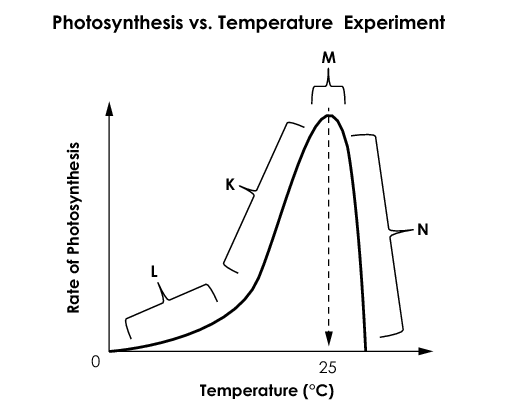
Use the graph below for question 49.

Graph titled Photosynthesis vs. Temperature Experiment showing rate of photosynthesis at different temperature ranges labeled L, K, M, and N.

Students in a biology class conduct an experiment to determine the effect of temperature on the rate of photosynthesis in a plant. They place an Elodea plant (underwater plant) into a test tube filled with water. Then students place the test tube under a light and slowly increase the temperature of the water. They record their results and display them on a graph as shown above.

1
Asemmisa {{asɛmmisaAhyɛnsode}}
48.

Which statement is supported by the data in the graph? (U3:LT3,4)

Asemmisa {{asɛmmisaAhyɛnsode}}
49.

Which of the following is the organelle that performs cellular respiration? (U3:LT5)


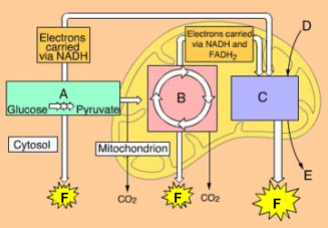
Diagram of cellular respiration pathway labeled A through F

1
Asemmisa {{asɛmmisaAhyɛnsode}}
50.

The process shown in the diagram to the right is known as ____________: (U3:LT5,6)

1
1
1
Asemmisa {{asɛmmisaAhyɛnsode}}
54.

What type of respiration occurs in the ABSENCE of oxygen? (U3:LT7)

Asemmisa {{asɛmmisaAhyɛnsode}}
55.

Which most accurately describes the difference in ATP production between aerobic and anaerobic respiration? (U3:LT7)

Asemmisa {{asɛmmisaAhyɛnsode}}
56.

This process is performed by human muscle cells during exercise and the products of this process are why stretching is important after exercise. (U3:LT8)

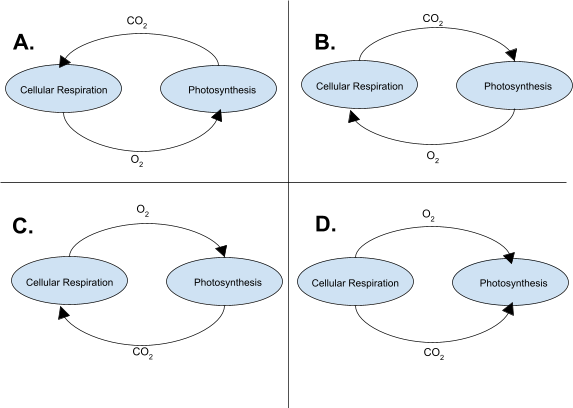
Which of the following diagrams accurately represents the use of gases in photosynthesis and cellular respiration? (U3:LT9)

Diagrams labeled A, B, C, and D showing gas exchange between cellular respiration and photosynthesis.

Asemmisa {{asɛmmisaAhyɛnsode}}
57.

Which is true of cellular respiration and photosynthesis? (U3:LT9)

Asemmisa {{asɛmmisaAhyɛnsode}}
58.

Why do cells divide? (U4:LT1)

Asemmisa {{asɛmmisaAhyɛnsode}}
59.

Structures that are made of DNA and carry genetic information from one generation to the next are called: (U4:LT2)

Asemmisa {{asɛmmisaAhyɛnsode}}
60.

Humans have ______ chromosomes in each of their body cells. (U4:LT2)

Asemmisa {{asɛmmisaAhyɛnsode}}
61.

Which of the following is the cell cycle phase correctly paired with its function? (U4:LT3)


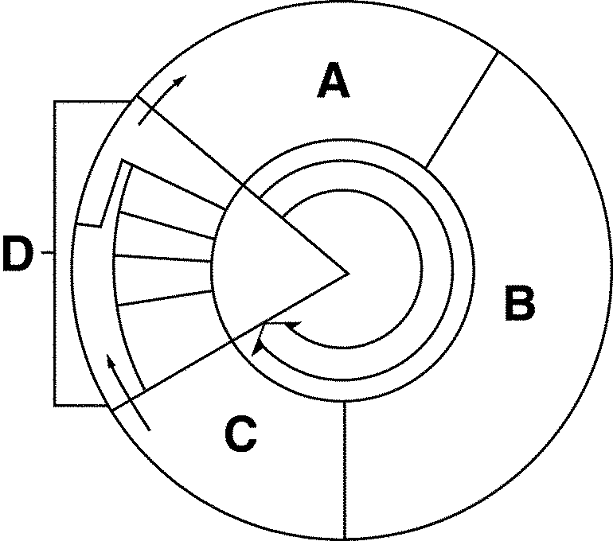
Labeled diagram of the cell cycle with regions A, B, C, and D.

1
Asemmisa {{asɛmmisaAhyɛnsode}}
62.

Which place on the cell cycle above indicates the stage where cell division takes place? (U4:LT3)

1
Asemmisa {{asɛmmisaAhyɛnsode}}
64.

What human disease/disorder results from a mutation in the proteins that regulate the cell cycle which result in uncontrolled cell division? (U4:LT3)

Asemmisa {{asɛmmisaAhyɛnsode}}
65.

In multicellular organisms, mitosis results in: (U4:LT4)

Asemmisa {{asɛmmisaAhyɛnsode}}
66.

What is the role of the spindle during mitosis? (U4:LT4)

Asemmisa {{asɛmmisaAhyɛnsode}}
67.

After mitosis, how many chromosomes does each daughter cell contain compared to the parent cell? (U4:LT4,6)


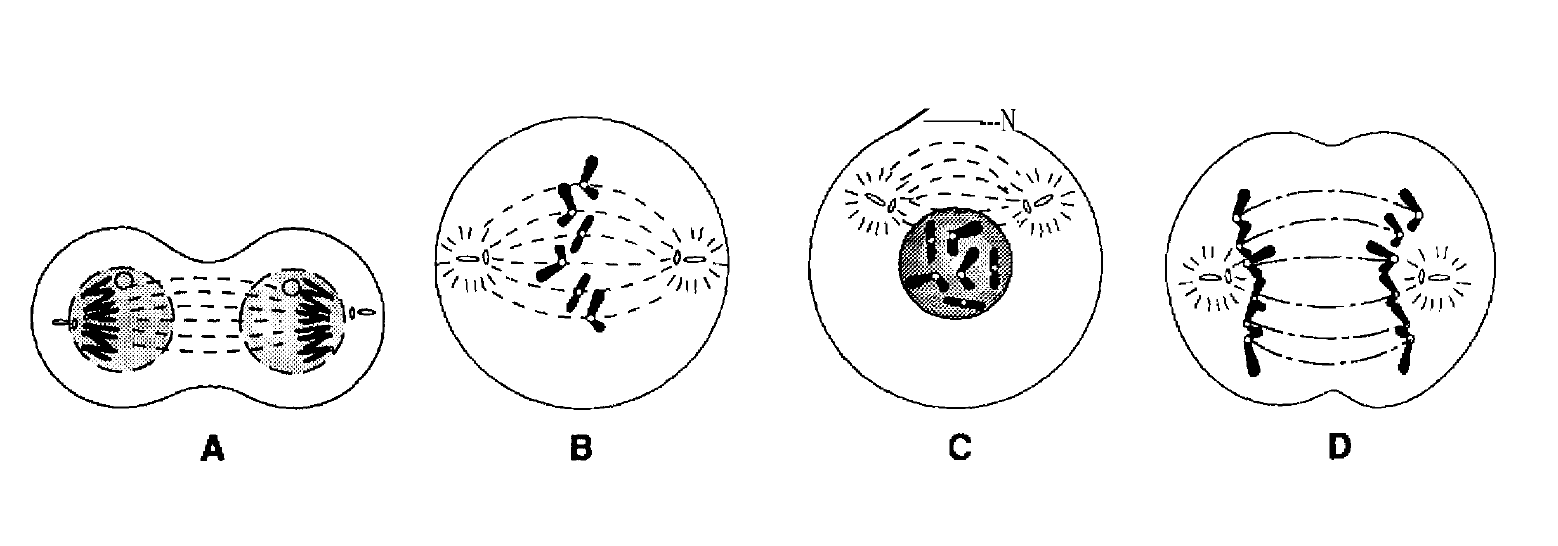
Diagrams labeled A, B, C, and D showing stages of a cellular process.

1
Asemmisa {{asɛmmisaAhyɛnsode}}
68.

The diagrams above show the stages of a cellular process. What is the correct sequence of these stages?

Asemmisa {{asɛmmisaAhyɛnsode}}
69.

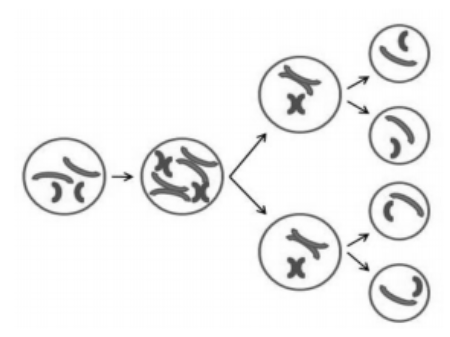
What would most likely result if cytoplasm division (cytokinesis) did not happen? (U4:LT4)


Cell division diagram with chromosomes separating into four cells

1
Asemmisa {{asɛmmisaAhyɛnsode}}
70.

Which process is occurring and what type of resulting cells are produced in the diagram to the right? (U4:LT5)

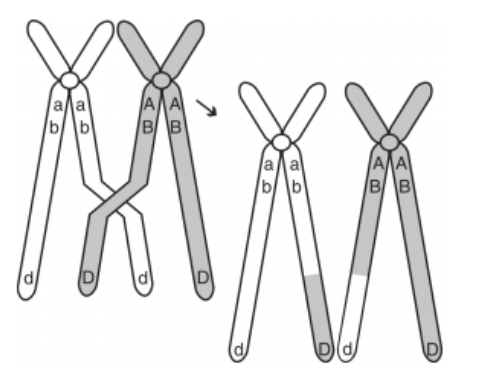
Diagram of homologous chromosomes exchanging segments

1
Asemmisa {{asɛmmisaAhyɛnsode}}
71.

The process by which homologous chromosomes exchange segments of DNA is shown in the image to the right. What is the name for this process? (U4:LT5)

Asemmisa {{asɛmmisaAhyɛnsode}}
72.

Cells formed by meiosis are: (U4:LT5,6)

Asemmisa {{asɛmmisaAhyɛnsode}}
73.

A sperm cell is: (U4:LT5)

Asemmisa {{asɛmmisaAhyɛnsode}}
74.

If a body cell in a butterfly contains 24 chromosomes, a butterfly egg or sperm cell would contain: (U4:LT6)

Asemmisa {{asɛmmisaAhyɛnsode}}
75.

In this type of division crossing over occurs (U4:LT 6)

Asemmisa {{asɛmmisaAhyɛnsode}}
76.

This type of cell division results in daughter cells that are different from the parent cell. (U4:LT6)

Asemmisa {{asɛmmisaAhyɛnsode}}
77.

In this process, the second cell division splits sister chromatids into single chromosomes (U4:LT6)

Asemmisa {{asɛmmisaAhyɛnsode}}
17.

Which letter on the graph above indicates the products of the reaction? (U1:LT4)

Asemmisa {{asɛmmisaAhyɛnsode}}
34.

Which solution above indicates red blood cells present within an environment that is hypotonic? (U2:LT4,5)

Asemmisa {{asɛmmisaAhyɛnsode}}
45.

Letter A indicates the _________ while letter B indicates the _____________. (U3: LT2,3)

Asemmisa {{asɛmmisaAhyɛnsode}}
46.

What substance (G on the diagram) is produced during the Calvin Cycle? (U3: LT2,3)

Asemmisa {{asɛmmisaAhyɛnsode}}
51.

__________ is indicated by letter A in the diagram to the right: (U3:LT5,6)

Asemmisa {{asɛmmisaAhyɛnsode}}
52.

What is the substance F produced at each step in the diagram above? (U3:LT6)

Asemmisa {{asɛmmisaAhyɛnsode}}
53.

In order for the process in the diagram above to move beyond step A, which molecule MUST be present? (U3:LT6,7)

Asemmisa {{asɛmmisaAhyɛnsode}}
63.

Which place on the cell cycle above indicates S-Phase where DNA is replicated? (U4:LT3)