Myxomatosis Resistance in Australian Rabbits
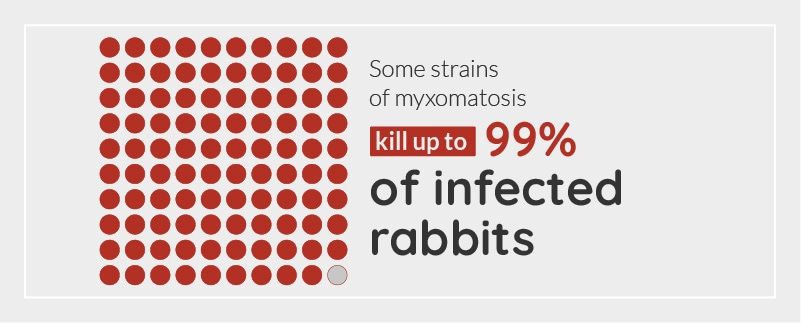
In the 1950s, Australia introduced the myxoma virus to control invasive rabbit populations that were damaging crops and native ecosystems. When the virus was released, it caused extremely high mortality: in some regions, over $99\%$ of infected rabbits died. However, within just a few generations, the proportion of rabbits surviving infection began to increase.
Initially, nearly all rabbits were highly susceptible to the virus. But a small number carried genetic variants that gave them partial resistance. These rabbits were far more likely to survive infection long enough to reproduce. As the virus continued to spread, resistant rabbits had a strong selective advantage: they survived, produced offspring, and passed their resistance alleles to the next generation.
Diagram 1.
 Source: https://fuzzyrabbit.com/sudden-death-in-rabbits/
Because rabbits reproduce rapidly, each female producing multiple litters per year, the population had high reproductive potential - one of the key factors driving evolutionary change. Even if only a fraction of rabbits survived the virus, the surviving resistant individuals produced enough offspring to quickly shift allele frequencies in the population.
Competition also played a role. As susceptible rabbits died in high numbers, resistant rabbits faced less competition for resources such as food and space. Their increased survival and reproductive success created conditions for the rapid proliferation of the resistant trait.
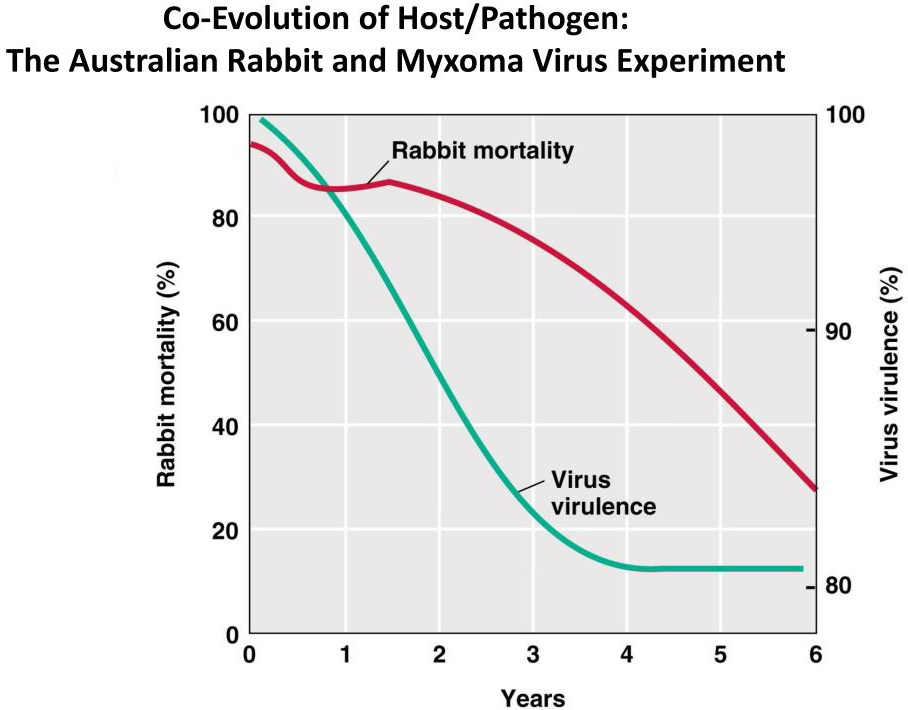
Over time, the average mortality rate caused by the virus decreased, not because the virus became less deadly at first, but because the population of rabbits contained a much higher proportion of resistant individuals. Statistical analysis of rabbit populations showed clear upward trends in resistance frequency and downward trends in mortality.
This phenomenon illustrates the principles of:
Potentials for population increase allow traits to spread quickly.
Heritable genetic variation provides the raw material for evolution.
Competition and lethal selection pressures reduce survival of individuals lacking advantageous traits.
Organisms with advantageous traits increase in proportion across generations.
The evolution of myxomatosis resistance in Australia remains a key historical example of how strong selective pressures can rapidly shift trait frequencies in natural populations.
Diagram 2.
Source: https://www.slideserve.com/zenia-chaney/chapter-32
Table 1.
Year | Resistant Rabbits (%) | Susceptible Rabbits (%) |
|---|
1950 | 1 | 99 |
1955 | 8 | 92 |
1960 | 22 | 78 |
1965 | 38 | 62 |
1970 | 55 | 45 |
1975 | 71 | 29 |
Graph of Information - Figure 1.
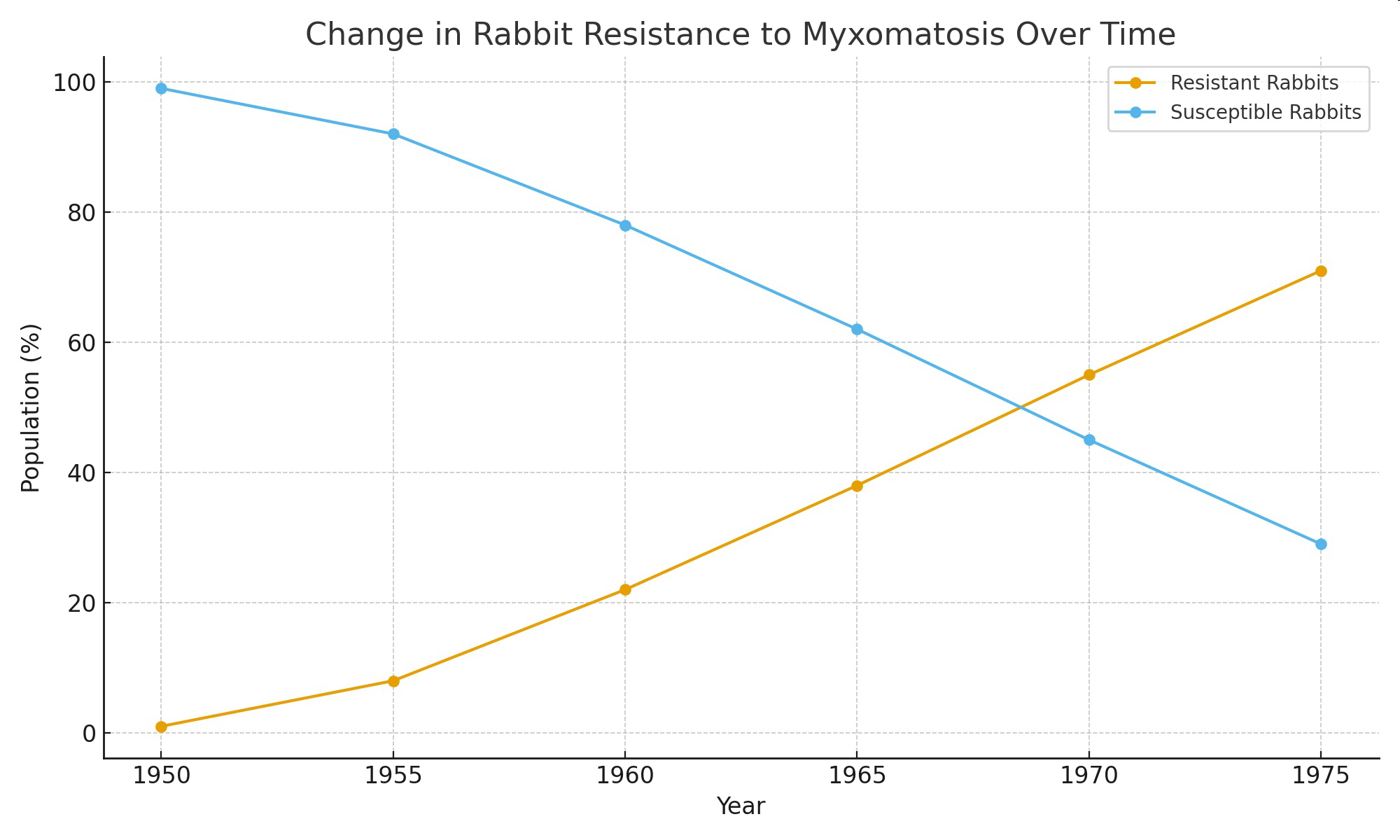
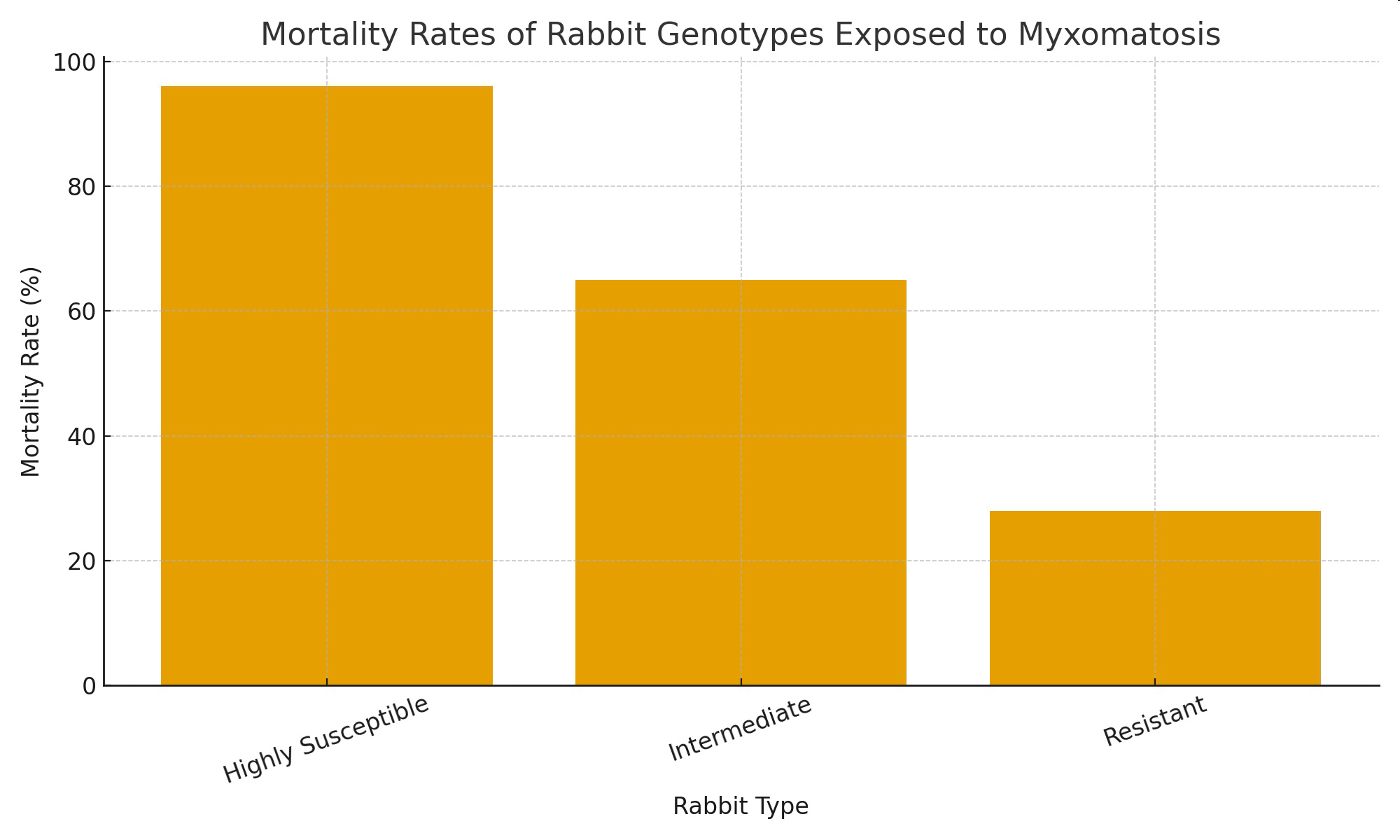
Table 2.
Rabbit Type | Mortality Rate (%) |
|---|
Highly Susceptible | 96 |
Intermediate | 65 |
Resistant | 28 |
Graph of Information - Figure 2.