Ocean Acidification and Coral Reef Species Collapse
Coral reefs are among the most diverse ecosystems on Earth, but they are increasingly threatened by rising atmospheric carbon dioxide ($CO_2$). As $CO_2$ dissolves into seawater, it forms carbonic acid, lowering the pH of the ocean. Although the ocean remains slightly basic, even small decreases in pH reduce the concentration of carbonate ions, which corals need to build their calcium carbonate skeletons. Over the last 40 years, ocean pH has dropped from about 8.11 to about 8.01 - a seemingly minor change that significantly impacts marine organisms.
Diagram 1.
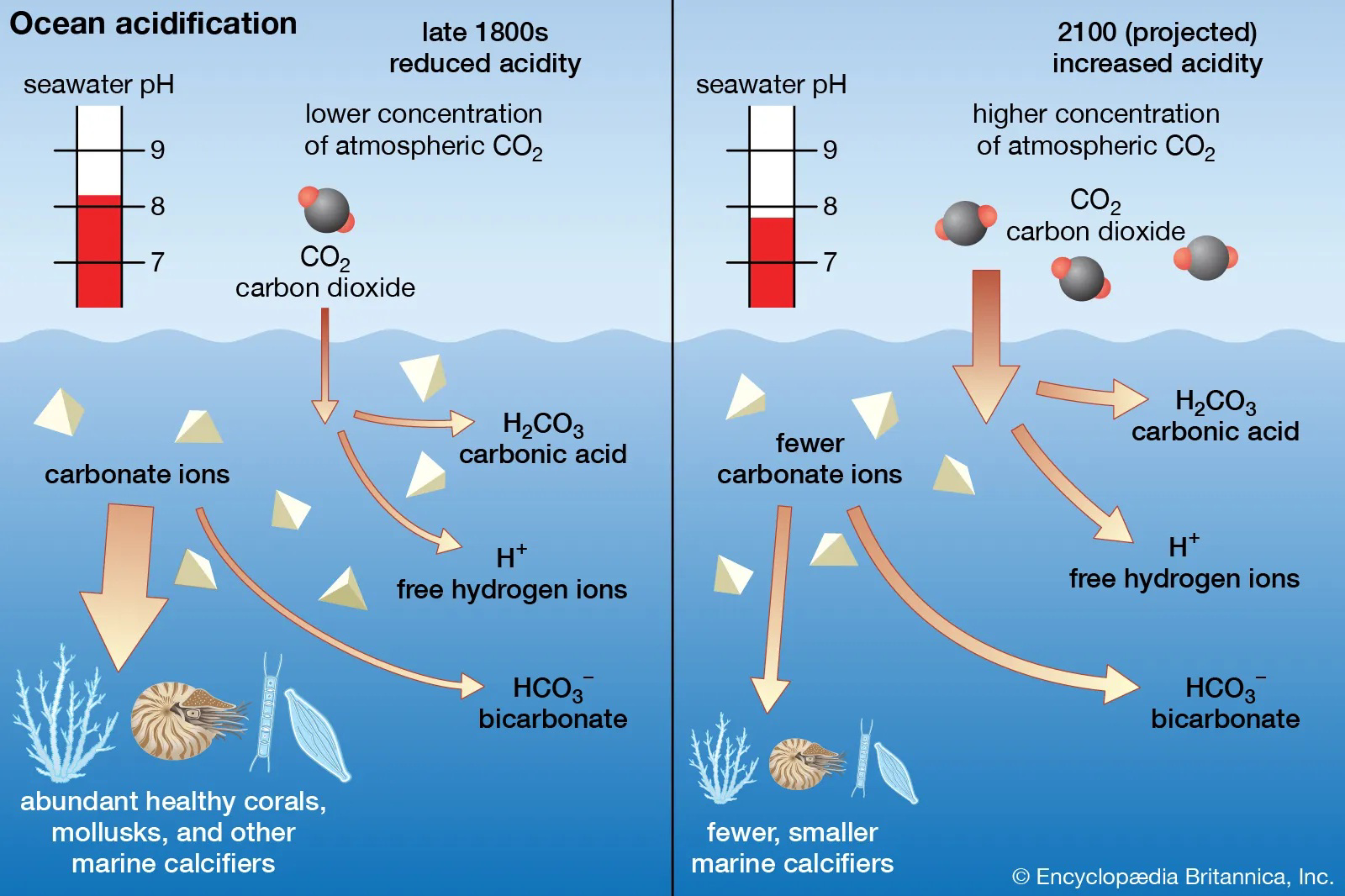
Source: https://www.britannica.com/science/ocean-acidification
Corals grow by creating hard skeletons, and this process requires a steady supply of carbonate ions. When pH declines, the ocean becomes more corrosive to carbonate-based structures and reduces coral growth rates. As acidification increases, many species of coral struggle to repair damage, reproduce successfully, or maintain their structures. These stresses make corals more vulnerable to disease, storms, and warming temperatures.
The decline of living coral cover has cascading effects throughout the ecosystem. Coral reefs provide habitats and shelter for thousands of species, from fish and crustaceans to sponges and mollusks. As corals die, the complexity of the reef decreases, reducing habitat space and causing many dependent species to decline or disappear. In some regions, reefs have already lost over half of their coral cover, resulting in major losses of biodiversity.
Diagram 2.
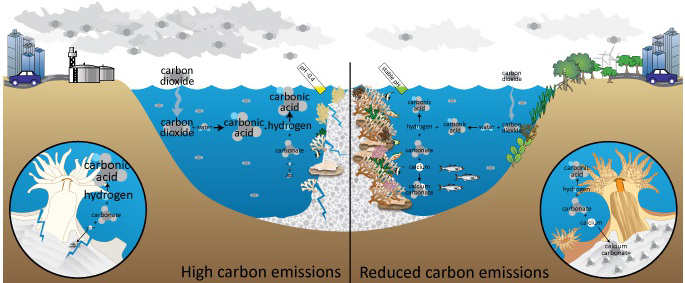
Source:
https://www.e-education.psu.edu/earth103/node/649
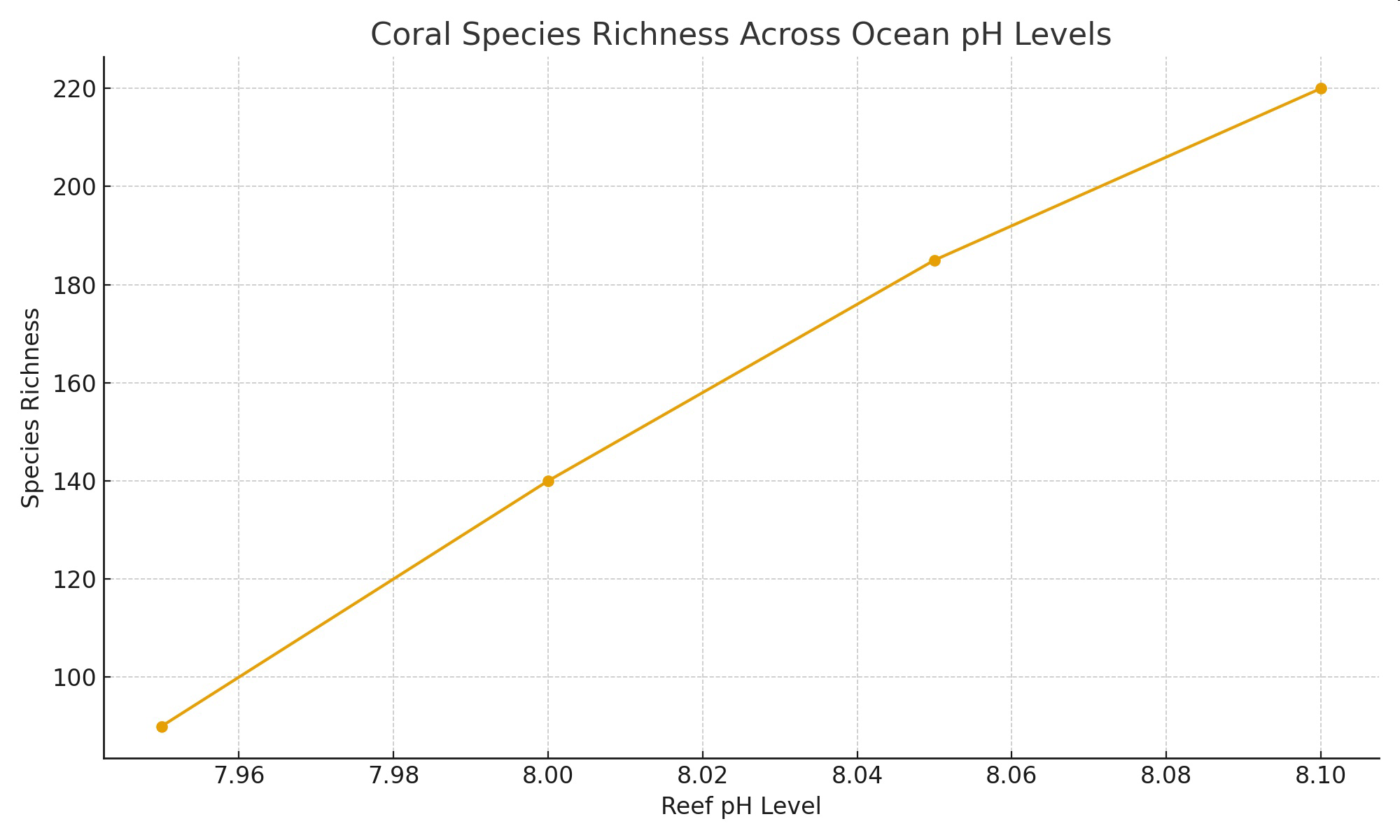
Data from long-term monitoring show strong relationships between decreasing pH levels and coral decline. For example, between 1980 and 2020, ocean pH dropped by about $0.10$ units while living coral cover fell from $42\%$ to $18\%$. Species richness also contracts dramatically as pH decreases; at slightly lower pH conditions (around $7.95$), species richness can drop to less than half of that found at preindustrial pH levels.
These patterns demonstrate how environmental change - in this case, ocean acidification driven by human activity - can lead to both declines in species numbers and local extinctions. If current trends continue, scientists project further reductions in coral growth, additional species losses, and a risk that some reef ecosystems could collapse entirely.
Table 1.
Year | Average Ocean pH | Living Coral Cover (%) |
|---|
1980 | 8.11 | 42 |
1990 | 8.08 | 38 |
2000 | 8.05 | 33 |
2010 | 8.03 | 27 |
2020 | 8.01 | 18 |
2030 | 7.98 | 10 |
Graph of Information - Figure 1.
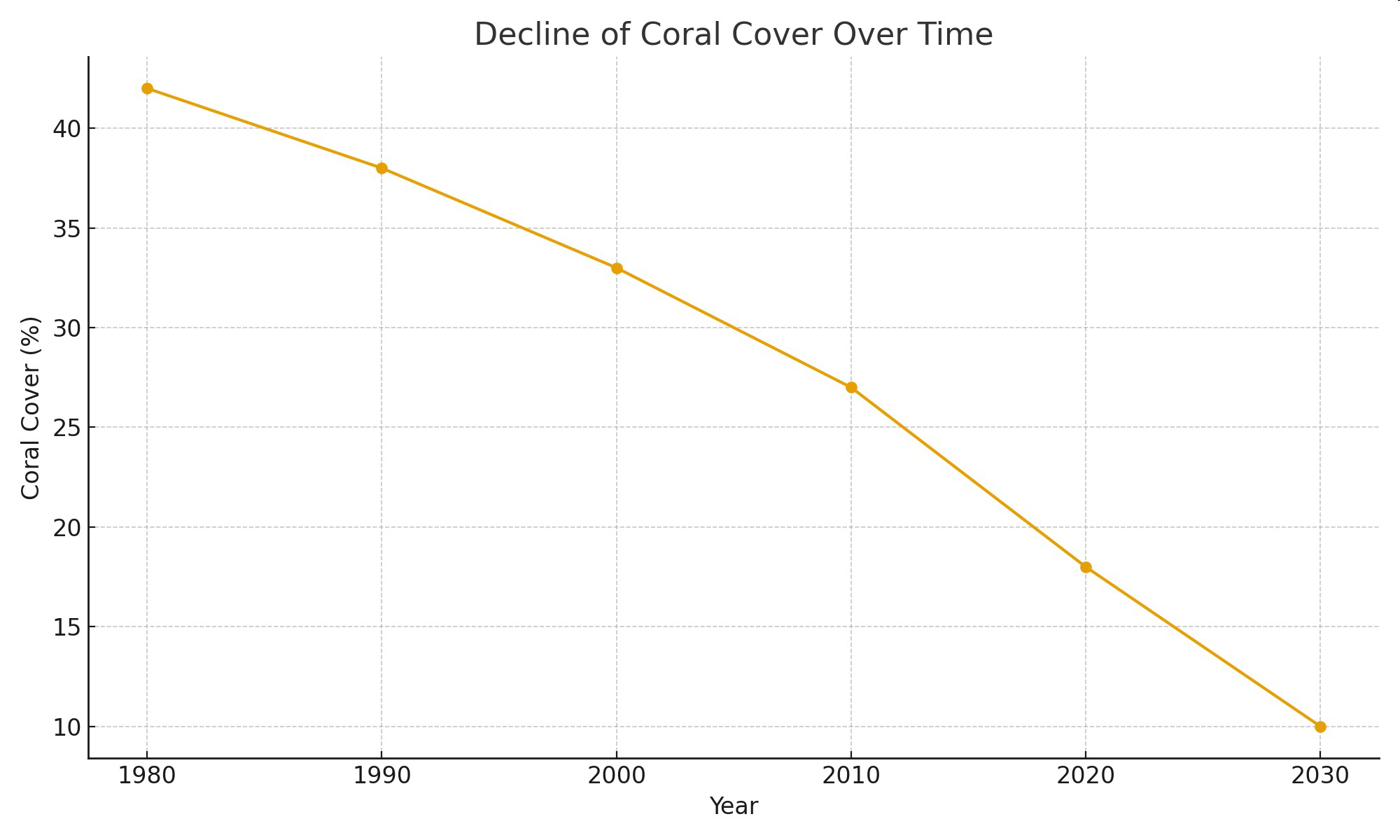
Table 2.
Reef pH Level | Coral Species Richness |
|---|
8.1 | 220 |
8.05 | 185 |
8 | 140 |
7.95 | 90 |
Graph of Information - Figure 2.