Pesticide Resistance in Agricultural Insects
The Colorado potato beetle is one of the most destructive agricultural pests in North America and Europe. For more than a century, farmers have used pesticides to control beetle populations, but the species has repeatedly evolved resistance to nearly every major class of insecticide. This phenomenon provides a powerful real-world example of natural selection leading to population-level adaptation.
Diagram 1.
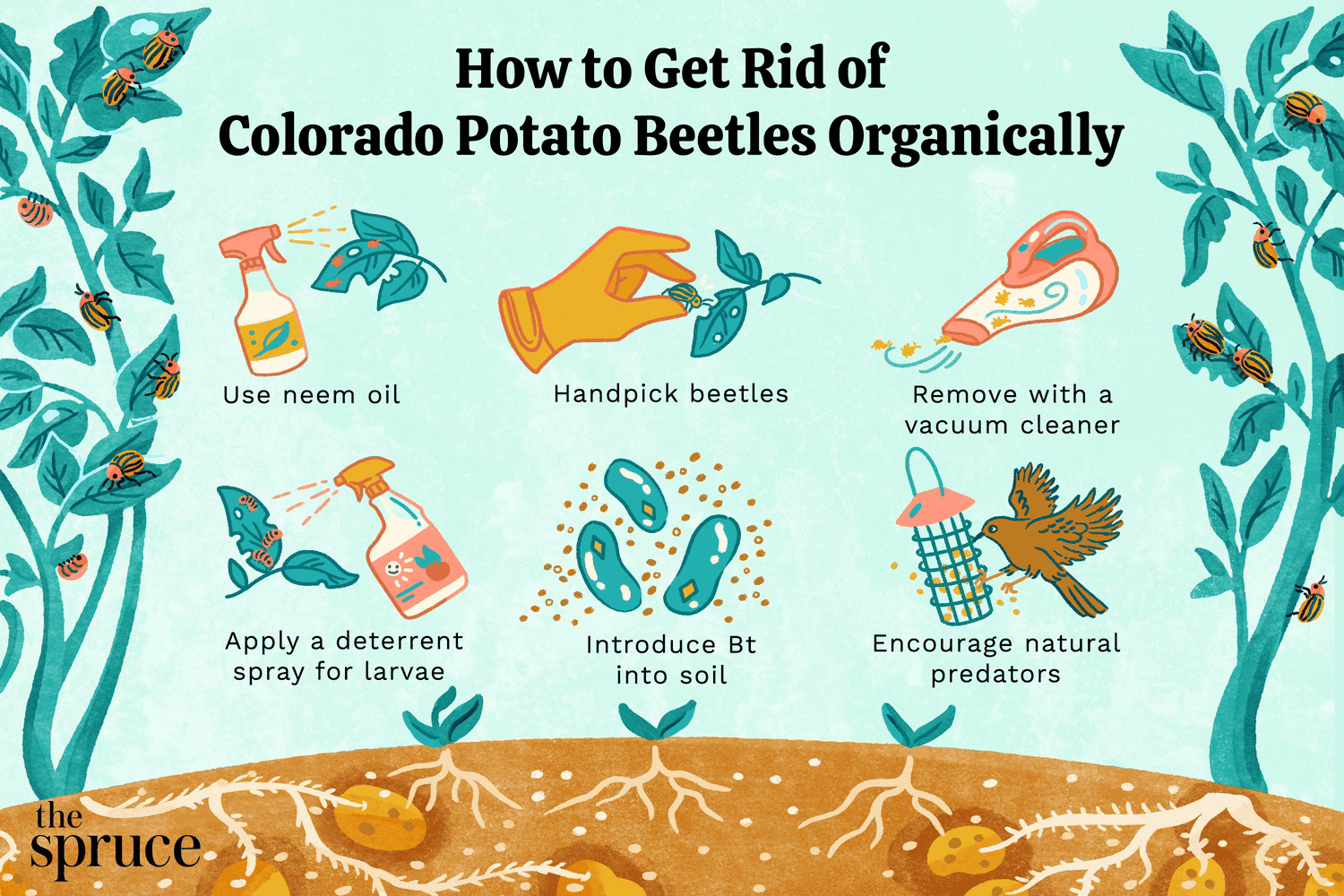
Source: https://ar.inspiredpencil.com/pictures-2023/potato-beetle-insecticide
Colorado potato beetles reproduce rapidly, with multiple generations per year. Each generation contains genetic variation in traits related to detoxification enzymes, nerve-receptor sensitivity, and cuticle thickness. Some beetles, by chance, have genetic variants that make them slightly more tolerant to a pesticide. When farmers apply insecticides, beetles lacking those protective traits are killed at high rates, while individuals with resistance traits survive at much higher rates.
Because resistant beetles survive, they also reproduce and pass their advantageous alleles to the next generation. Over several generations, the frequency of resistance alleles increases dramatically in populations that are consistently exposed to the pesticide. This shift in allele frequency is the hallmark of adaptation through natural selection. The rapid rise of resistant beetles is not due to individuals “learning” or “developing” resistance, but rather because individuals with heritable resistance traits leave more offspring.
Empirical studies show that resistance evolves more quickly in regions with heavy, repeated pesticide use. For example, populations in high-application potato farming zones show the highest levels of resistance to neonicotinoids and pyrethroids. In contrast, populations in low-application areas show lower resistance frequencies.
This pattern demonstrates the combined effects of the four key factors that drive evolution:
(1) large reproductive potential,
(2) heritable genetic variation,
(3) competition and mortality due to pesticide exposure
(4) the increased reproductive success of resistant individuals.
By collecting data on allele frequencies, survival rates, and reproductive success of resistant vs non-resistant beetles, scientists can track the evolutionary process in real time. Over time, the population becomes dominated by individuals with advantageous traits, making them increasingly difficult to control.
Diagram 2.
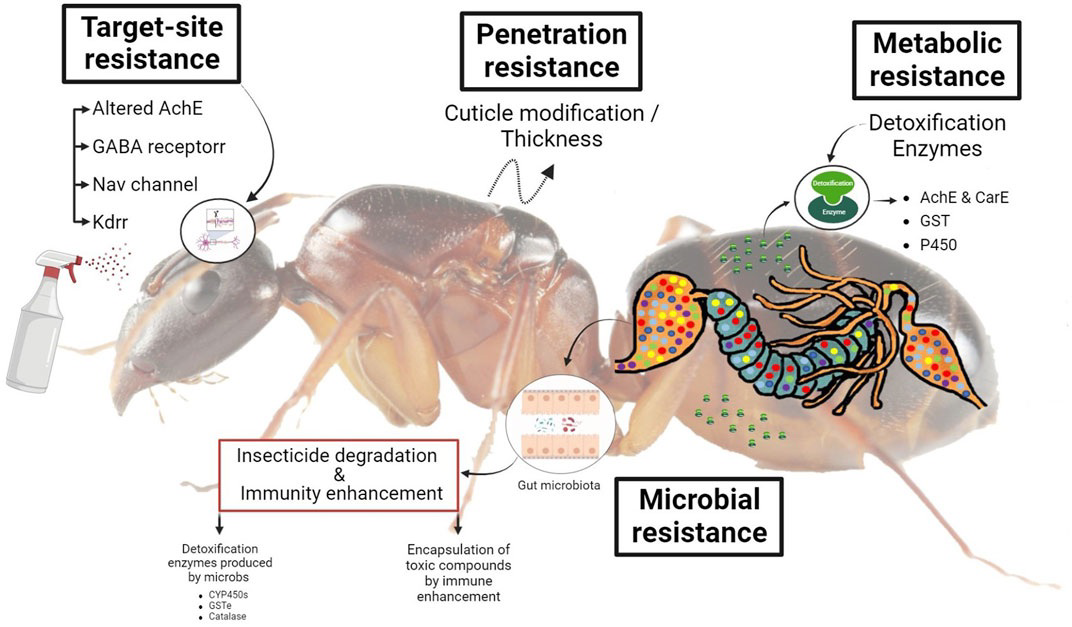
Source: www.frontiersin.org
The Colorado potato beetle is now considered one of the most pesticide-resistant insects on Earth, having evolved resistance to more than 50 insecticides. This ongoing arms race between beetles and agricultural management demonstrates natural selection and population adaptation with exceptional clarity.
Table 1.
Year | Resistant Beetles (%) | Susceptible Beetles (%) |
|---|
2000 | 10 | 90 |
2005 | 18 | 82 |
2010 | 32 | 68 |
2015 | 47 | 53 |
2020 | 61 | 39 |
2025 | 74 | 26 |
Graph of Information - Figure 1.
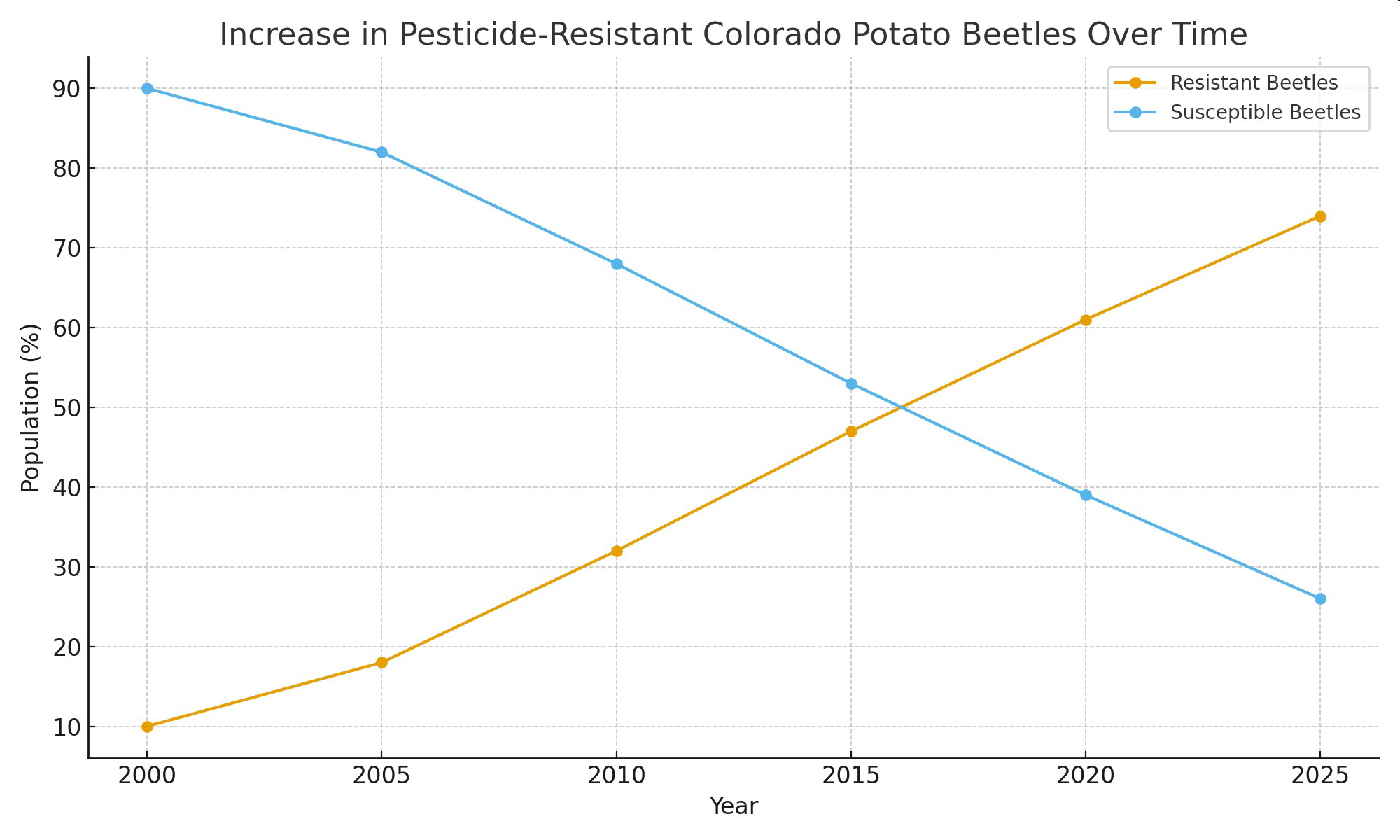
Table 2.
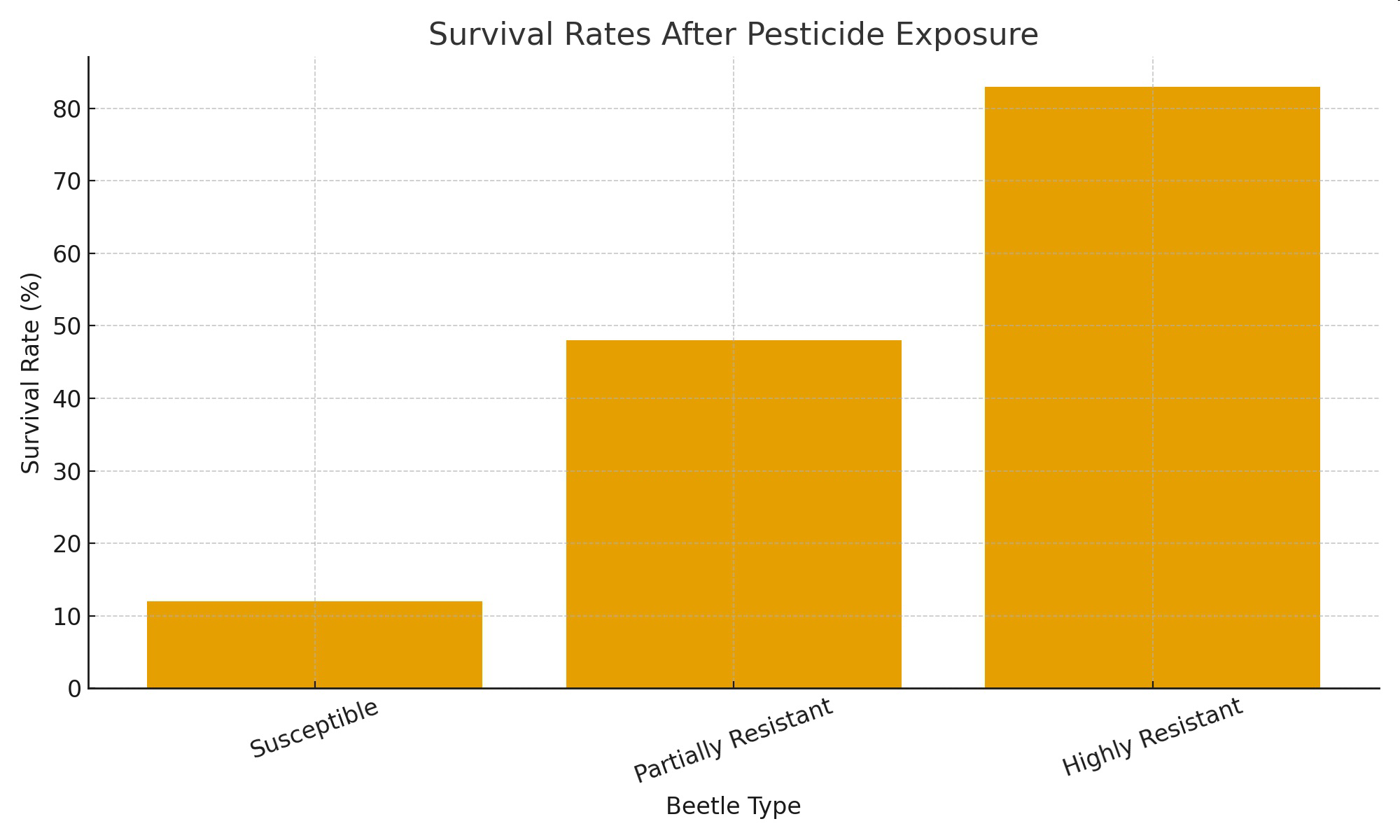
Beetle Type | Survival Rate (%) |
|---|
Susceptible | 12 |
Partially Resistant | 48 |
Highly Resistant | 83 |
Graph of Information - Figure 2.