Tibetan High-Altitude Adaptation
Populations living at high altitudes face extreme environmental challenges, including low oxygen levels, cold temperatures, and intense UV radiation. One of the best-studied examples of natural selection leading to population-level adaptation comes from Tibetan highlanders, who have evolved physiological traits that allow them to thrive at elevations above 4,000 meters. These adaptations are strongly associated with genetic differences, particularly involving the EPAS1 gene, which plays a key role in regulating the body’s response to low oxygen.
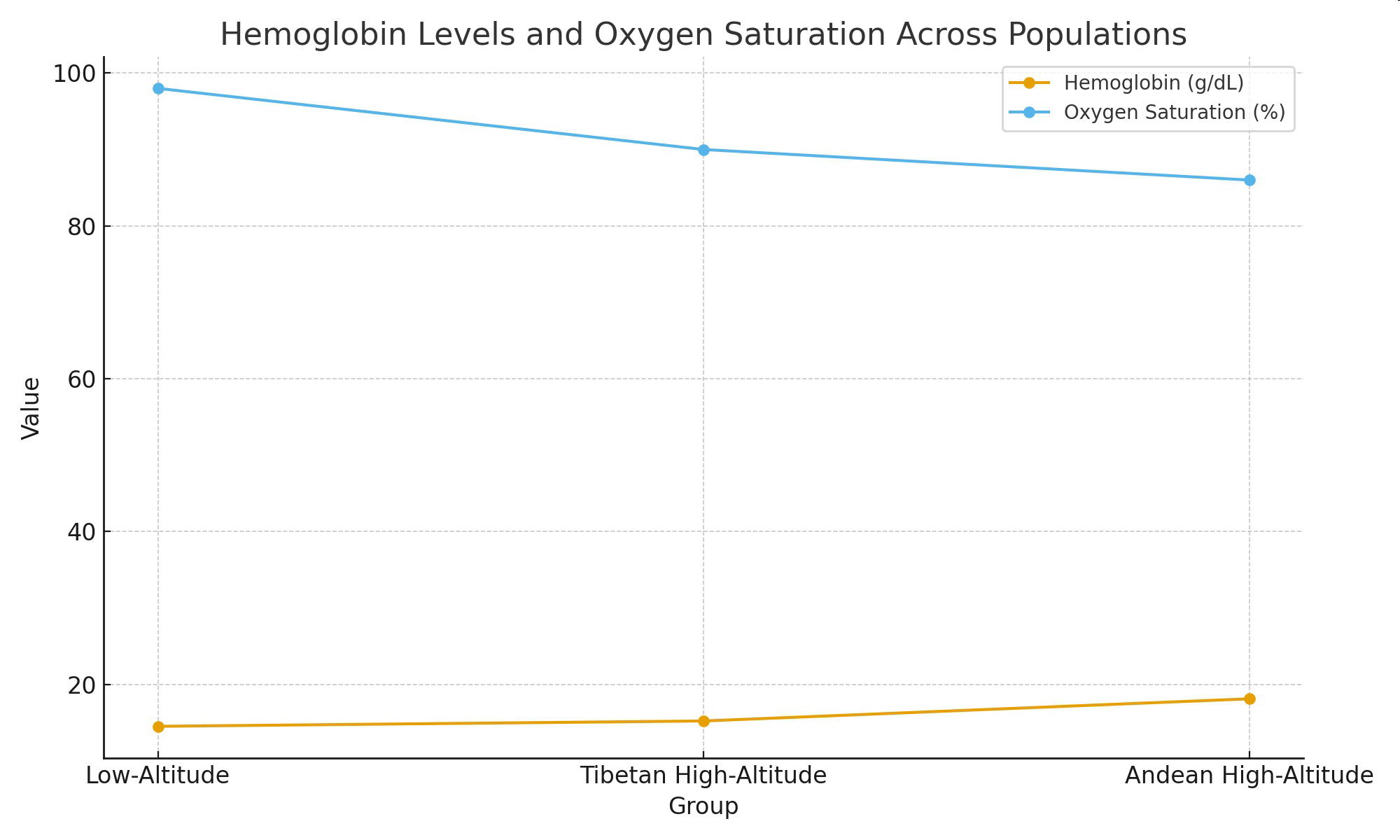
At sea level, the body increases red blood cell (RBC) production when oxygen levels fall. This response helps restore oxygen delivery, but at high altitudes, persistently elevated RBC levels can cause blood to thicken, increasing the risk of clots, stroke, and pregnancy complications. Most lowland humans who move to high altitudes show dangerously high RBC counts over time – an effect called chronic mountain sickness.
Tibetans, however, show a different response. Despite living in low-oxygen environments for thousands of years, they maintain normal or only slightly elevated red blood cell levels, avoiding the negative health effects experienced by lowlanders. This difference is linked to a unique version of the EPAS1 gene, which reduces the over-production of RBCs under hypoxic (low-oxygen) conditions.
Genetic studies reveal that the high-altitude version of EPAS1 is extremely common in Tibetan populations but almost absent in lowland populations. Statistical analyses show that the gene’s frequency is far too high to be explained by chance alone and is consistent with strong positive natural selection. Individuals with this trait have a higher probability of surviving high-altitude stresses, successfully reproducing, and passing the advantageous allele to the next generation.
Measurements of oxygen saturation, hemoglobin concentration, breathing rate, and EPAS1 allele frequency across different populations provide multiple lines of evidence. Comparisons between lowland individuals temporarily visiting Tibet and lifelong Tibetan residents show clear differences in physiological response. Over many generations, these heritable differences resulted in population-level adaptation.
Table 1.
Population | EPAS1 Adaptive Allele (%) |
|---|
Low-Altitude Han Chinese | 2 |
Tibetan (3,000 m) | 65 |
Tibetan (4,000 m) | 78 |
Andean (3,500 m) | 12 |
Graph of Information - Figure 1.
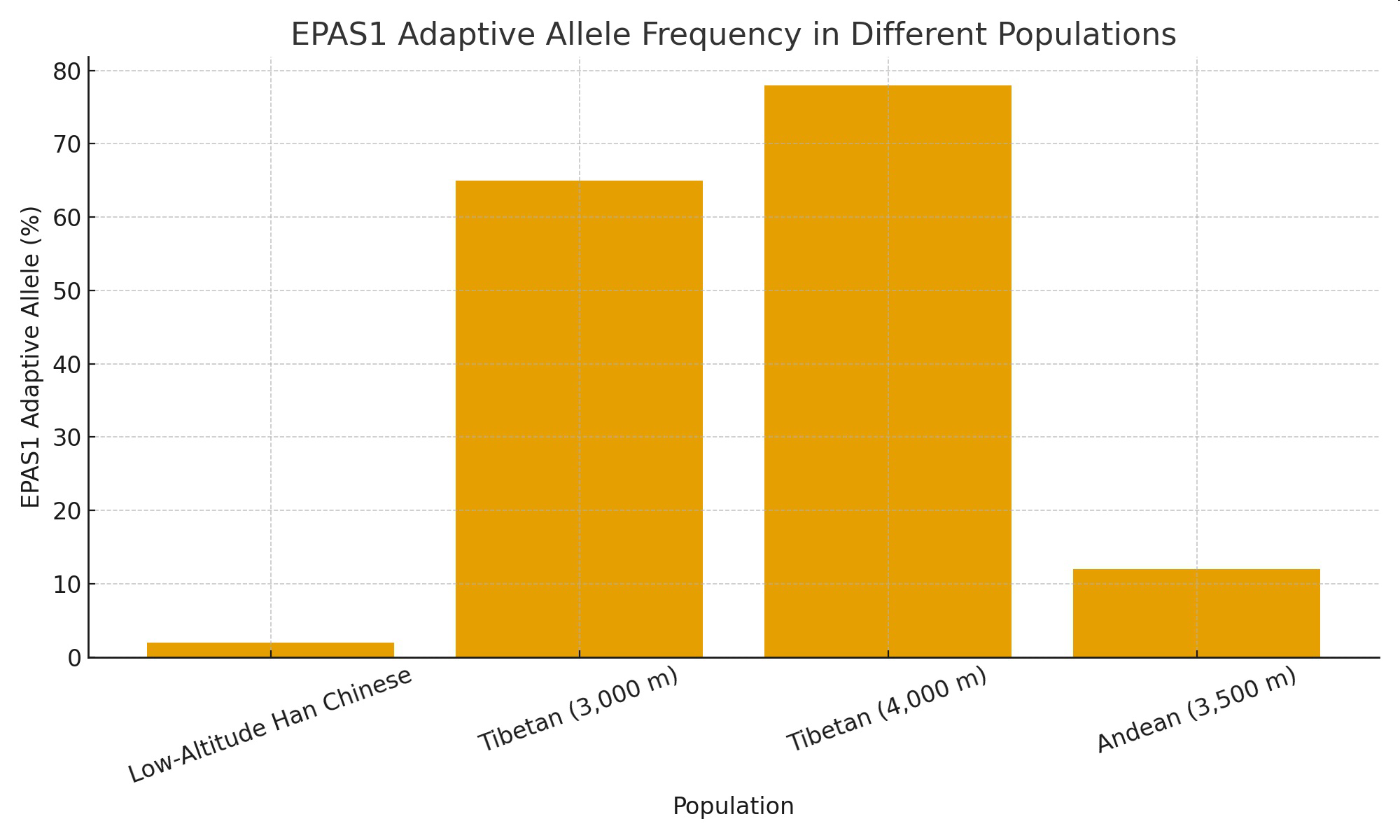
Table 2.
Group | Average Hemoglobin (g/dL) | Oxygen Saturation (%) |
|---|
Low-Altitude | 14.5 | 98 |
Tibetan High-Altitude | 15.2 | 90 |
Andean High-Altitude | 18.1 | 86 |
Graph of Information - Figure 2.