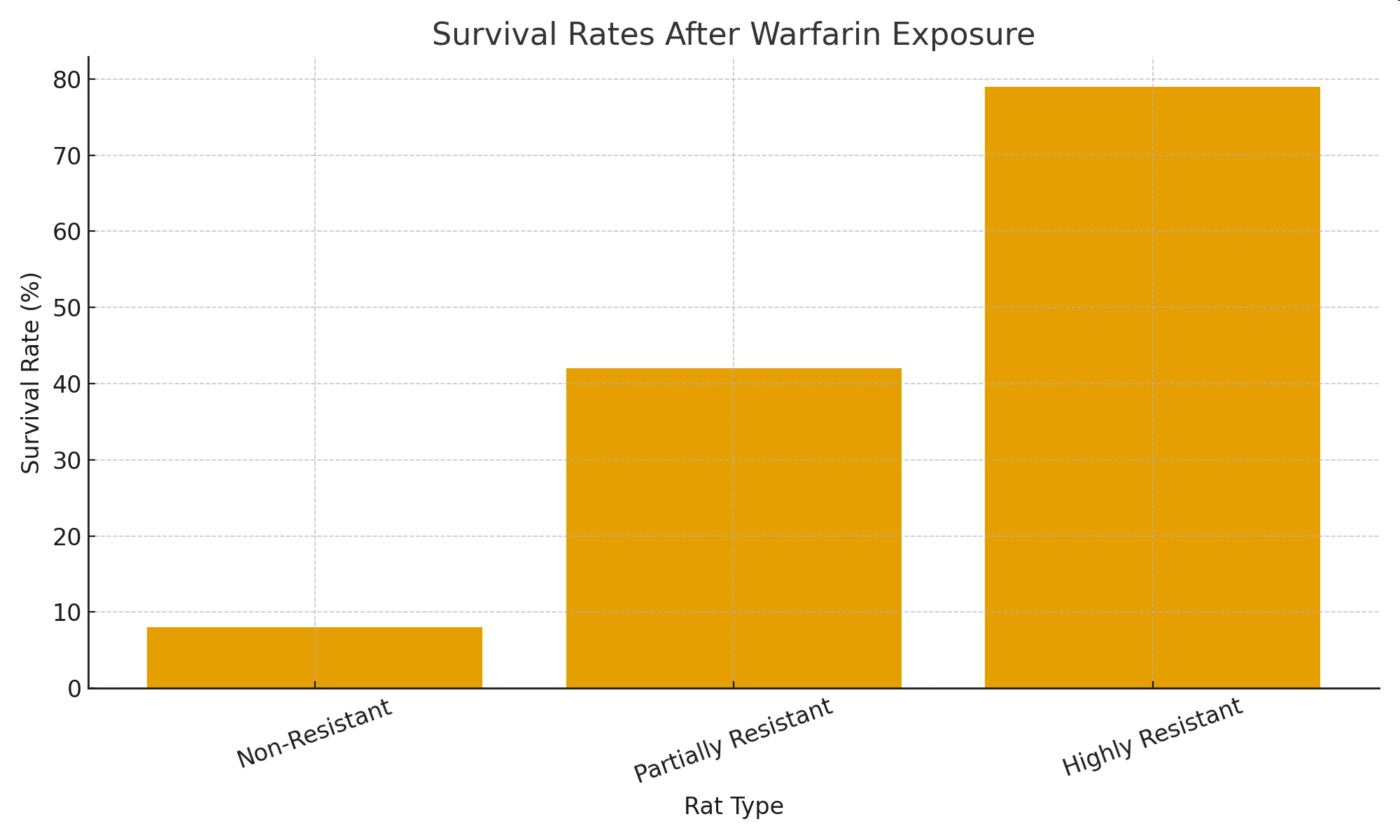
Diagram 1.
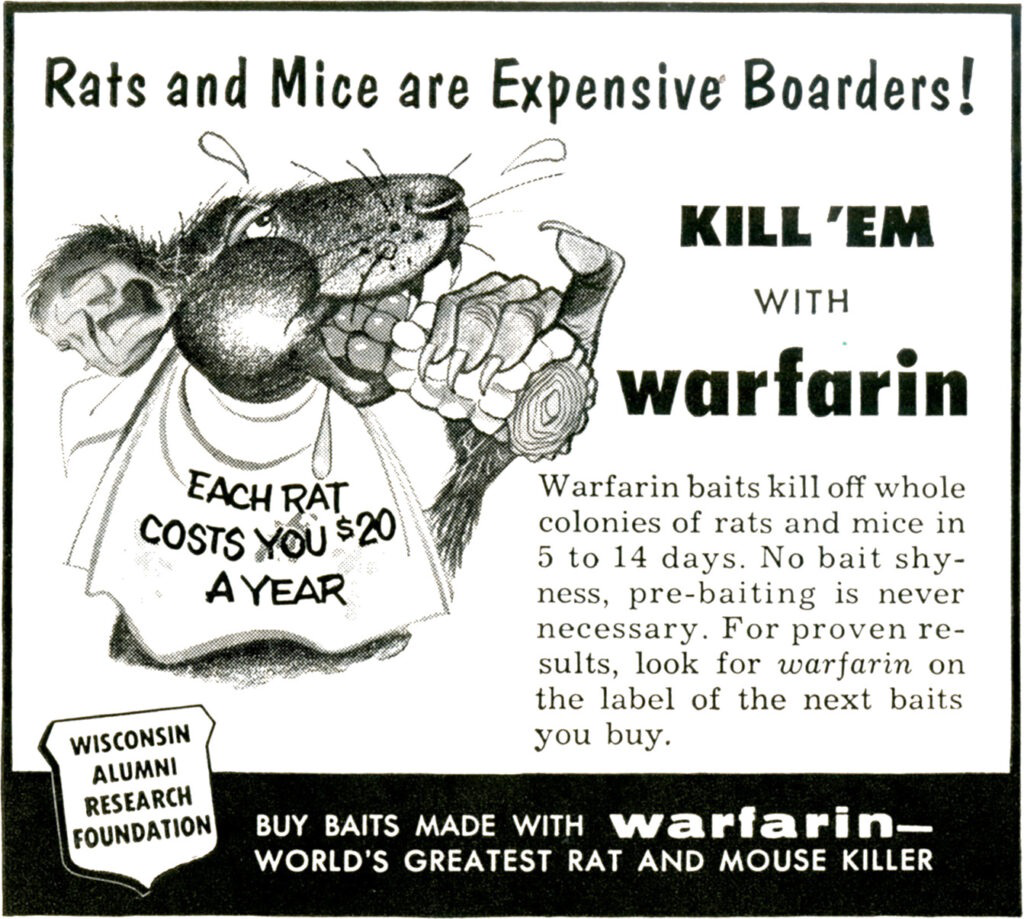 Source: https://www.sciencehistory.org/stories/magazine/a-study-in-scarlet/
Warfarin, a common rodenticide used since the 1950s, works by interfering with blood clotting. When rats ingest it, even small injuries can cause fatal bleeding. For many years, warfarin was extremely effective at reducing rat populations in cities. However, over time, researchers noticed that some rat populations were no longer affected by the toxic compound.
Initial studies showed that resistance was controlled by mutations in the VKORC1 gene, which encodes a protein involved in vitamin K recycling, crucial for blood clotting. Rats with certain VKORC1 mutations could survive doses of warfarin that would kill non-resistant individuals. Because this resistance is heritable, offspring of resistant rats inherit the advantageous trait.
Urban environments create conditions where rats reproduce quickly - females may have 6 - 12 pups per litter and multiple litters per year. This high reproductive potential means traits can spread rapidly through populations. When warfarin is used repeatedly, resistant rats survive at much higher rates than susceptible rats. Over several generations, resistant individuals make up a larger portion of the population, an example of differential survival and reproduction driven by selection pressure.
Competition intensifies this shift. As susceptible rats die, the remaining individuals must compete for limited food and nesting sites. Rats with warfarin-resistant alleles not only survive the poison but also gain a reproductive advantage by facing fewer competitors. Over time, the proportion of resistant rats can rise sharply.
Scientists use statistics and probability to analyze how quickly resistance spreads. Frequency data show clear increases in resistant alleles across urban populations. Survival-rate studies reveal dramatic differences between resistant and susceptible rats when exposed to warfarin. Together, these patterns illustrate how selection pressure, heritable variation, and population growth interact to drive evolutionary change.
The spread of warfarin resistance also demonstrates that evolution can be observed over short timescales - sometimes within a few decades or even years. Many cities have now documented rat populations where more than half carry resistance-associated alleles. This real-world example demonstrates how traits that increase survival and reproductive success become more common, precisely as predicted by evolutionary theory.
Diagram 2.
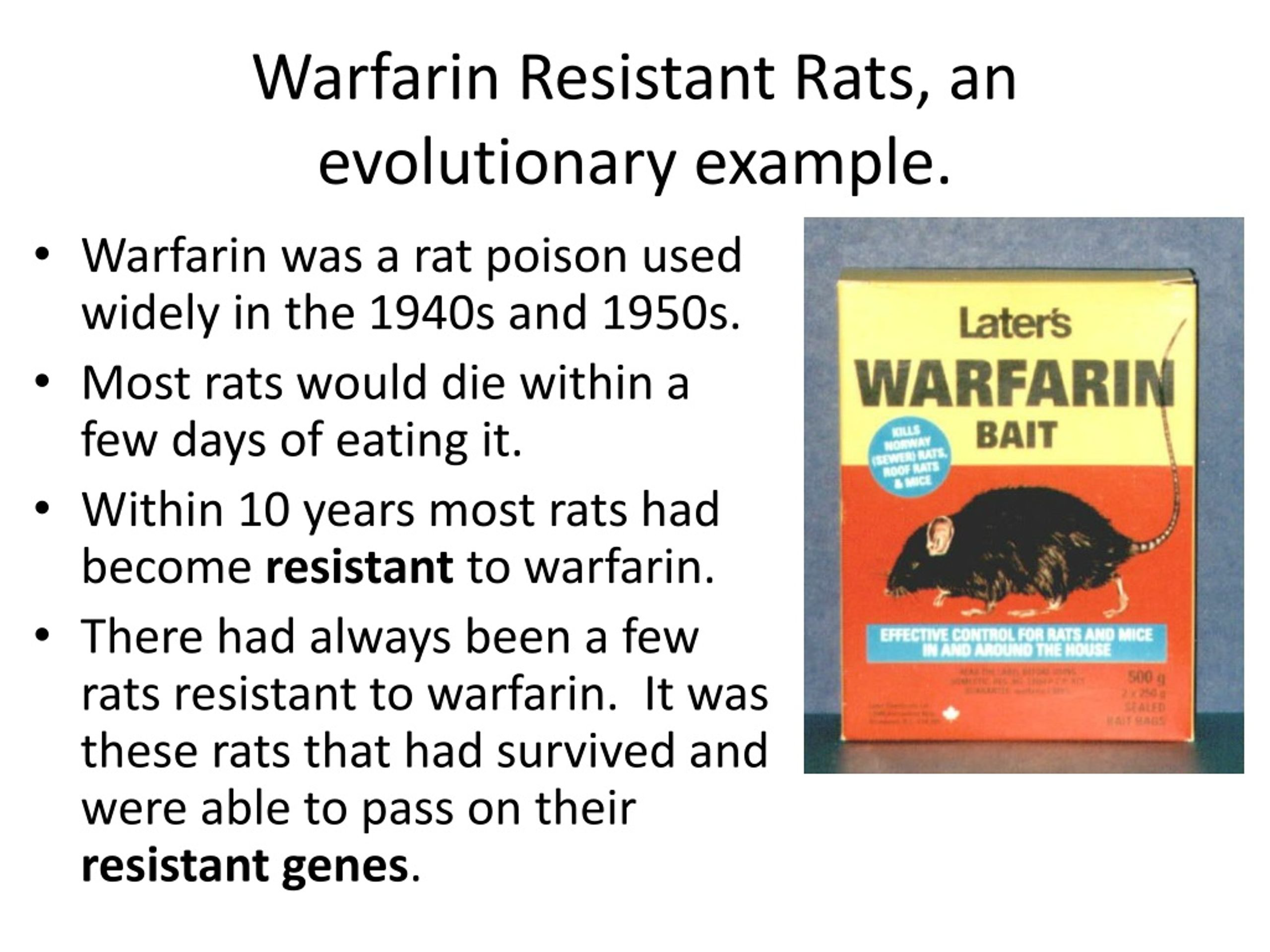 Source: https://www.slideserve.com/adina/edexcel-gcse-science
Table 1.
Year | Warfarin-Resistant Rats ($\%$) | Non-Resistant Rats ($\%$) |
|---|
2000 | 5 | 95 |
2005 | 12 | 88 |
2010 | 25 | 75 |
2015 | 38 | 62 |
2020 | 52 | 48 |
2025 | 67 | 33 |
Graph of Information - Figure 1.
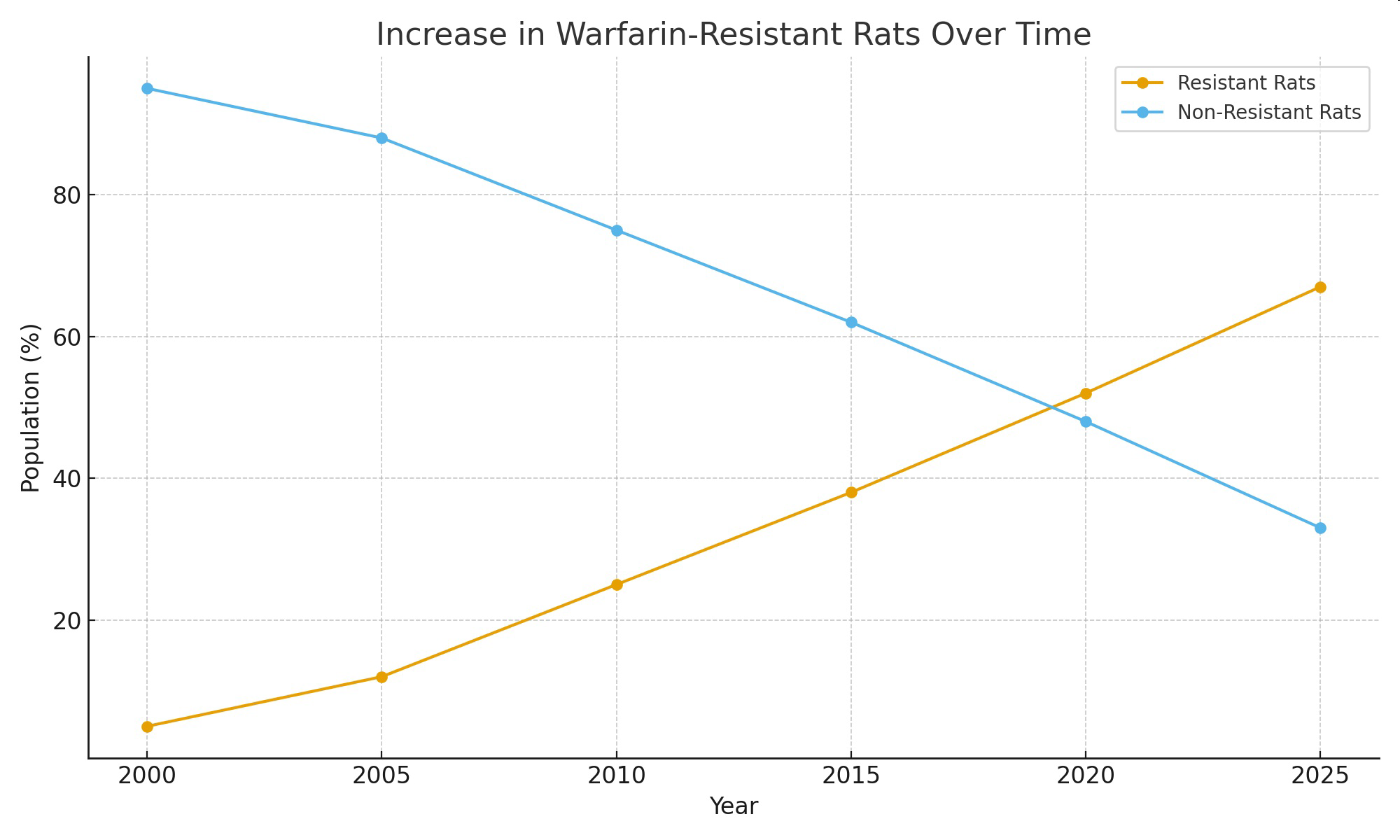
Table 2.
Rat Type | Survival Rate ($\%$) |
|---|
Non-Resistant | 8 |
Partially Resistant | 42 |
Highly Resistant | 79 |
Graph of Information - Figure 2.