Whale Evolution
Modern whales are fully aquatic mammals, yet they share key skeletal, developmental, and genetic traits with terrestrial mammals. Over the past several decades, scientists have uncovered a detailed fossil sequence showing how early land-dwelling ancestors gradually evolved into the whales we see today. These fossils, along with molecular and anatomical evidence, provide strong support for the idea that whales and terrestrial mammals share a common ancestor.
One major line of evidence comes from transitional fossils. Early forms such as Pakicetus (about 50 million years old) had long limbs and hooves, indicating a terrestrial lifestyle. Slightly younger species, including Ambulocetus, show adaptations for swimming, such as webbed feet and a more flexible spine. Later fossils such as Rodhocetus and Dorudon show progressively reduced hind limbs, more powerful tails, and nostrils that begin shifting toward the top of the skull - features that become the blowholes in living whales. This sequence represents a gradual accumulation of traits suited for aquatic life.
Diagram 1.
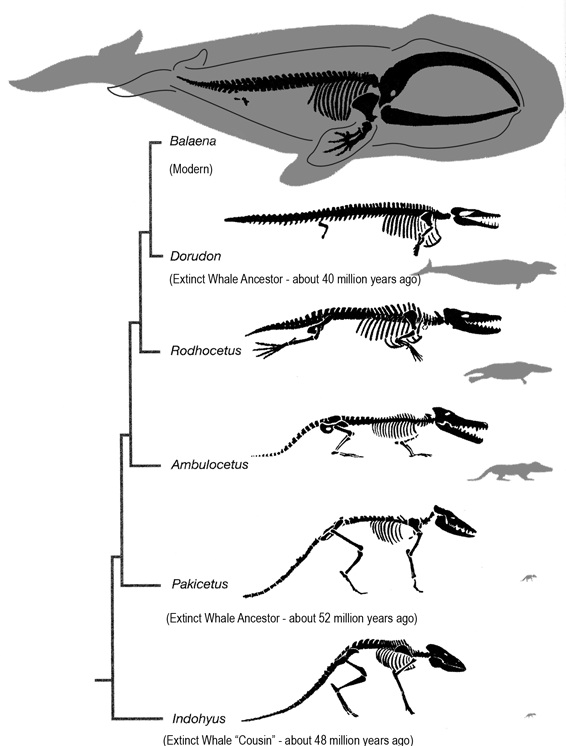
Source: https://thewhaleevolution.weebly.com/the-whale-evolutionary-tree.html
Another line of evidence comes from homologous structures. Modern whales retain pelvic bones that no longer attach to hind limbs. These bones closely resemble the pelvis of land mammals, demonstrating descent with modification rather than independent origin. The flippers of whales contain the same pattern of bones - humerus, radius, ulna, carpals - as the limbs of terrestrial mammals, showing that these structures were inherited from a common ancestor and adapted for swimming.
Diagram 2.
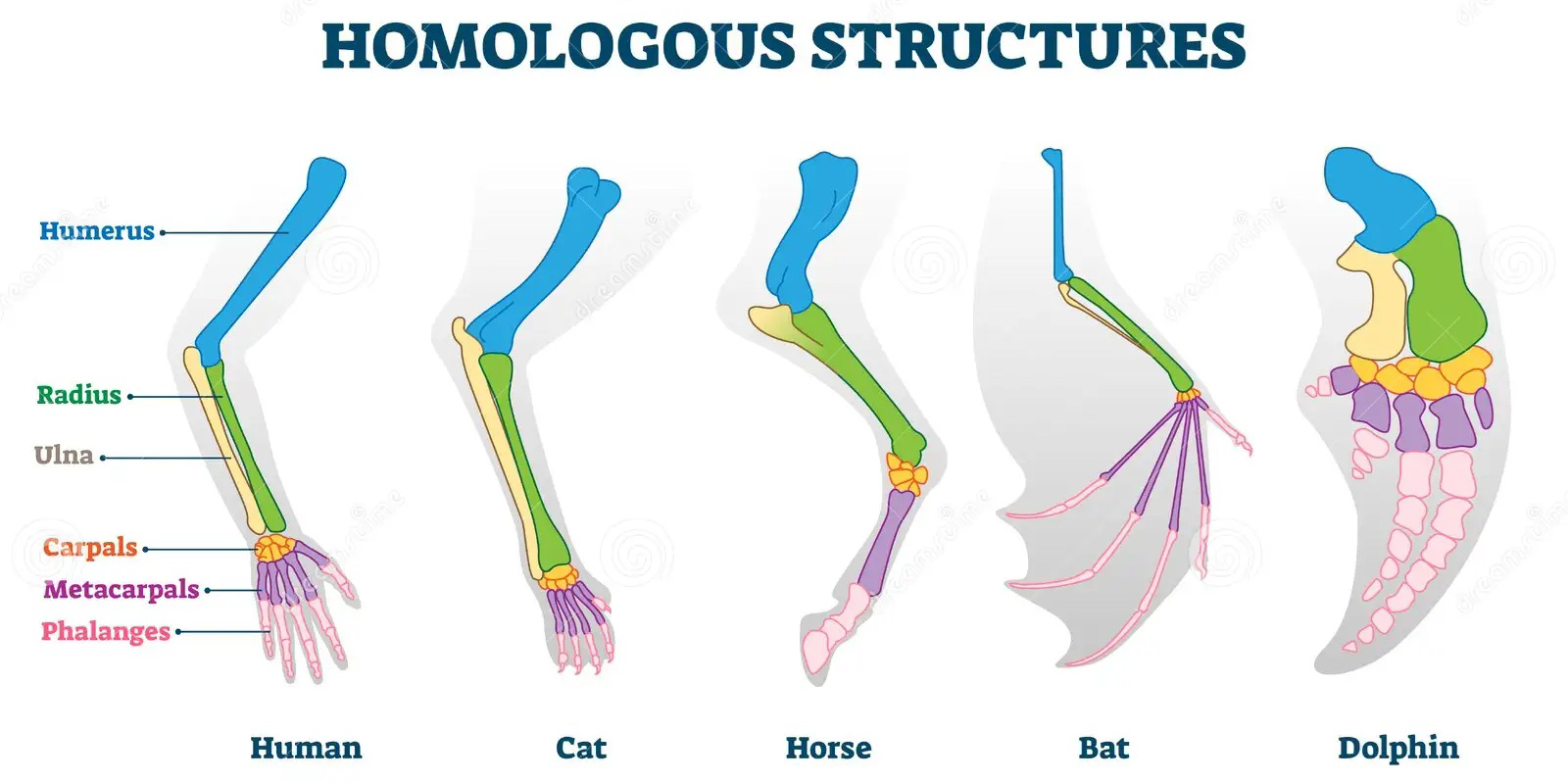 Source: https://animalia-life.club/qa/pictures/analogous-structures-vs-homologous-structures
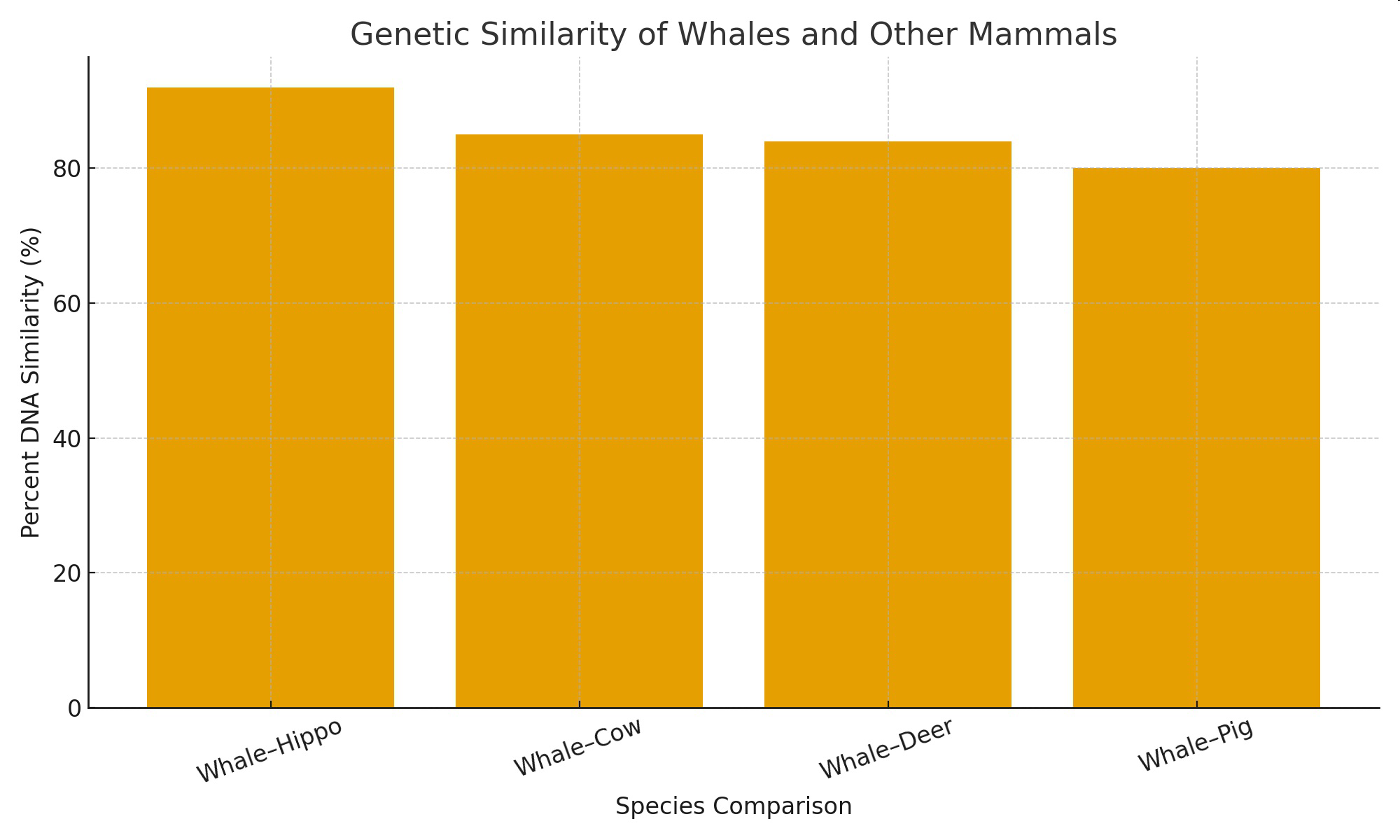
Molecular evidence provides a third line of support. DNA comparisons show that whales share more genetic similarities with hippos than with any other living mammals. Shared retroposon insertions - rare genetic markers - appear in both groups, strongly indicating that they inherited these markers from a common ancestor. Combining fossil, anatomical, and molecular evidence creates a consistent evolutionary story.
Finally, whale embryology offers additional clues. Developing embryos show limb buds that later regress, mirroring the evolutionary transition visible in the fossil record. Their nostrils also migrate upward during development, reflecting evolutionary modification of skull shape over time.
Table 1.
Species | Age (million years) | Hind Limb Length (cm) | Nostril Position Index |
|---|
Pakicetus | 50 | 60 | 0.1 |
Ambulocetus | 48 | 50 | 0.25 |
Rodhocetus | 46 | 30 | 0.5 |
Dorudon | 40 | 10 | 0.75 |
Basilosaurus | 37 | 5 | 0.9 |
Graph of Information - Figure 1.
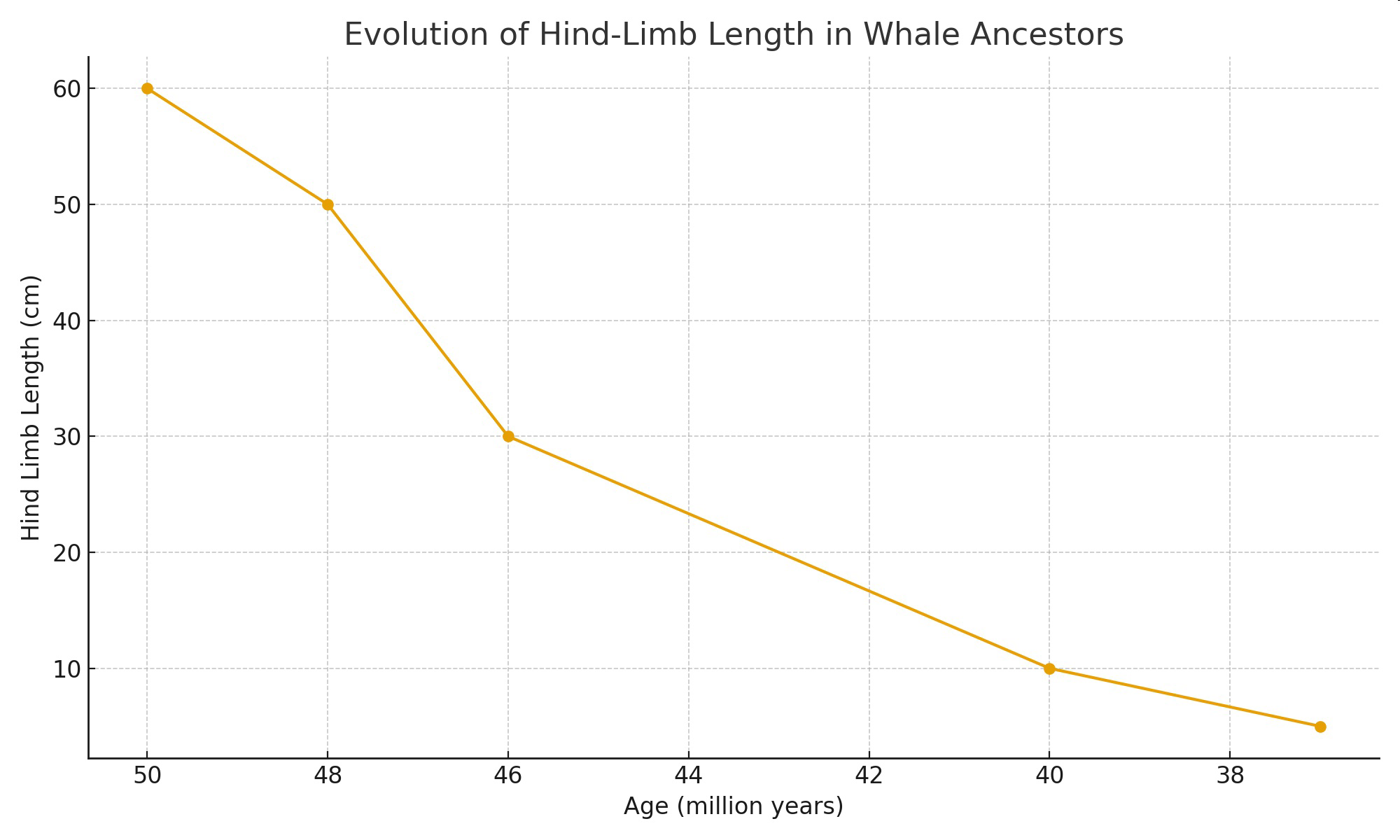
Table 2.
Comparison | Percent DNA Similarity (%) |
|---|
Whale to Hippo | 92 |
Whale to Cow | 85 |
Whale to Deer | 84 |
Whale to Pig | 80 |
Graph of Information - Figure 2.