Blood Glucose Regulation After a Meal
Homeostasis refers to the ability of organisms to maintain stable internal conditions. One of the most important examples in humans is the regulation of blood glucose levels, which must remain within a narrow range to supply cells with energy without damaging tissues. This balance is maintained through a negative feedback mechanism involving the endocrine system, digestive system, and circulatory system.
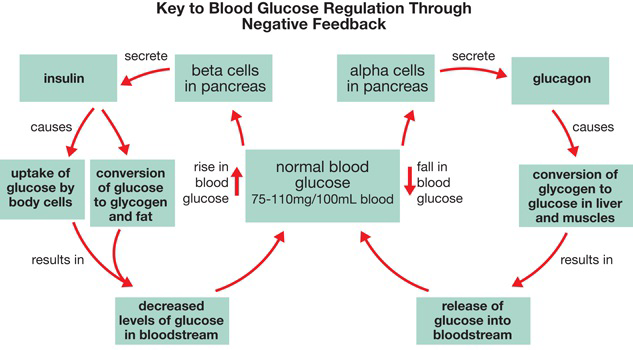
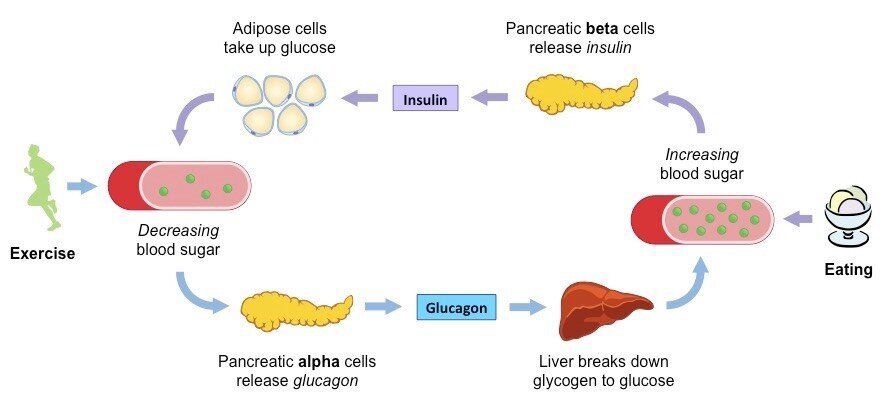
After a carbohydrate-rich meal, glucose enters the bloodstream as digestion breaks starches into simple sugars. This rise in blood glucose serves as a stimulus detected by specialized cells in the pancreas called $\beta$-cells, located in the islets of Langerhans. These cells act as both sensors and controllers: when glucose levels become too high, they release the hormone insulin into the bloodstream.
Insulin travels through the circulatory system to target tissues such as muscle, liver, and adipose tissue. Muscle and fat cells respond by moving glucose transport proteins (GLUT4) to their membranes, allowing glucose to enter the cell more efficiently. The liver responds by converting excess glucose into glycogen for storage. These actions represent the effectors in the feedback loop.
As cells absorb glucose, blood sugar levels begin to fall toward the homeostatic set point. When levels return to normal, insulin secretion decreases - a classic example of negative feedback: the response counteracts the initial stimulus.
A second hormone, glucagon, produced by pancreatic $\alpha$-cells, works in the opposite direction. When blood glucose drops too low - such as between meals or during exercise - glucagon signals the liver to break down glycogen and release glucose into the bloodstream. Together, insulin and glucagon form a dynamic feedback pair that stabilizes blood glucose around a healthy range.
In people with diabetes, this feedback system is disrupted. In Type 1 diabetes, the pancreas produces little or no insulin, preventing glucose uptake by cells. In Type 2 diabetes, tissues become resistant to insulin, and blood glucose remains elevated longer after meals. These conditions illustrate what happens when a feedback loop fails: homeostasis cannot be maintained, leading to health complications.
This example demonstrates the core idea: feedback mechanisms are essential for maintaining internal stability, and disruptions to these mechanisms produce measurable physiological changes.
Table 1.
Time After Meal (minutes) | Healthy Blood Glucose (mg/dL) | Diabetic Blood Glucose (mg/dL) |
|---|
0 | 90 | 110 |
30 | 130 | 180 |
60 | 120 | 190 |
90 | 100 | 175 |
120 | 95 | 160 |
180 | 90 | 150 |
Graph of Information - Figure 1.
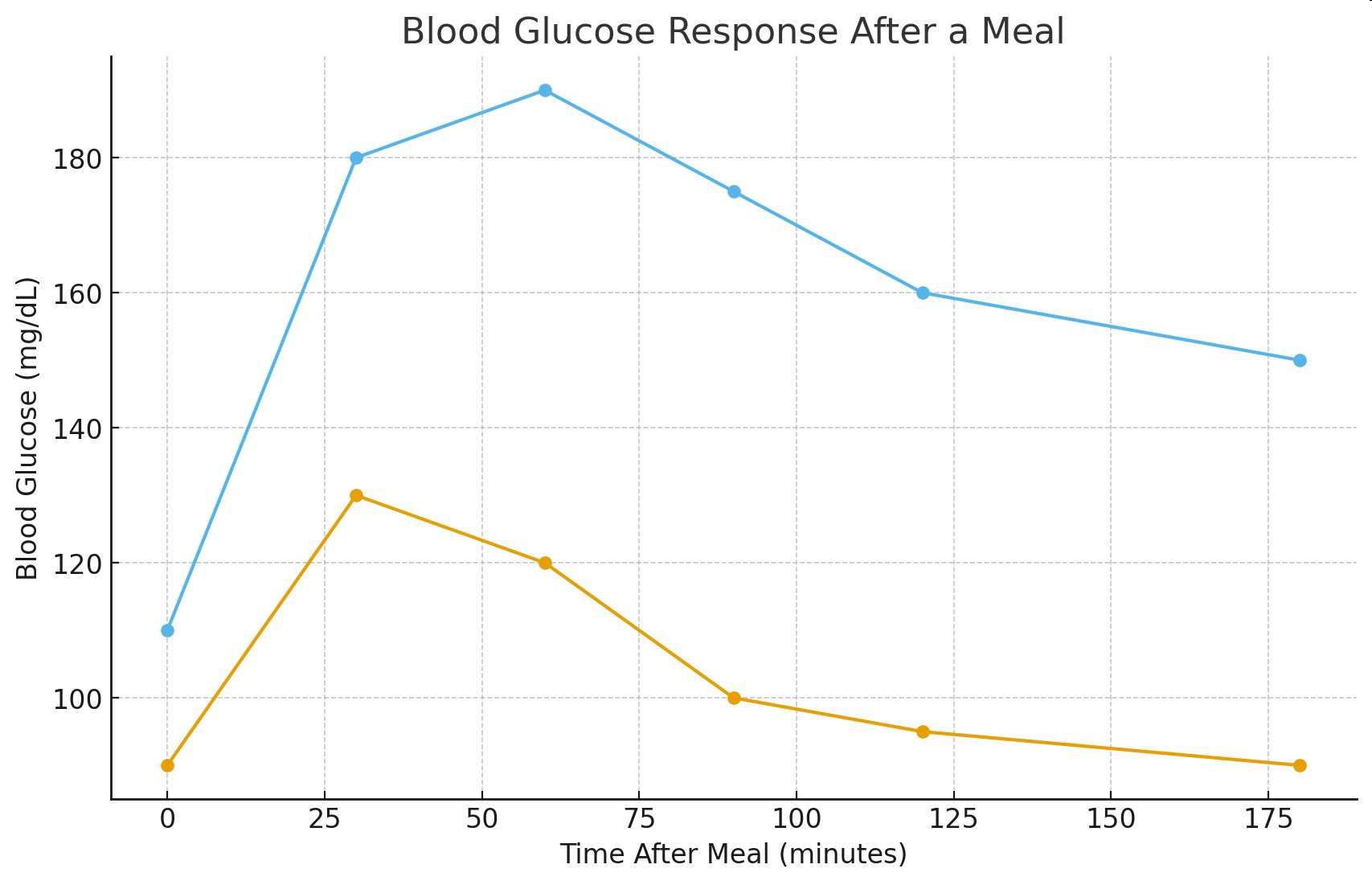
Table 2.
Time After Meal (minutes) | Insulin Level (µU/mL) | Glucagon Level (pg/mL) |
|---|
0 | 8 | 75 |
30 | 35 | 60 |
60 | 30 | 55 |
90 | 20 | 65 |
120 | 12 | 70 |
180 | 8 | 80 |
Graph of Information - Figure 2.
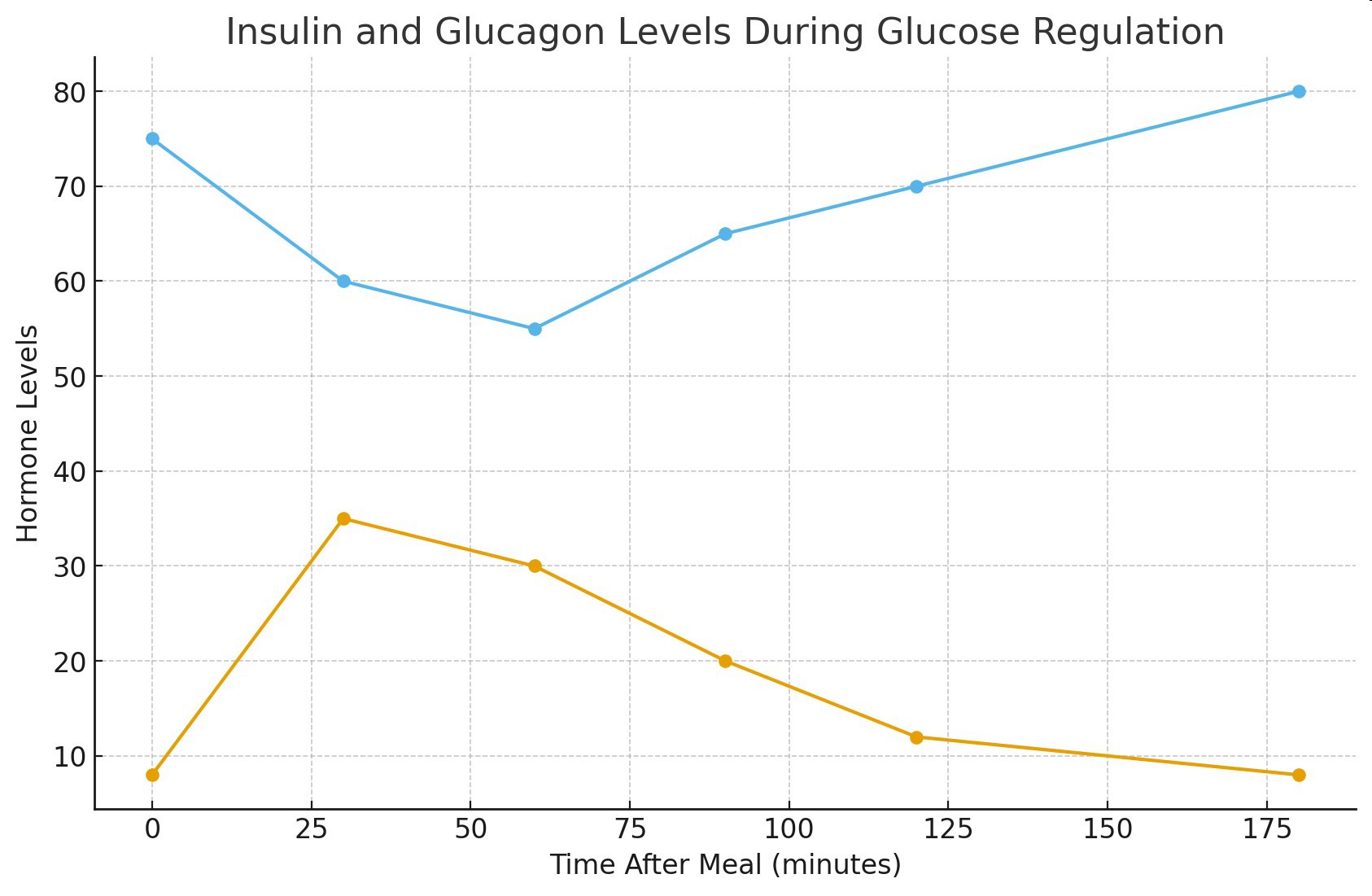
Figure 3.
 Source: https://lah.elearningontario.ca/CMS/public/exported_courses/SBI4U/exported/SBI4UU02/SBI4UU02/SBI4UU02A11/
Figure 4.
 Source:
https://www.difference.wiki/insulin-vs-glucagon/