CO2 Levels and Breathing Rate
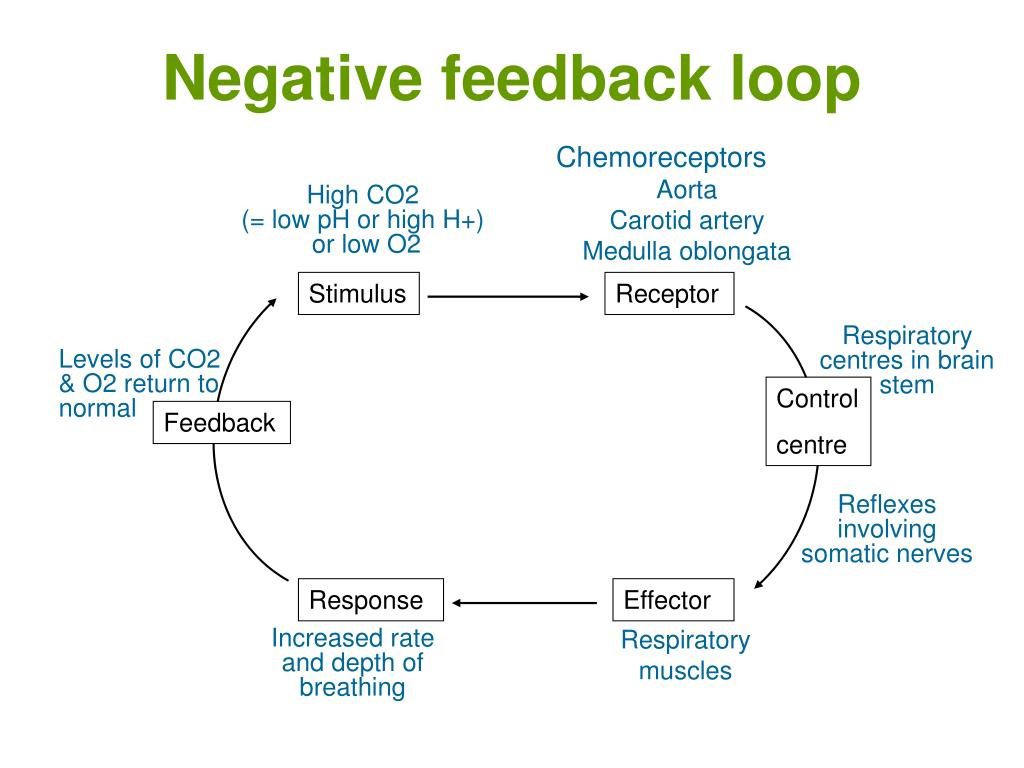
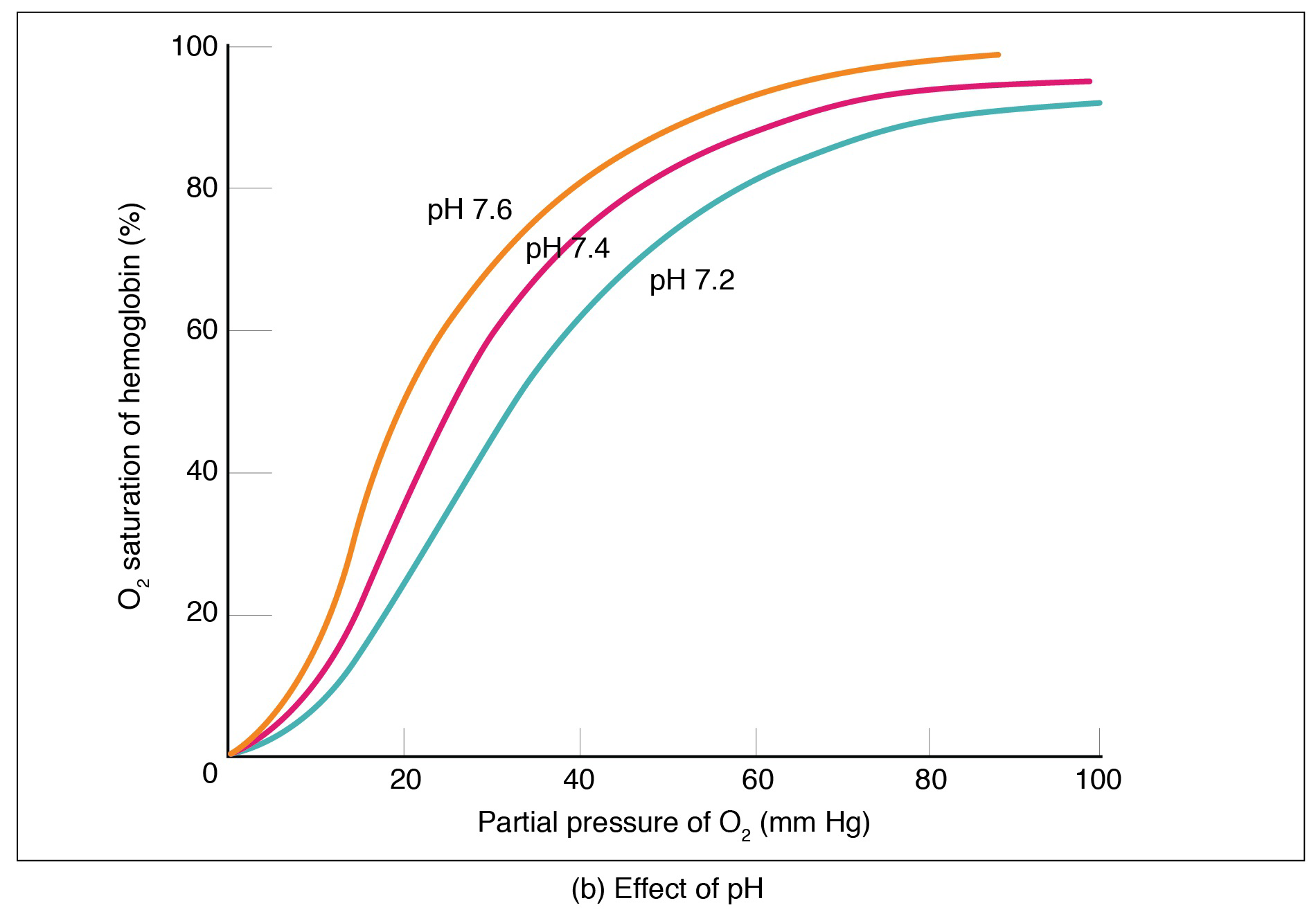
The regulation of breathing is a classic example of how a negative feedback mechanism maintains homeostasis. While many people think oxygen levels control breathing, it is actually carbon dioxide (CO2) that plays the most significant role. CO2 dissolves in the blood to form carbonic acid, lowering blood pH. Because even slight deviations from normal pH $7.35–7.45$ can disrupt cellular processes, the body closely monitors CO2 and adjusts breathing to keep pH stable.
The process begins with chemoreceptors, specialized sensory cells located in the medulla of the brainstem and in the carotid arteries. These cells detect increases in CO2 or decreases in pH. When a person holds their breath or begins exercising, CO2 levels begin to rise. Chemoreceptors send immediate signals to the respiratory control centers in the brainstem.
At the organ level, the brainstem responds by increasing the activity of the diaphragm and intercostal muscles, causing breathing rate and depth to rise. Faster and deeper breathing removes more CO2 from the bloodstream. This prevents the dangerous drop in pH that would otherwise occur as CO2 accumulates.
This is clearly seen after a breath-hold: breathing rate temporarily spikes, and exhaled CO2 levels rise sharply before gradually returning to normal. During moderate exercise, CO2 production increases because muscle cells respire more rapidly. As pH begins to fall, chemoreceptors trigger deeper breaths, helping maintain blood pH near its set point.
At the organ-system level, the respiratory and circulatory systems work together to support homeostasis. The circulatory system transports CO2 from tissues to the lungs, while the respiratory system removes it from the body. If breathing were controlled only by voluntary actions, CO2 could build up to dangerous levels, but automatic feedback ensures constant stability.
Table 1.
Time After Breath-Hold (seconds) | Exhaled CO2 (%) | Breathing Rate (breaths/min) |
|---|
0 | 2.5 | 10 |
15 | 3.2 | 16 |
30 | 3.8 | 20 |
45 | 4.1 | 22 |
60 | 4.3 | 24 |
Graph of Information - Figure 1.
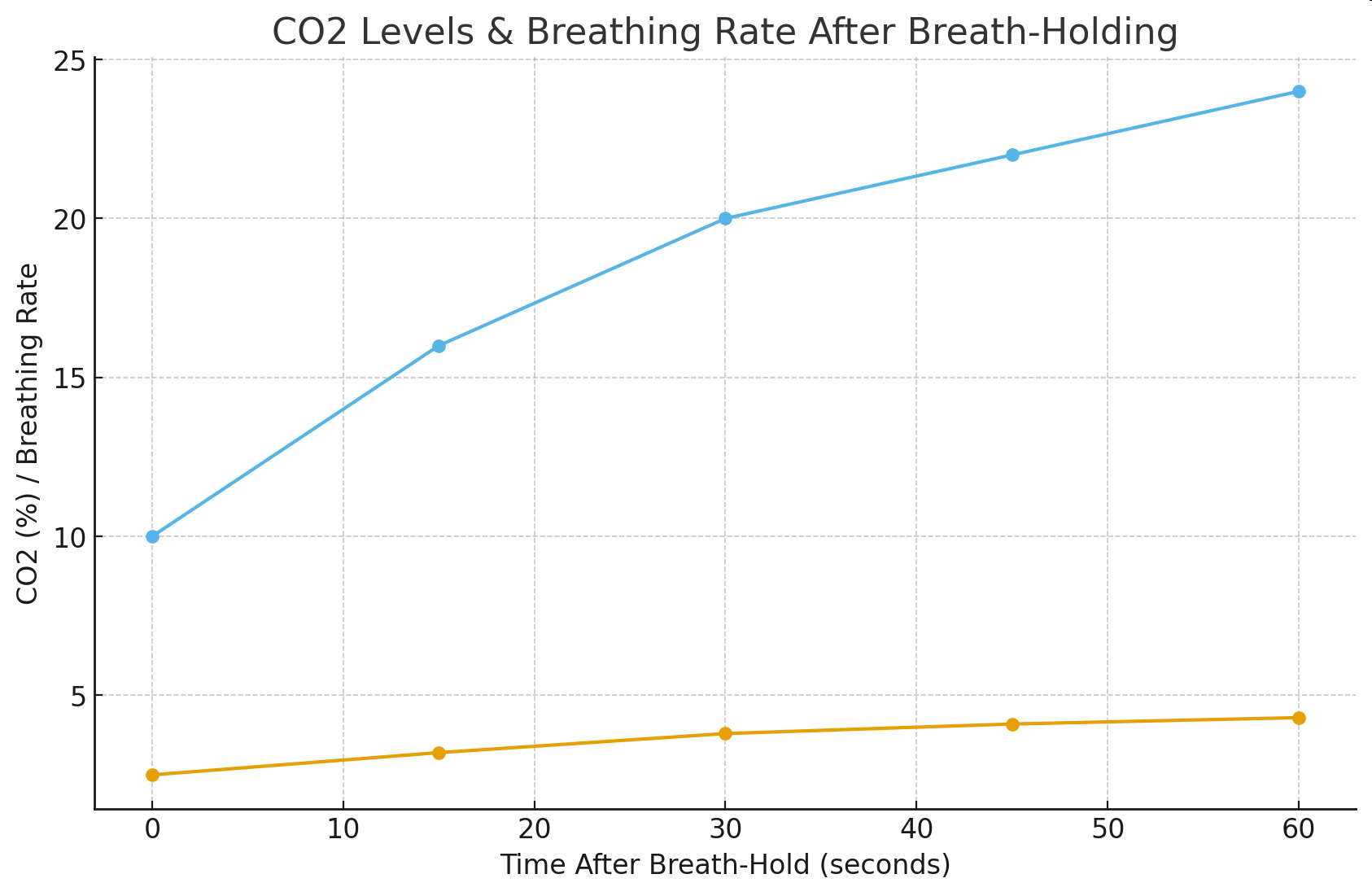
Table 2.
Time (minutes) | Blood pH | Breathing Depth (mL per breath) |
|---|
0 | 7.4 | 400 |
2 | 7.38 | 480 |
4 | 7.36 | 550 |
6 | 7.34 | 620 |
8 | 7.33 | 700 |
Graph of Information - Figure 2.
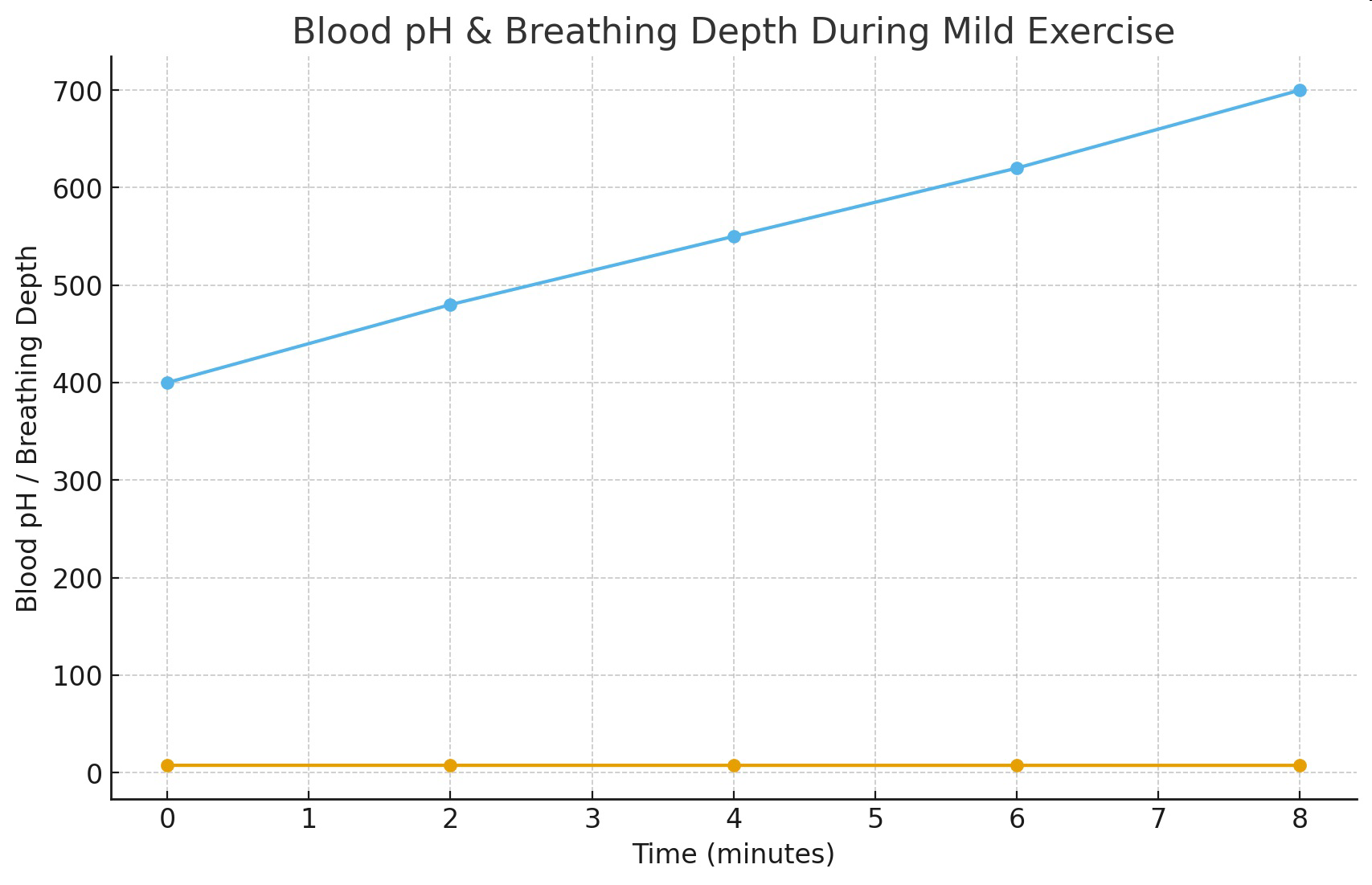
Figure 3.
 Source: https://www.slideserve.com/eljah/unit-3a-human-form-function
Figure 4.
 Source: https://geekymedics.com/oxygen-transport-in-the-blood/