Cystic Fibrosis
Cystic fibrosis (CF) is a genetic disorder that demonstrates the direct link between DNA sequence, protein structure, and the function of specialized cells. The disorder is caused by mutations in the CFTR gene, which encodes the cystic fibrosis transmembrane conductance regulator, a protein that functions as a chloride ion channel in the cell membranes of epithelial tissues. These tissues line structures such as the lungs, pancreas,
and intestines, where chloride movement helps control fluid balance and mucus consistency.
The most common mutation causing cystic fibrosis is called ÄF508, which indicates the deletion of three nucleotides from the CFTR gene. This deletion removes the amino acid phenylalanine at position 508 of the CFTR protein. Although this may seem like a small change - one missing amino acid out of over 1,400 - it has
a profound effect on the protein’s structure. Because proteins fold into very specific three-dimensional shapes to function correctly, even a single missing or substituted amino acid can destabilize the folding process.
In the case of ÄF508, the altered protein folds incorrectly, and the cell recognizes the misfolded CFTR as defective. Instead of sending it to the cell membrane, the cell’s quality-control system targets the protein for degradation. As a result, very little functional CFTR reaches the membrane in individuals who have two copies of the ÄF508 mutation. This drastically reduces chloride ion transport. Without adequate chloride movement,
epithelial cells cannot regulate the movement of water into mucus, causing it to become thick, sticky, and
difficult to clear.
This change in protein folding has system-wide impacts. In the lungs, thick mucus traps bacteria and leads to chronic infections. In the pancreas, mucus blocks the release of digestive enzymes, impairing nutrient absorption. Even in sweat glands, the lack of CFTR alters salt balance, causing unusually salty sweat—one of
the diagnostic signs of CF.
Carriers with one ÄF508 allele produce enough normal CFTR protein to maintain partial chloride transport, which prevents CF symptoms. People with two copies of the mutation experience severe reductions in protein function, demonstrating how DNA 6 protein 6 cell 6 organ system relationships drive this condition.
Cystic fibrosis highlights the core idea of HS-LS1-1: specific DNA mutations alter protein structure, which changes cellular function and affects an entire organism.
Table 1.
Genotype | CFTR Function (%) | Chloride Transport (arbitrary units) |
|---|
Normal (WT) | 100 | 95 |
Carrier (ΔF508/WT) | 55 | 50 |
CF (ΔF508/ΔF508) | 5 | 8 |
Graph of Information - Figure 1.
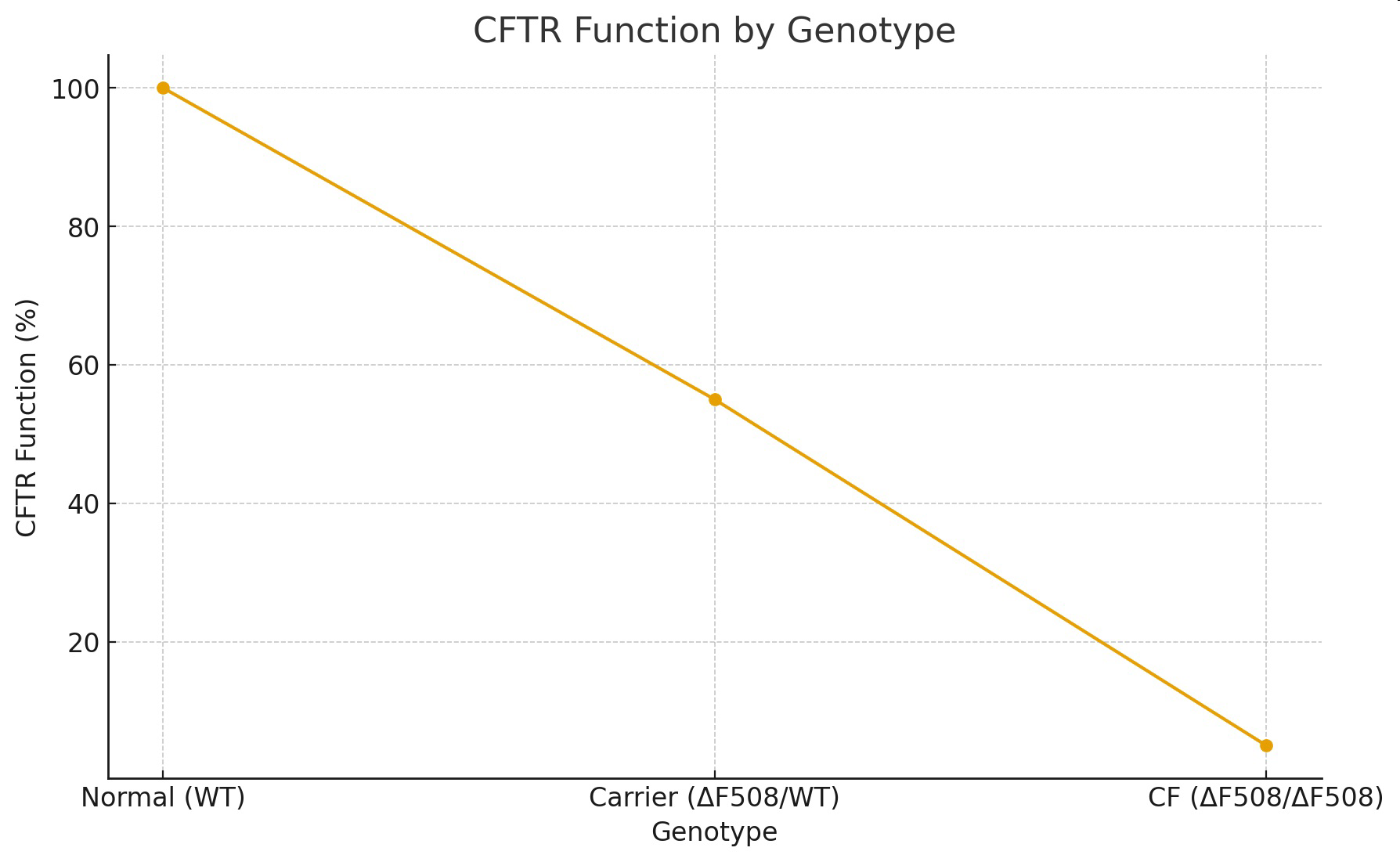
Table 2.
Time (minutes) | Mucus Viscosity Normal (Pa·s) | Mucus Viscosity CF (Pa·s) |
|---|
0 | 1 | 1.5 |
5 | 1 | 1.8 |
10 | 1.1 | 2.2 |
20 | 1.1 | 2.7 |
30 | 1.2 | 3 |
Graph of Information - Figure 2.
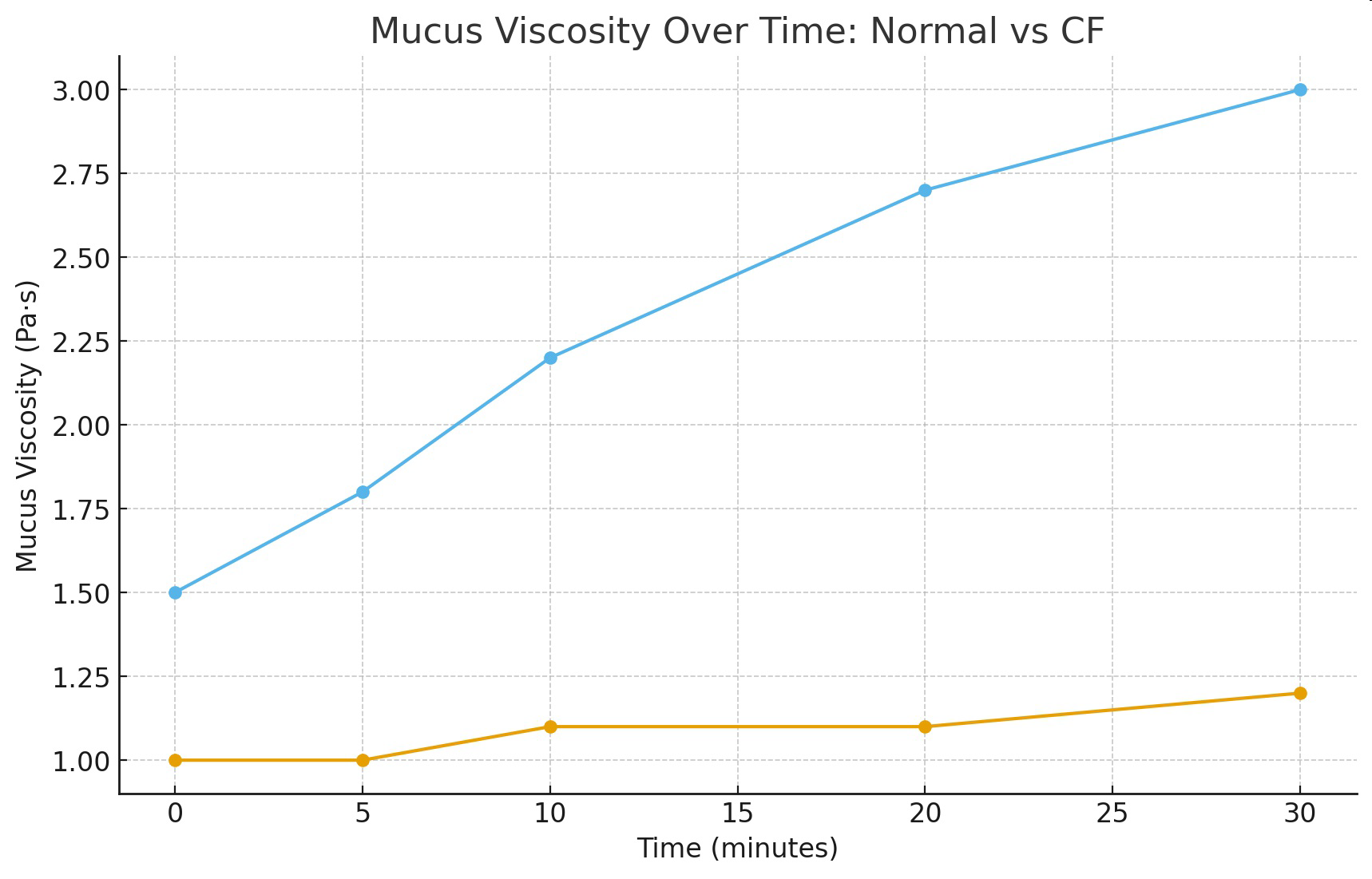
Figure 3.
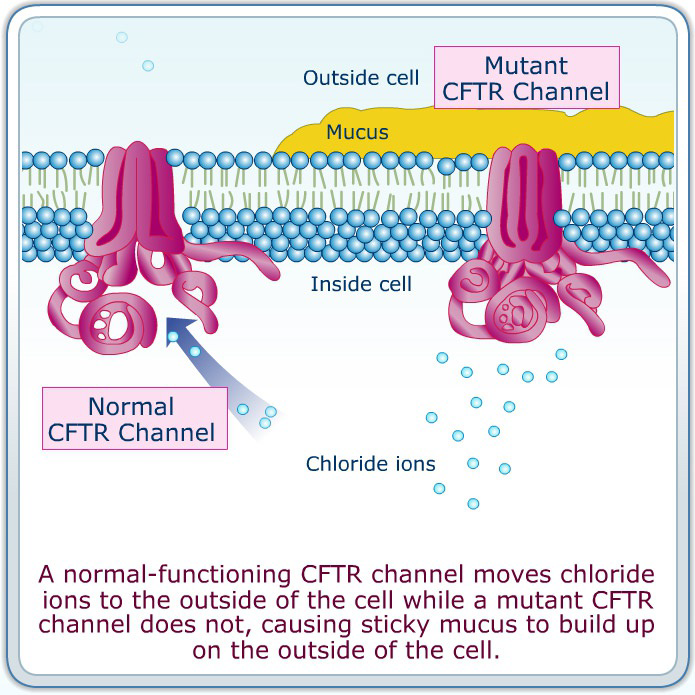 Source: https://cyfbin.weebly.com/cyfb.html
Figure 4.
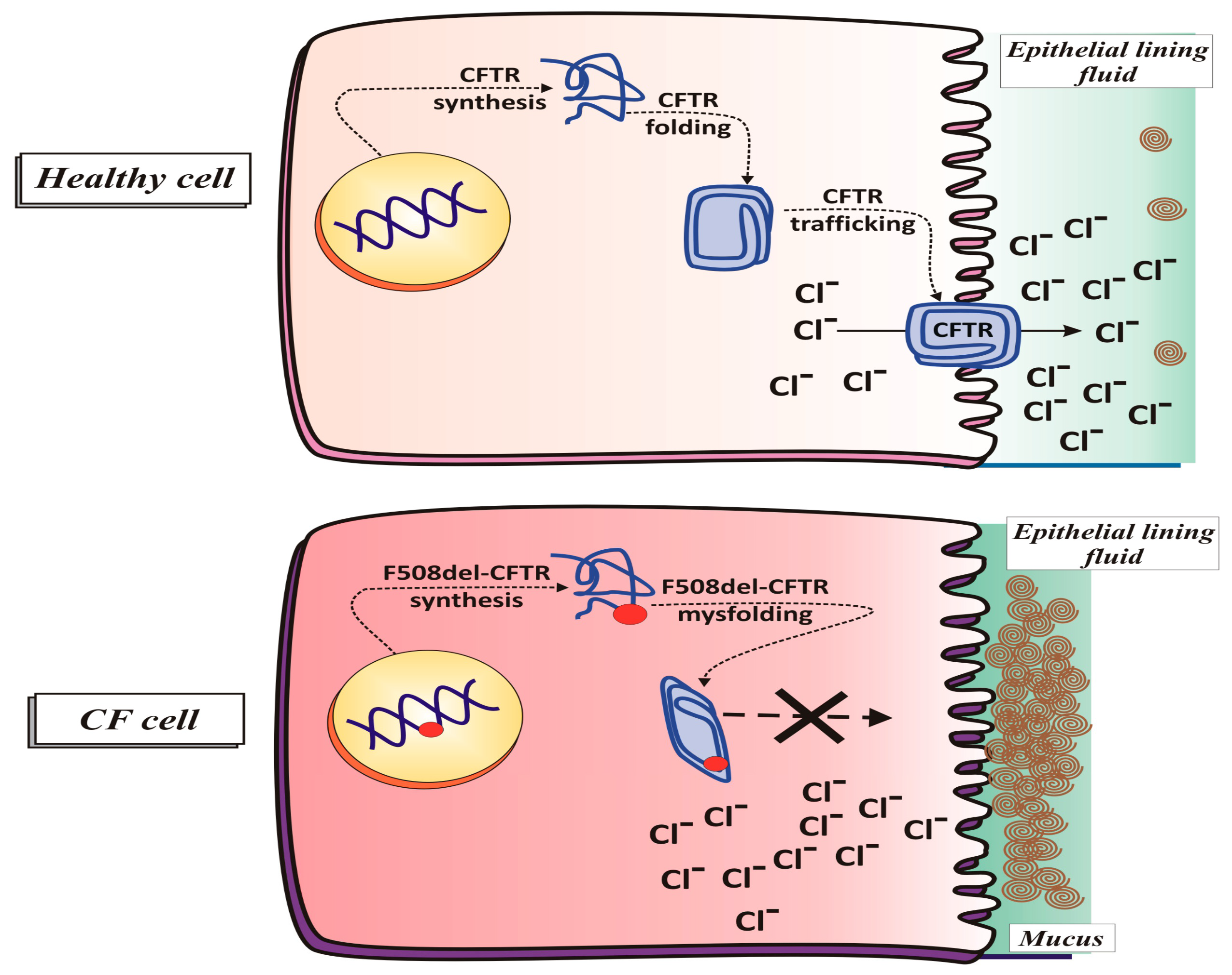 Source:
https://www.mdpi.com/2077-0383/8/11/1890