Diabetes and Glucose Regulation
Maintaining stable blood glucose levels requires the coordinated actions of multiple structures within the body - cells, tissues, organs, and organ systems. This makes glucose regulation an excellent example of the hierarchical organization. In a healthy individual, specialized β-cells in the pancreas detect rising blood glucose after a meal. These cells release the hormone insulin, which travels through the bloodstream and signals muscle, liver, and fat cells to absorb glucose. This cellular uptake lowers blood glucose back to homeostatic levels.
At the tissue level, clusters of β-cells form the islets of Langerhans, which serve as the pancreas’s regulatory centers for blood sugar. Meanwhile, tissues such as skeletal muscle contain insulin receptors that allow their cells to respond quickly by increasing glucose transport across the membrane. The cooperation of these tissues ensures a rapid return to normal glucose levels.
At the organ level, the pancreas releases insulin, the liver stores glucose as glycogen, and muscle tissues actively remove glucose from the blood. These organs each perform distinct but complementary roles. Their coordinated responses are essential for maintaining homeostasis.
Type 2 diabetes occurs when cells in these organs become insulin resistant, meaning insulin binds less effectively to its receptor. Even though β-cells may release large amounts of insulin, muscle and liver cells fail to initiate glucose uptake. As a result, glucose remains in the bloodstream for longer periods after meals, leading to chronic hyperglycemia.
These disruptions cascade into the organ-system level. The endocrine system produces insulin, but the circulatory system carries high glucose levels throughout the body. The digestive system continues breaking down carbohydrates into glucose, further elevating blood sugar levels. Over time, persistently high blood glucose damages blood vessels, nerves, and kidney function, affecting nearly every major organ system.
Type 2 diabetes clearly demonstrates how interacting systems rely on the structure and organization of cells and tissues. When insulin receptors on individual cells fail to respond, tissues cannot perform their normal functions, organs fall out of sync, and organ systems lose the ability to regulate glucose. This failure of coordination across levels of organization illustrates the hierarchical nature of physiological regulation in multicellular organisms.
Table 1.
Condition | Time After Meal (minutes) | Blood Glucose (mg/dL) |
|---|
Healthy | 0 | 90 |
Healthy | 60 | 120 |
Healthy | 120 | 95 |
Type 2 Diabetes | 0 | 110 |
Type 2 Diabetes | 60 | 190 |
Type 2 Diabetes | 120 | 165 |
Graph of Information - Figure 1.
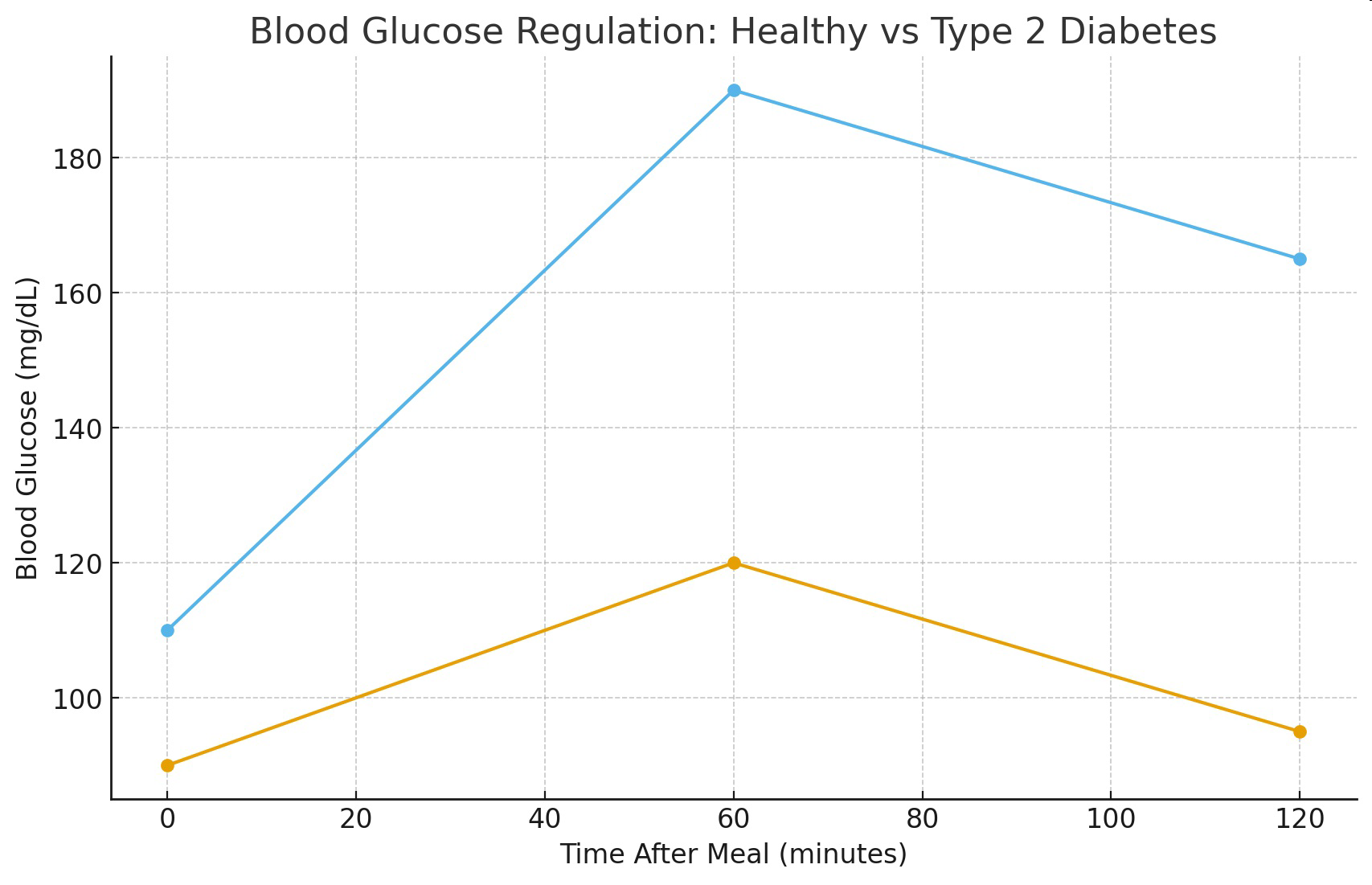
Table 2.
Condition | Insulin Level (μU/mL) | Glucose Uptake Rate (arb.units) |
|---|
Healthy | 8 | 90 |
Healthy | 30 | 120 |
Healthy | 15 | 100 |
Type 2 Diabetes | 15 | 40 |
Type 2 Diabetes | 45 | 45 |
Type 2 Diabetes | 40 | 42 |
Graph of Information - Figure 2.
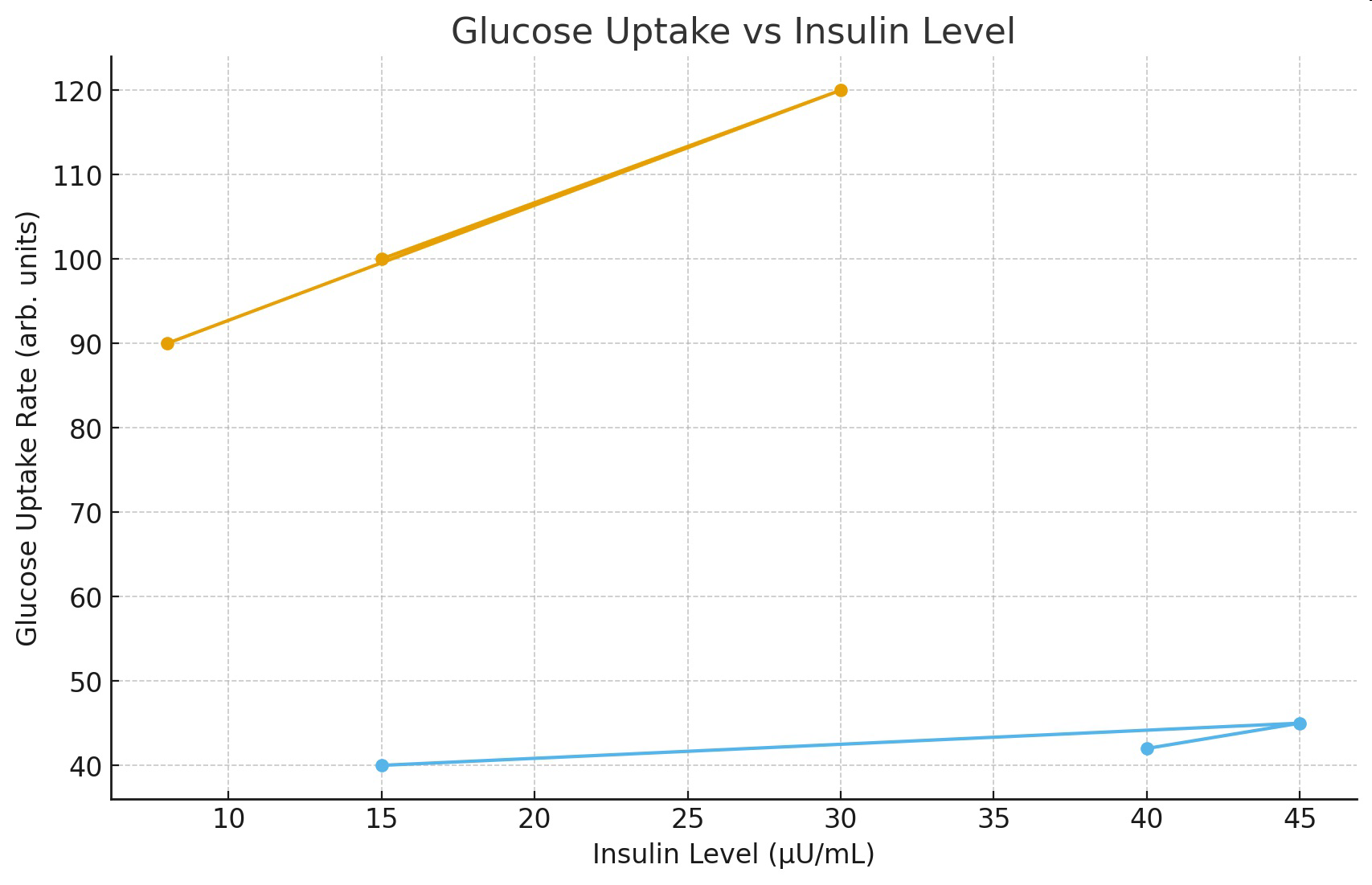
Figure 3.
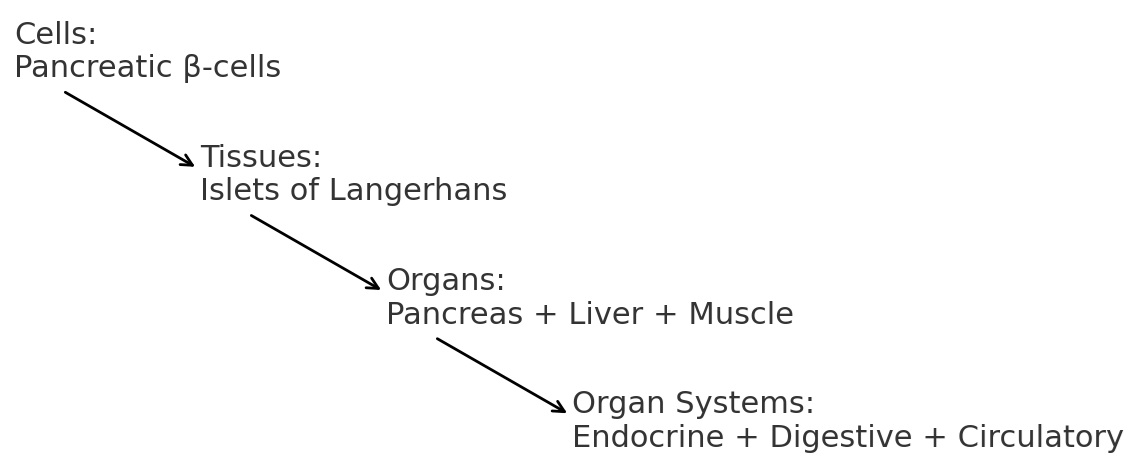
Figure 4.
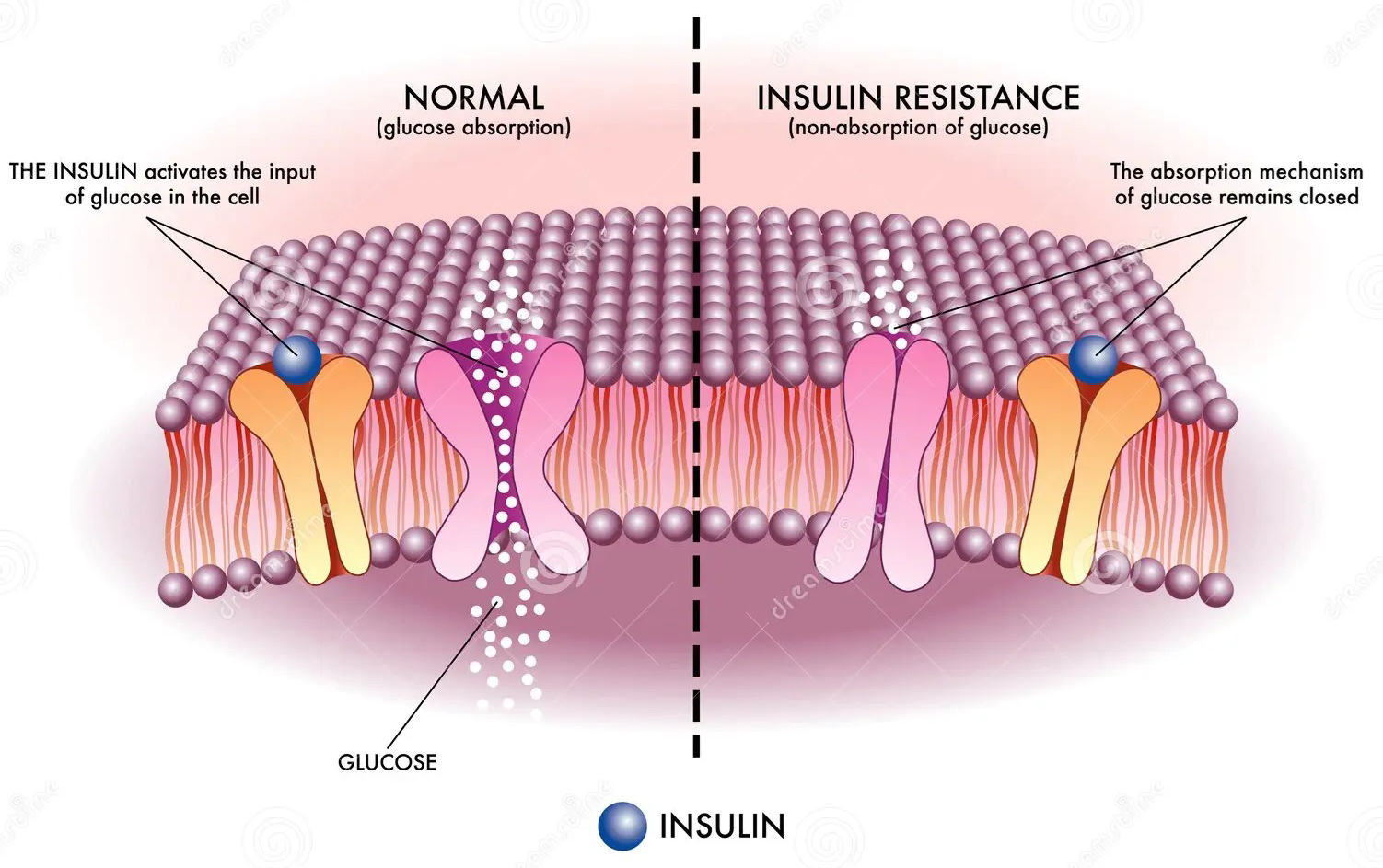
Source: https://cartoondealer.com/image/327487346/medical-illustration-insulin-resistance.html