Gas Exchange Breakdown in Emphysema
Emphysema is a chronic lung condition that clearly illustrates how multicellular organisms depend on a hierarchical organization of structures - cells, tissues, organs, and interacting organ systems - to perform essential functions. In healthy lungs, the smallest functional units of gas exchange are the alveoli, tiny air sacs clustered at the ends of bronchioles. Each alveolus is lined with a thin layer of epithelial cells supported by elastic connective tissue and surrounded by a dense network of capillaries. Together, these structures create a large surface area for oxygen and carbon dioxide diffusion between the respiratory and circulatory systems.
In emphysema, long-term exposure to irritants such as cigarette smoke causes inflammation that damages alveolar epithelial cells. Over time, many alveolar walls break down, merging small alveoli into larger, less efficient spaces. This reduces total surface area and destroys elastic fibers that normally allow alveoli to expand and recoil. Although the lung as an organ may still fill with air, the ability of alveolar tissues to facilitate gas exchange is severely impaired.
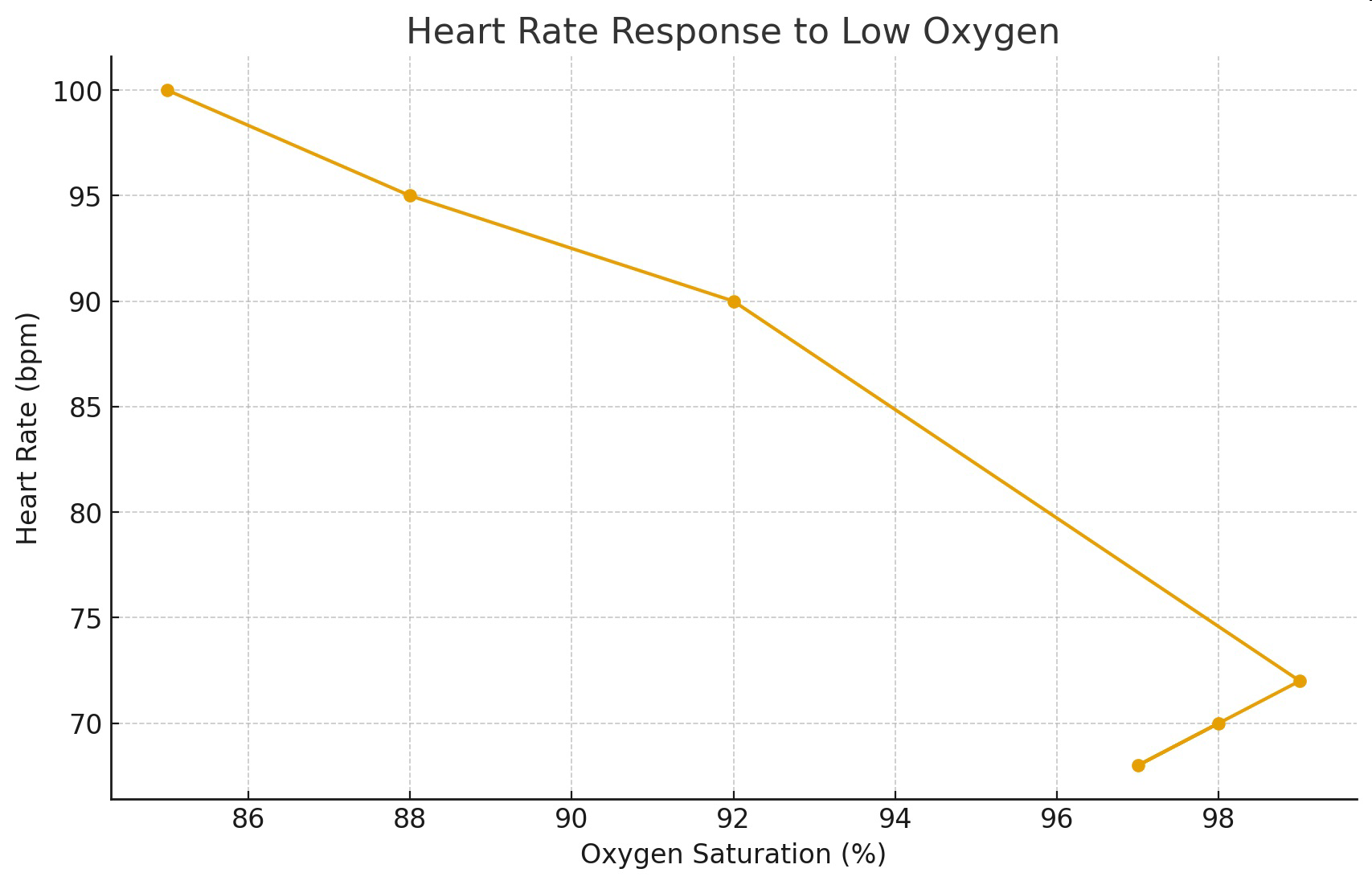
At the tissue level, the loss of elasticity makes it difficult for air to move out of the lungs during exhalation. Air becomes trapped in the damaged alveoli, causing lung hyperinflation. This not only reduces gas exchange efficiency but also alters the diaphragm’s position, making breathing even more difficult. As oxygen uptake declines, the circulatory system must compensate by increasing heart rate and redirecting blood flow - but compensation is limited.
These failures cascade up the hierarchy. At the organ-system level, reduced oxygen loading in the lungs means less oxygen is delivered to tissues throughout the body. Cells in muscles, the brain, and other organs cannot produce enough ATP, leading to fatigue, cognitive difficulties, and decreased physical capacity. Over time, the heart may enlarge or weaken as it struggles to maintain adequate circulation.
Emphysema demonstrates the core idea: complex organismal functions depend on interactions among systems, and these systems depend on the organization of cells and tissues within organs. Damage that begins at the cellular level - epithelial cell loss - leads to tissue-level collapse of alveolar walls, which impairs organ-level lung function and disrupts the integrated activity of the respiratory and circulatory systems. This hierarchical failure ultimately changes the functioning of the entire organism.
Table 1.
Severity Level | Alveolar Surface Area (% of normal) | Respiratory Efficiency (% O$_2$ absorbed) |
|---|
Healthy | 100 | 98 |
Mild Emphysema | 75 | 85 |
Moderate Emphysema | 50 | 65 |
Severe Emphysema | 25 | 40 |
Graph of Information - Figure 1.
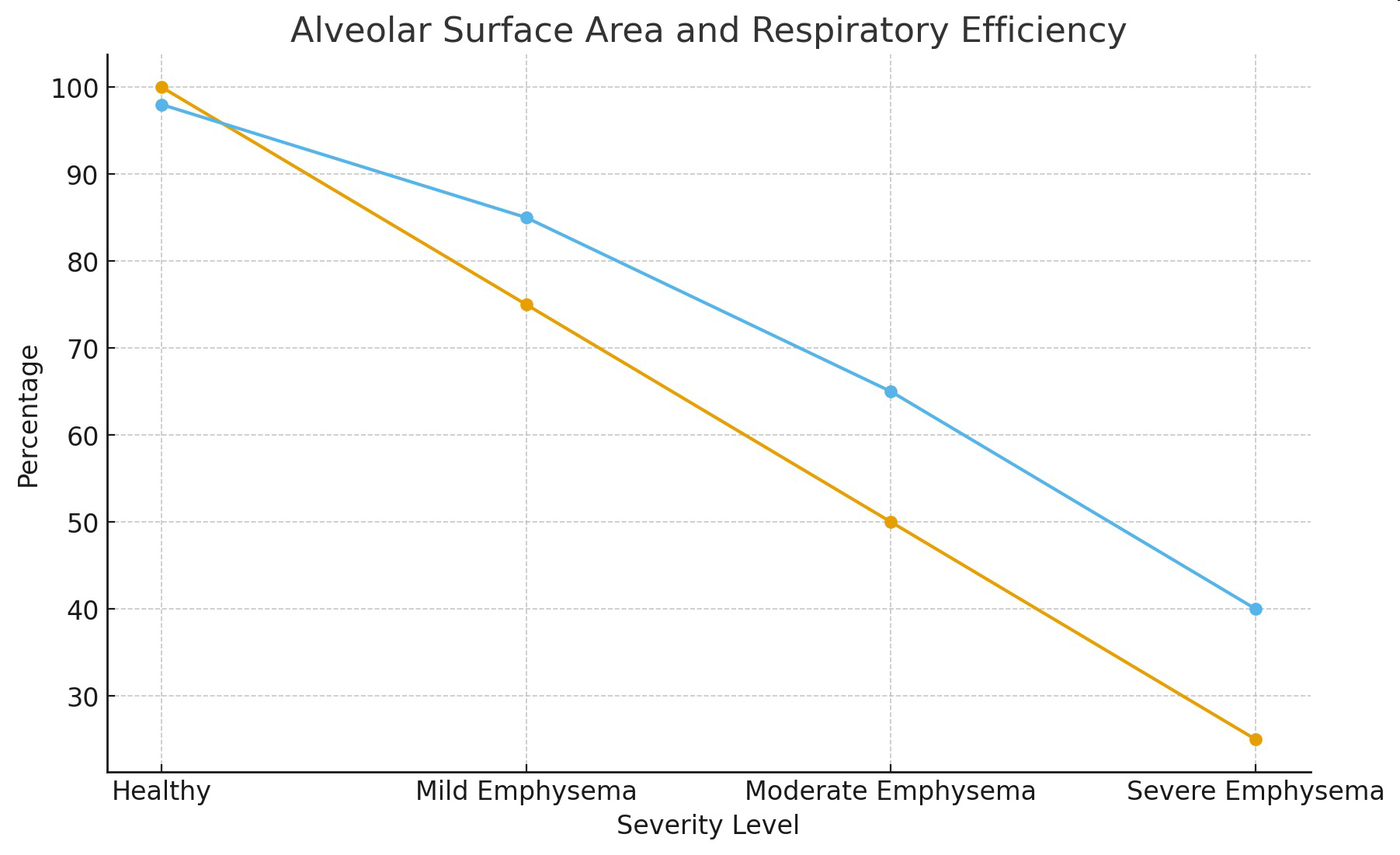
Table 2.
Condition | Oxygen Saturation (%) | Heart Rate (bpm) |
|---|
Healthy | 98 | 70 |
Healthy | 97 | 68 |
Healthy | 99 | 72 |
Emphysema | 92 | 90 |
Emphysema | 88 | 95 |
Emphysema | 85 | 100 |
Graph of Information - Figure 2.