Muscle Fatigue During Intense Exercise
High-intensity exercise provides a powerful model for understanding how the hierarchical organization of the human body supports a specific function: muscle contraction. When a person begins sprinting or lifting heavy weights, muscle fibers, motor neurons, blood vessels, and respiratory structures all coordinate to supply energy to the working muscles. The moment exercise intensity rises, muscle cells (the basic functional units of contraction) begin rapidly breaking down ATP, the molecule that powers cross-bridge cycling needed for muscle contraction.
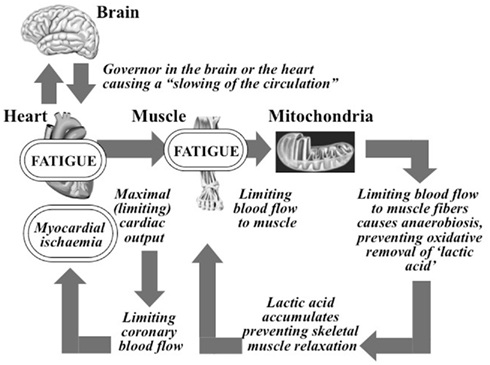
At the cellular level, ATP is consumed faster than it can be replaced through aerobic respiration. As oxygen delivery becomes insufficient, cells shift to anaerobic metabolism, producing lactate as a by-product. Lactate accumulation lowers intracellular pH, slowing enzyme activity and contributing to the burning sensation and declining performance known as muscle fatigue.
At the tissue level, groups of muscle fibers organized into skeletal muscle bundles contract repeatedly. As ATP becomes limited and lactate increases, tissue-level performance decreases — contraction strength weakens and coordination becomes less efficient. Meanwhile, blood vessels within the muscle tissue dilate to increase oxygen delivery, but this is often not enough to meet extreme energy demands.
At the organ level, the heart pumps faster to supply oxygenated blood, while the lungs increase breathing rate to bring in more oxygen and remove carbon dioxide. These organs act together to support the working muscle, but when demand exceeds capacity, fatigue becomes unavoidable. The liver also plays a role by clearing lactate and converting it back to usable energy, but during intense bouts this process cannot keep up.
At the organ-system level, the muscular, respiratory, and circulatory systems interact continuously. The muscular system uses ATP for contraction, the respiratory system brings in oxygen, and the circulatory system transports nutrients and removes waste. When any system becomes overtaxed — such as oxygen delivery lagging behind ATP use — fatigue emerges as a system-wide limitation.
This scenario highlights the core idea: functions in multicellular organisms result from interactions across multiple hierarchical levels. Muscle fatigue does not arise from a single cell or tissue failing; instead, it emerges from the limits of coordinated actions across entire organ systems.
Table 1.
Time (minutes) | ATP Level (% of resting) | Lactate Concentration (mmol/L) |
|---|
0 | 100 | 1 |
2 | 80 | 3.5 |
4 | 60 | 6 |
6 | 45 | 9 |
8 | 35 | 11 |
Graph of Information - Figure 1.
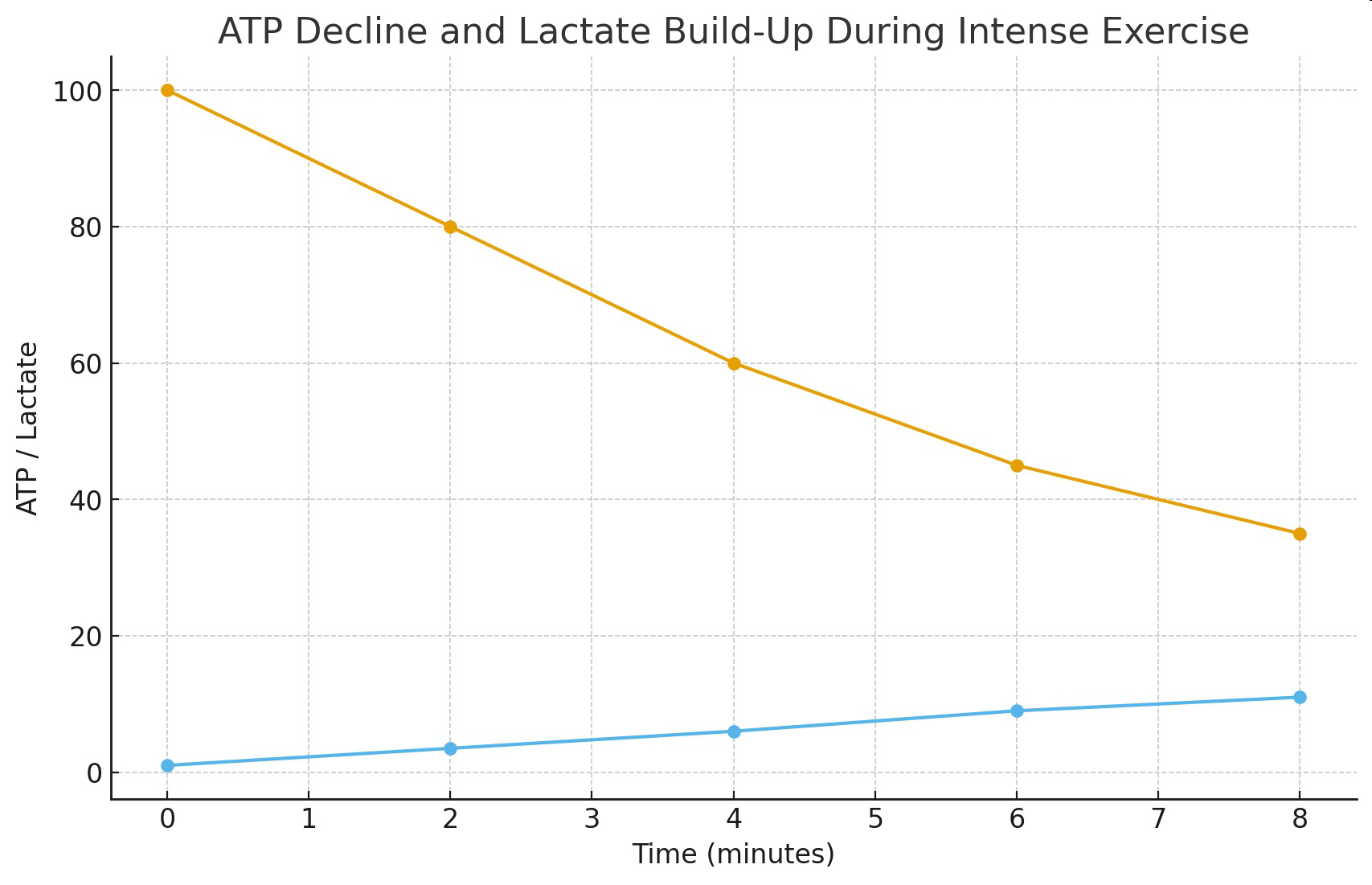
Table 2.
Exercise Intensity (% max) | Oxygen Consumption (L/min) | Breathing Rate (breaths/min) |
|---|
20 | 0.5 | 12 |
40 | 1 | 18 |
60 | 1.8 | 28 |
80 | 2.8 | 38 |
100 | 3.5 | 48 |
Graph of Information - Figure 2.
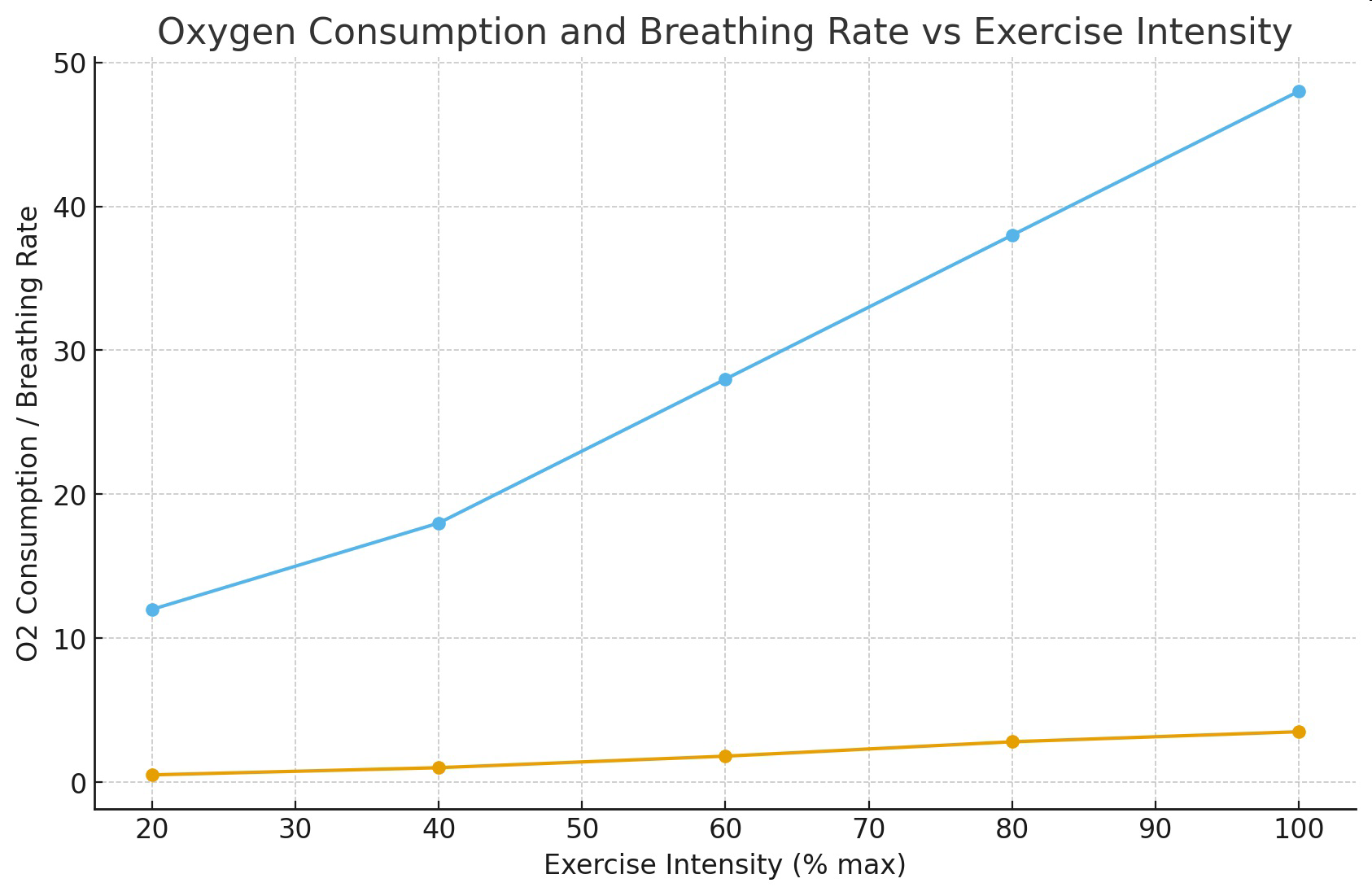
Figure 3.
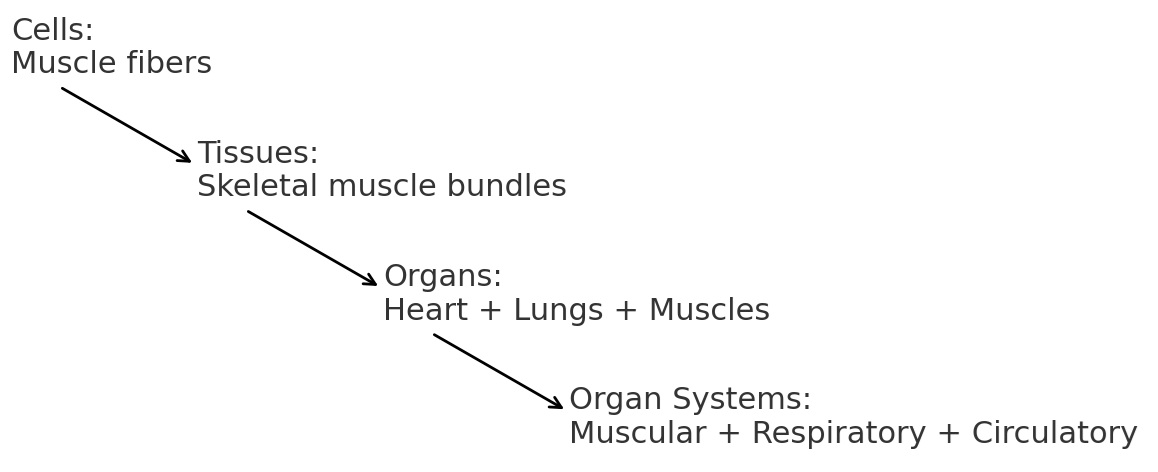
Figure 4.
 Source:
https://ar.inspiredpencil.com/pictures-2023/muscle-fatigue-lactic-acid