Sickle Cell Disease and Hemoglobin Shape
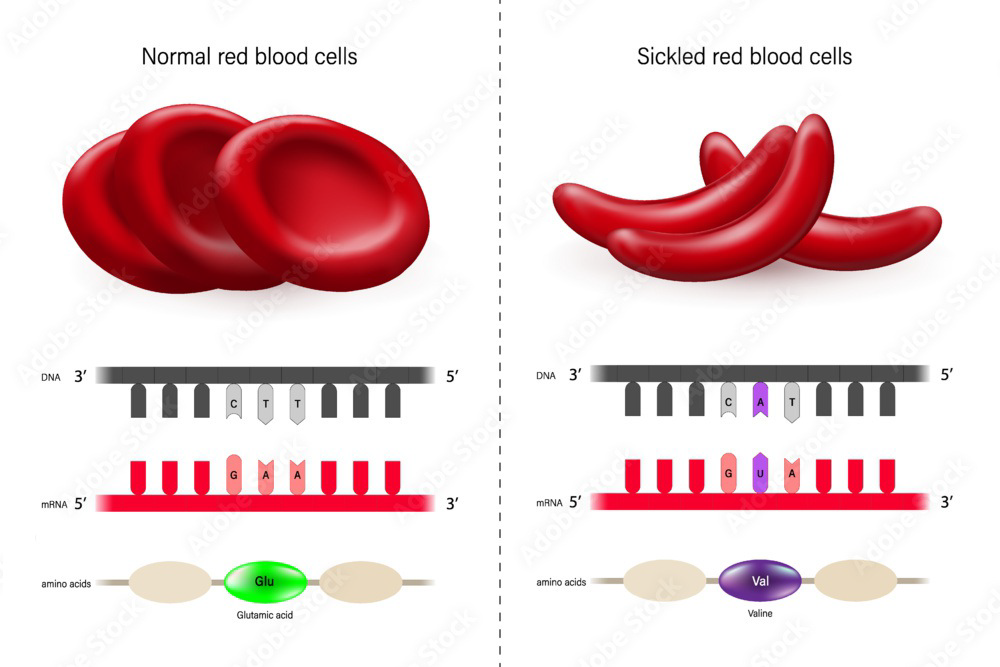
Sickle cell disease provides one of the clearest real-world examples of how a small change in DNA can alter the structure of a protein and, in turn, affect the function of entire cells and body systems. Hemoglobin, the oxygen-carrying protein inside red blood cells (RBCs), is normally made of four protein chains: two alpha chains and two beta chains. The instructions for building these proteins are stored in the DNA sequence of the hemoglobin genes. When these genes are copied into mRNA and translated by ribosomes, the exact order of amino acids in each chain is determined by the DNA code.
In most people, the DNA sequence in the $\beta$-globin gene includes the base triplet GAG, which codes for the amino acid glutamic acid at position 6 of the protein chain. In sickle cell disease, a point mutation changes this triplet to GTG, which causes the ribosome to insert a different amino acid—valine—into that same position. Although this substitution affects only one out of more than 140 amino acids, it changes the chemical properties of the entire hemoglobin molecule.
Glutamic acid is hydrophilic (water-attracting), while valine is hydrophobic (water-repelling). When hemoglobin molecules with valine reach low oxygen conditions, they tend to stick together and form long, rigid fibers. These fibers distort the normally round, flexible RBC into a stiff, curved “sickle” shape. Sickled cells cannot bend through narrow capillaries, leading to painful blockages, reduced oxygen delivery, and damage to organs such as the brain, spleen, and lungs.
Individuals with one sickle allele (AS) produce a mixture of normal hemoglobin (HbA) and sickle hemoglobin (HbS). Their cells rarely sickle under normal conditions, making them “carriers.” Those with two sickle alleles (SS) produce mostly HbS and experience frequent sickling events.
This chain of molecular cause-and-effect illustrates the core idea: DNA determines protein structure, protein structure determines function, and protein function affects cells, tissues, and systems. A single nucleotide change in DNA produces a protein with a slightly altered amino acid sequence, which leads to changes in protein folding and interactions, which then cause changes in cell shape and behavior - ultimately affecting the health of the entire organism.
Table 1.
Genotype | Hemoglobin A (%) | Hemoglobin S (%) |
|---|
AA (Normal) | 98 | 2 |
AS (Carrier) | 60 | 40 |
SS (Sickle Cell) | 5 | 95 |
Graph of Information - Figure 1.
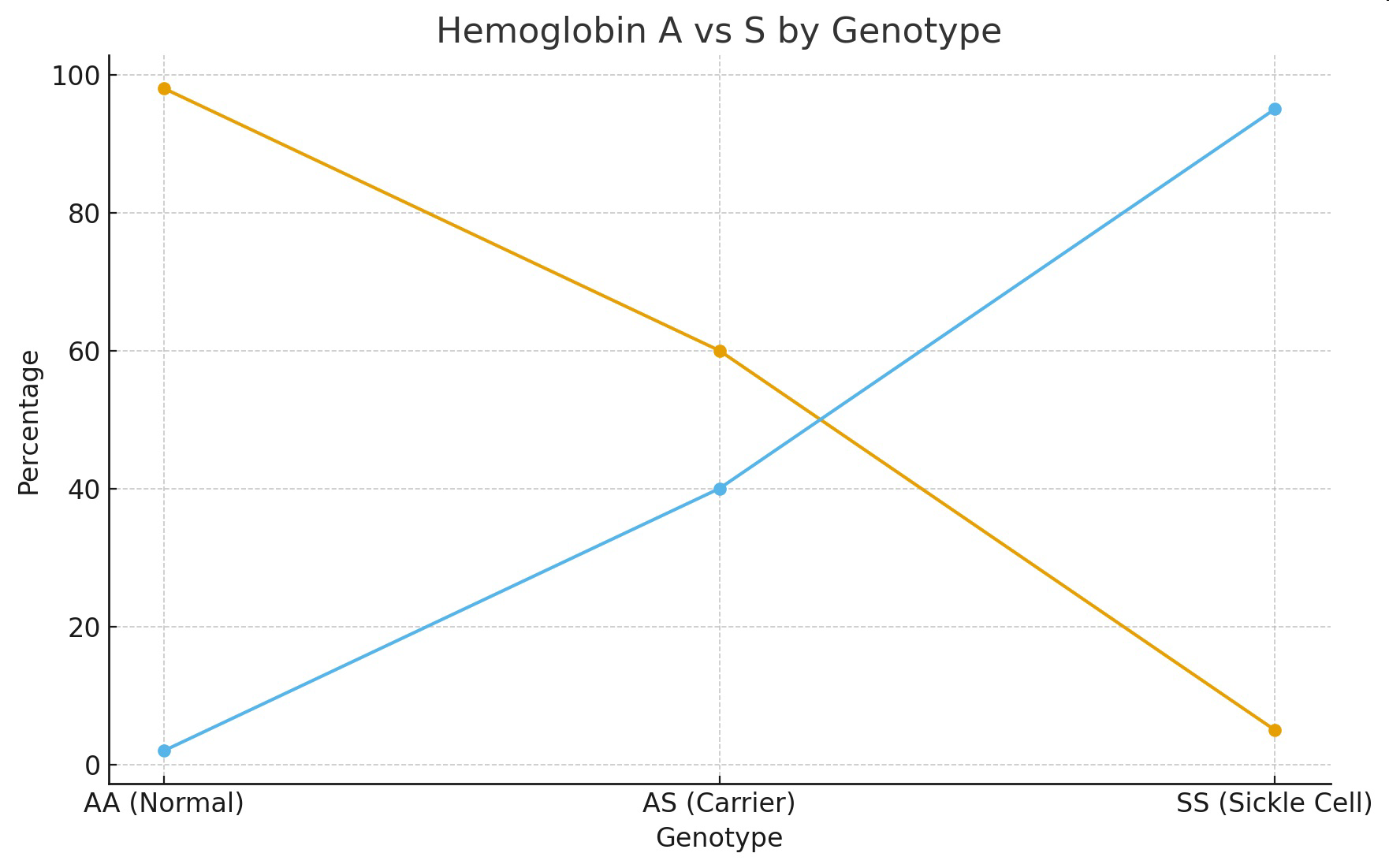
Table 2.
Oxygen Level (%) | RBC Deformation Normal (%) | RBC Deformation Sickle (%) |
|---|
100 | 1 | 5 |
80 | 1 | 20 |
60 | 2 | 40 |
40 | 2 | 70 |
20 | 3 | 90 |
Graph of Information - Figure 2.
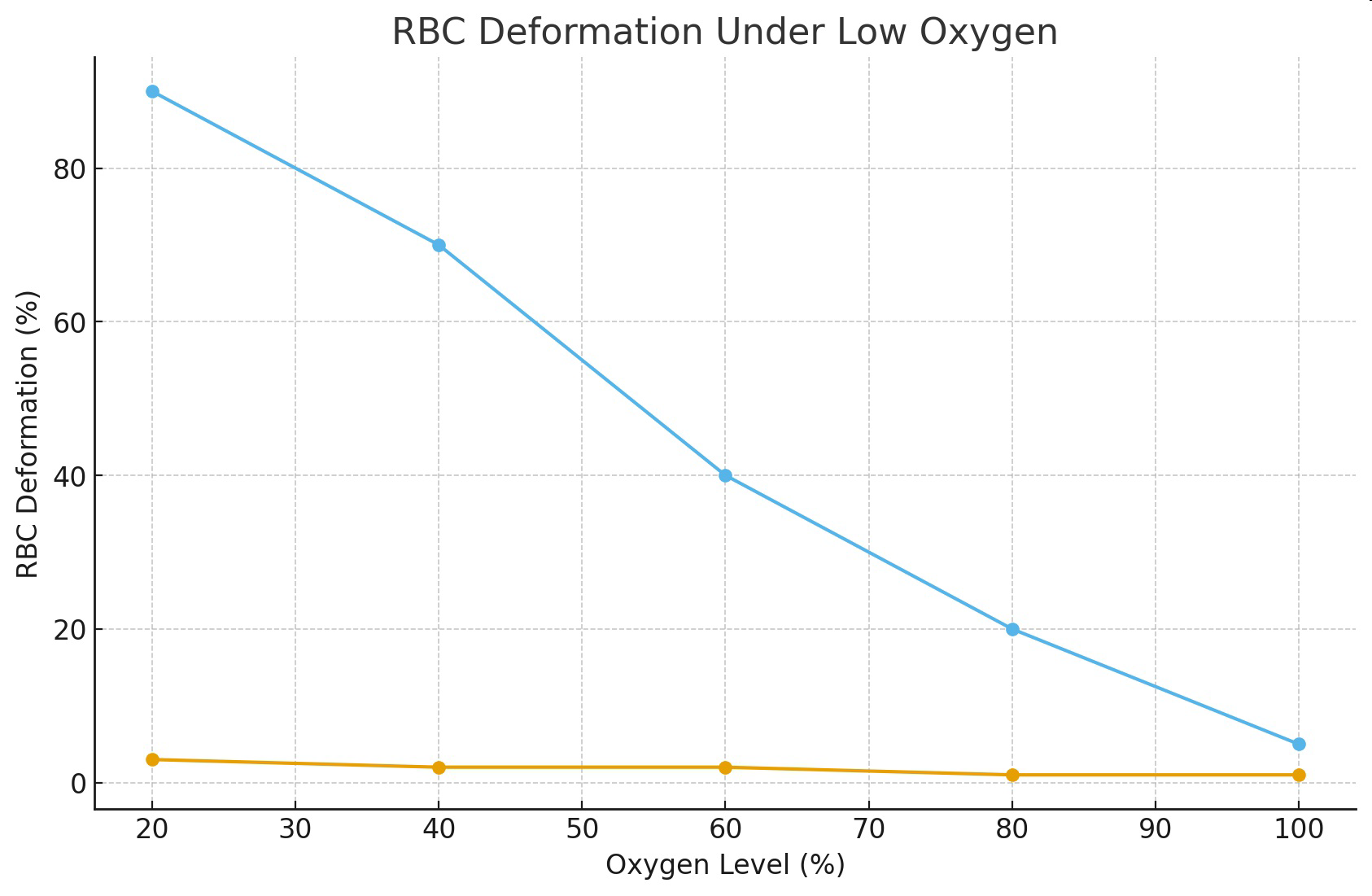
Figure 3.