Stomatal Regulation in Plants
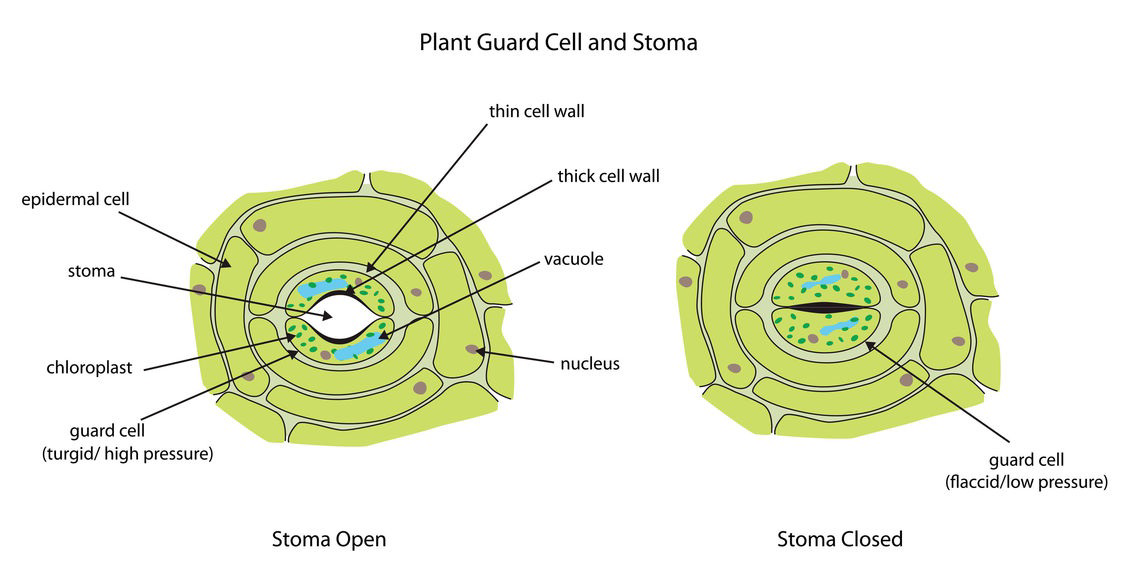
Plants constantly balance two competing needs: gaining carbon dioxide (CO2) for photosynthesis and minimizing water loss through transpiration. This balance is controlled by stomata, microscopic pores on leaf surfaces. Each stoma is surrounded by a pair of guard cells that change shape to open or close the pore. Their behavior is governed by a negative feedback mechanism that helps the plant maintain water homeostasis.
When environmental conditions become dry, hot, or windy, water evaporates from leaf surfaces more
quickly. As a result, the water content inside guard cells decreases. Guard cells require high internal water
pressure - called turgor - to remain swollen and keep the stomatal pore open. When turgor decreases, guard cells
lose their curved shape and collapse inward, causing the stoma to close.
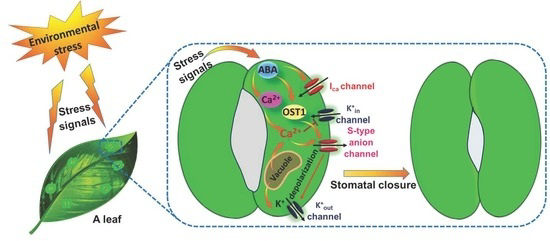
This cellular response is controlled by both physical changes and chemical signals. A key hormone involved in stomatal regulation is abscisic acid (ABA). When a plant senses reduced leaf water potential (for example, during drought), root cells and leaf cells produce ABA. The hormone travels to guard cells, triggering
ion channels to release potassium and chloride. Water follows these ions out of the guard cells, reducing turgor pressure and closing the stomata. This response represents the effector action in the negative feedback loop.
At the tissue and organ level, stomatal closure reduces water loss from the leaf's mesophyll tissues and slows transpiration through the leaf surface. While this limits CO2 uptake and temporarily reduces photosynthesis, it is essential for preventing dangerous dehydration.
At the organ-system level, the entire plant benefits. Reduced water loss helps maintain internal water balance, prevents wilting, and allows xylem pressure to stabilize. This negative feedback mechanism protects the plant from losing too much water during stressful conditions. When humidity increases or the plant regains water, guard cells restore turgor pressure, and the stomata reopen to resume gas exchange.
When water levels drop, stomata close, reducing water loss; when water levels rise, stomata open, restoring CO2 intake. This dynamic control keeps plant tissues functioning properly even as environmental conditions change.
Table 1.
Time (minutes) | Mass Loss Light (g) | Mass Loss Dark (g) |
|---|
0 | 0 | 0 |
10 | 0.12 | 0.05 |
20 | 0.25 | 0.09 |
30 | 0.38 | 0.13 |
40 | 0.52 | 0.17 |
Graph of Information - Figure 1.
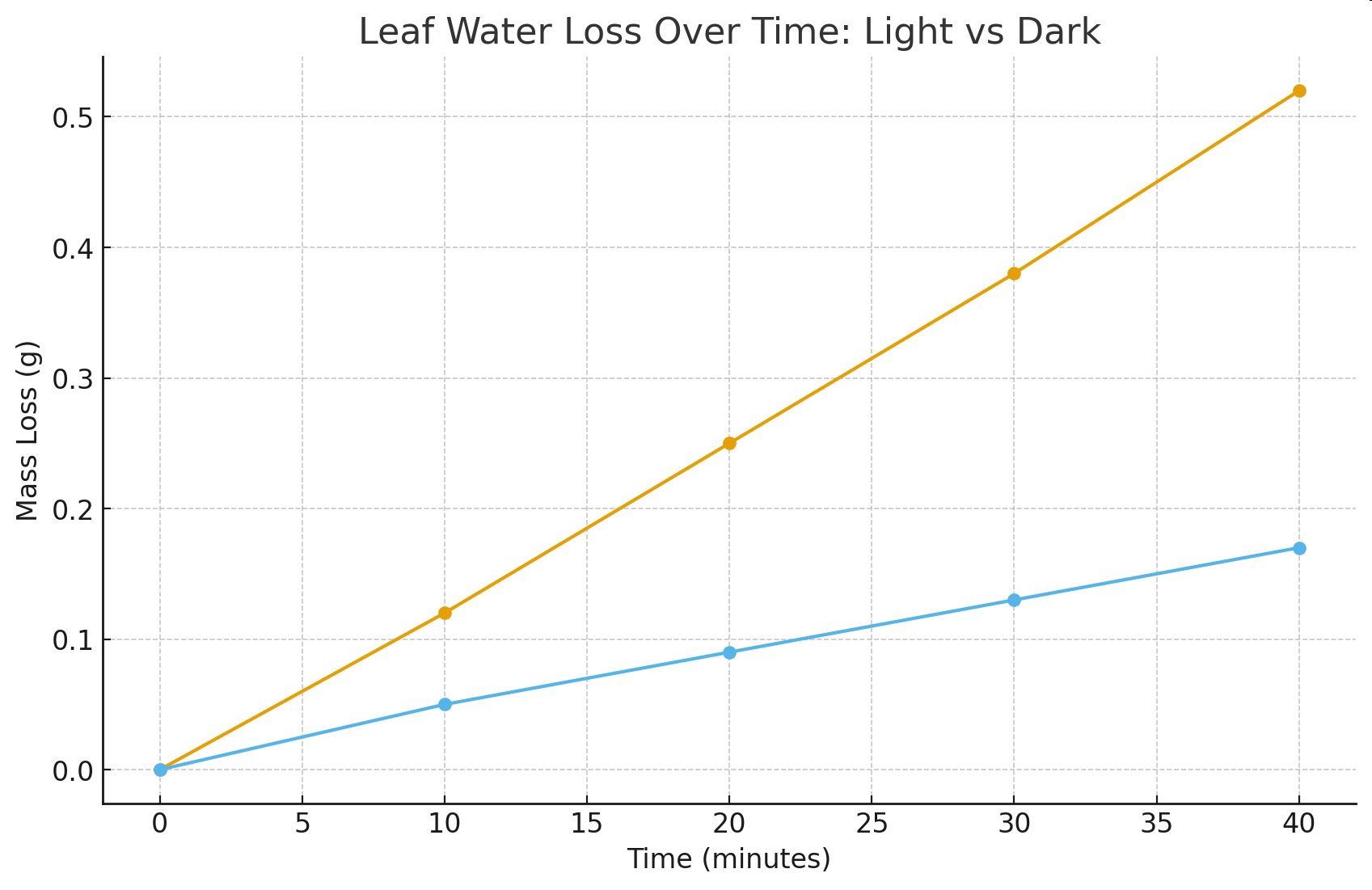
Table 2.
Humidity (% RH) | Stomatal Aperture (µm) | Transpiration Rate (mmol/m²/s) |
|---|
20 | 9 | 12 |
40 | 7.5 | 10 |
60 | 6 | 7 |
80 | 4 | 4 |
95 | 2.5 | 2 |
Graph of Information - Figure 2.
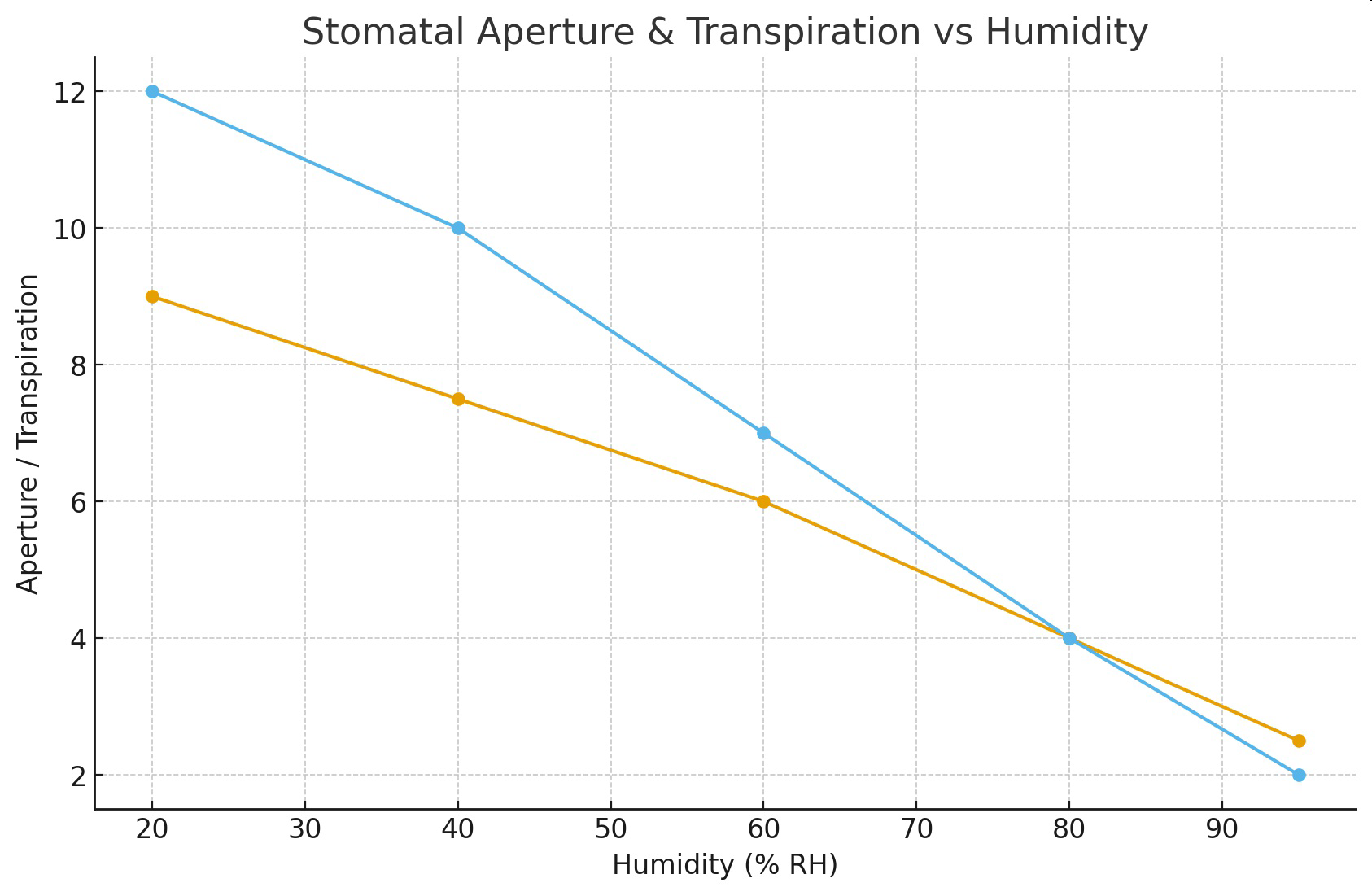
Figure 3.
 Source:
https://www.sciencelearn.org.nz/images/3889-stoma-open-and-closed
Figure 4.
Source:
https://www.mdpi.com/2223-7747/10/12/2774