Thermoregulation
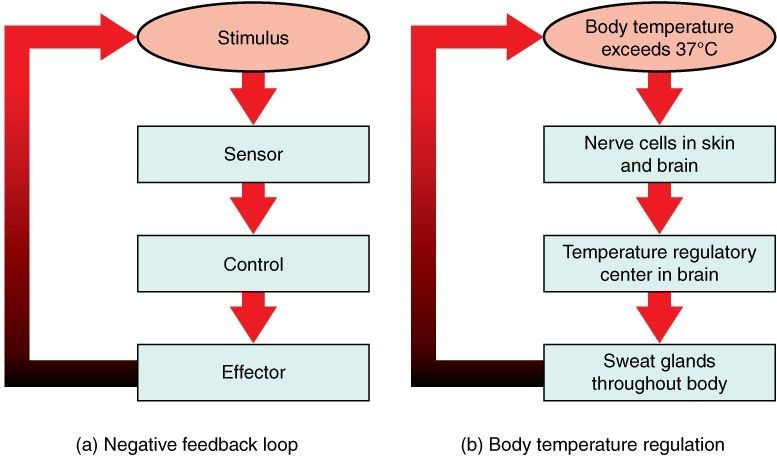
Human thermoregulation provides one of the clearest examples of a negative feedback mechanism maintaining homeostasis. Body temperature must remain close to 37o for enzymes, cells, and organ systems to function correctly. When internal or external temperatures change, the nervous, circulatory, and integumentary systems work together to restore stable conditions.
The process begins with thermoreceptors, specialized sensory neurons located in the skin and the hypothalamus. These cells detect small increases or decreases in temperature. When a person enters a warm environment or begins light exercise, skin temperature rises quickly. Thermoreceptors send signals through the nervous system to the hypothalamus, the brain’s primary center for regulating internal temperature.
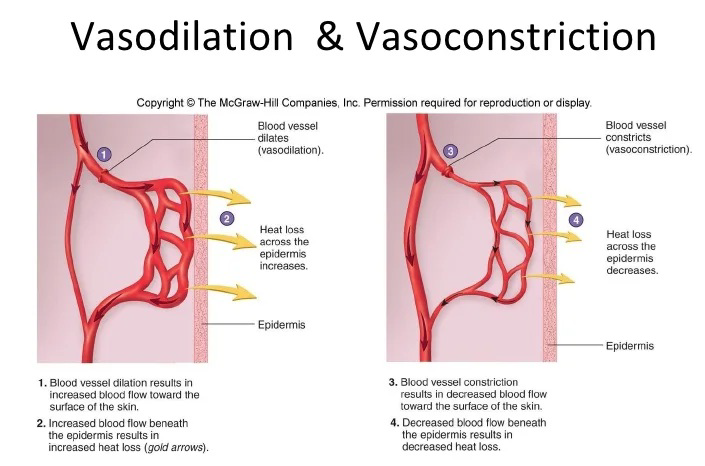
At the tissue and organ level, the hypothalamus integrates this sensory information and activates effectors that initiate cooling. It signals sweat glands in the skin to increase sweat production. As sweat evaporates, heat is drawn away from the body surface. At the same time, smooth muscle in the walls of skin blood vessels relaxes, causing vasodilation. This increases blood flow to the skin so more heat can be released to the environment.
These actions represent the effector response in the negative feedback loop. As sweat evaporates and heat dissipates from the skin, core body temperature stops rising and stabilizes near its set point. The heart also increases its rate slightly to circulate warm blood from the core to the skin more efficiently, supporting heat loss.
This gradual stabilization is evident during mild heat exposure: although skin temperature increases noticeably, core temperature remains steady or rises only slightly, demonstrating successful homeostatic control. Once temperature returns to acceptable limits, the hypothalamus reduces stimulation of sweat glands and blood vessels, allowing the body to conserve water and maintain normal circulation.
This negative feedback system prevents dangerous overheating. When the system fails - such as in dehydration, extreme heat, or heat stroke - temperature can rise uncontrollably, showing how essential feedback mechanisms are to maintaining homeostasis.
Table 1.
Time (minutes) | Skin Temperature (°C) | Sweat Rate (L/hr) |
|---|
0 | 30.5 | 0.05 |
5 | 31.2 | 0.15 |
10 | 32 | 0.3 |
15 | 32.4 | 0.45 |
20 | 32.7 | 0.6 |
Graph of Information - Figure 1.
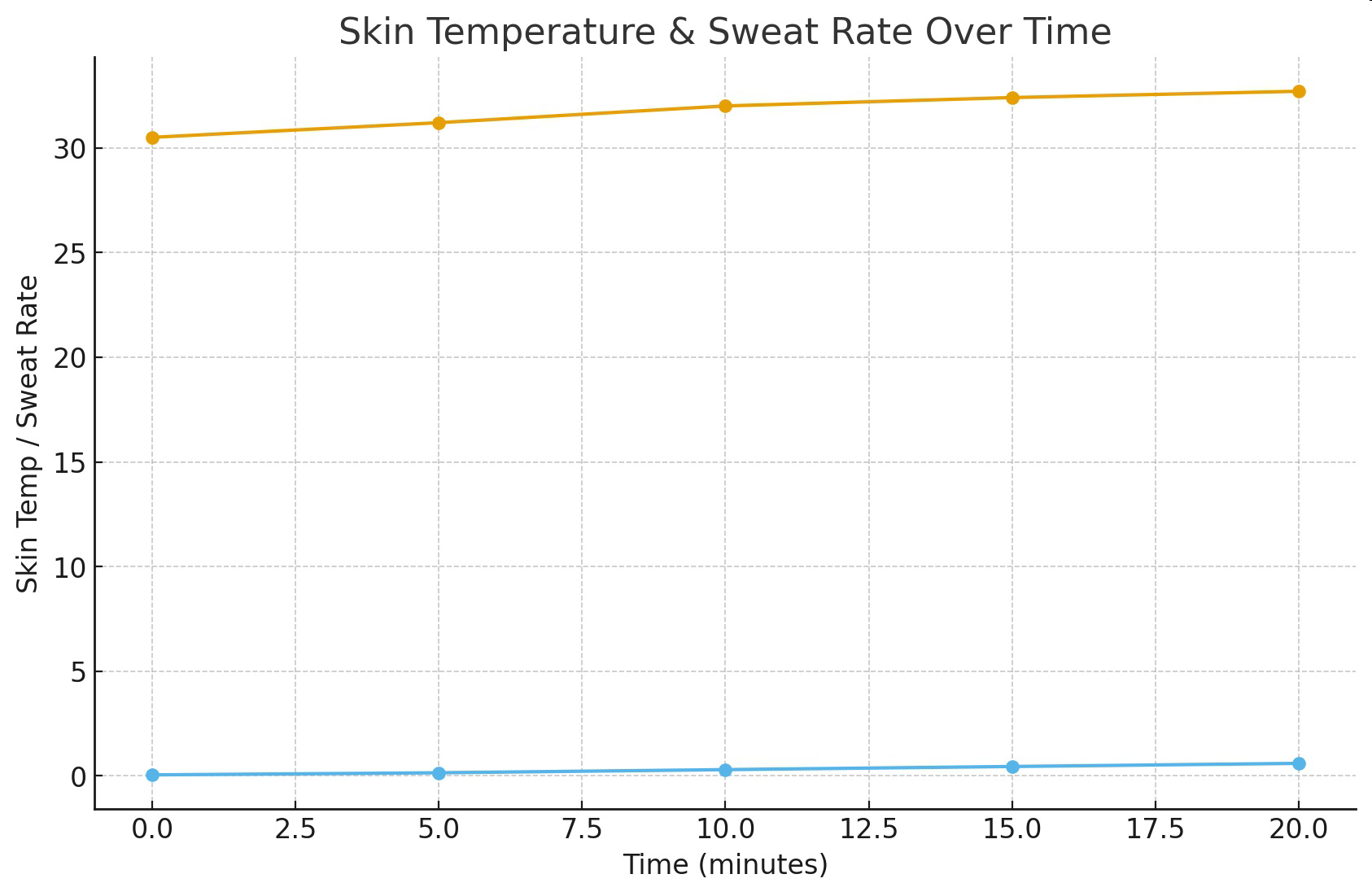
Table 2.
Time (minutes) | Core Temperature ($^ oclass C$) | Heart Rate (bpm) |
|---|
0 | 37 | 72 |
5 | 37.1 | 82 |
10 | 37.2 | 90 |
15 | 37.2 | 96 |
20 | 37.3 | 102 |
Graph of Information - Figure 2.
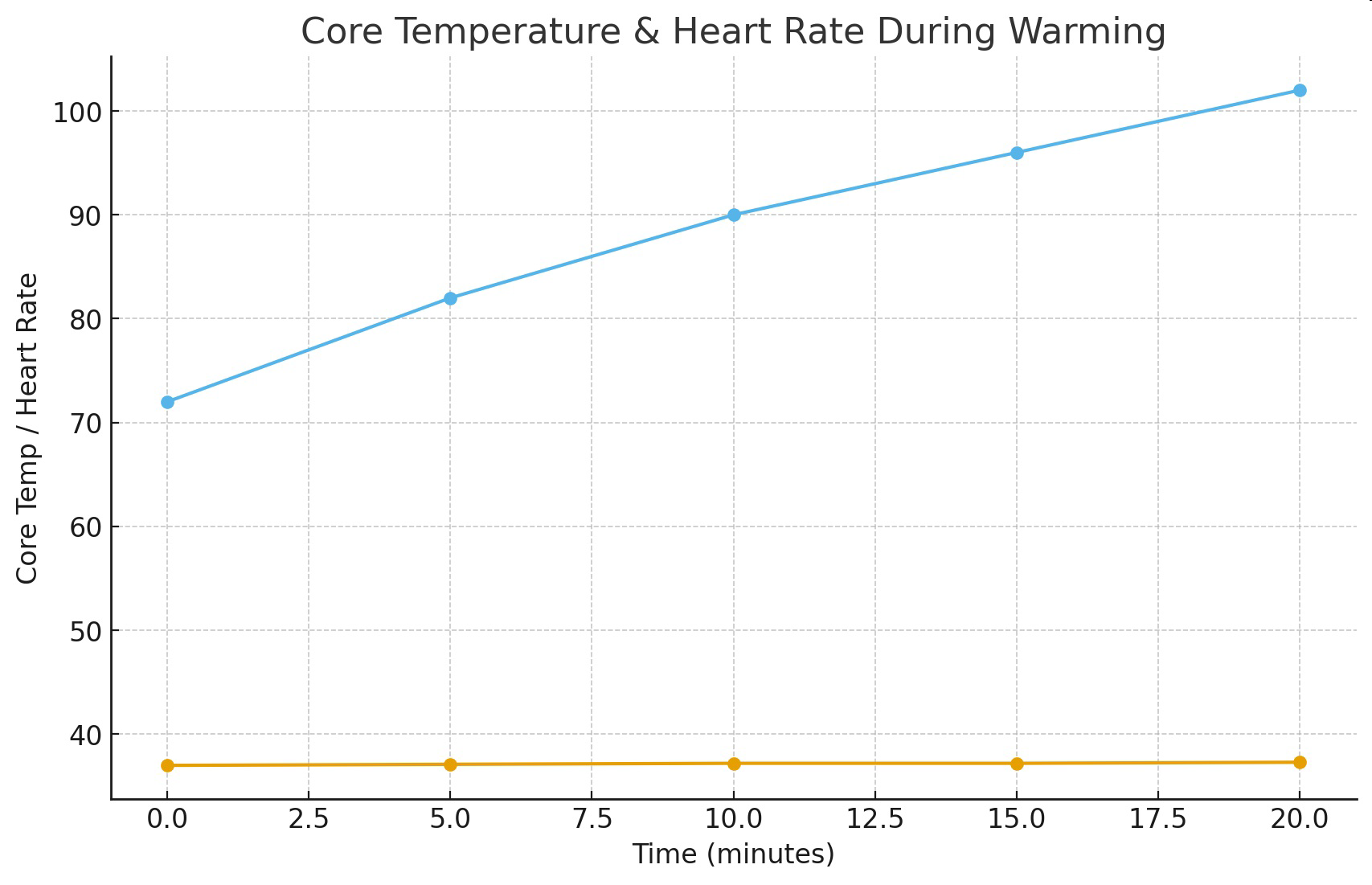
Figure 3.
 Source: https://www.simplemed.co.uk/subjects/metabolism/temperature-regulation
Figure 4.
 Source: https://www.slideshare.net/slideshow/homeostasis-1311062/1311062