Thermoregulatio During Heat Stress
Human thermoregulation is a powerful example of how multicellular organisms rely on a hierarchical structure - cells, tissues, organs, and organ systems - to maintain stable internal conditions. When body temperature begins to rise, specialized thermoreceptor neurons in the skin and brain detect the change. These sensory cells convert temperature information into electrical signals that travel through nervous tissue and ultimately reach the hypothalamus, the brain’s temperature-regulating center.
At the tissue level, hypothalamic neurons integrate these sensory inputs and initiate appropriate responses. If heat stress is detected, hypothalamic tissue activates pathways that affect several organs simultaneously. This includes signaling sweat glands in the skin, affecting smooth muscle in blood vessel walls, and adjusting cardiovascular function.
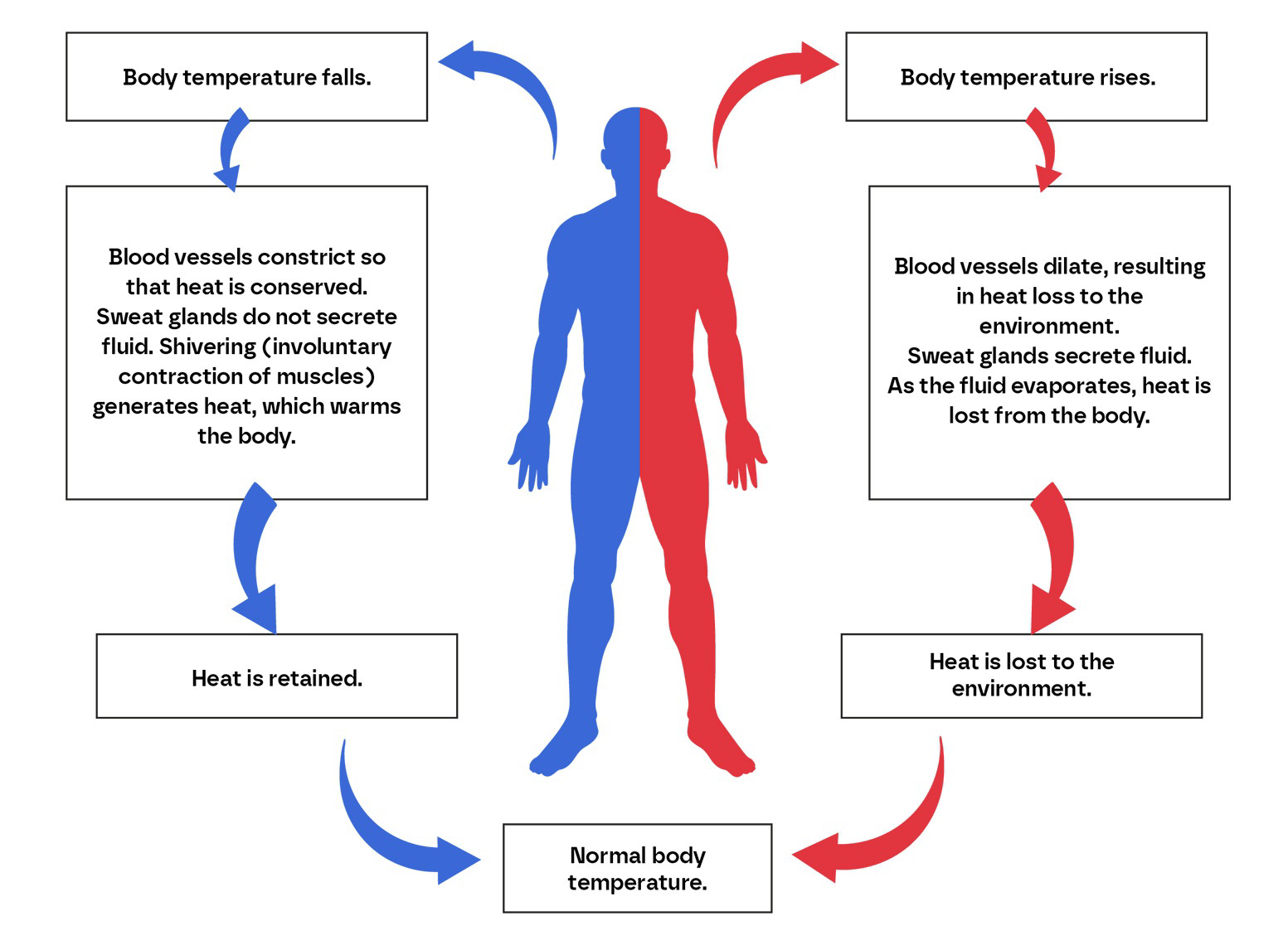
At the organ level, the skin becomes a major site of heat loss. Sweat glands increase secretion, releasing water onto the skin’s surface. As sweat evaporates, it removes heat from the body. Additionally, blood vessels in the skin undergo vasodilation, meaning their smooth muscle walls relax to widen the vessel. This increases blood flow to the skin, bringing warm blood closer to the body surface where heat can dissipate. Meanwhile, the heart increases its rate to move blood efficiently between internal organs and the skin.
These changes depend on the coordinated actions of entire organ systems. The nervous system detects heat stress and communicates regulatory commands. The integumentary system (skin, sweat glands) performs cooling actions such as sweating and heat radiation. The circulatory system carries heat from the core to the skin and adjusts heart rate to maintain blood pressure during vasodilation. Together, these systems work to maintain thermal homeostasis despite environmental challenges.
As heat stress becomes more extreme or prolonged, the body’s responses intensify. Sweat rate may increase dramatically, and heart rate may rise significantly to support higher skin blood flow. If compensatory mechanisms fail - as in heat exhaustion or heat stroke - organ systems no longer interact effectively, illustrating how essential hierarchical organization is for maintaining life.
Thermoregulation is a textbook example: specific functions in multicellular organisms arise from the interactions of systems, and those systems depend on the organization of their parts. From thermoreceptor cells to organ-system-level coordination, each structural level contributes to the overall function of maintaining body temperature.
Table 1.
Ambient Temperature (°C) | Sweat Rate (L/hr) | Skin Blood Flow (% of max) |
|---|
20 | 0.1 | 20 |
25 | 0.3 | 40 |
30 | 0.7 | 60 |
35 | 1.2 | 80 |
40 | 1.8 | 95 |
Graph of Information - Figure 1.
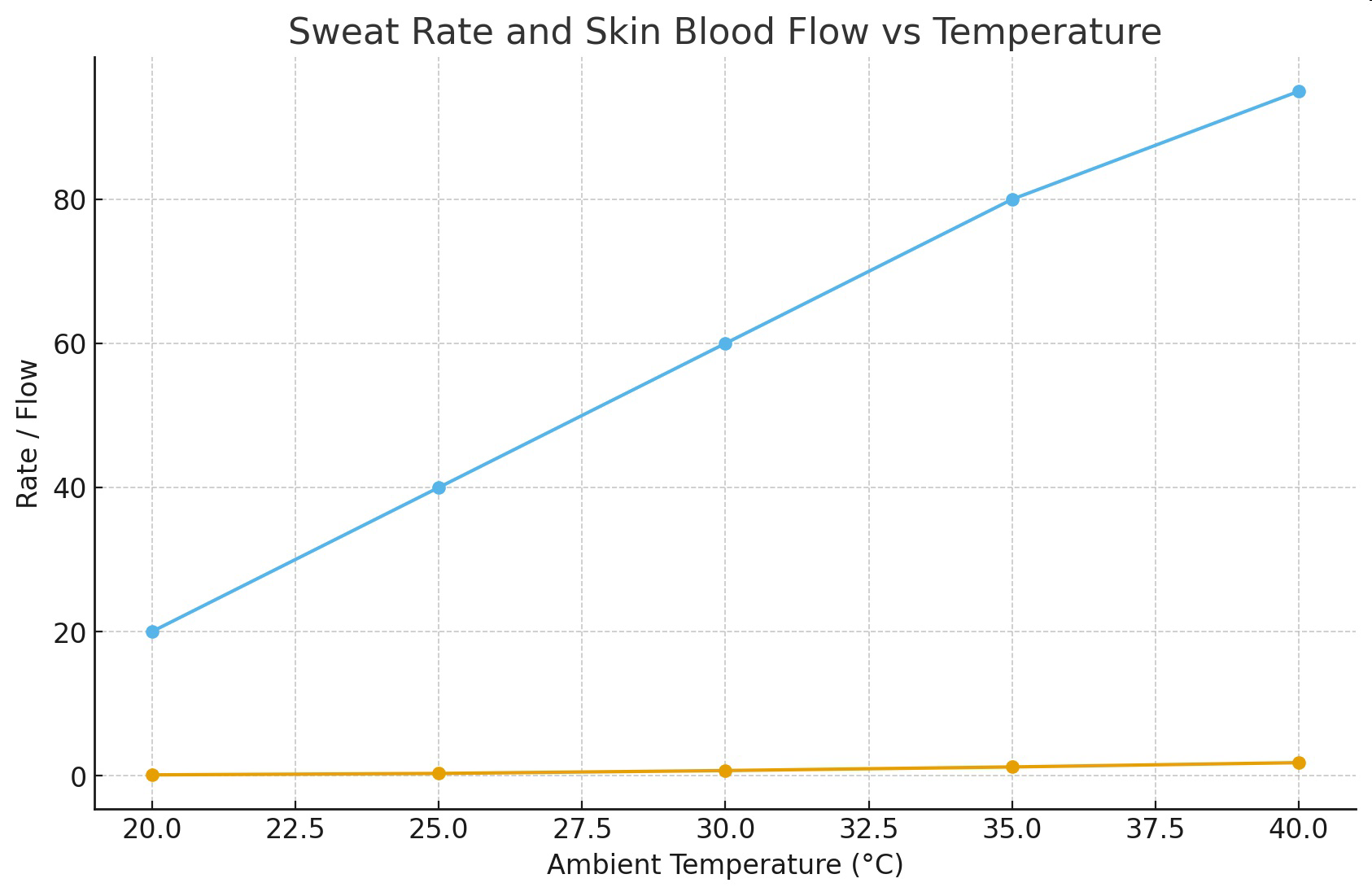
Table 2.
Time (minutes) | Core Temperature (°C) | Heart Rate (bpm) |
|---|
0 | 37.0 | 70 |
10 | 37.3 | 85 |
20 | 37.7 | 100 |
30 | 38.1 | 115 |
40 | 38.6 | 130 |
Graph of Information - Figure 2.
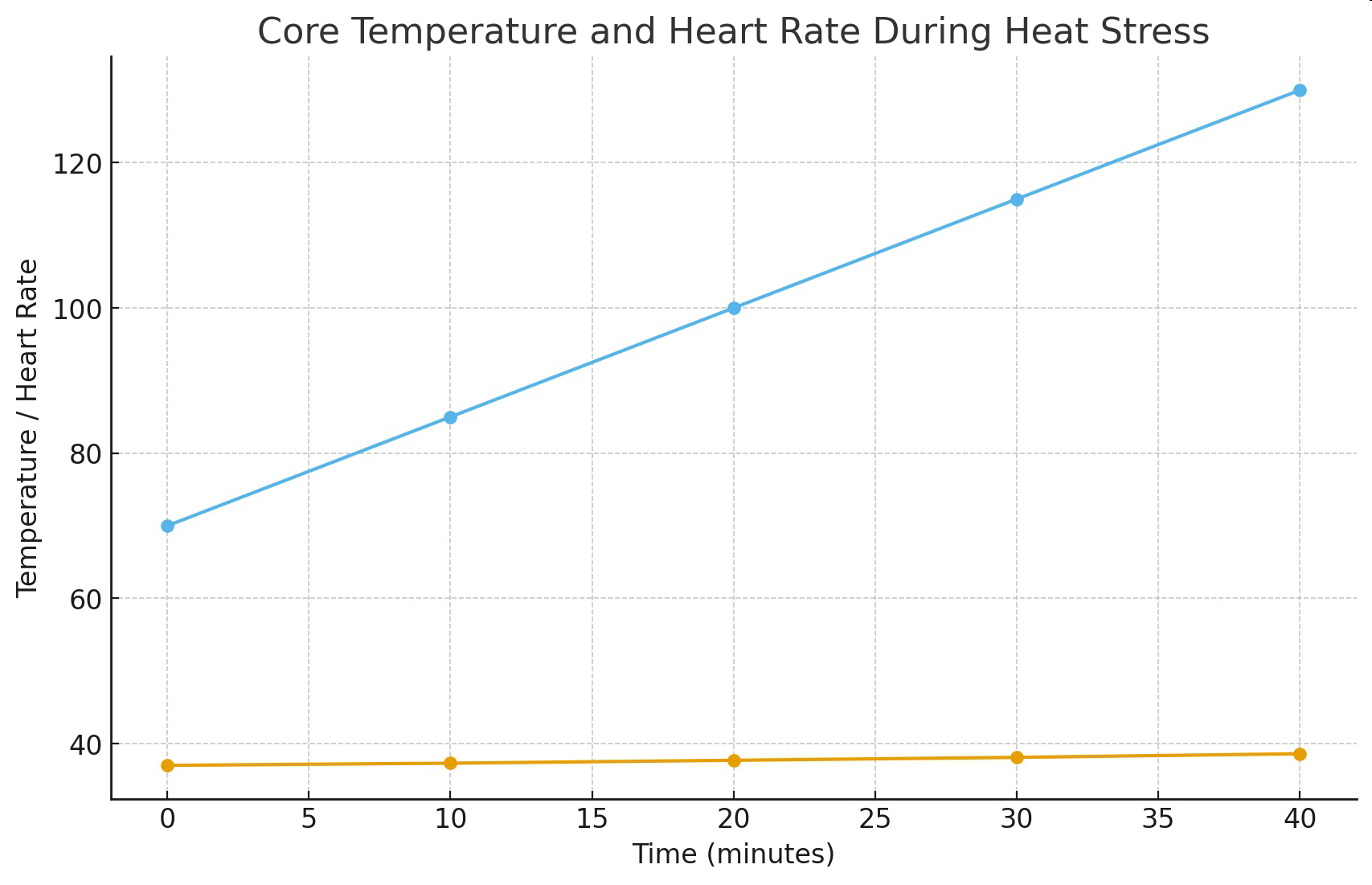
Figure 3.
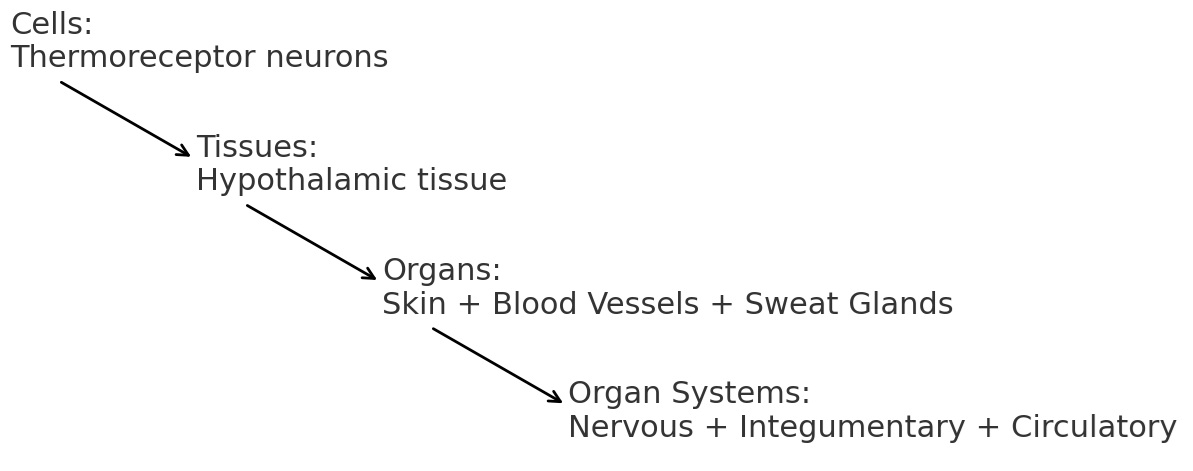
Figure 4.
 Source:
https://news.six2.com/en/body-thermoregulation-in-sports-sixs/