Use the historical document(s) and the short readings in the left panel to answer the associated questions.
Document A is a translated record from ancient Egypt describing how officials measured the Nile’s flood and kept grain accounts. When floods were low, leaders organized storage and distribution. Use the excerpt and map sketch as evidence about how geography shaped government.
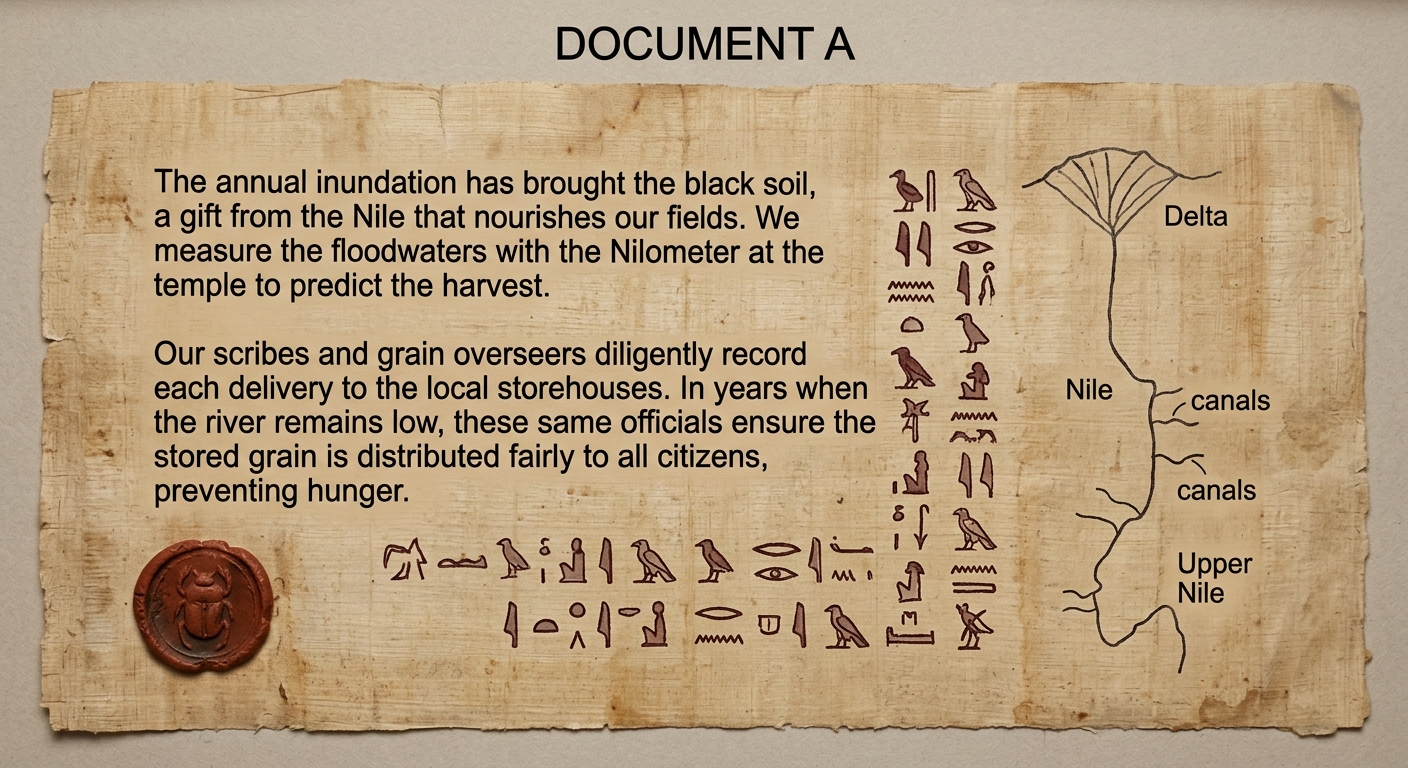
Based on Document A, which geographic condition most directly explains why Egyptian officials kept records of grain deliveries and flood levels?
Which conclusion about political structure is BEST supported by the evidence in Document A?
Which additional source would BEST help a historian corroborate the claim that geography shaped government actions described in Document A?
Use evidence from Document A and the reading to explain how a geographic factor influenced Egypt’s political structure.
In your paragraph, cite at least two specific details (for example, flood measurement, canals, grain accounts, or distribution).
Evaluate Document A as historical evidence. What is one limitation of using this document alone to explain Egypt’s government, and what is one additional type of source you would seek to strengthen your conclusion?
Write one paragraph.
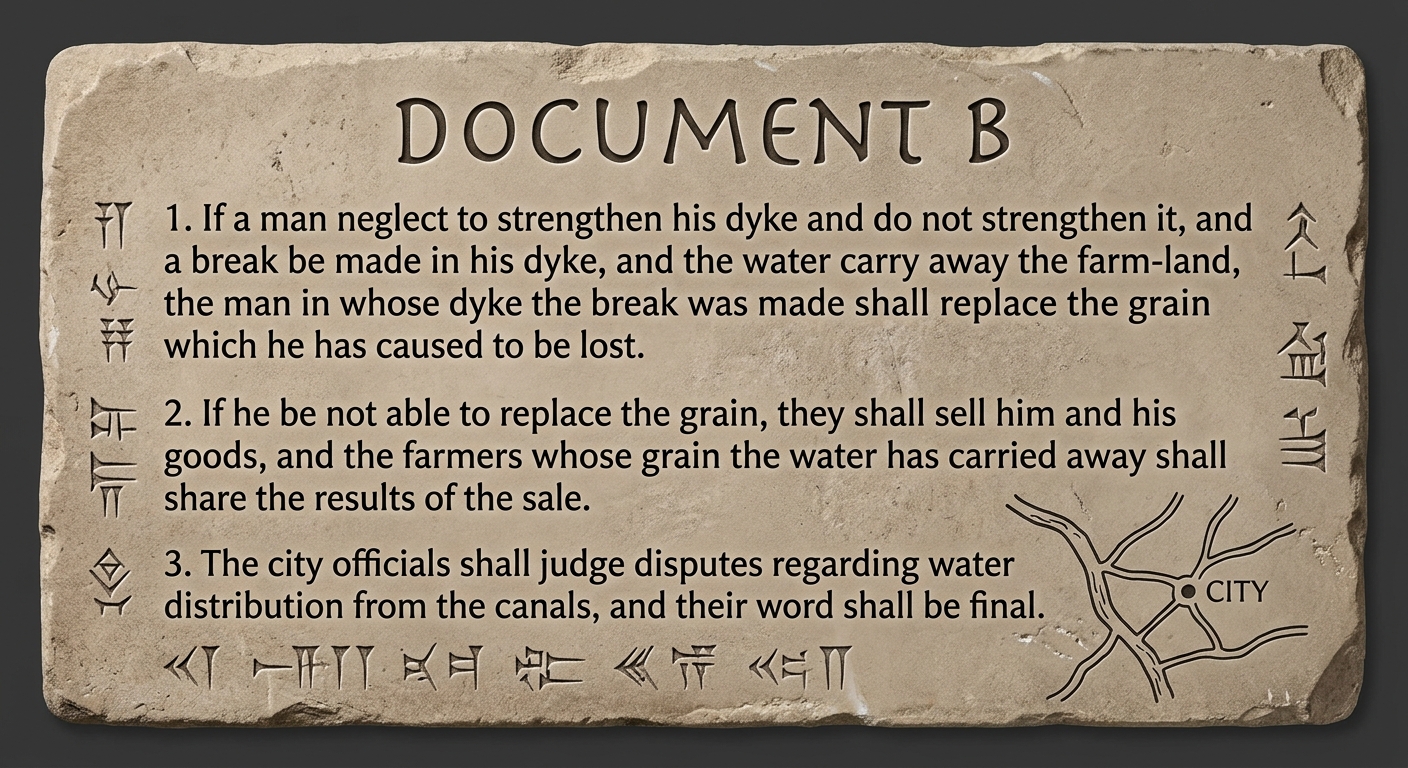
Reading (40–50 words): Document B is a translated excerpt from a Mesopotamian law code about irrigation canals. It lists penalties for damaging canals and describes officials settling disputes. Use the excerpt and the map sketch to explain how leaders created order, enforced laws, and made decisions.

Based on Document B, which statement BEST shows that leaders created and enforced laws to establish order?
Which inference about decision making is BEST supported by Document B?
Which additional piece of evidence would BEST help a historian evaluate how well these laws were enforced?
Use evidence from Document B and the reading to explain how leaders used laws to create order and make decisions in Mesopotamia.
In your paragraph, cite at least two specific details from the document (for example, canal maintenance, penalties, or judging disputes).
Evaluate Document B as historical evidence.
What is one limitation of using this document alone to understand Mesopotamian law and government, and what is one additional type of source you would seek to strengthen your conclusion?
Write one paragraph.
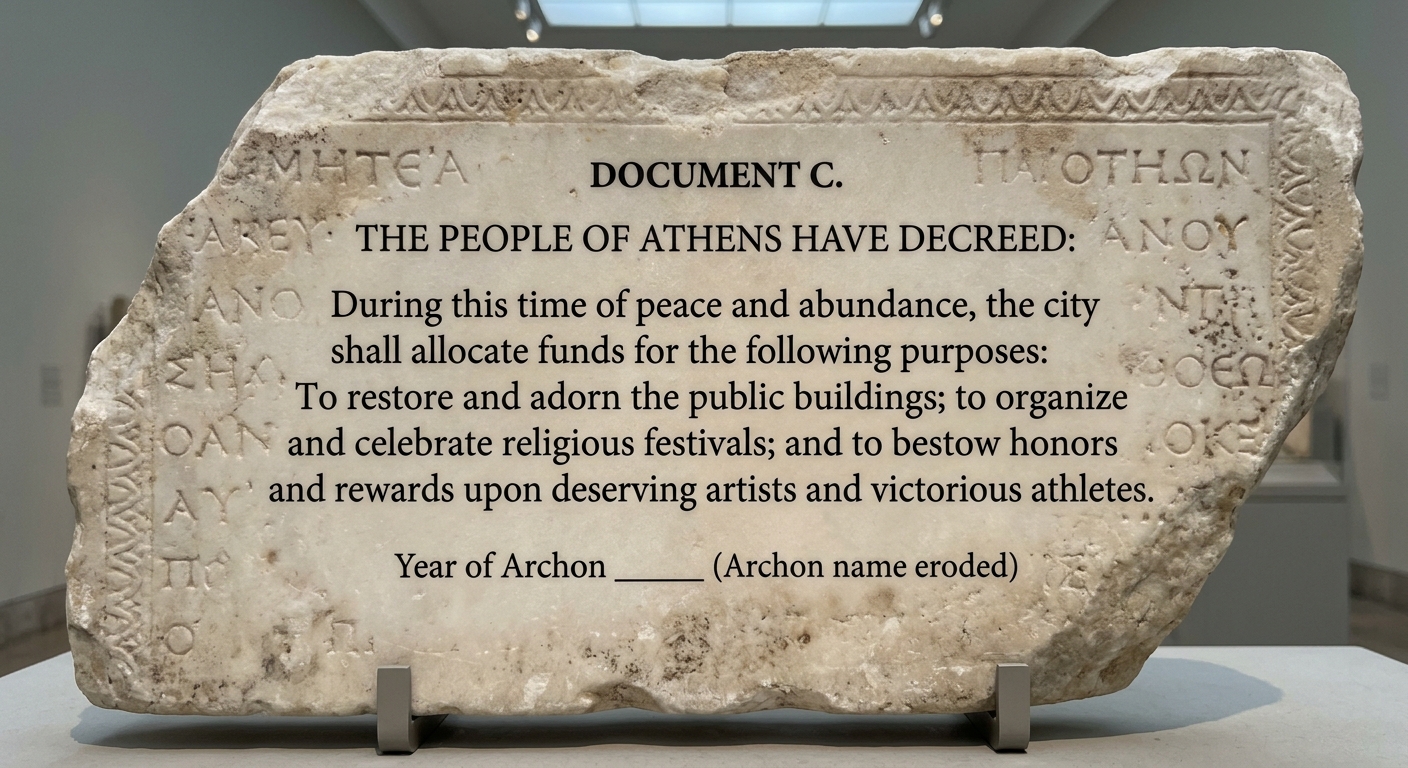
Document C is a translated public decree from a Greek city-state. It describes money set aside for temples, festivals, and honors for artists and athletes. Use the inscription to infer what conditions might have existed for these cultural achievements and whether this suggests a golden age.

Based on Document C, which detail is the BEST evidence that this society had enough stability and resources to support cultural achievements?
Which inference about the period described in Document C is BEST supported by the evidence?
Which additional source would BEST help a historian evaluate whether the period described in Document C was part of a golden age?
Use evidence from Document C and the reading to explain how peace and prosperity can lead to cultural achievements.
In your paragraph, cite at least two specific details from the document (for example, festivals, public buildings, or honors).
Evaluate Document C as historical evidence for identifying a golden age.
What is one limitation of using this decree alone, and what is one additional type of evidence you would seek to strengthen your conclusion?
Write one paragraph.