Use the historical document(s) and the short readings in the left panel to answer the associated questions.
After invasions and local fighting made travel unsafe, some people sought protection from powerful landowners. In return, they promised loyalty and military help. Agreements like this document helped create feudal relationships that provided order and met basic needs, even without strong central rule.
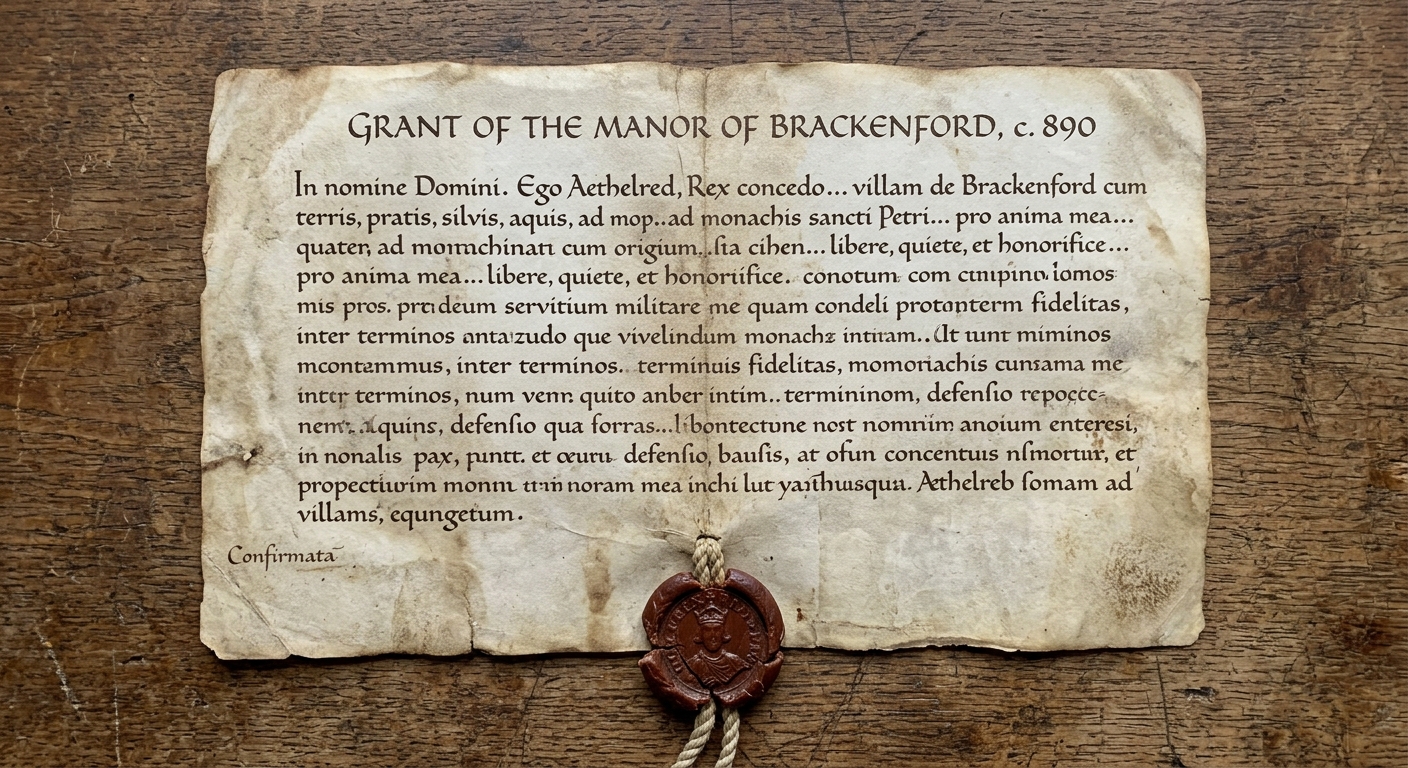
Based on the charter and the short reading, which detail is the strongest evidence that feudalism involved an exchange between people of different status?
Which condition described in the short reading best explains why agreements like this charter became more common in Western Europe?
What is the most likely purpose of the lord issuing a written charter like the one shown?
Using evidence from BOTH the charter image and the short reading, explain how feudalism developed in Western Europe in response to a need for order and basic needs.
Include at least two specific pieces of evidence (details) from the sources.
What is one limitation of using this single charter to explain the broader shift to feudalism after the fall of Rome?
Identify one additional type of source that would help a historian and explain how it would add evidence.
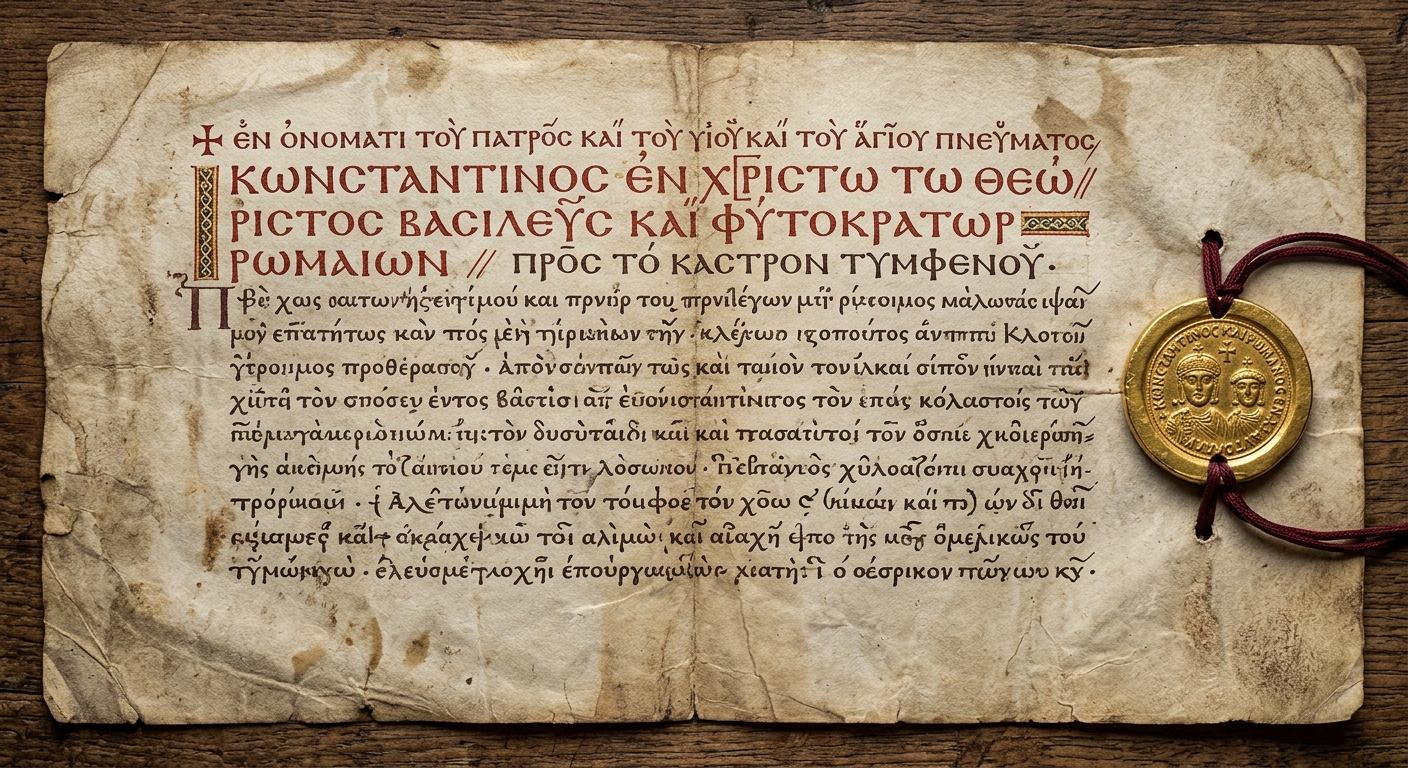
In the eastern Mediterranean, emperors in Constantinople ruled a state that kept many Roman traditions. Official documents, like this edict, used Roman law, collected taxes to support an army, and promoted Orthodox Christianity. These policies helped the Byzantine Empire preserve and reshape Roman power after the west fell.

Which detail from the reading best supports the claim that the Byzantine Empire preserved elements of the Roman Empire?
Based on the document and reading, which action best shows how the Byzantine government maintained control over lands around the Mediterranean?
Which statement best explains how Orthodox Christianity helped the Byzantine Empire preserve and reshape Roman traditions?
Using evidence from BOTH the imperial edict image and the reading, explain how the Byzantine Empire preserved elements of the Roman Empire while developing Orthodox Christianity.
Include at least two specific pieces of evidence (details) from the sources.
What is one limitation of using this single imperial edict to explain the Byzantine Empire’s role in preserving Roman elements?
Identify one additional type of source that would help a historian and explain how it would add evidence.
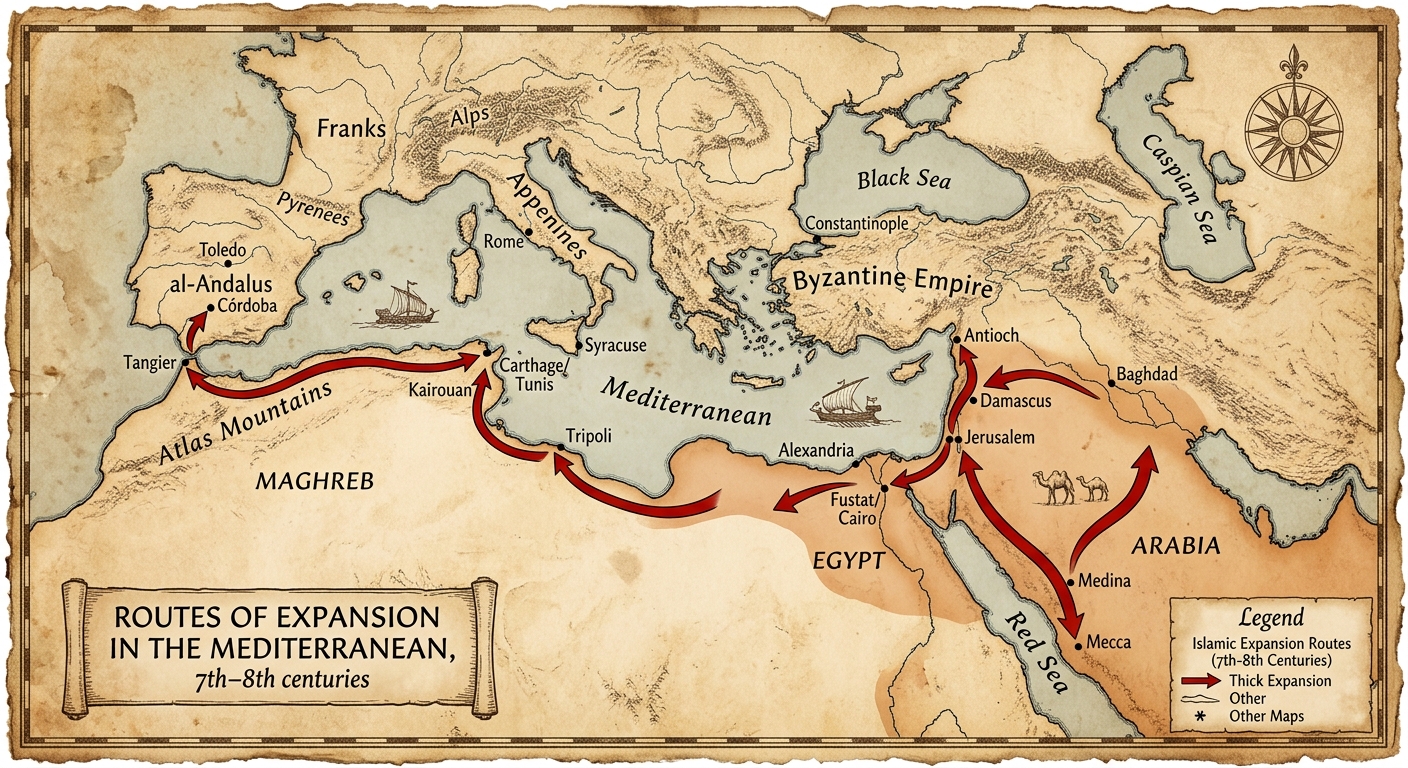
After the rise of Islam in southwest Asia, Muslim forces and leaders expanded their influence across the Mediterranean. Control of key cities, alliances, and trade routes helped Islam spread into Egypt and North Africa. From there, movement across the Strait of Gibraltar brought Islamic rule into the Iberian Peninsula.

Based on the map, which area was reached after expansion moved west across North Africa?
Which feature on the map is the best evidence that Islam spread through the Mediterranean region from southwest Asia to northern Africa and then to Iberia?
Which inference is best supported by BOTH the reading and the map about how Islam spread?
Using evidence from BOTH the map and the reading, explain how Islam spread within the Mediterranean region from southwest Asia to northern Africa and the Iberian Peninsula.
Include at least two specific pieces of evidence (details) from the sources.
What is one limitation of using this map to explain the spread of Islam in the Mediterranean?
Identify one additional type of source that would help a historian and explain how it would add evidence.
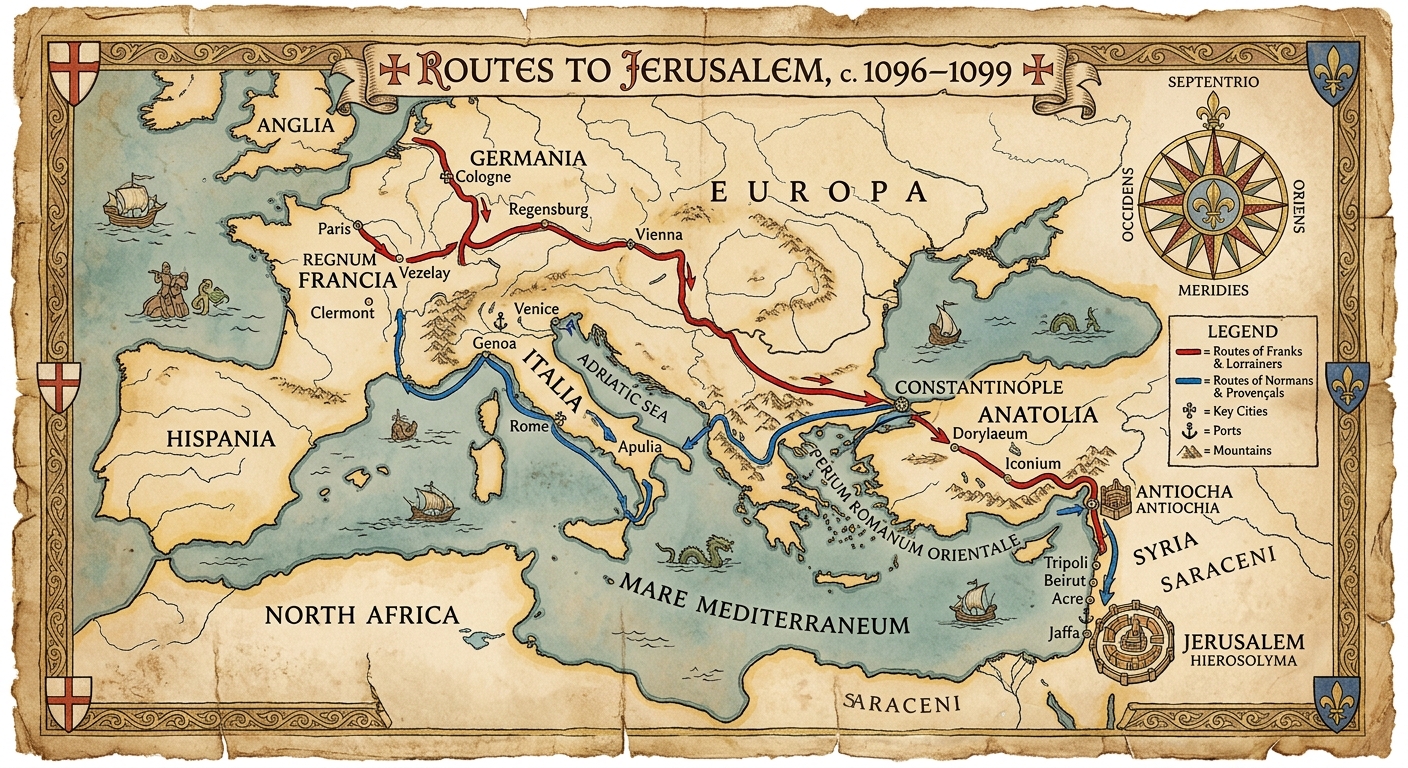
In the late 1000s, rival powers competed for religious, economic, and political influence in the eastern Mediterranean. Control of holy sites in Jerusalem and key trade routes mattered to many groups. European leaders organized Crusades, traveling through Constantinople toward the Levant, where local rulers resisted.

Based on the map, which destination appears to be the main focus of the Crusader routes?
Which feature of the map is the strongest evidence that the Crusades involved competition over holy lands?
Which conclusion is best supported by BOTH the reading and the map?
Using evidence from BOTH the map and the reading, explain how competition and rivalry over religious, economic, and political control of holy lands contributed to conflict such as the Crusades.
Include at least two specific pieces of evidence (details) from the sources.
What is one limitation of using this map to explain the causes of conflict during the Crusades?
Identify one additional type of source that would help a historian and explain how it would add evidence.