Twa kɔ nsɛm atitiriw so
Log in
Sign up for FREE
arrow_back
Laabri

6.5 - Comparative Classical Civilizations in the Eastern Hemisphere - Practice B

star
star
star
star
star
Last updated about 2 months ago
15 Nsɛmmisa
Hyɛ no nsow a efi ɔkyerɛwfo no hɔ:

Use the historical document(s) and the short readings in the left panel to answer the associated questions.

Use the historical document(s) and the short readings in the left panel to answer the associated questions.

6.5.a
DOK.SS.2
6.5.b
DOK.SS.2
6.5.c
DOK.SS.2
Ɛhia
1
6.5.a
DOK.SS.2
Ɛhia
1
6.5.a
DOK.SS.2
Ɛhia
1
6.5.a
DOK.SS.2
Ɛhia
1
6.5.a
DOK.SS.2
Ɛhia
1
6.5.a
DOK.SS.2
Ɛhia
1
6.5.b
DOK.SS.2
Ɛhia
1
6.5.b
DOK.SS.2
Ɛhia
1
6.5.b
DOK.SS.2
Ɛhia
1
6.5.b
DOK.SS.2
Ɛhia
1
6.5.b
DOK.SS.2
Ɛhia
1
6.5.c
DOK.SS.2
Ɛhia
1
6.5.c
DOK.SS.2
Ɛhia
1
6.5.c
DOK.SS.2
Ɛhia
1
6.5.c
DOK.SS.2
Ɛhia
1
6.5.c
DOK.SS.2

Document A is a translated excerpt from a provincial decree issued by an imperial ruler around 500 BCE. It orders local officials to repair canals after seasonal flooding, record harvest taxes, and maintain a road to the nearest fortress. The decree was copied and posted in a river-valley town.
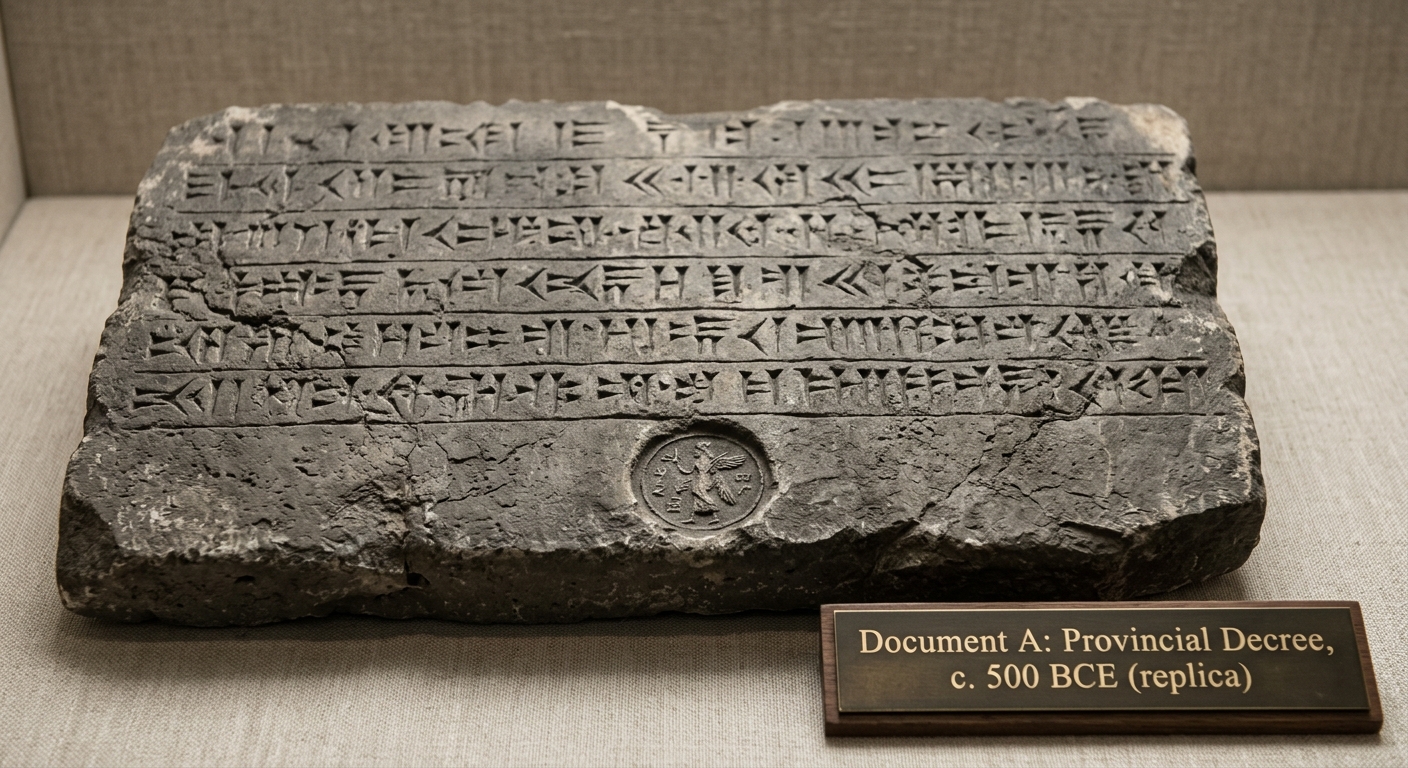
A photo of a replica stone stele fragment with lines of ancient script and a caption plaque reading “Document A: Provincial Decree, c. 500 BCE (replica).”

Asemmisa {{asɛmmisaAhyɛnsode}}
1.

Create a 4-step yearly timeline that shows a logical sequence of events suggested by the decree. Your steps must include flooding, canal repair, harvest/taxes, and travel/communication to the fortress. Explain briefly why the order makes sense.

Asemmisa {{asɛmmisaAhyɛnsode}}
2.

Explain how a geographic factor described or implied in Document A influenced the government’s responsibilities.

Use at least two pieces of evidence from the reading stimulus (for example, canals, flooding, roads, fortress, taxes).

Asemmisa {{asɛmmisaAhyɛnsode}}
3.

Why would the decree likely require canal repairs before officials record harvest taxes?

Asemmisa {{asɛmmisaAhyɛnsode}}
4.

Based on the order of events in the reading stimulus, which action would most likely happen immediately after seasonal flooding?

Asemmisa {{asɛmmisaAhyɛnsode}}
5.

Which detail best supports the inference that this empire had an organized political structure that could manage distant regions over time?

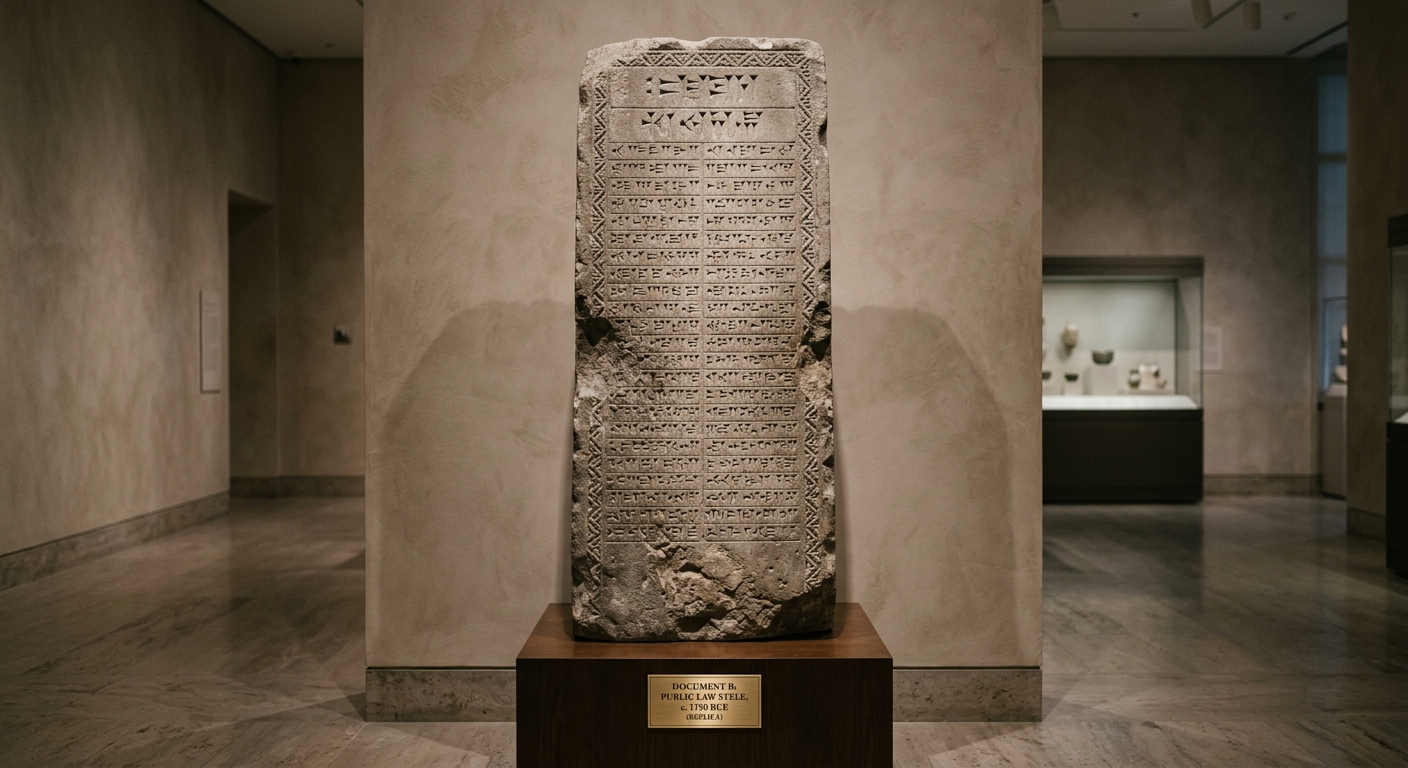
Document B is a translated summary of a public law stele carved around 1750 BCE. The ruler orders officials to post the laws in the town market, assign judges to hear disputes, record decisions on tablets, and collect fines for theft and assault. Messengers report results to the capital.

A museum-style photo of a replica stone law stele with carved lines of ancient script and a caption plaque reading “Document B: Public Law Stele, c. 1750 BCE (replica).”

Asemmisa {{asɛmmisaAhyɛnsode}}
6.

Why would a government require local judges to record decisions in writing?

Asemmisa {{asɛmmisaAhyɛnsode}}
7.

Based on the reading stimulus, which action would most likely happen first after officials receive the new legal code?

Asemmisa {{asɛmmisaAhyɛnsode}}
8.

Which detail best supports the inference that this state had systems to enforce laws over time?

Asemmisa {{asɛmmisaAhyɛnsode}}
9.

Create a 4-step timeline showing how a new law would move from the ruler to everyday enforcement in a town.

Your steps must include posting the law, a decision by a judge, a penalty, and reporting/record-keeping.

Briefly explain why the order makes sense.

Asemmisa {{asɛmmisaAhyɛnsode}}
10.

Explain how the political structure in Document B was designed to establish order and enforce laws.

Use at least two pieces of evidence from the reading stimulus (for example, judges, posted laws, records, fines, messengers).

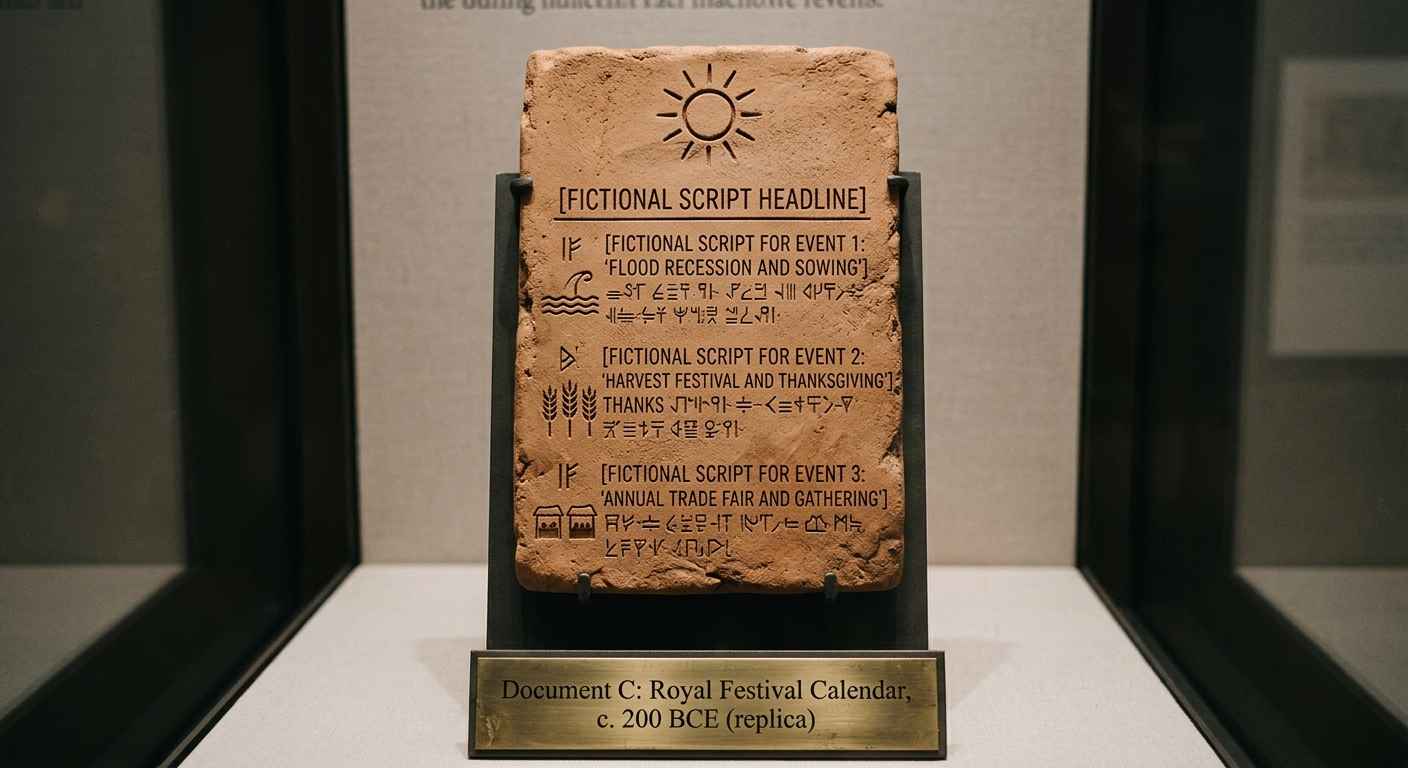
Document C is a translated excerpt from a royal festival calendar posted during a long period of peace around 200 BCE. It lists seasonal celebrations, market days, and public building repairs scheduled across the year. Officials used the calendar to coordinate labor and distribute food during festivals.

A museum-style photo of a replica tablet labeled “Document C: Royal Festival Calendar, c. 200 BCE (replica),” showing lines of ancient script and a small sun symbol.

Asemmisa {{asɛmmisaAhyɛnsode}}
11.

Based on the stimulus, which action would most likely happen immediately before a major public festival?

Asemmisa {{asɛmmisaAhyɛnsode}}
12.

Explain how Document C suggests a connection between peace/prosperity and cultural achievements.

Use at least two pieces of evidence from the reading stimulus (for example, scheduled celebrations, market days, building repairs, distributing food).

Asemmisa {{asɛmmisaAhyɛnsode}}
13.

Create a 4-step timeline for one year that fits Document C.

Your steps must include (1) calendar planning, (2) market activity, (3) a festival, and (4) public building repair.

Briefly explain why your order is logical.

Asemmisa {{asɛmmisaAhyɛnsode}}
14.

Which detail best supports the idea that this period could be considered a “golden age”?

Asemmisa {{asɛmmisaAhyɛnsode}}
15.

Which sequence best matches the yearly pattern suggested by Document C and the reading stimulus?