Twa kɔ nsɛm atitiriw so
Log in
Sign up for FREE
arrow_back
Laabri

6.6 - Mediterranean World: Feudal Western Europe - The Byzantine Empire, and the Islamic Caliphates - Practice B

star
star
star
star
star
Last updated about 2 months ago
20 Nsɛmmisa
Hyɛ no nsow a efi ɔkyerɛwfo no hɔ:

Use the historical document(s) and the short readings in the left panel to answer the associated questions.

Use the historical document(s) and the short readings in the left panel to answer the associated questions.

6.6.a
DOK.SS.2
6.6.b
DOK.SS.2
6.6.c
DOK.SS.2
6.6.d
DOK.SS.2
Ɛhia
2
6.6.a
DOK.SS.2
Ɛhia
1
6.6.a
DOK.SS.2
Ɛhia
1
6.6.a
DOK.SS.2
Ɛhia
1
6.6.a
DOK.SS.2
Ɛhia
2
6.6.a
DOK.SS.2
Ɛhia
1
6.6.b
DOK.SS.2
Ɛhia
1
6.6.b
DOK.SS.2
Ɛhia
2
6.6.b
DOK.SS.2
Ɛhia
2
6.6.b
DOK.SS.2
Ɛhia
1
6.6.b
DOK.SS.2
Ɛhia
1
6.6.c
DOK.SS.2
Ɛhia
1
6.6.c
DOK.SS.2
Ɛhia
2
6.6.c
DOK.SS.2
Ɛhia
2
6.6.c
DOK.SS.2
Ɛhia
1
6.6.c
DOK.SS.2
Ɛhia
2
6.6.d
DOK.SS.2
Ɛhia
1
6.6.d
DOK.SS.2
Ɛhia
1
6.6.d
DOK.SS.2
Ɛhia
1
6.6.d
DOK.SS.2
Ɛhia
2
6.6.d
DOK.SS.2

Historical Document (translated excerpt), 476 CE
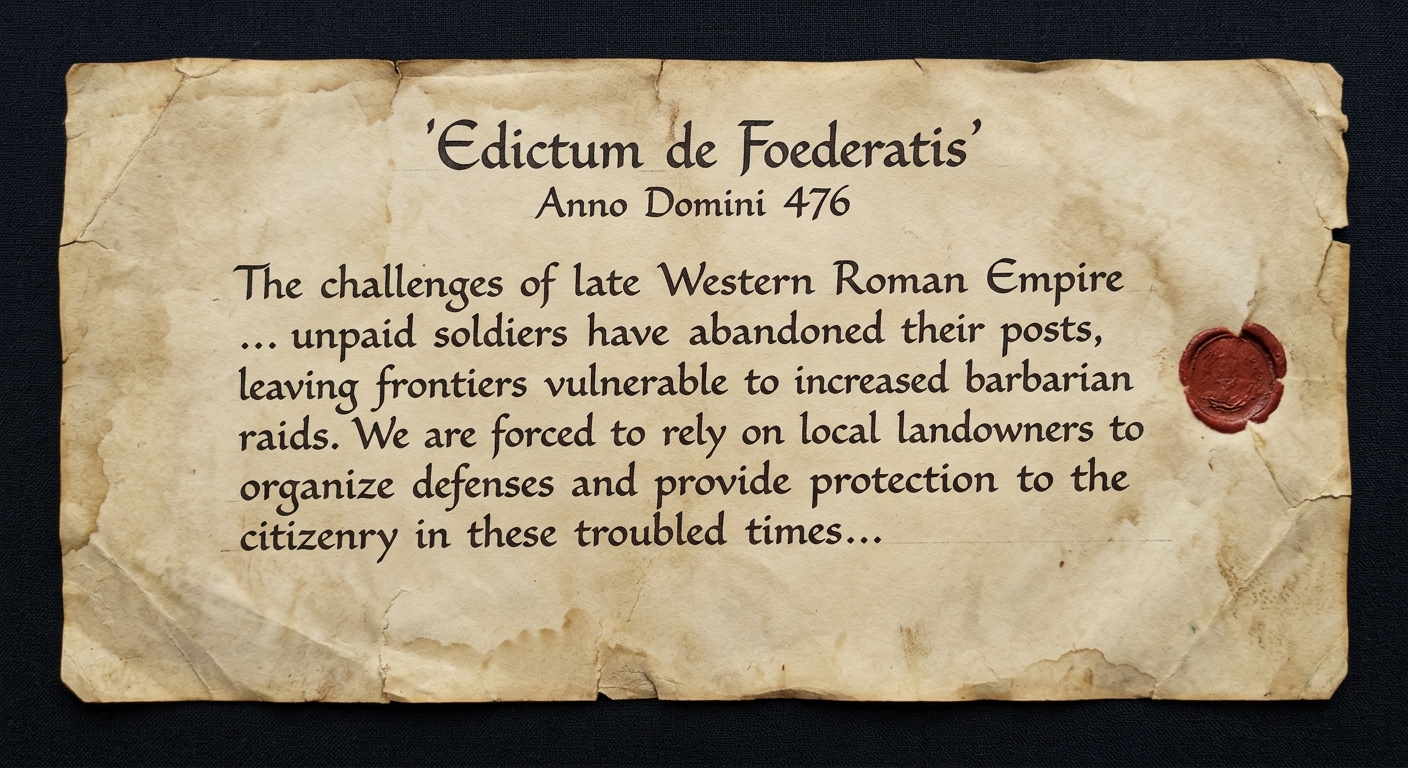
Parchment-style historical document labeled 476 CE with a short translated edict about unpaid soldiers and frontier raids, with a wax seal in the margin.

In 476 CE, a Western Roman official describes mounting raids and soldiers who have not been paid. With taxes failing and officials arguing, he urges communities to seek protection from powerful landowners who can raise armed followers, even if that weakens imperial control.
Asemmisa {{asɛmmisaAhyɛnsode}}
1.

Explain a cause-and-effect chain (at least two linked steps) that connects one problem described in the document to one feature of feudalism that developed later in Western Europe.

Use chronological words such as “before,” “as a result,” or “over time.”

Asemmisa {{asɛmmisaAhyɛnsode}}
2.

Based on the document, which development is the BEST prediction for what happened NEXT in Western Europe?

Asemmisa {{asɛmmisaAhyɛnsode}}
3.

Which event most likely happened shortly BEFORE the situation described in the document and reading stimulus?

Asemmisa {{asɛmmisaAhyɛnsode}}
4.

Which long-term cause of Rome’s fall is MOST supported by the document and reading stimulus?

Asemmisa {{asɛmmisaAhyɛnsode}}
5.

Using evidence from the document and reading stimulus, identify one immediate problem and one longer-term effect.

Then explain how they are chronologically related (what came first and what followed).

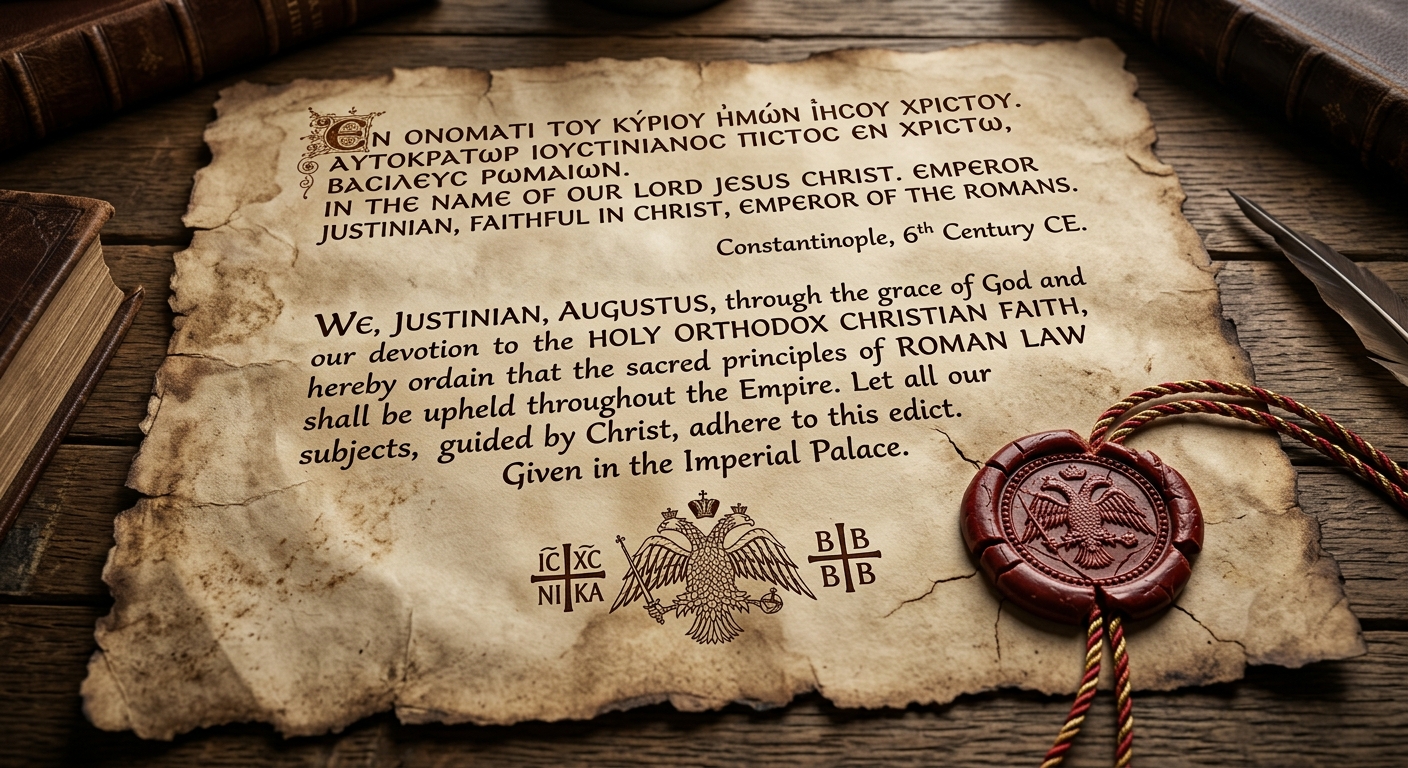
Historical Document (translated excerpt), Constantinople, 6th century CE

Byzantine parchment decree labeled Constantinople, 6th century CE, referencing Roman law and the Orthodox Christian faith, with an imperial seal.

Reading stimulus (47 words): In the 500s CE, an emperor in Constantinople orders officials to enforce a written law code and support church leaders in the capital. The decree calls the ruler “Emperor of the Romans” and describes Orthodox Christianity as a source of unity while the empire defends Mediterranean lands.

Asemmisa {{asɛmmisaAhyɛnsode}}
6.

Which development most likely happened shortly BEFORE the situation described in the document and reading stimulus?

Asemmisa {{asɛmmisaAhyɛnsode}}
7.

Which detail from the document best shows how the Byzantine Empire preserved elements of the Roman Empire?

Asemmisa {{asɛmmisaAhyɛnsode}}
8.

Using evidence from the document and reading stimulus, explain one way the Byzantine Empire shows continuity with Rome and one way it shows change over time.

Use chronological words such as “before,” “later,” or “over time.”

Asemmisa {{asɛmmisaAhyɛnsode}}
9.

Explain a cause-and-effect chain (at least two linked steps) that connects Byzantine control of Mediterranean lands to the growth of Orthodox Christianity as described in the stimulus.

Use chronological words such as “as a result” or “therefore.”

Asemmisa {{asɛmmisaAhyɛnsode}}
10.

Based on the reading stimulus, which development is the BEST prediction for what happened NEXT in the Byzantine Empire?

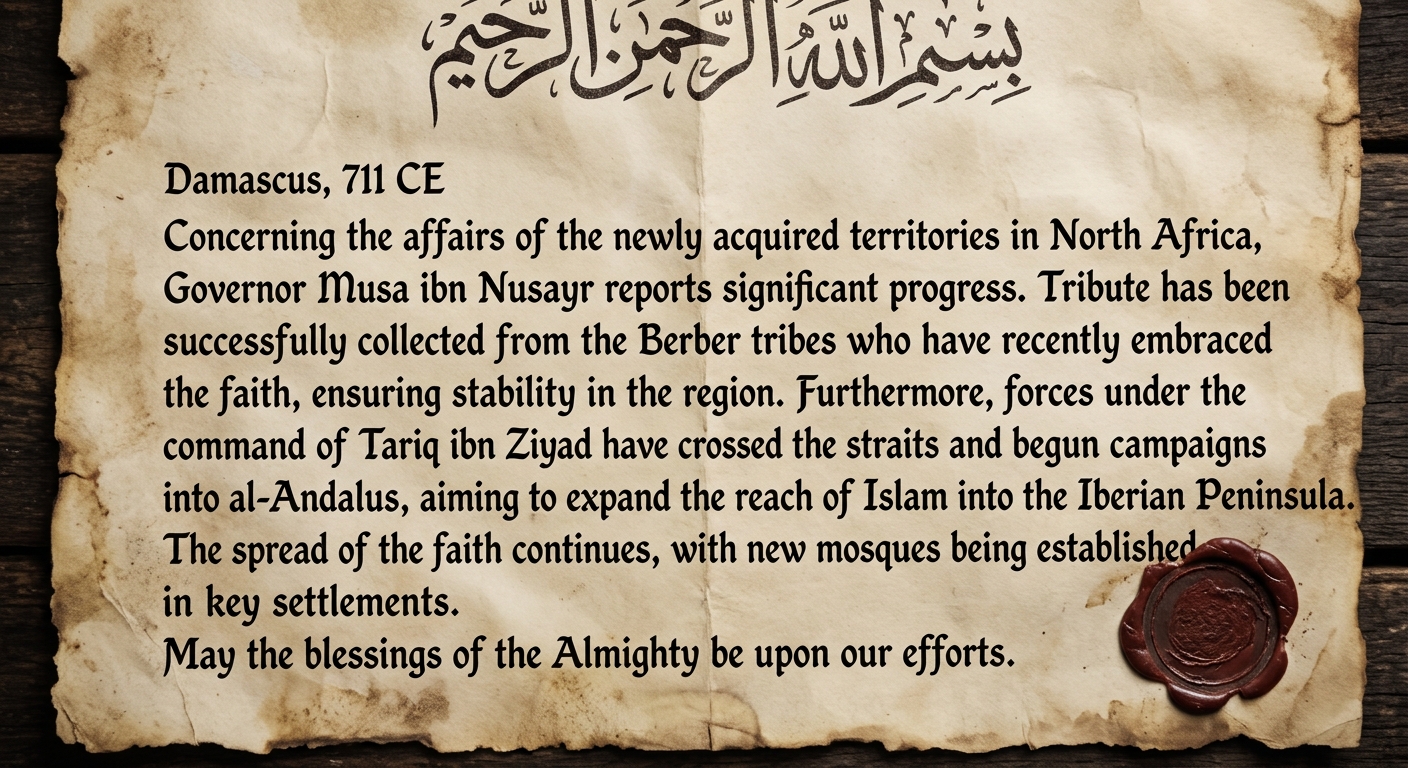
Historical Document (translated excerpt), 711 CE

Parchment-style translated document dated 711 CE describing Muslim expansion into North Africa and the Iberian Peninsula, with an official seal.

Reading stimulus (49 words): In 711 CE, an official in the Umayyad Caliphate reports that Muslim forces have crossed from North Africa into the Iberian Peninsula. He instructs local governors to collect taxes, protect trade routes, and support new mosques in captured towns. The letter links political control with the spread of Islam.

Asemmisa {{asɛmmisaAhyɛnsode}}
11.

Which statement best explains how political control and religious change are chronologically connected in the stimulus?

Asemmisa {{asɛmmisaAhyɛnsode}}
12.

Which event most likely happened shortly BEFORE the situation described in the document and reading stimulus?

Asemmisa {{asɛmmisaAhyɛnsode}}
13.

Using evidence from the document and reading stimulus, identify one immediate action described and one longer-term impact that could follow.

Then explain how they are chronologically related (what came first and what followed).

Asemmisa {{asɛmmisaAhyɛnsode}}
14.

Explain a cause-and-effect chain (at least two linked steps) that connects Islamic expansion into North Africa to the spread of Islam into the Iberian Peninsula.

Use chronological words such as “before,” “as a result,” or “over time.”

Asemmisa {{asɛmmisaAhyɛnsode}}
15.

Based on the document, which development is the BEST prediction for what happened NEXT in the Iberian Peninsula?

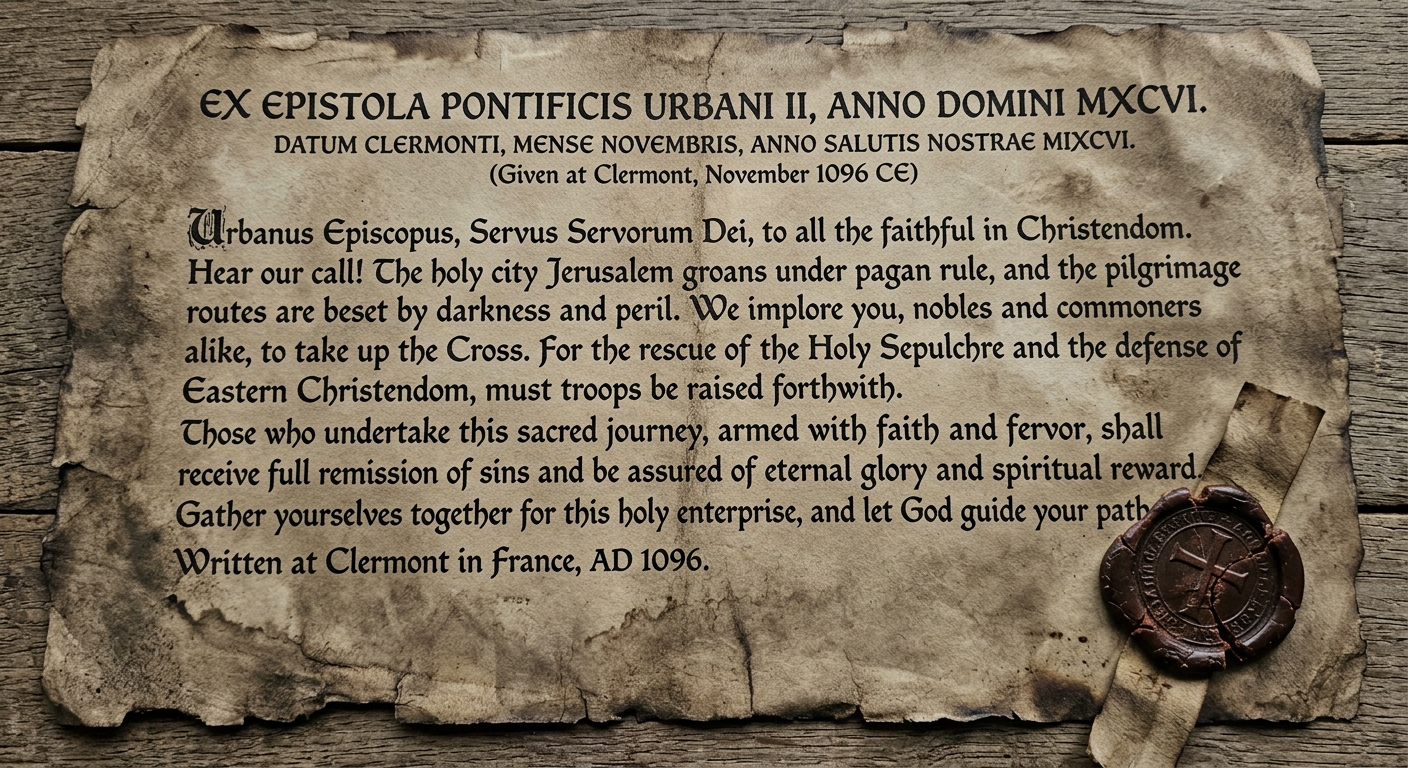
Historical Document (translated excerpt), 1096 CE

Parchment-style translated letter dated 1096 CE calling for armed pilgrimage to the Holy Land, with a wax seal.

In 1096 CE, a church leader urges nobles to organize an armed pilgrimage to Jerusalem. He claims that conflict has grown over access to holy places and trade routes and warns that rival rulers are expanding their power. He promises spiritual reward to those who join the expedition.

Asemmisa {{asɛmmisaAhyɛnsode}}
16.

Explain a cause-and-effect chain (at least two linked steps) that connects competition over religious, economic, and political control to the outbreak of a Crusade.

Use chronological words such as “before,” “as a result,” or “therefore.”

Asemmisa {{asɛmmisaAhyɛnsode}}
17.

Based on the document, which development is the BEST prediction for what happened NEXT in Europe and the Mediterranean region?

Asemmisa {{asɛmmisaAhyɛnsode}}
18.

Which development most likely happened shortly BEFORE the situation described in the document and reading stimulus?

Asemmisa {{asɛmmisaAhyɛnsode}}
19.

Which statement best explains why rivalry over holy lands led to conflict such as the Crusades?

Asemmisa {{asɛmmisaAhyɛnsode}}
20.

Using evidence from the document and reading stimulus, identify one immediate goal and one longer-term effect of crusading.

Then explain how they are chronologically related (what came first and what followed).