Use the historical document(s) and the short readings in the left panel to answer the associated questions.
Use the historical document(s) and the short readings in the left panel to answer the associated questions.
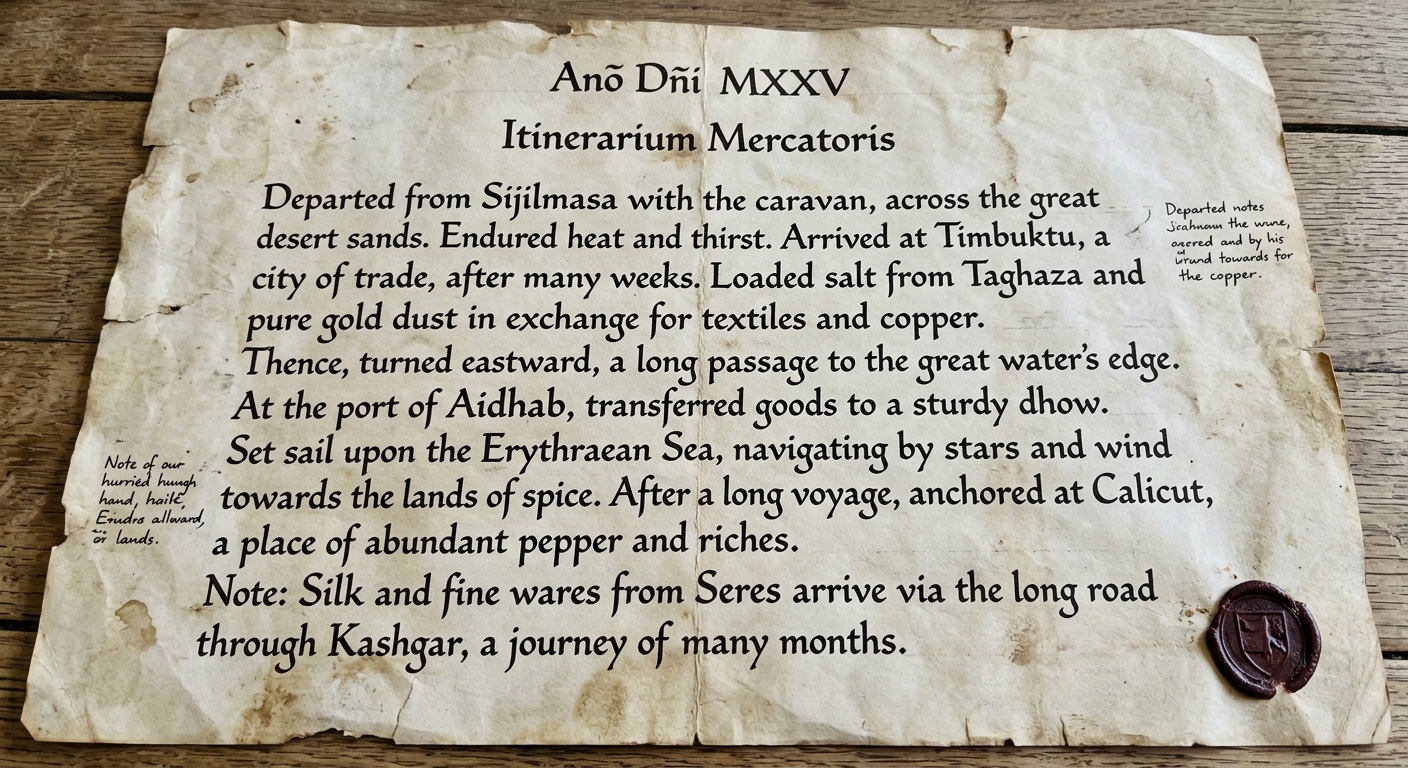
The image shows a translated excerpt from a merchant’s travel log dated 1025 CE. It describes moving goods by caravan and by ship across Afro‑Eurasian trade routes. Use the order of events and place names in the document to reason about what happened first, next, and later.
Which inference about change over time is BEST supported by the document’s description of repeated movement of goods and people along multiple routes?
Construct a brief timeline (3–4 steps) of the journey described in the document.
For each step, name what happened and cite a specific word or phrase from the document that supports your order.
Which major Afro‑Eurasian trade network is MOST directly supported by the document’s description of a caravan crossing the Sahara toward Timbuktu?
Use evidence from the document to explain how the merchant’s log shows connections between the East and West.
In your explanation, describe at least two details from the document and explain how the timing or sequence of travel helped those exchanges happen.
Based on the document, which sequence BEST represents how the merchant’s goods likely moved over time?
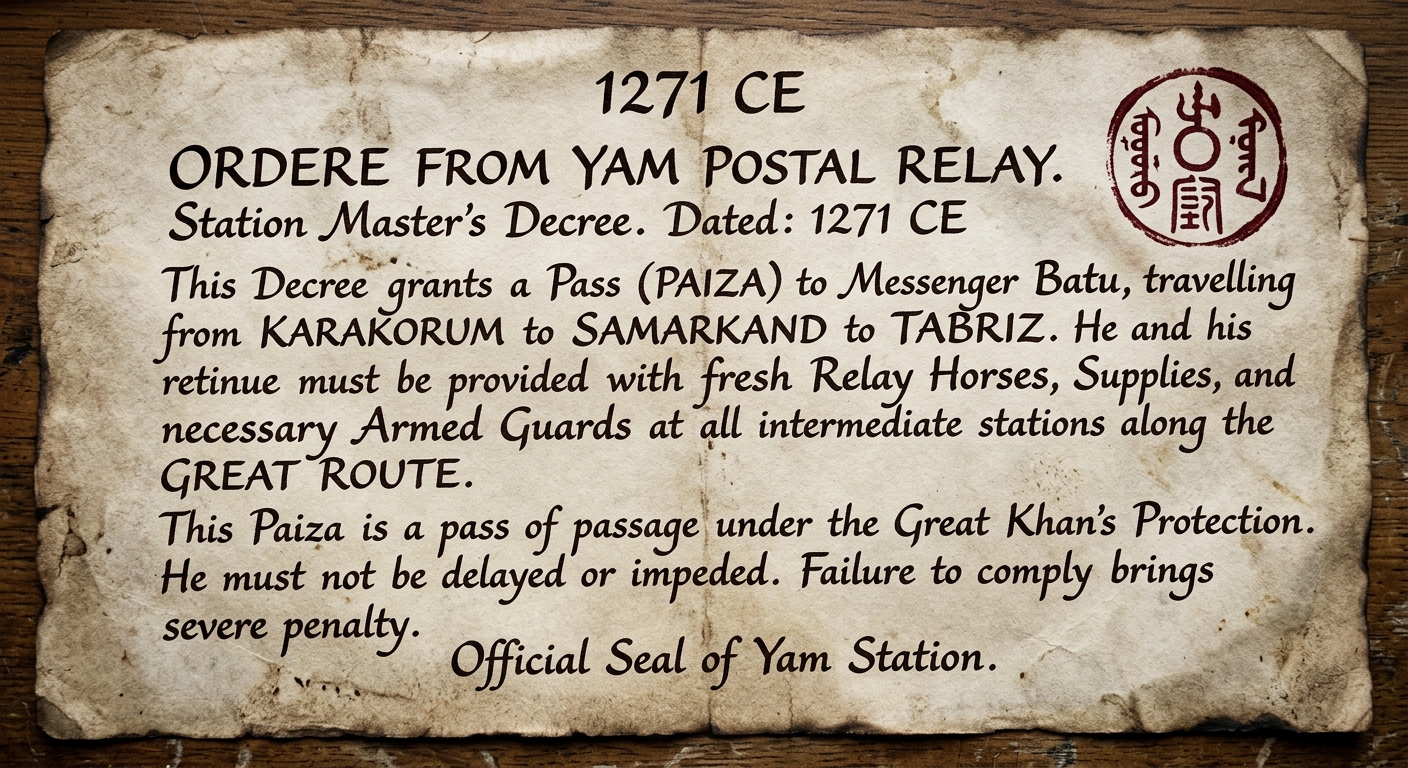
The image shows a translated decree dated 1271 CE about a Mongol relay‑station pass for messengers. It lists a sequence of stops and promises horses and guards to speed travel. Use the dated order of places and actions to reason what happened first, next, and later.
Which statement is BEST supported by the decree’s description of a relay‑station pass that provides horses and guards along the route?
Construct a brief timeline (3–4 steps) of what the messenger likely did from the start to the end of the journey described.
For each step, cite a specific word or phrase from the decree that supports your order.
According to the place order listed in the decree, which location would the messenger MOST likely reach last?
Explain how the decree shows the Mongols acting as agents of change by connecting regions.
Use at least two specific details from the document and explain how the sequence of stops or actions helped cultural diffusion occur over time.
Which sequence BEST matches the process described in the decree?
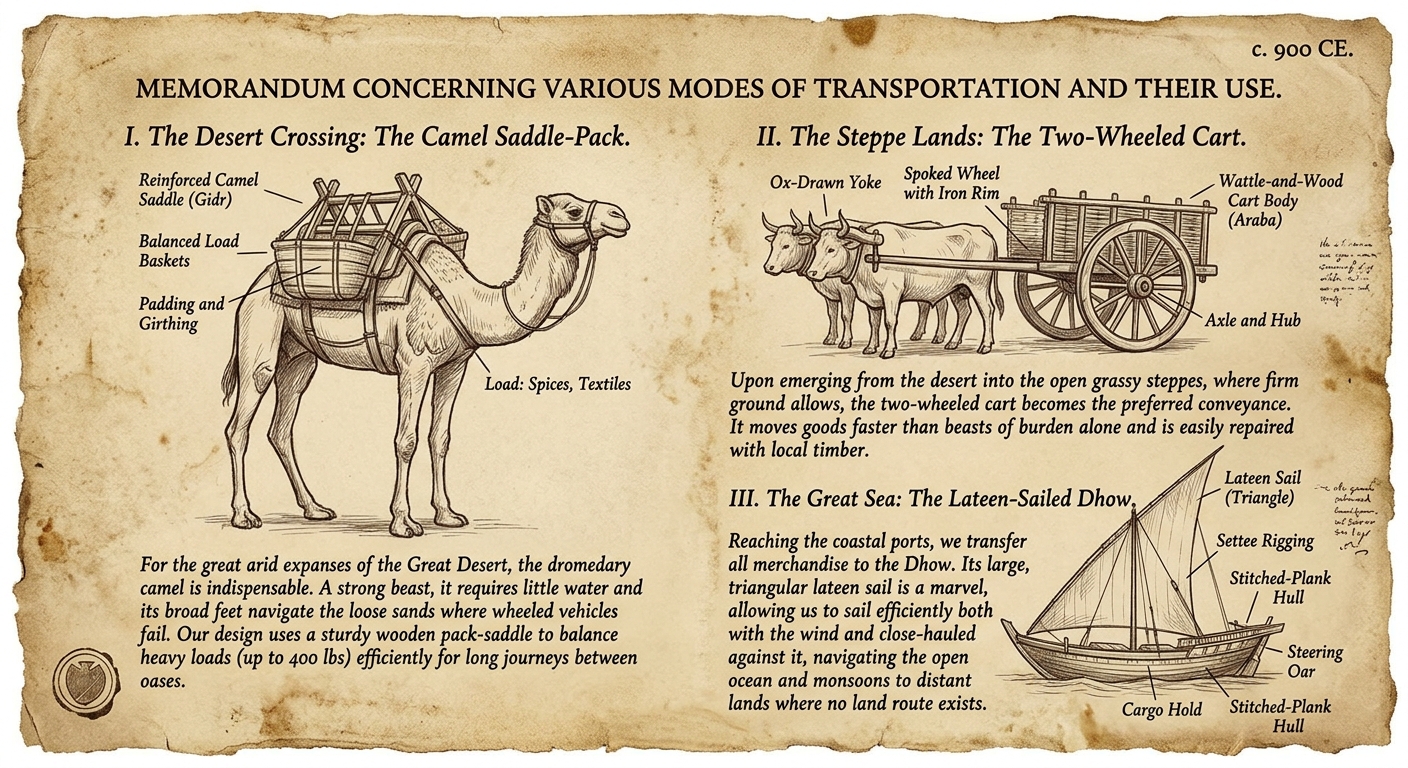
The image shows a translated report dated c. 900 CE describing transportation technologies used on Afro‑Eurasian trade routes. It notes how camel pack saddles, carts, and lateen‑sailed dhows helped people cross deserts and seas. Use the order of tools and places to infer what happened first, next, and later.
Which inference about cause and effect is BEST supported by the document’s explanation of why different transport tools were used?
Explain how the document shows adaptation to different environments (desert, land routes, sea routes) over time.
Use at least two details from the document and explain why the sequence of transportation choices matters.
Construct a brief timeline (3–4 steps) of the journey suggested by the document.
For each step, name the transportation technology used and cite a specific word or phrase from the document that supports your order.
Based on the document’s description, which sequence of transportation technologies MOST likely occurred over time on this journey?
Which detail from the document BEST supports the idea that societies designed transportation technologies to cross challenging landscapes?