Use the historical document(s) and the short readings in the left panel to answer the associated questions.
This sketch map shows where a small group set up camp near a river bend. The river provided fresh water and fish, and the wet ground grew reeds for tools and shelter. Nearby wild grain added food, while dry land and rocky hills offered fewer resources.
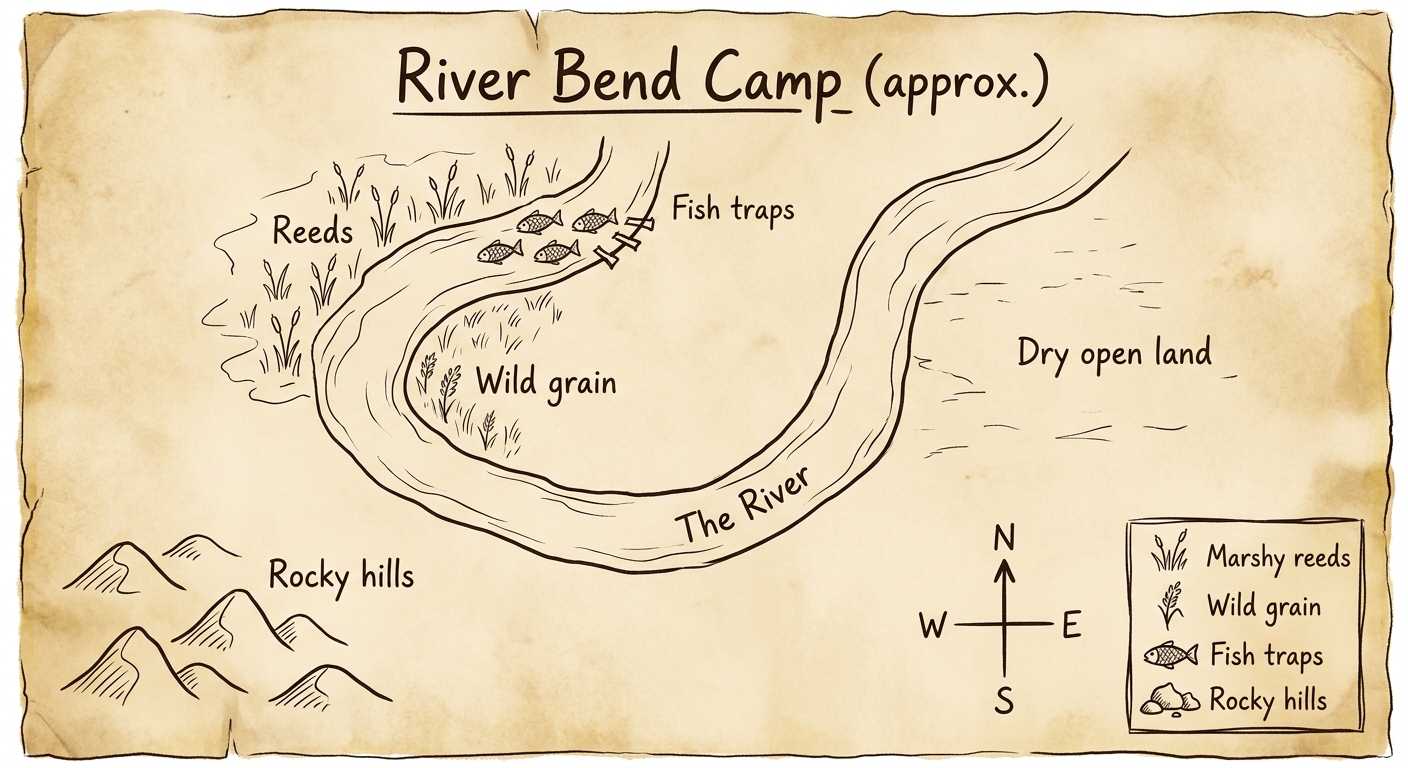
Based on the document and reading, which resource most likely explains why people chose to camp at the river bend?
If the river’s water level dropped for several months each year, which outcome is most likely for this camp?
Name one natural resource labeled on the document.
Which activity is best supported by the evidence shown closest to the river?
Using evidence from both the map and the reading, explain how at least two physical features or resources shaped daily life at River Bend Camp.
Include one likely adaptation people might make if the camp had to rely more on the dry open land.
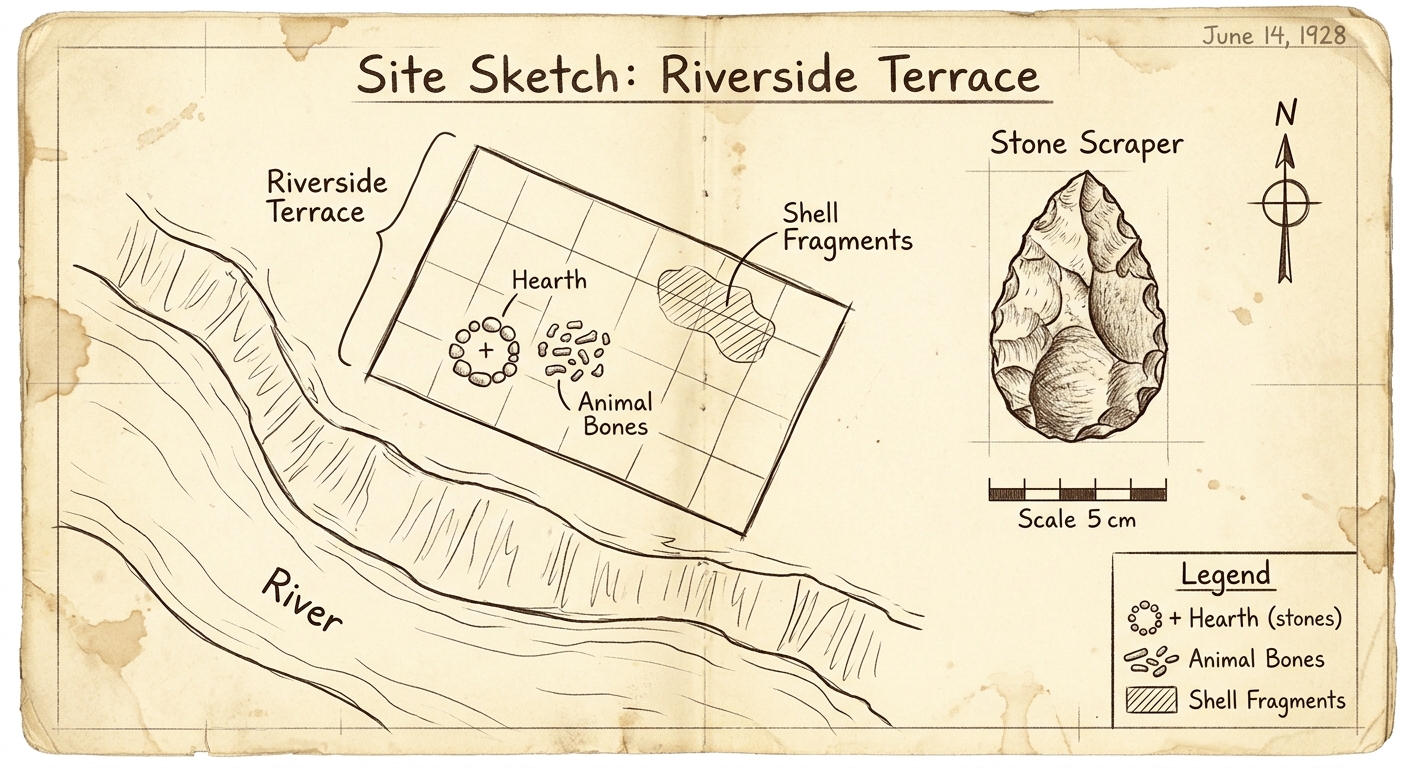
An archaeologist sketched a camp area on a river terrace. The drawing shows a hearth, animal bones, shell fragments, and a stone scraper. Because these objects were found close together near water, the archaeologist infers people cooked food here and made tools while living nearby.

Which piece of evidence from the document best supports the inference that people prepared food at this site?
Name one artifact shown in the document.
Using evidence from the document, explain how the archaeologist could use both artifacts and site features to draw conclusions about how people lived at this place.
Include at least two pieces of evidence from the sketch.
If this same camp were located far from the river in very dry open land, which change is most likely in the evidence archaeologists might find?
Based on the location shown, why would a river terrace be a useful place for people to live for a time?
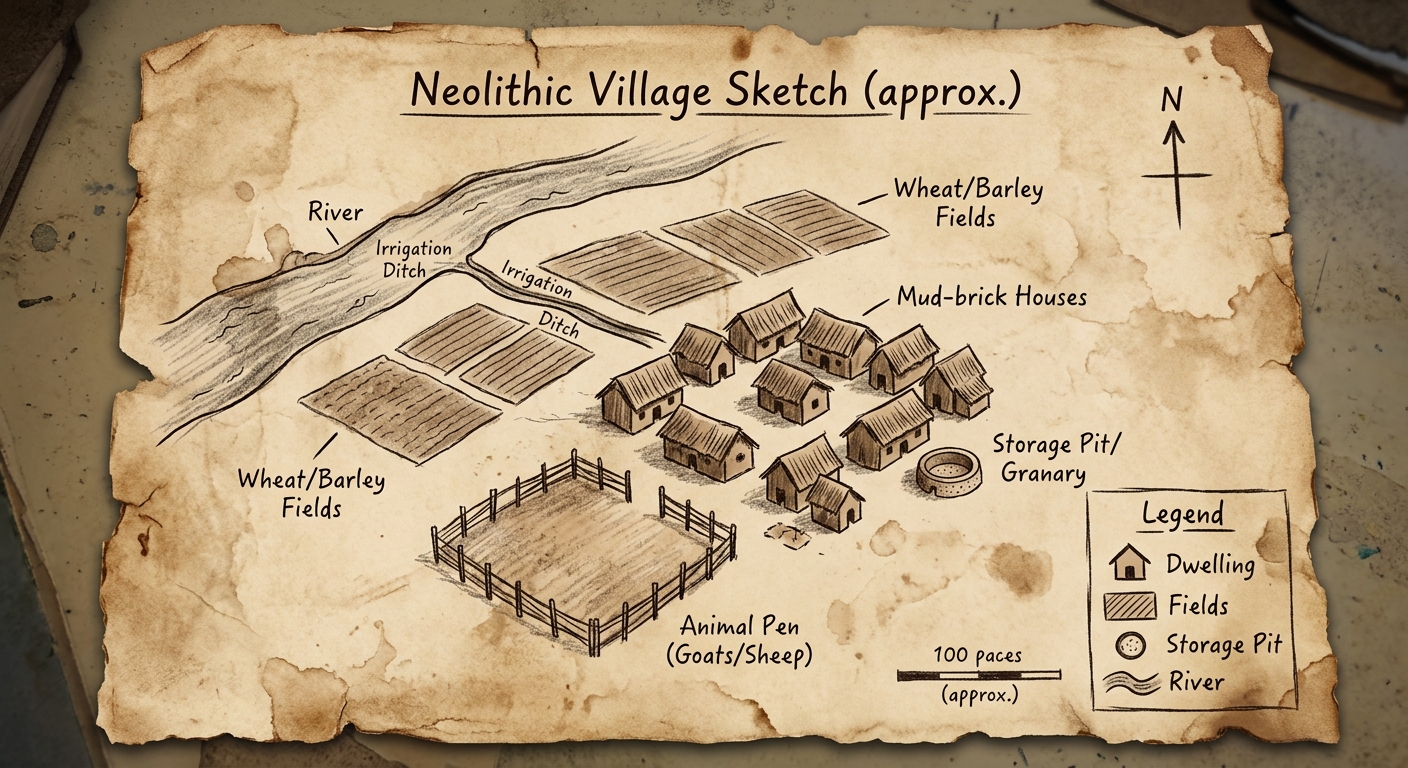
This field sketch shows a small Neolithic village beside a river. Fields of grain and an irrigation ditch suggest people grew crops. A pen for goats or sheep shows animal domestication. Mud-brick houses and a granary indicate people stored food and lived in one place for long periods.

Which conclusion is best supported by the irrigation ditch shown on the sketch?
Using evidence from the sketch and reading, explain how the physical environment helped this village grow more food than a mobile hunting-and-gathering camp.
Include at least two specific pieces of evidence and one geographic challenge the villagers might face.
Name one domesticated animal shown on the document.
If the river flooded earlier than usual for several years, which effect on this village is most likely?
Based on the document, which feature is the strongest evidence that this community was becoming sedentary (living in one place)?
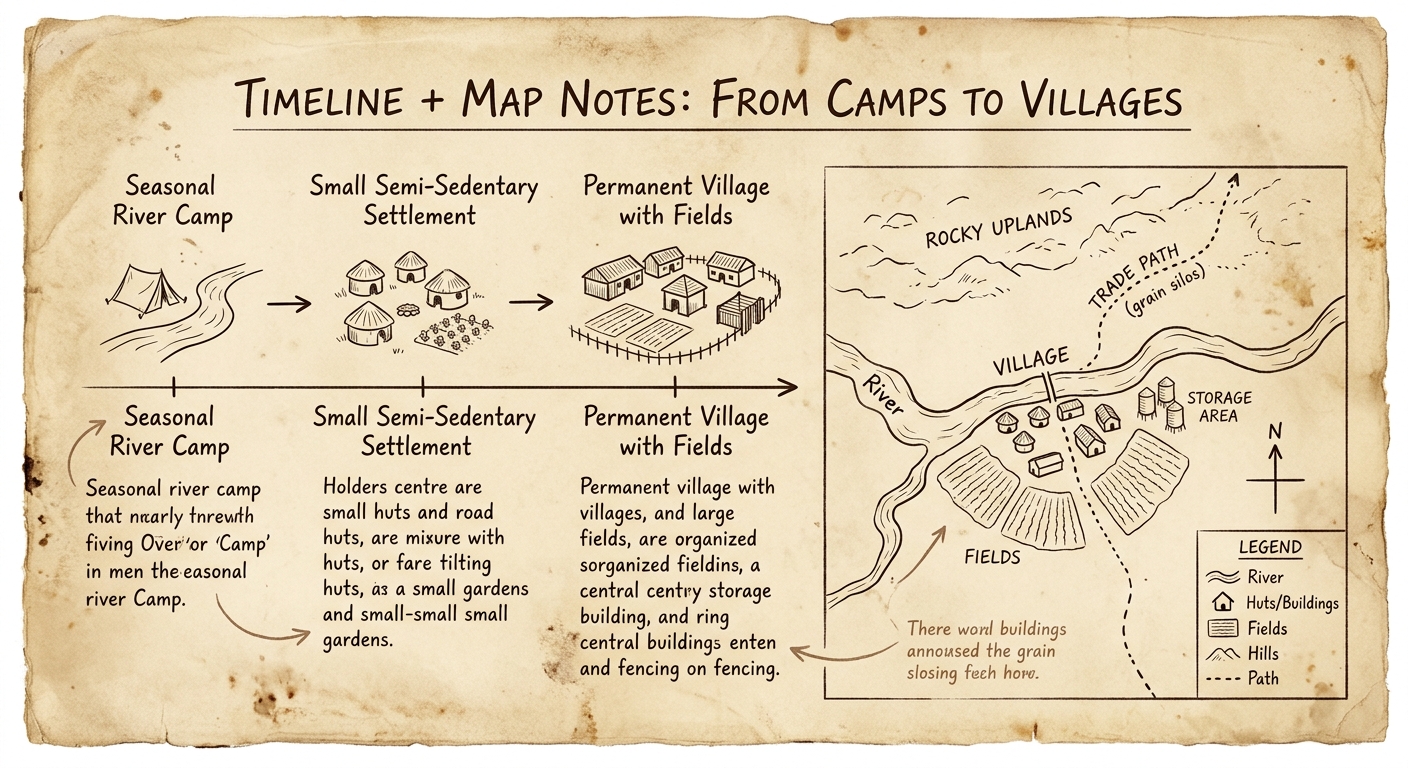
Historians use maps, timelines, and artifacts to identify turning points. This notebook page shows notes about a shift from seasonal river camps to a permanent village with fields and storage. The changes suggest new ways people used nearby land and water to support larger communities.

Which change shown on the document is the best evidence of a turning point toward permanent settlement?
Name one type of evidence mentioned in the reading.
According to the map notes, which geographic factor most directly supports the growth of the village?
Why would historians use both the timeline and the map on this page to study the change over time?
Using evidence from the document and reading, explain why the shift from seasonal camps to a permanent village can be considered a turning point.
Include at least two specific features from the page and explain how they show geographic choices people made.