Use the historical document(s) and the short readings in the left panel to answer the associated questions.
Study the translated route notes shown in the document. The traveler describes religious journeys between major cities and ports. Use the locations and routes to infer how deserts, seas, and crossroads shaped contact among belief communities, sacred sites, and shared practices.
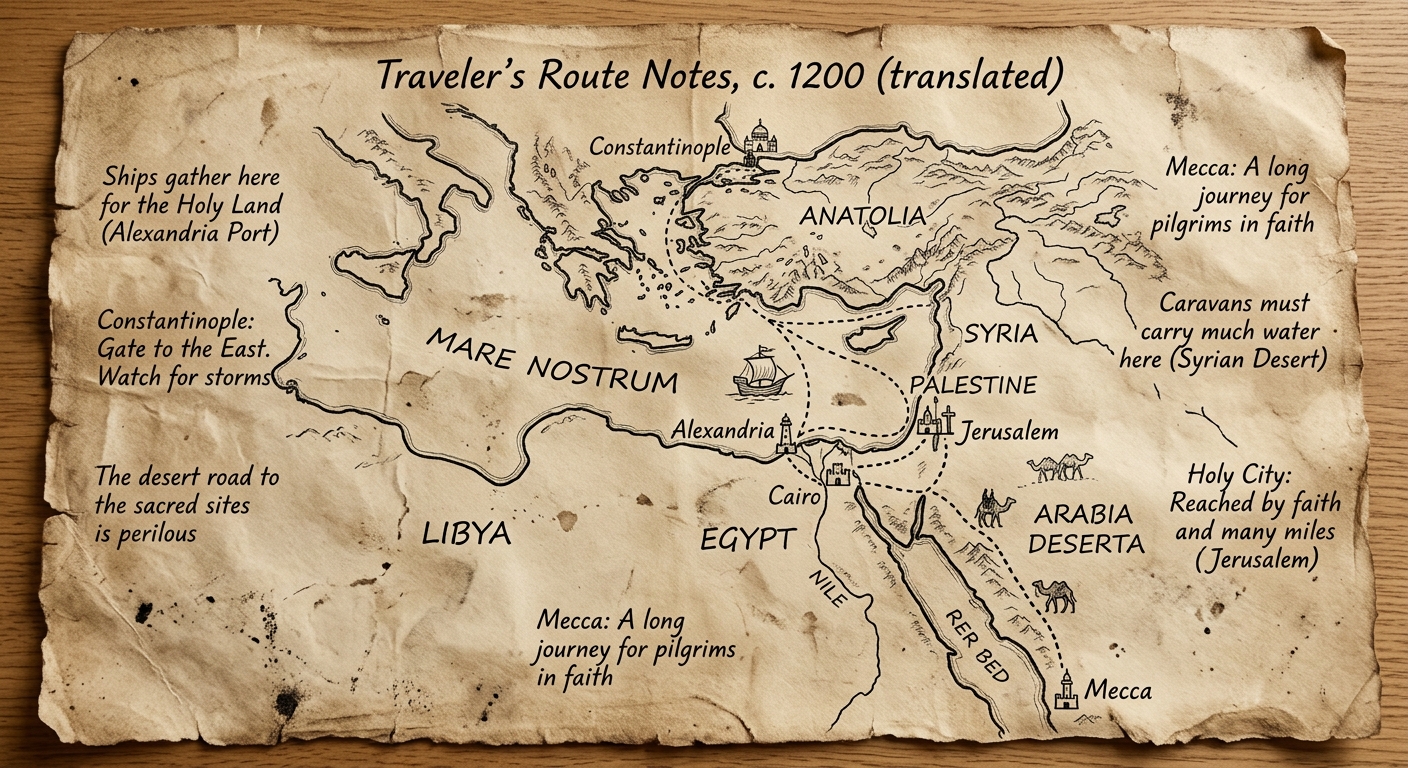
Using evidence from the routes and place names in the document, explain one way a physical feature (such as sea, desert, or a crossroads) could shape how people traveled to sacred sites and interacted with other belief communities.
Compare belief systems by identifying one similarity and one difference that might exist among religions connected by the routes in the document.
Use geographic evidence (places or routes) to support your comparison.
Based on the routes linking several major cities, which statement best explains how geography could affect religion in this region?
Which geographic feature is most likely a reason the document shows travel by sea between ports?
Which claim about belief systems is most supported by a document that highlights routes to multiple sacred sites?
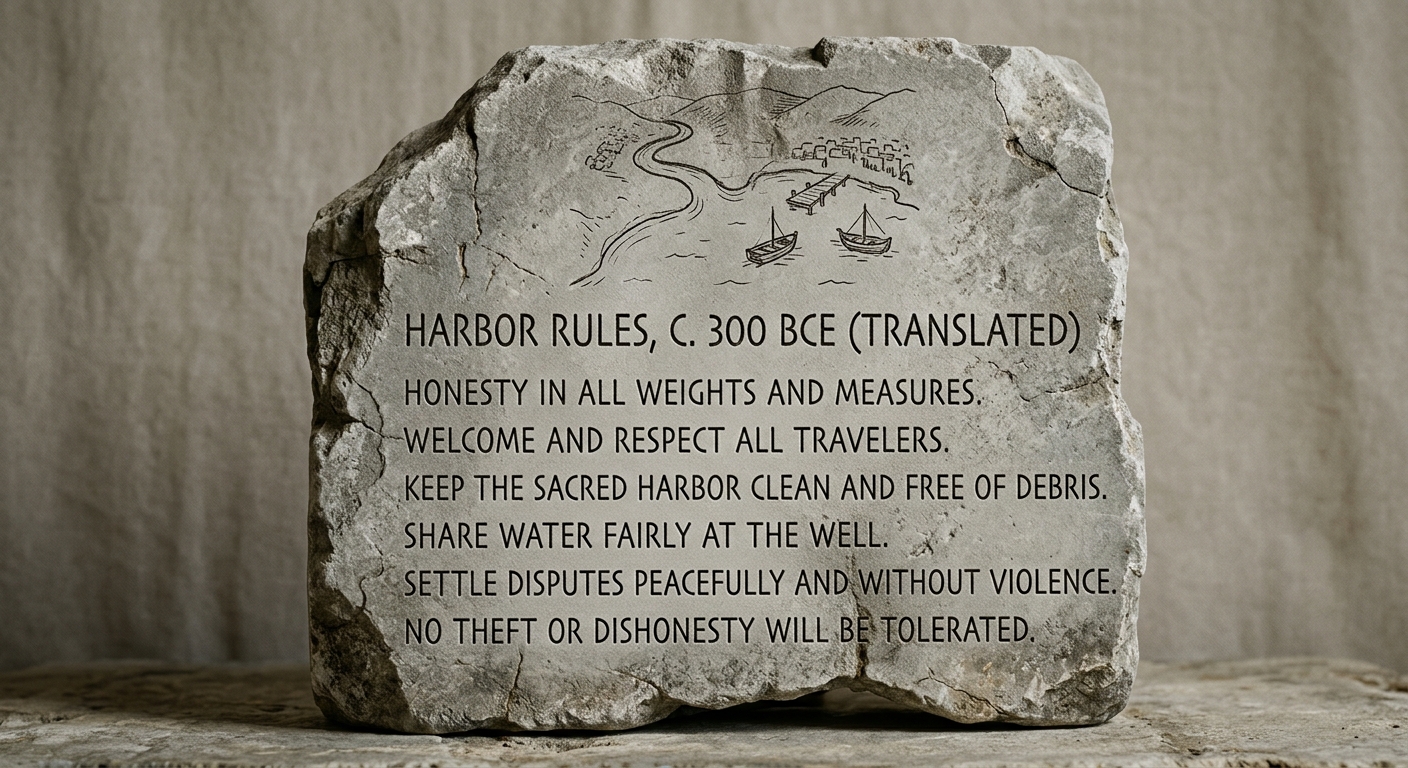
Study the translated stone rules posted at a busy harbor where ships arrived and travelers crossed a river mouth. Leaders used the inscription to remind locals and visitors of shared values—honesty, hospitality, cleanliness, and peaceful behavior—important in a place where many belief communities met.

Why would leaders be most likely to post shared rules at a harbor and river crossing?
Identify one value shown in the inscription and explain how that value could shape a rule or practice in a travel hub used by pilgrims and traders.
Which conclusion is best supported about belief communities meeting in this port city?
Using evidence from the document and the harbor location, explain one way geography could help spread shared values and practices among different belief communities.
Which rule best shows a mutually held value meant to guide people from many backgrounds?
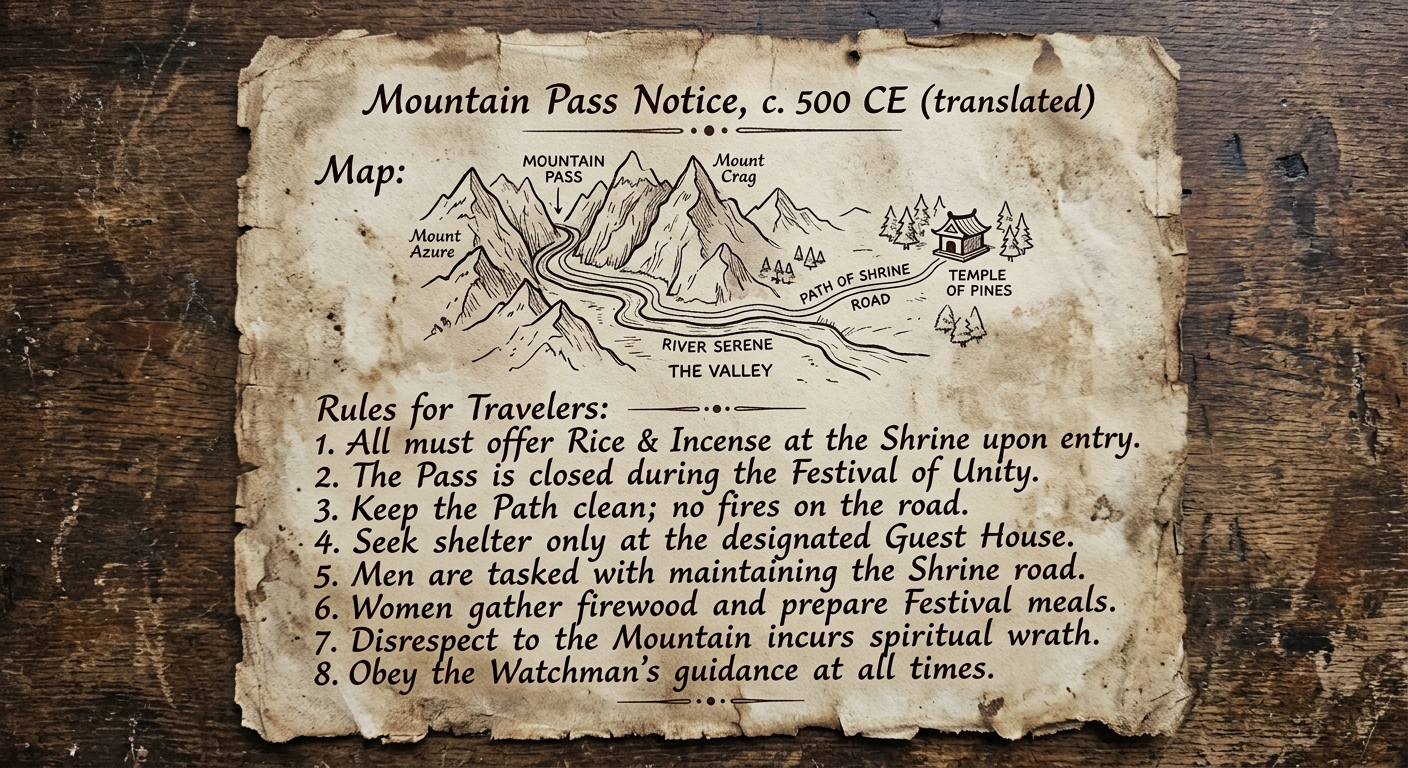
Study the translated notice posted at a narrow mountain pass leading to a shrine. The document lists rules for pilgrims and describes different roles for men and women during a festival. Use the map sketch and location details to explain how geography could shape social order and shared religious practices.

Using evidence from the notice and the map sketch, explain one way the mountain pass location could help religious leaders unify different groups of travelers.
Which statement best connects geography to the spread of the shrine’s rules and practices?
Which conclusion is best supported about belief systems and social order in a travel chokepoint?
Identify one way the notice suggests belief systems could affect gender roles or social order.
Explain how the geography of the pass might strengthen that effect.
Which geographic detail best explains why leaders could control behavior at this sacred site?