Use the historical document(s) and the short readings in the left panel to answer the associated questions.
Historical Document:
River & Desert Travel Notice (Egypt, c. 200 BCE)
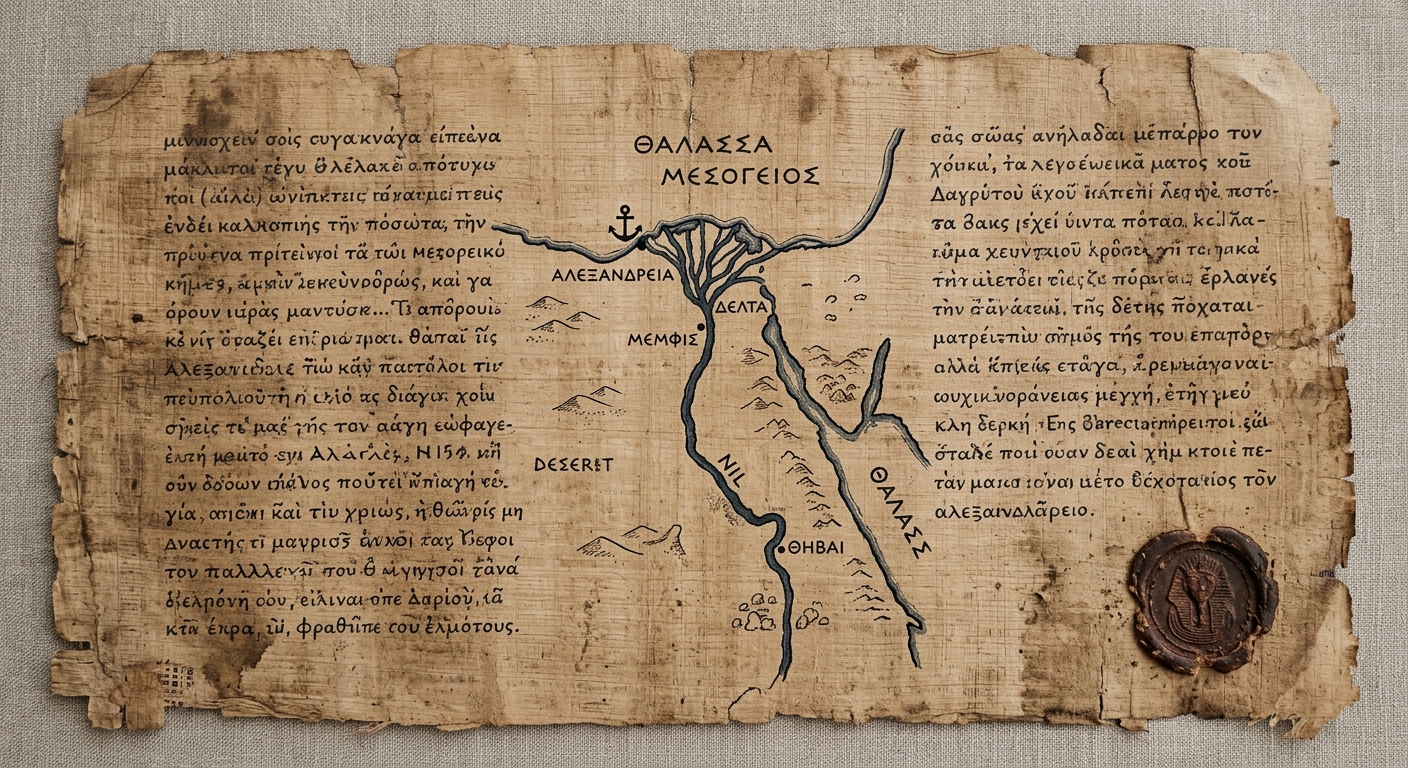
A copy of a government notice used by travelers and tax officials in Egypt. The sketch map highlights the Nile’s course to the delta, nearby deserts, and a coastal port. Use the map and the document’s layout to infer how geography shaped settlement, trade, and control.
Explain how two geographic features visible in the document (for example, the river, delta, coast, or deserts) could influence Egypt’s political organization and economic activity.
Use specific evidence from the image to support your reasoning.
A merchant wants the most efficient route to move grain from inland farms to traders from other regions. Which route best fits the geography shown?
Which conclusion about political control is best supported by the map’s emphasis on the river and surrounding deserts?
Compare the advantages of river travel and desert travel for moving people and goods in the region shown.
Then infer why many towns would likely cluster where the map shows the river widening into the delta.
Based on the document’s map, which geographic feature most directly supported large-scale farming in ancient Egypt?
Historical Document:
Canal & City Law Tablet
(Mesopotamia, c. 1750 BCE)

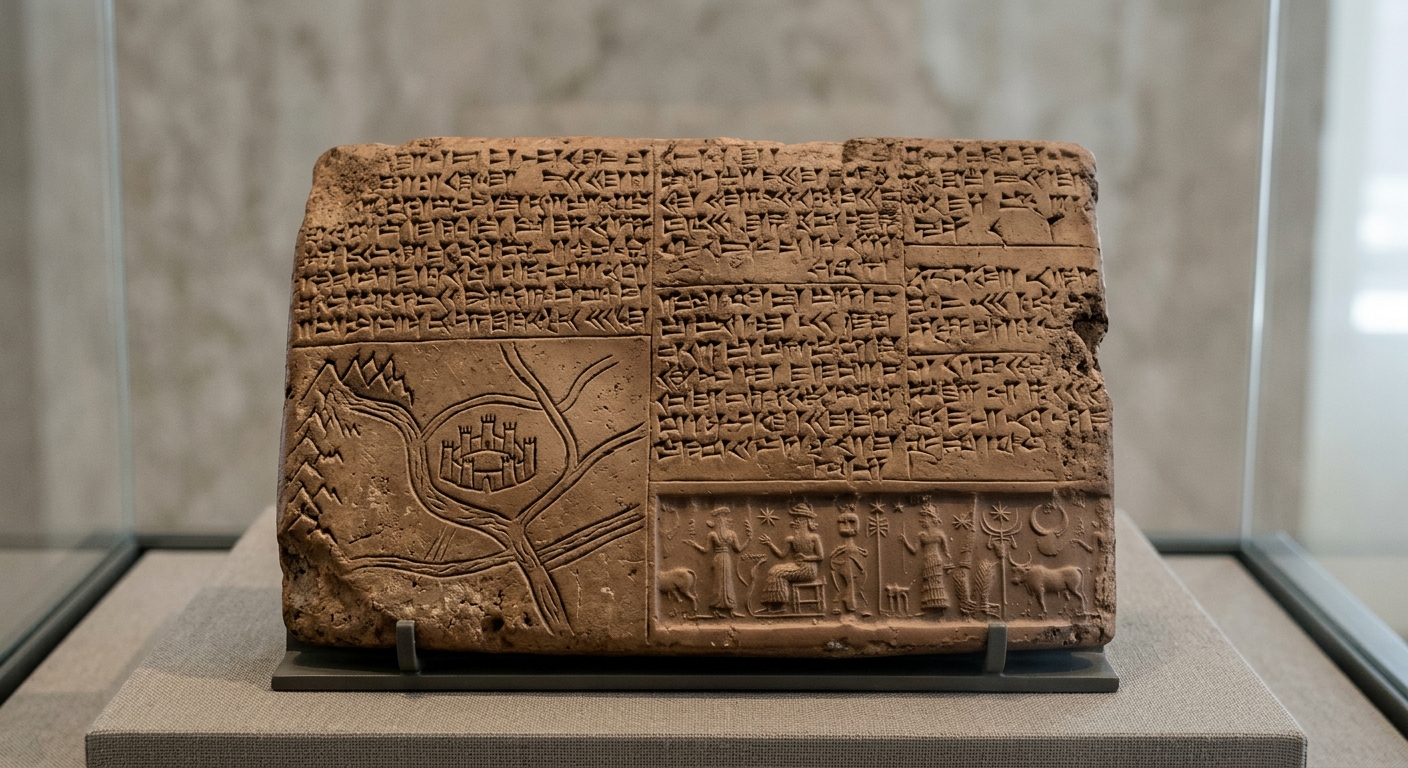
A clay tablet from a river-valley city describing rules for canal upkeep and dispute decisions. The incised diagram shows a river, a branching canal, a walled town, and nearby hills. Use the geography to infer why leaders created laws and organized authority.
If the hills shown on the diagram limited travel on one side of the settlement, which political decision would most likely help leaders manage trade and security?
Using evidence from the diagram (river, canal, walled town, or hills), explain how geography could lead Mesopotamian leaders to create laws and officials to maintain order and make decisions.
Which geographic situation shown in the diagram best explains why leaders might create clear laws about property and water use?
In the document’s diagram, why would a canal connecting to the river most likely require government rules and enforcement?
Compare two geographic challenges suggested by the diagram (for example, flooding, limited farmland, or travel barriers).
Then explain how a political structure could respond to each challenge with a specific action or rule.
Historical Document:
River-Valley Prosperity Record
(Han China, c. 50 BCE)

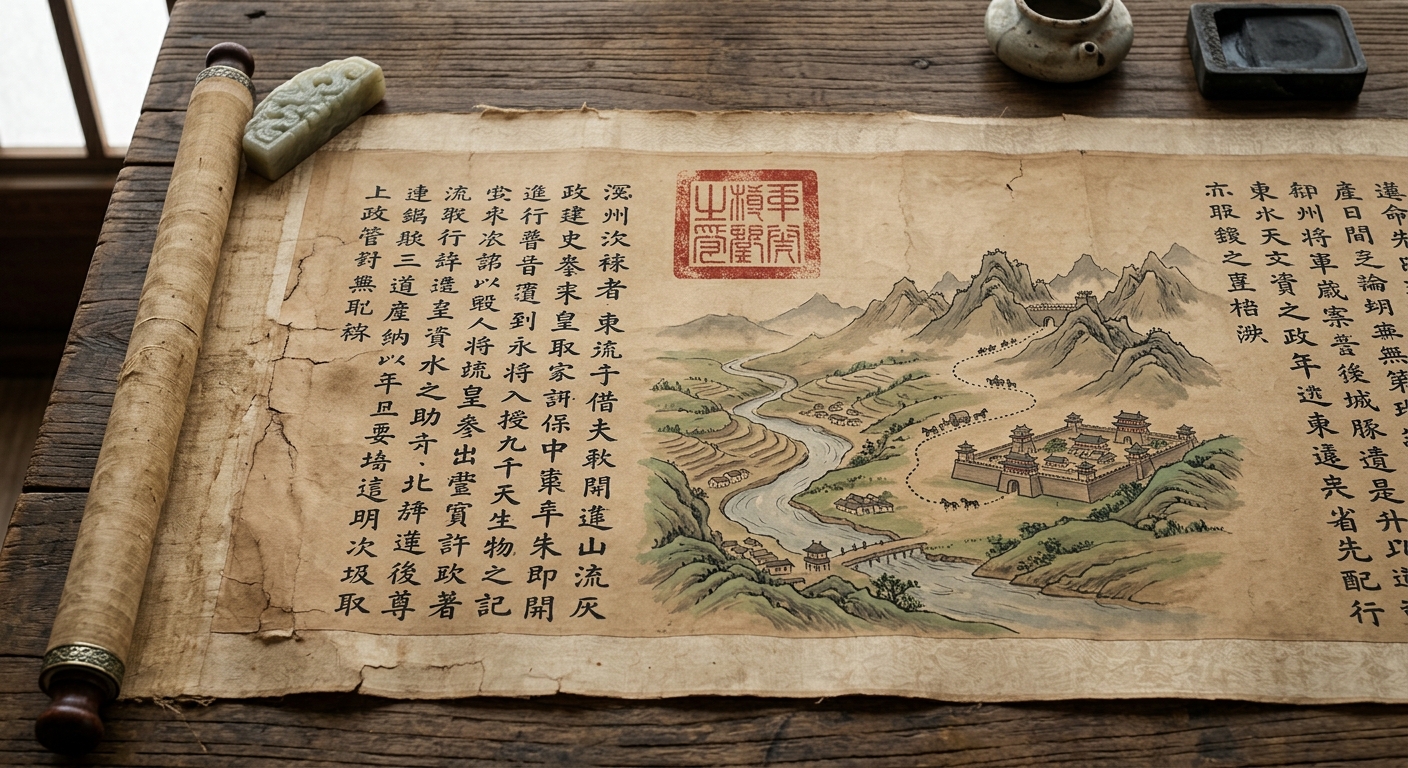
An official record praising a period of stability and prosperity in a river valley. The small map marks irrigated fields, a walled city, and a trade road through nearby mountain passes. Use these geographic clues to infer how peaceful rule supported economic and cultural achievements.
Which geographic feature shown would most directly help create food surpluses that could support a “golden age”?
The document’s map includes a trade road through mountain passes. Which conclusion best connects this geography to prosperity during peaceful rule?
Use evidence from two features on the document’s map (for example, the river valley, irrigated fields, walled city, or mountain pass road) to explain how geography could support peace, prosperity, and cultural achievements.
Which scenario would most likely threaten the kind of peace and prosperity described in the record, based on the geography shown?
Compare how the river system and the mountain pass trade route could each strengthen a government during a “golden age.” Include one specific government action for each feature.