Use the historical document(s) and the short readings in the left panel to answer the associated questions.
Historical Document: Frontier Sketch Map (c. 470 CE)
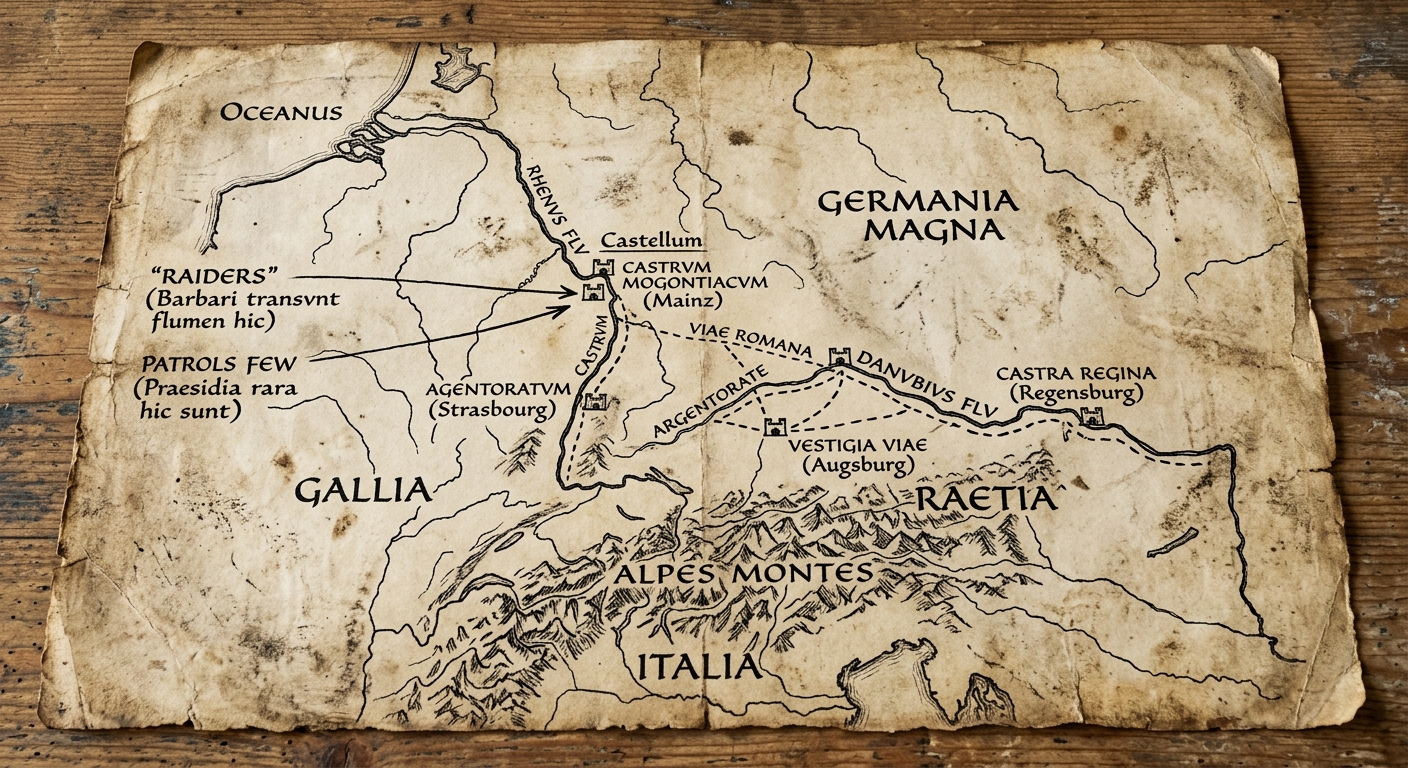
A traveler copied this sketch map as Roman control weakened. Notes show fewer patrols on key roads, raids near river crossings, and forts close to the Rhine and Danube. People seeking safety often moved toward defended estates rather than distant towns.
Explain how overexpansion, civil conflict, and invasions could lead people to rely on a local lord and a fortified estate.
Use at least two geographic details from the document (such as rivers, roads, mountain passes, distance to frontier, or coastal access) as evidence.
Choose two different physical settings shown or implied by the document (for example, a river valley and a mountain pass).
Describe how each setting could shape
(1) where people seek protection and (2) how land and labor are organized under feudalism.
Support your answer with evidence from the document.
Based on the map’s notes about raids and fewer patrols, which settlement location would likely face the greatest risk of quick attacks and disrupted trade?
Using the document’s sketch map, which physical feature would most likely serve as a defensive boundary when imperial armies could not protect every frontier?
Which conclusion BEST explains how the geographic patterns shown in the document could contribute to the development of feudalism in western Europe after Rome weakened?
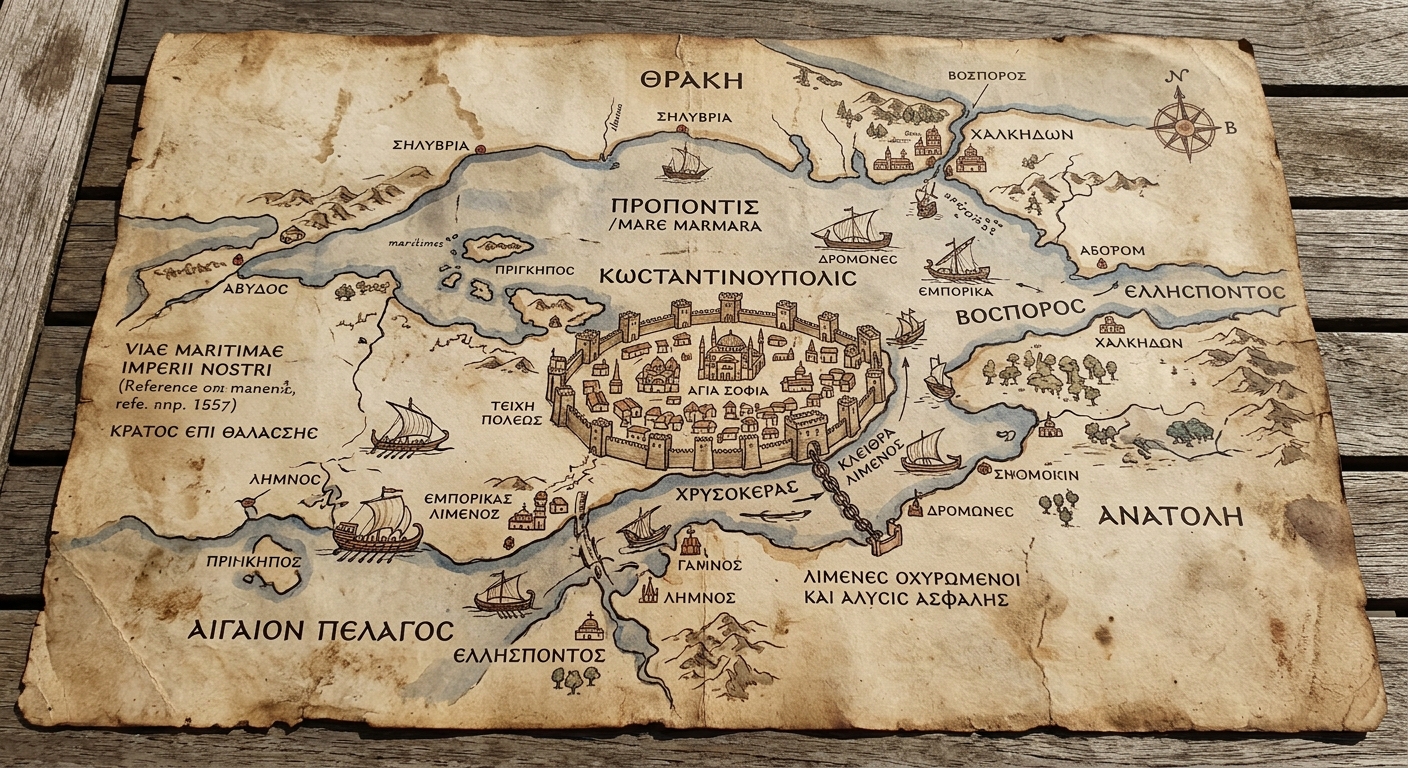
Historical Document: Harbor Map of Constantinople (c. 560 CE)

A dock official drew this harbor sketch to guide arriving ships. It highlights the narrow Bosporus, the sheltered Golden Horn, and strong walls controlling entry. Notes mention customs collection and patrol ships. These geographic advantages helped the Byzantine Empire protect trade and preserve Roman traditions.
Which conclusion BEST connects the geography in the document to how the Byzantine Empire preserved elements of the Roman Empire?
Which location shown or implied in the document would most likely be used to shelter ships during storms and organize trade?
The document emphasizes control of sea routes. Describe one benefit and one possible limitation of relying on this geography to keep the empire connected to lands around the Mediterranean basin.
Explain how two geographic features in the document could help the Byzantine Empire defend its capital and maintain control of Mediterranean trade. Use evidence from the map and reading stimulus.
Based on the document, which geographic feature most directly helped Constantinople control movement between seas?
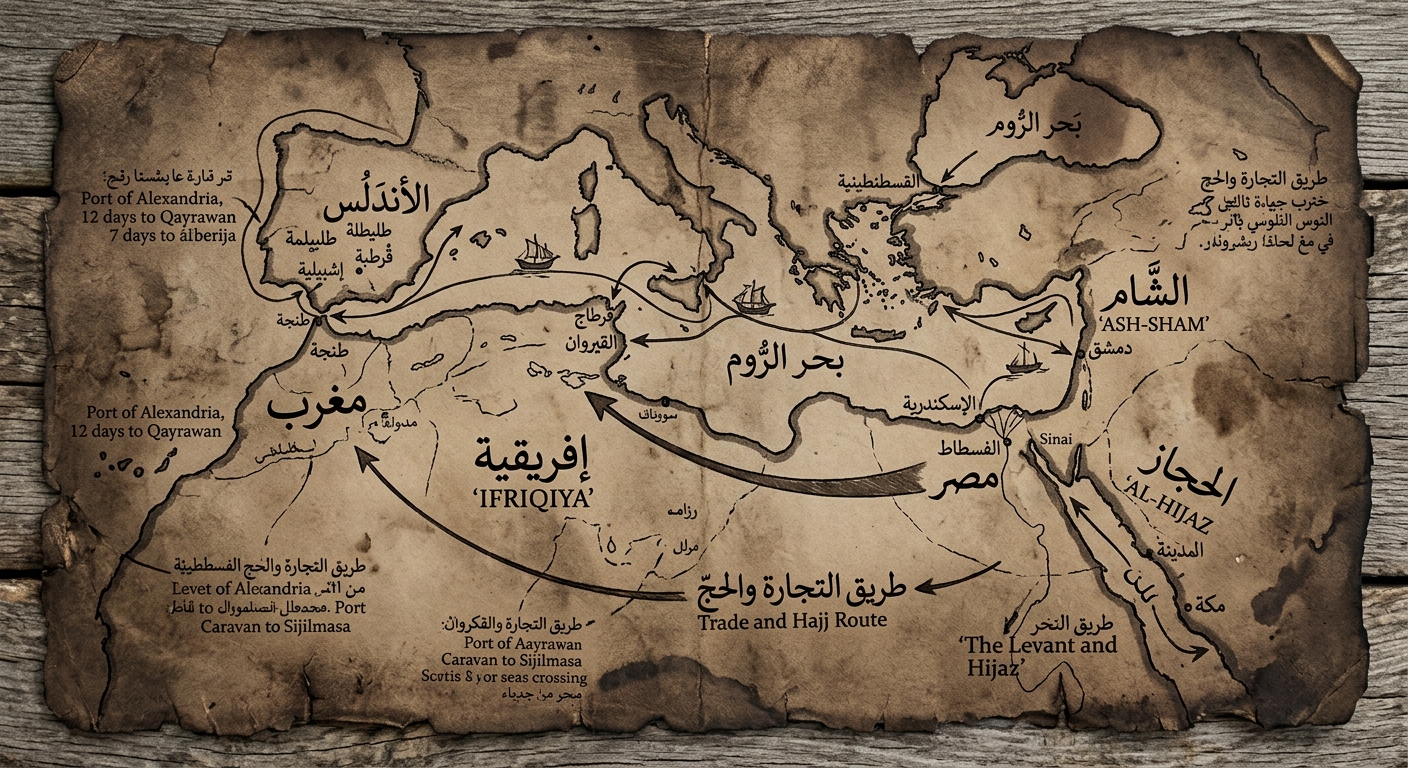
Historical Document: Route Sketch of the Southern Mediterranean (c. 720 CE)

A merchant copied this route sketch for ships and caravans moving west. It marks ports along North Africa, a narrow crossing into Iberia, and inland stops near river valleys. Notes describe safe harbors and supply points. Such geography helped Islam spread across the Mediterranean region.
Explain how two geographic details in the document (for example, ports, sea crossings, coastal routes, deserts, or river valleys) could help Islam spread from southwest Asia to northern Africa and the Iberian Peninsula.
Use evidence from the map and reading stimulus.
The document marks several coastal ports. Which inference BEST explains why ports would matter for the spread of Islam across the Mediterranean region?
The document includes both coastal routes and inland stopping points.
Describe one advantage and one challenge of each route type for travel and communication in the 700s. Support your answer with evidence from the document.
Based on the document, which geographic feature would most directly help travelers move from North Africa into the Iberian Peninsula?
The reading mentions inland stops near river valleys. Which conclusion BEST connects river valleys to travel and settlement patterns shown in the document?
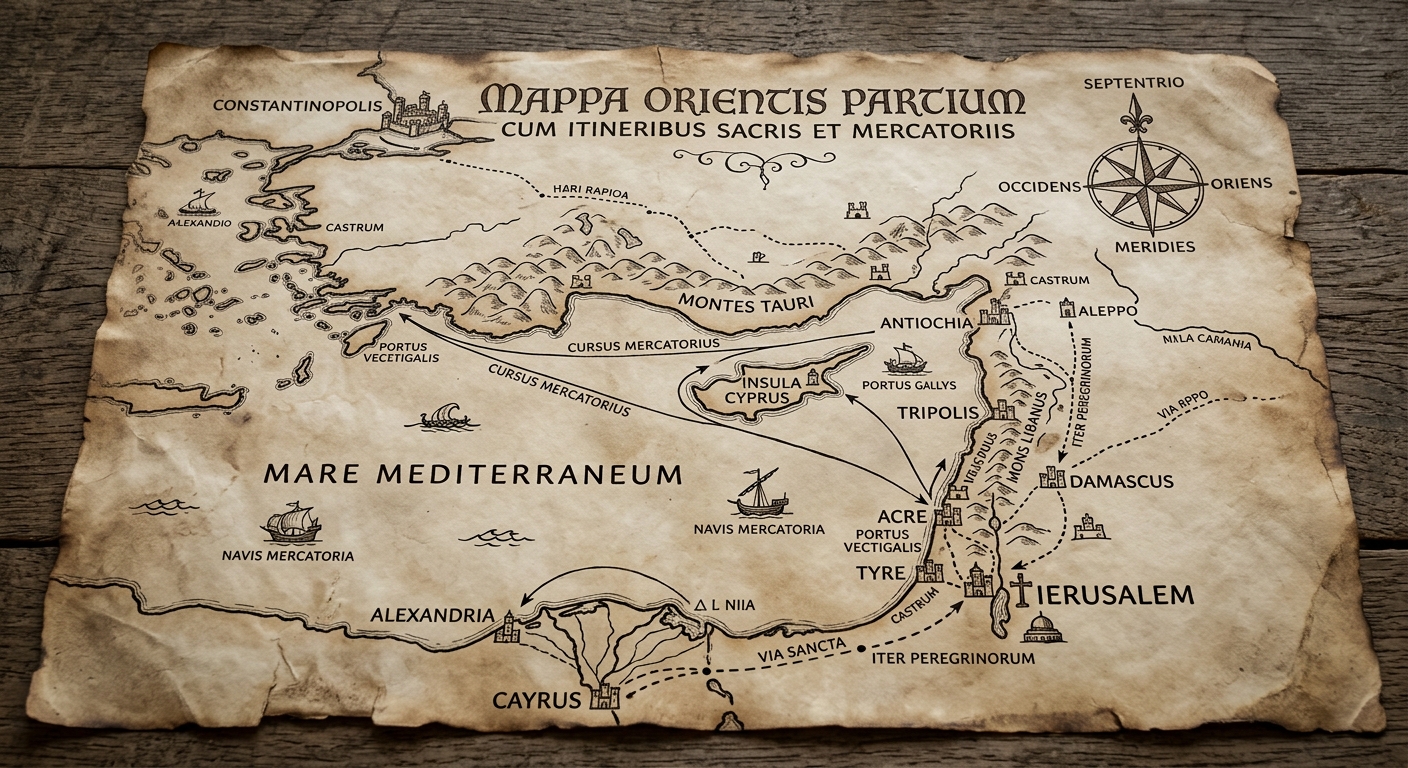
Historical Document: Pilgrimage & Port Route Map (c. 1099 CE)

A pilgrim guide sketched this map to show routes to Jerusalem. It marks fortified coastal ports, mountain passes into the interior, and sea lanes used by merchants. Notes mention tolls and guarded roads. Competition to control these routes helped fuel conflict during the Crusades.
Which conclusion BEST connects the document’s geographic features to why religious, economic, and political rivalry could lead to conflict over holy lands?
Based on the document, which geographic feature would most likely make movement into the interior slower and easier to control?
Explain how two geographic details from the document (for example, ports, sea lanes, mountain passes, or distance to Jerusalem) could create competition between rival groups.
Use evidence from the map and reading stimulus.
The map highlights fortified coastal ports and sea lanes. Which inference BEST explains why controlling a major port could increase power during the Crusades?
The reading mentions tolls and guarded roads. Describe one way these conditions could affect
(1) pilgrims traveling to holy lands and (2) merchants trading across the region.
Support your answer with geographic evidence from the document.