Twa kɔ nsɛm atitiriw so
Log in
Sign up for FREE
arrow_back
Laabri

6.7 - Interactions Across the Eastern Hemisphere - Practice D

star
star
star
star
star
Last updated about 1 month ago
15 Nsɛmmisa
Hyɛ no nsow a efi ɔkyerɛwfo no hɔ:

Use the historical document(s) and the short readings in the left panel to answer the associated questions.

Use the historical document(s) and the short readings in the left panel to answer the associated questions.

Ɛhia
1
6.7.a
DOK.SS.2
Ɛhia
1
6.7.a
DOK.SS.2
Ɛhia
1
6.7.a
DOK.SS.2
Ɛhia
1
6.7.a
DOK.SS.2
Ɛhia
1
6.7.a
DOK.SS.2
Ɛhia
1
6.7.b
DOK.SS.2
Ɛhia
1
6.7.b
DOK.SS.2
Ɛhia
1
6.7.b
DOK.SS.2
Ɛhia
1
6.7.b
DOK.SS.2
Ɛhia
1
6.7.b
DOK.SS.2
Ɛhia
1
6.7.c
DOK.SS.2
Ɛhia
1
6.7.c
DOK.SS.2
Ɛhia
1
6.7.c
DOK.SS.2
Ɛhia
1
6.7.c
DOK.SS.2
Ɛhia
1
6.7.c
DOK.SS.2

Historical Document:

The image shows a fictional merchant manifest from about 1100 CE. It lists goods and ports around the Indian Ocean, including Aden and Calicut, and mentions sailing with seasonal monsoon winds. Use it as evidence to explain how geography shaped trade and connections across Afro-Eurasia.
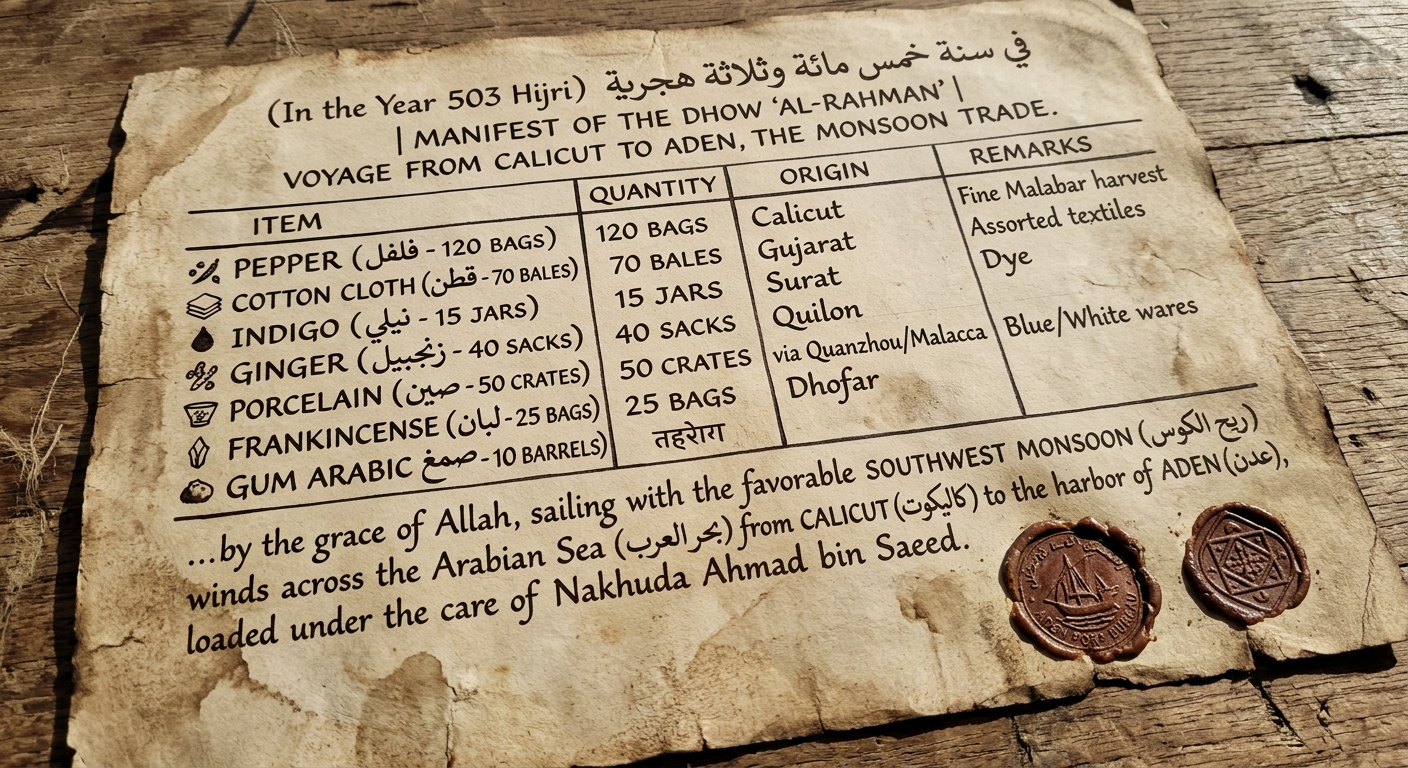
Sepia-toned parchment document styled as a medieval merchant manifest mentioning Aden, Calicut, monsoon winds, and trade goods, with ink handwriting and two seals.

Asemmisa {{asɛmmisaAhyɛnsode}}
1.

Based on the document, which geographic factor most directly helped merchants travel between ports like Aden and Calicut?

Asemmisa {{asɛmmisaAhyɛnsode}}
2.

Which inference about the location of Aden and Calicut is best supported by the document?

Asemmisa {{asɛmmisaAhyɛnsode}}
3.

Which route description best matches the connections suggested by the document?

Asemmisa {{asɛmmisaAhyɛnsode}}
4.

Using evidence from the historical document, explain how geography helped shape Indian Ocean trade.

In your paragraph, include

(1) one geographic feature or pattern (such as winds, seas, or port locations) and

(2) two specific details from the document that support your explanation.

Asemmisa {{asɛmmisaAhyɛnsode}}
5.

Explain one geographic advantage and one geographic challenge of trading by sea in the Indian Ocean network.

Then, briefly compare that to trade along the Silk Roads (land routes).

Use at least one piece of evidence from the document in your answer.

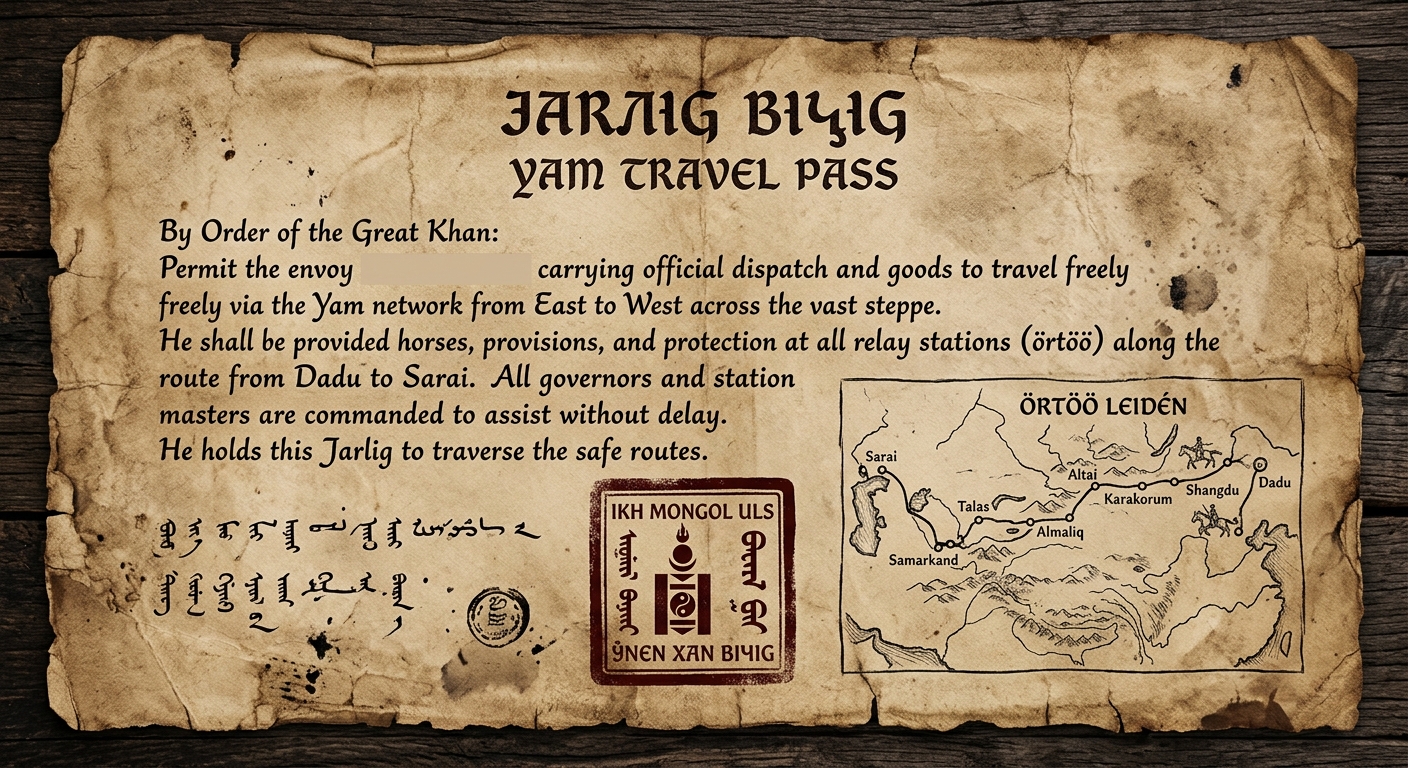
Historical Document:

The image shows a fictional Mongol-era travel pass (c. 1270 CE) for the yam relay network. It grants safe passage across steppe routes and lists relay stations and supplies. Use it to explain how Mongol control of geography connected people, goods, and ideas across Eurasia.

Sepia parchment travel pass styled as a Mongol-era official document, with an ink seal and notes about relay stations and safe passage across Eurasian steppe routes.

Asemmisa {{asɛmmisaAhyɛnsode}}
6.

Based on the travel pass, which geographic feature most directly supported the yam relay network’s ability to connect distant parts of Eurasia?

Asemmisa {{asɛmmisaAhyɛnsode}}
7.

Which conclusion about Mongol rule is best supported by the document’s focus on safe passage and supplies?

Asemmisa {{asɛmmisaAhyɛnsode}}
8.

Which geographic challenge would the yam network be MOST likely designed to reduce?

Asemmisa {{asɛmmisaAhyɛnsode}}
9.

Using evidence from the travel pass, explain how the Mongols used geography to foster connections between the East and the West.

In your paragraph, include

(1) one geographic characteristic of the steppe routes and

(2) two details from the document (for example, relay stations, supplies, or safe passage).

Asemmisa {{asɛmmisaAhyɛnsode}}
10.

Explain one way the yam relay network could lead to cultural diffusion (spread of ideas or technologies) across Eurasia.

Use at least one detail from the document and connect it to a geographic reason the diffusion could happen.

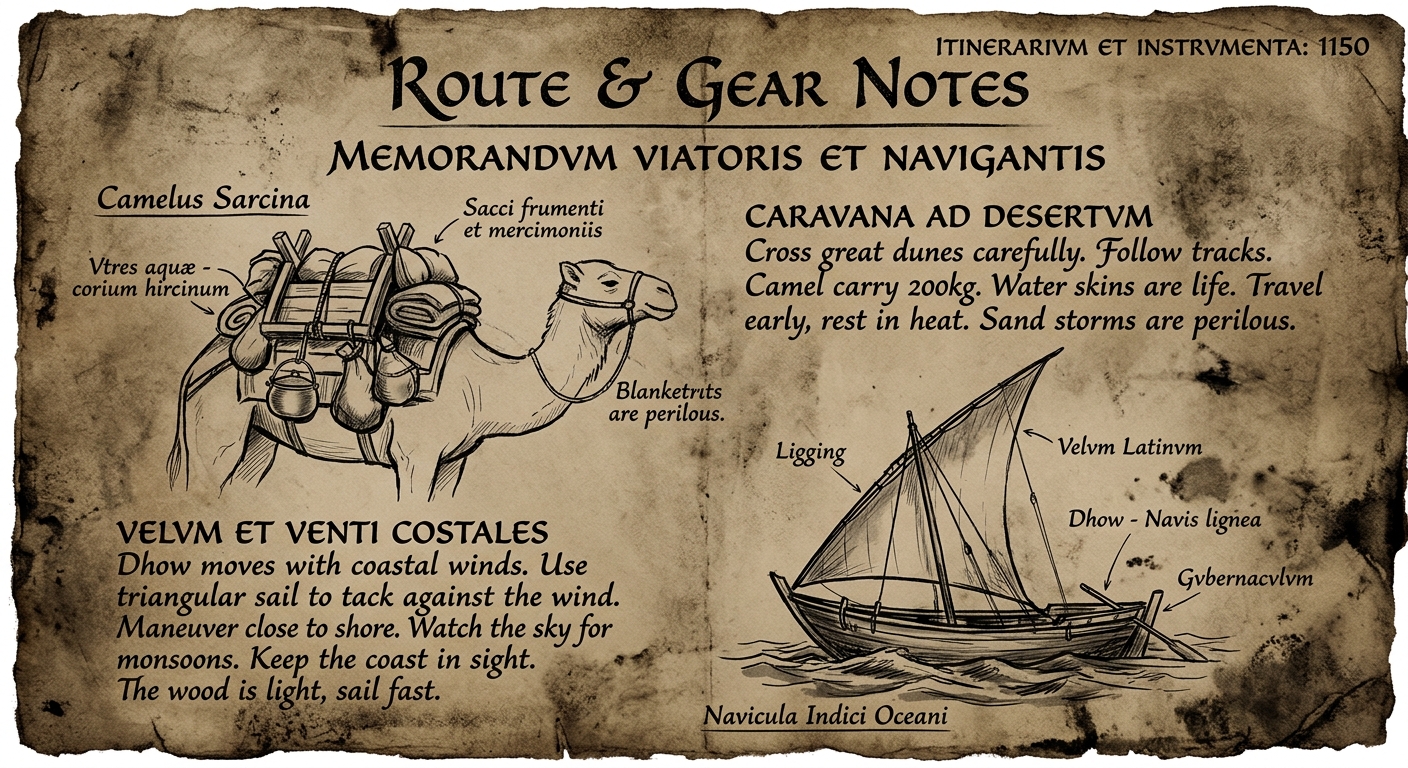
Historical Document:

The image shows a fictional set of “Route & Gear Notes” (c. 1150 CE). It includes sketches of a camel pack saddle and a dhow with a lateen sail, with notes about carrying water across deserts and maneuvering along coasts. Use it to analyze how technology helped people cross landscapes.

Aged parchment document with ink diagrams of a camel pack saddle and a dhow with a lateen sail, with handwritten notes about desert and sea travel.

Asemmisa {{asɛmmisaAhyɛnsode}}
11.

Based on the document, which transportation technology is MOST directly adapted for long-distance travel across dry desert routes?

Asemmisa {{asɛmmisaAhyɛnsode}}
12.

Which feature shown in the document would MOST help sailors navigate coastal waters and changing winds in the Indian Ocean?

Asemmisa {{asɛmmisaAhyɛnsode}}
13.

Which geographic barrier is the camel pack-saddle design MOST likely intended to help travelers overcome?

Asemmisa {{asɛmmisaAhyɛnsode}}
14.

Using evidence from the historical document, explain how one transportation technology shown helped people move goods across a challenging landscape.

In your paragraph, include

(1) the landscape challenge and

(2) two specific details from the document (such as the sail type, water-carrying, or cargo).

Asemmisa {{asɛmmisaAhyɛnsode}}
15.

Compare how the two technologies shown (the camel pack saddle and the lateen-sailed dhow) address different geographic challenges.

In your paragraph, describe

(1) the landscape each is designed for and

(2) how that would change the speed or reliability of trade connections.