Twa kɔ nsɛm atitiriw so
Log in
Sign up for FREE
arrow_back
Laabri

6.3 - Early River Valley Civilizations in the Eastern Hemisphere - Practice E

star
star
star
star
star
Last updated about 2 months ago
20 Nsɛmmisa
Hyɛ no nsow a efi ɔkyerɛwfo no hɔ:

Use the historical document(s) and the short readings in the left panel to answer the associated questions.

Use the historical document(s) and the short readings in the left panel to answer the associated questions.

Ɛhia
1
6.3.a
DOK.SS.2
Ɛhia
1
6.3.a
DOK.SS.2
Ɛhia
1
6.3.a
DOK.SS.2
Ɛhia
1
6.3.a
DOK.SS.2
Ɛhia
1
6.3.a
DOK.SS.2
Ɛhia
1
6.3.b
DOK.SS.2
Ɛhia
1
6.3.b
DOK.SS.2
Ɛhia
1
6.3.b
DOK.SS.2
Ɛhia
1
6.3.b
DOK.SS.2
Ɛhia
1
6.3.b
DOK.SS.2
Ɛhia
1
6.3.c
DOK.SS.2
Ɛhia
1
6.3.c
DOK.SS.2
Ɛhia
1
6.3.c
DOK.SS.2
Ɛhia
1
6.3.c
DOK.SS.2
Ɛhia
1
6.3.c
DOK.SS.2
Ɛhia
1
6.3.d
DOK.SS.2
Ɛhia
1
6.3.d
DOK.SS.2
Ɛhia
1
6.3.d
DOK.SS.2
Ɛhia
1
6.3.d
DOK.SS.2
Ɛhia
1
6.3.d
DOK.SS.2

Historical Document: River City Market Ledger

Archaeologists found this merchant record in a river valley city. The translated note lists amounts of barley, wool, and copper exchanged in the market. Records like this helped people track scarce goods, plan production, and trade with specialized workers across the region.
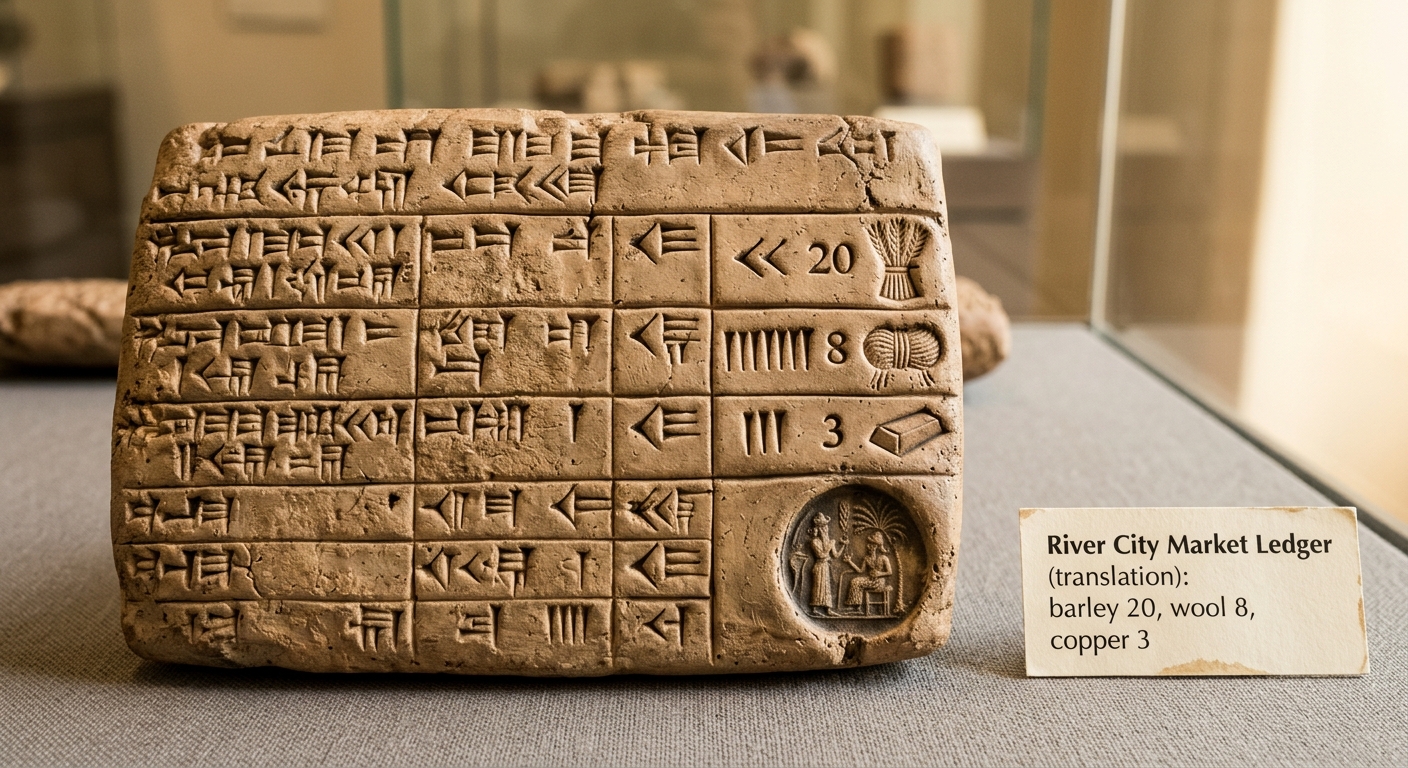
A clay tablet merchant ledger with cuneiform-like marks and a small translation label listing barley, wool, and copper.

Asemmisa {{asɛmmisaAhyɛnsode}}
1.

In this document, barley, wool, and copper are BEST classified as which type of resource?

Asemmisa {{asɛmmisaAhyɛnsode}}
2.

What economic concept is most directly shown by exchanging goods in a market?

Asemmisa {{asɛmmisaAhyɛnsode}}
3.

Which economic activity is BEST represented by this document?

Asemmisa {{asɛmmisaAhyɛnsode}}
4.

Which inference about the river valley economy is BEST supported by this document?

Asemmisa {{asɛmmisaAhyɛnsode}}
5.

Name one good listed in the translated note.

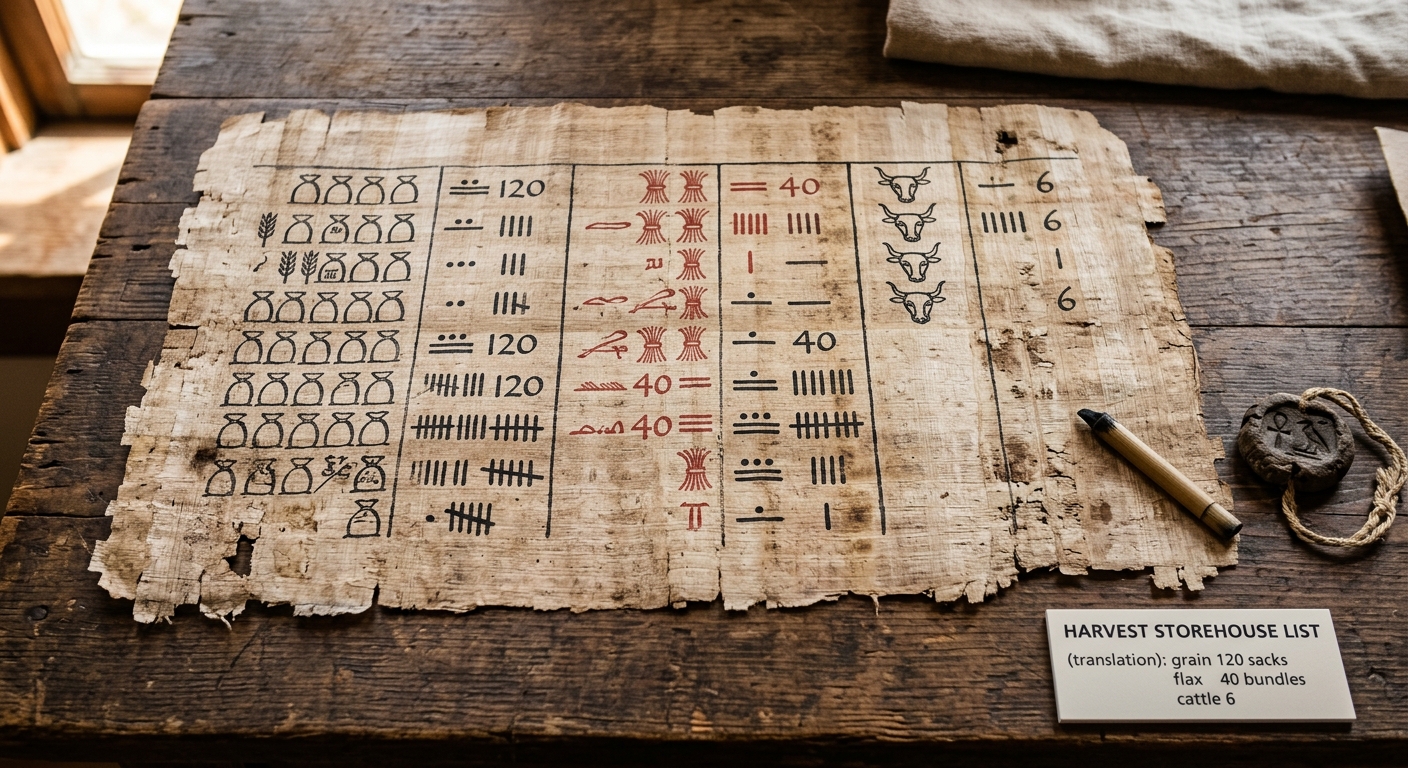
Historical Document: Harvest Storehouse List

Workers in a Nile River valley city recorded goods brought to a storehouse after the harvest. The translated label lists grain, flax, and cattle with quantities. Records like this helped leaders plan for scarcity, organize job specialization, and decide how to distribute resources.

A papyrus accounting record with a translation label listing grain, flax, and cattle amounts.

Asemmisa {{asɛmmisaAhyɛnsode}}
6.

Which economic problem is this record MOST directly used to help solve?

Asemmisa {{asɛmmisaAhyɛnsode}}
7.

Name one good listed in the translated label.

Asemmisa {{asɛmmisaAhyɛnsode}}
8.

Grain, flax, and cattle in this document are BEST classified as which type of resource?

Asemmisa {{asɛmmisaAhyɛnsode}}
9.

What economic concept is shown when leaders decide how to distribute limited goods?

Asemmisa {{asɛmmisaAhyɛnsode}}
10.

Which inference about this society is BEST supported by the use of a storehouse list?

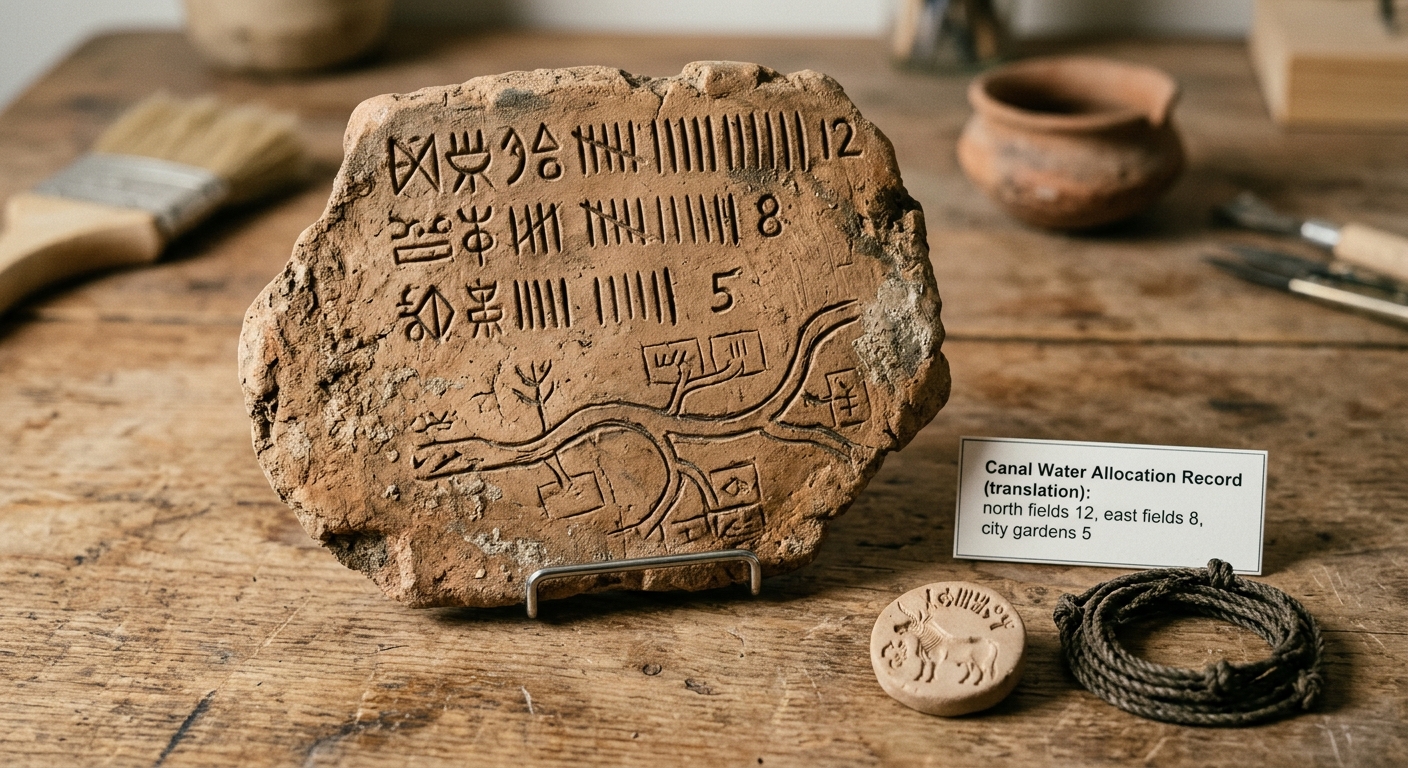
Historical Document: Canal Water Allocation Record (fictional)

Officials in a river valley city recorded how canal water would be shared during a dry season. The translated label lists amounts sent to fields and city gardens. Records like this helped leaders adapt to flooding and drought, limit waste, and support farming and trade.

A clay record showing tally marks and a simple canal sketch with a translation label about water allocation.

Asemmisa {{asɛmmisaAhyɛnsode}}
11.

Which inference about this society’s economy is BEST supported by the canal sketch and tallies?

Asemmisa {{asɛmmisaAhyɛnsode}}
12.

If the dry season becomes longer, which economic decision would BEST match the purpose of this record?

Asemmisa {{asɛmmisaAhyɛnsode}}
13.

Name one place that receives water in the translated label.

Asemmisa {{asɛmmisaAhyɛnsode}}
14.

What natural resource is being managed in this document?

Asemmisa {{asɛmmisaAhyɛnsode}}
15.

Which need is MOST directly shown by creating a canal water allocation record?

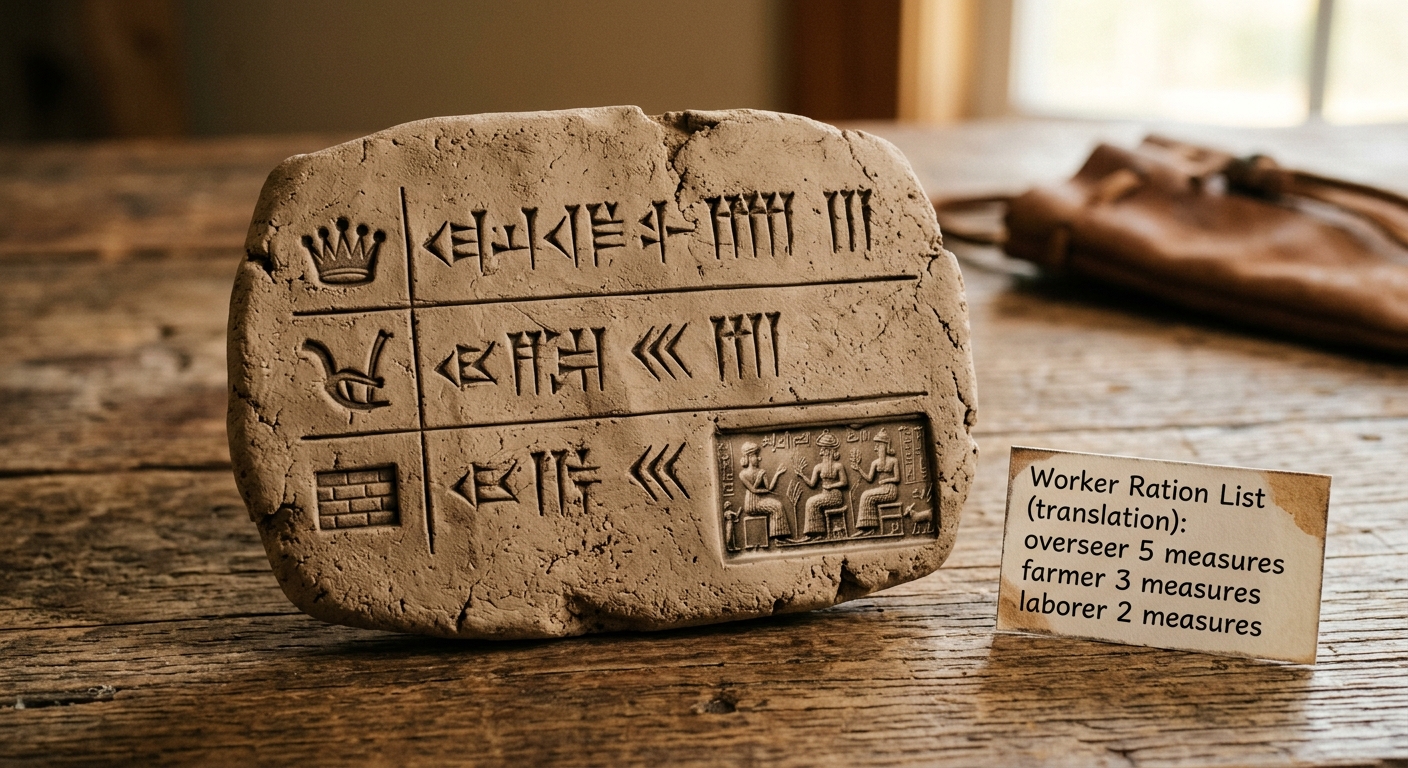
Historical Document: Worker Ration List (fictional)

In a river valley city, officials recorded grain rations given to different workers. The translated label shows larger rations for an overseer, with smaller amounts for farmers and laborers. Lists like this helped leaders manage scarce food and reinforced social and job hierarchies.

A clay tablet ration list showing different grain rations for an overseer, farmer, and laborer.

Asemmisa {{asɛmmisaAhyɛnsode}}
16.

In this record, grain rations are MOST directly used to do what?

Asemmisa {{asɛmmisaAhyɛnsode}}
17.

Which statement BEST explains how this document connects economics to social hierarchy?

Asemmisa {{asɛmmisaAhyɛnsode}}
18.

Which inference is BEST supported by the different ration amounts?

Asemmisa {{asɛmmisaAhyɛnsode}}
19.

What good is being distributed in this document?

Asemmisa {{asɛmmisaAhyɛnsode}}
20.

Name one type of worker shown in the translated label.