Use the historical document(s) and the short readings in the left panel to answer the associated questions.
Historical Document:
Indian Ocean Customs Ledger (mid-1800s)
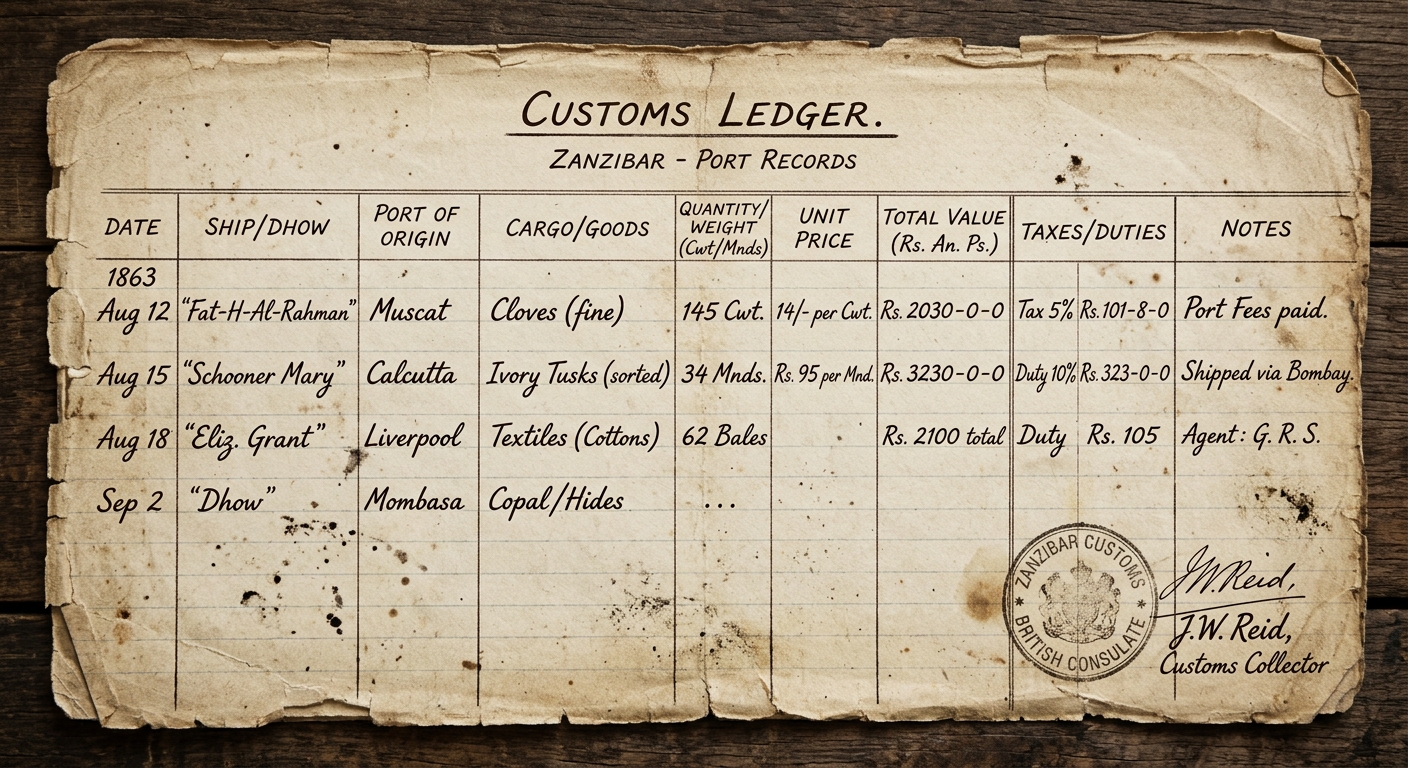
This customs ledger lists goods arriving at a port in the Indian Ocean region. Officials recorded items, quantities, prices, and fees. By tracking taxes on trade and the value of imports and exports, governments and merchants could plan how to use scarce resources.
Using evidence from the document and reading, explain one way a customs ledger could influence economic decisions made by
(1) a government and
(2) a merchant.
A merchant sees that the fee on imported cloth is higher than the fee on imported tools. Which decision is MOST consistent with comparing costs and benefits?
Identify one opportunity cost shown or implied by the ledger system, and explain it in a well-formed paragraph.
Based on the document, which information would be MOST useful for a government deciding how to raise revenue?
Which economic problem is BEST illustrated by officials recording prices and quantities in the ledger?
Historical Document: Caravan Toll Receipt & Travel Pass (c. 1265)

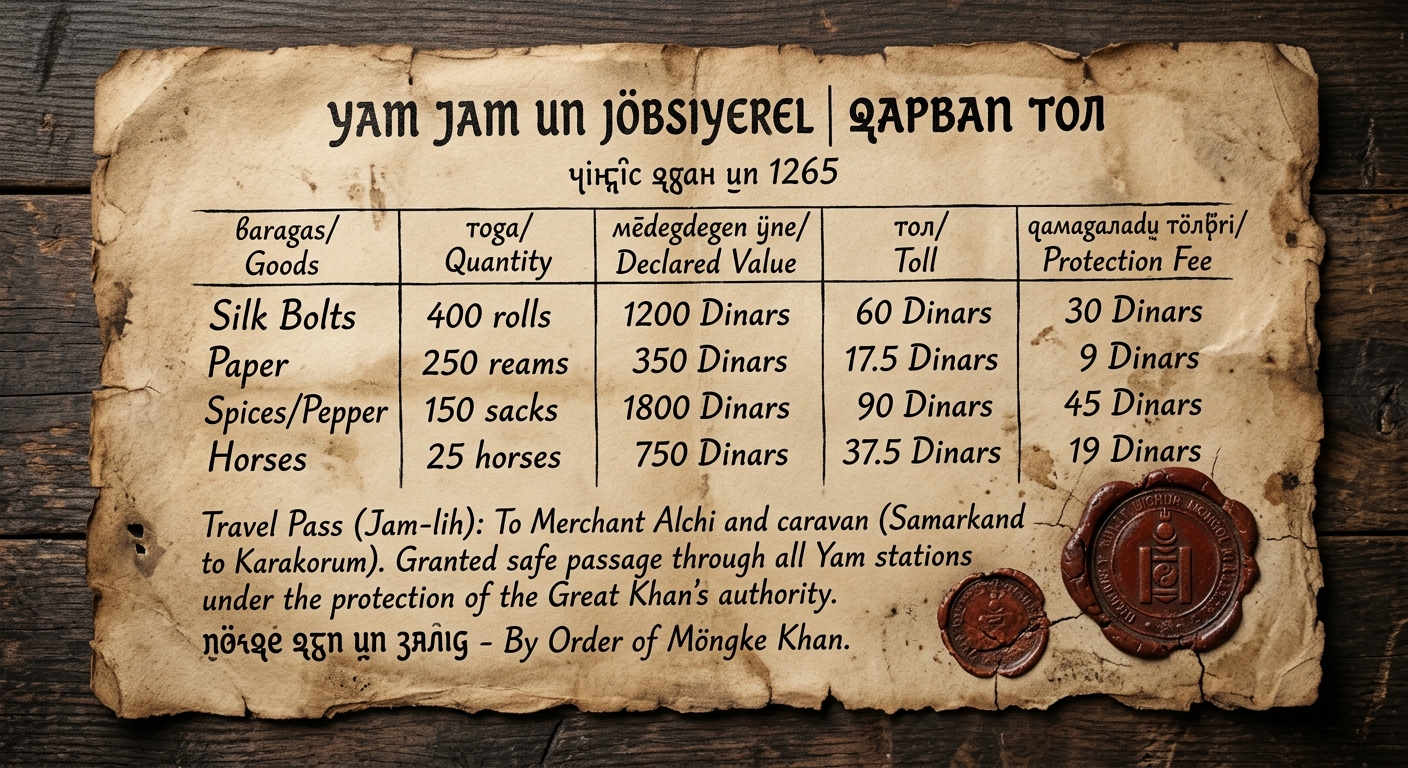
During Mongol rule, caravan travel across Eurasia often used official passes and paid tolls at relay stations. These records helped officials collect revenue and manage security. Merchants used the fees and values to compare routes and decide which goods to trade.
Which conclusion is BEST supported by the toll and protection fees shown on the document?
A merchant wants to reduce expenses but still reach distant markets. Which choice is MOST consistent with using the document to compare costs and benefits?
Based on the document, which Mongol policy would MOST directly lower a merchant’s overall costs over time?
Identify one opportunity cost shown or implied by the toll-and-pass system, and explain it in a well-formed paragraph.
Using evidence from the document and the reading, explain one way Mongol rule could encourage cultural diffusion through economic connections between East and West.
Historical Document: Imperial Transport Permit & Workshop Requisition (c. 1290)

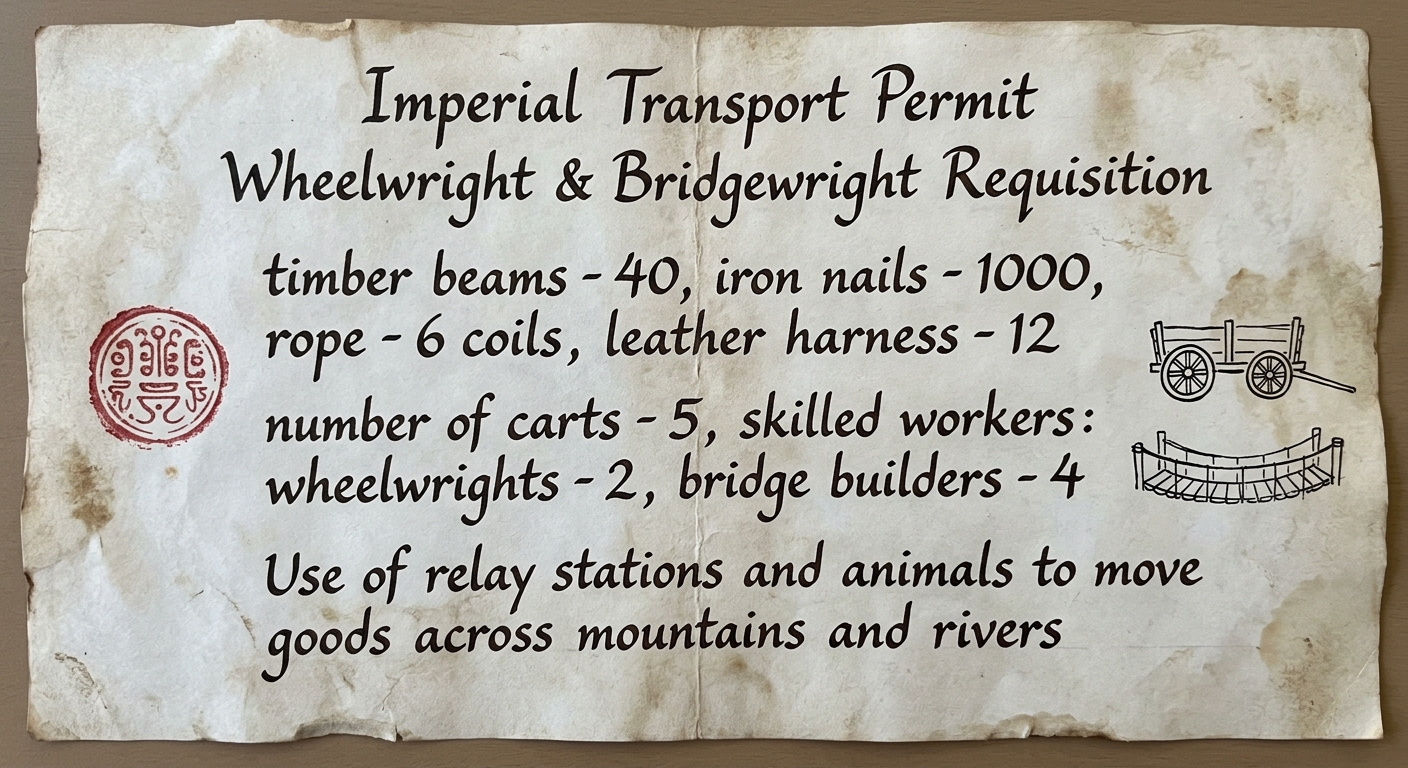
Officials in the Mongol Empire sometimes ordered transportation technology to move goods across difficult terrain. A permit could require carts, bridge materials, and skilled workers. These choices used scarce resources, but they could lower travel time and damage to goods, making long-distance trade more profitable.
Based on the document and reading, what is the BEST economic reason an official would order carts and bridge materials?
Identify one tradeoff (cost) a government might face when using scarce resources to build or supply transportation technology, and explain it in a well-formed paragraph.
Which statement BEST explains how transportation technology could change a merchant’s costs and benefits?
The permit requires skilled workers (such as wheelwrights or bridge builders). Which conclusion is MOST consistent with this evidence?
Using evidence from the document and the reading, explain one way transportation technology helped goods move across challenging landscapes in the Eastern Hemisphere.