Ɛhia
1
6.1.d
DOK.SS.2
Ɛhia
2
6.1.d
DOK.SS.2
Ɛhia
1
6.1.d
DOK.SS.2
Ɛhia
1
6.1.d
DOK.SS.2
Ɛhia
2
6.1.d
DOK.SS.2
Use the historical document(s) and the short readings in the left panel to answer the associated questions.
Use the historical document(s) and the short readings in the left panel to answer the associated questions.
Study the cartoon. Use its labels and symbols to explain how present-day regional issues can have roots in the past.
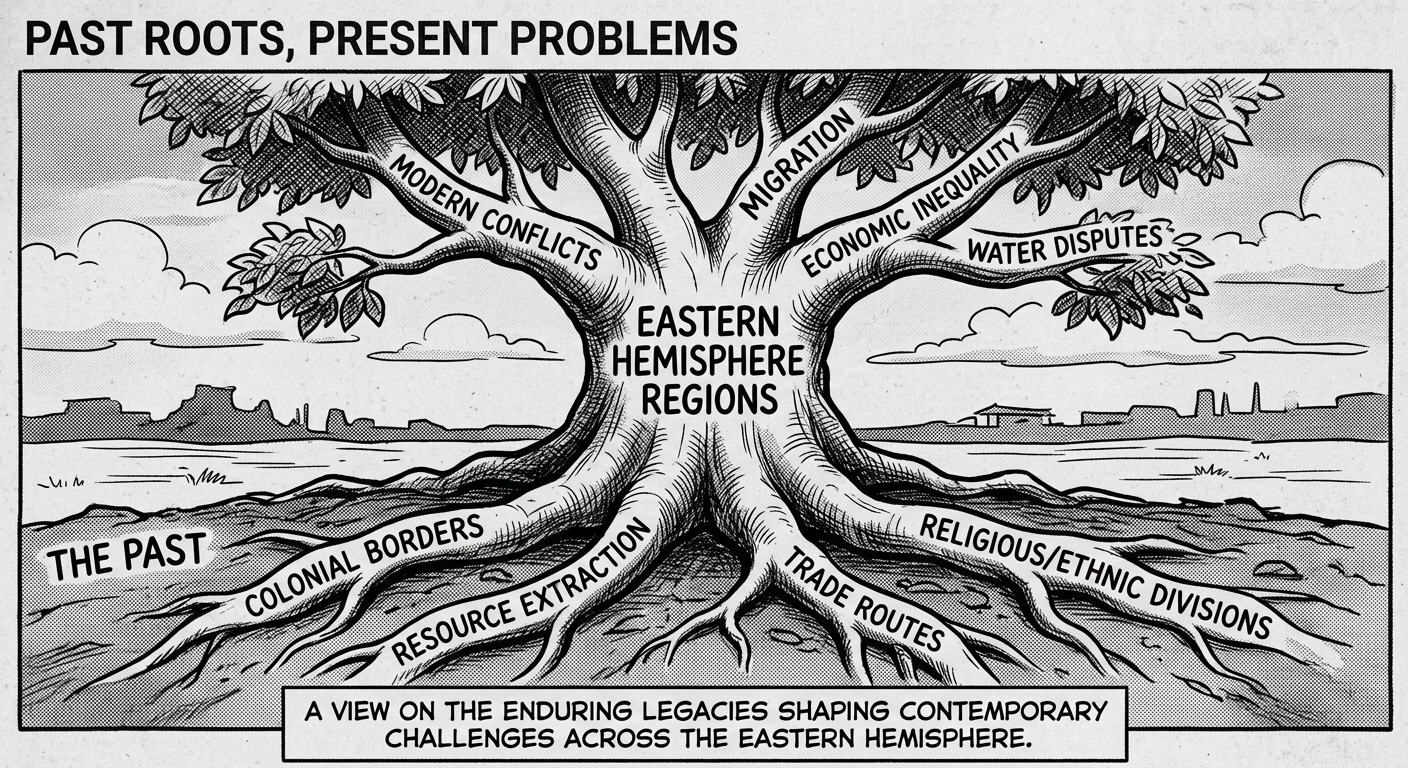
A student claims: “The cartoon argues that all modern issues have only one historical cause.” Which response best evaluates this claim using evidence?
Select one branch label (a present-day issue) from the cartoon. Cite one root label and explain how the past factor could contribute to that issue.
Which inference is best supported by the cartoon’s pairing of “resource extraction” roots with a branch labeled “economic inequality”?
Explain how the cartoon uses at least two pieces of evidence (labels or symbols) to show that regional problems are often multi-causal. Cite the evidence you use.
Which detail from the cartoon is the clearest evidence for the idea that current problems can be connected to past decisions?
Cartoons can show how present-day regional problems have roots in the past. In the document, roots represent earlier events and decisions, and branches represent issues today. Use the dated labels to connect causes over time and explain why problems can be multi-causal.
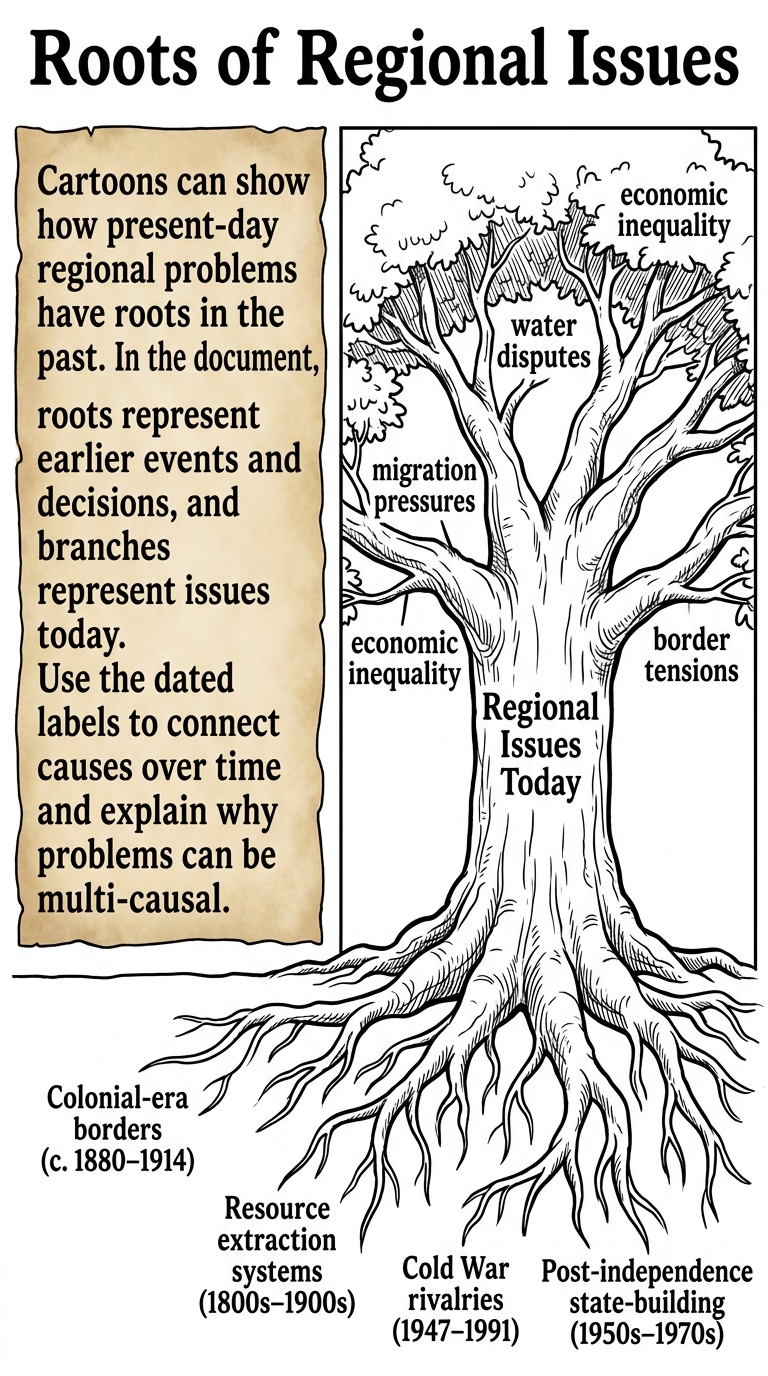
Select one branch label (a present-day issue) from the cartoon. Cite two different root labels and explain how each past factor could contribute to that issue. Use evidence from the cartoon in your explanation.
Which inference is best supported by the cartoon’s pairing of “Resource extraction systems (1800s–1900s)” with a branch labeled “economic inequality”?
Which detail from the cartoon is the clearest evidence for the idea that current problems can be connected to past decisions?
A student claims: “The cartoon argues that all modern issues have only one historical cause.” Which response best evaluates this claim using evidence?
Explain how the dated root labels help you reason chronologically about cause and effect. Cite two dated roots and describe what the timeline suggests about how regional issues develop over time.
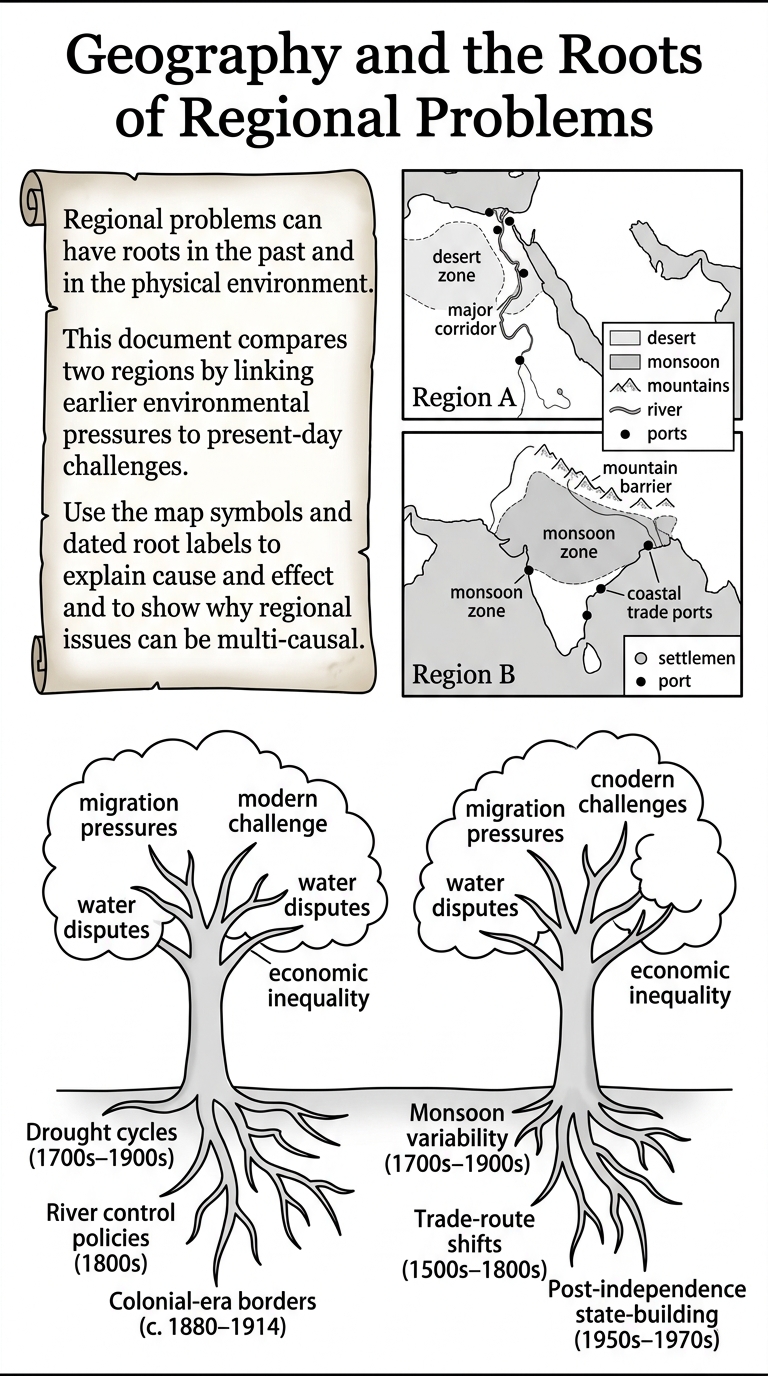
Regional issues often have roots in the past, but causes can differ by region and time period. This cartoon compares two regions by linking earlier decisions to present-day problems. Use the dated root labels to contextualize each issue and to compare how different past factors shape outcomes.
Which detail from the cartoon is the clearest evidence that present-day regional problems can be connected to past decisions?
Which statement best compares what the two trees suggest about why different regions can face similar present-day problems?
Which inference is best supported by comparing the root labels for Region A and Region B?
Choose one branch issue that appears on both trees. Compare the two regions by citing one root label from each tree and explaining how each root could contribute to the same present-day issue. Use evidence from the cartoon.
Contextualize one region’s present-day issues by explaining how the dates on two of its roots suggest a sequence of cause and effect over time. Cite the two roots you use and describe what changes from the earlier period to the later one.
Which detail from the document is the clearest evidence that present-day regional problems can have roots in the past?
Choose one present-day issue shown on a branch. Compare Region A and Region B by citing one map feature and one root label from each region. Explain how the evidence helps contextualize why both regions could experience the same issue.
A student says: “The document shows that each present-day issue has only one cause.” Which response best evaluates this claim using evidence?
Which inference is best supported by the map and root labels for Region A?
Contextualize one region’s present-day issues by explaining how two dated roots suggest a sequence of cause and effect over time. Cite the two roots and include at least one map feature in your explanation.
In many Indian Ocean ports, governments collected harbor fees and customs duties on imported and exported goods. This revenue paid for docks, guards, and warehouses, shaping what merchants traded and where ships stopped. Some present-day trade patterns and inequality debates trace back to these earlier systems.
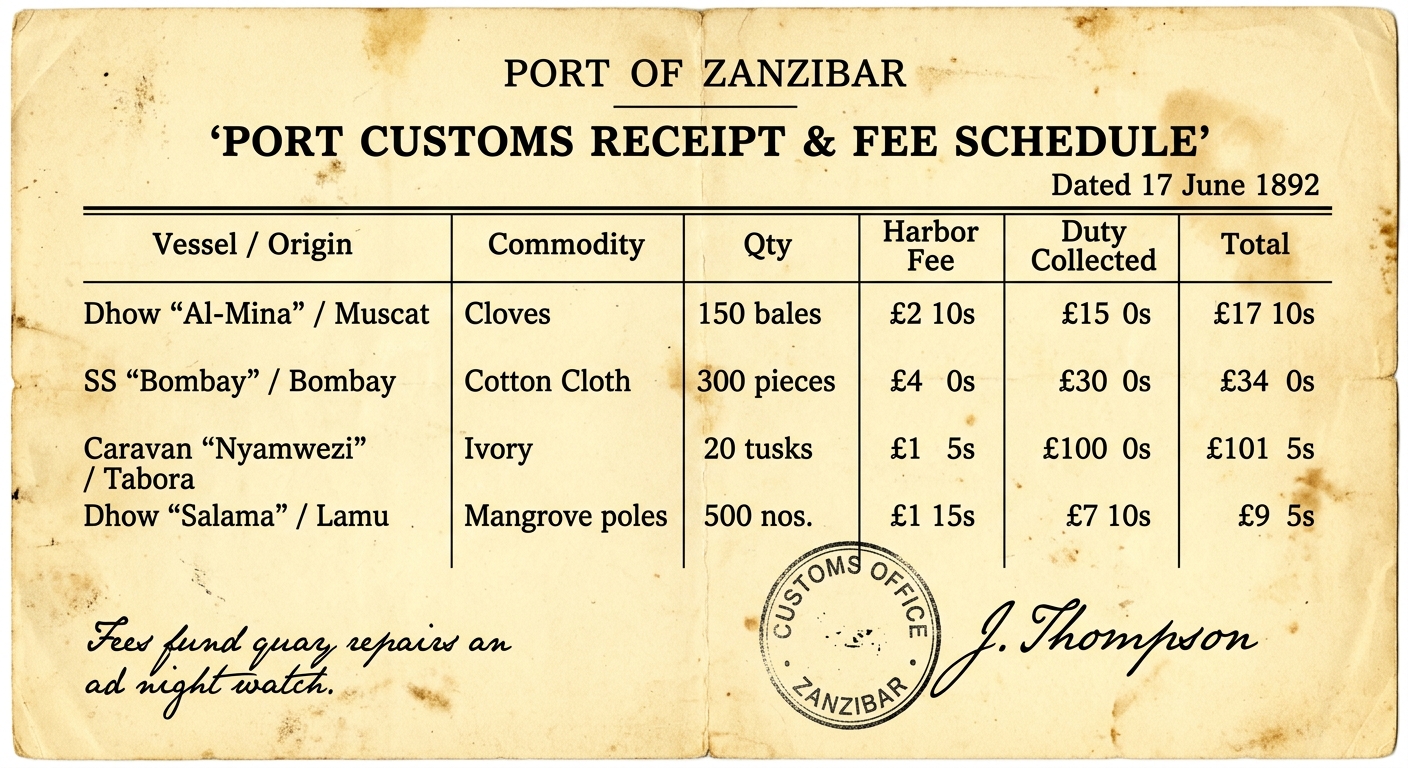
Using evidence from the passage and two specific details from the customs receipt, explain one way harbor fees and duties could shape an economic system in a port city (for example, government revenue, trade specialization, or protection of local producers). Then explain one way that a legacy of this kind of system could relate to a present-day regional issue.
Choose two different shipments on the customs receipt. For each shipment, explain how physical geography (for example, a sea route, seasonal winds, a coastline, or land barriers) could help explain why that commodity was traded through this port. Use at least two specific pieces of document evidence in your response.
Which detail from the document is the clearest evidence that the port government raised revenue from trade?
What inference about Zanzibar’s economic system is best supported by the “Vessel / Origin” entries on the document?
A student claims: “Customs duties always cause trade to decrease.” Which response best evaluates the claim using the passage and the document?