Use the historical document(s) and the short readings in the left panel to answer the associated questions.
This document is a reconstructed map showing a river valley, nearby desert, and coastal waters. Symbols mark fish, reeds, grazing land, and fertile fields. Use the evidence to explain how people living in different environments used local resources to develop distinct ways of life.
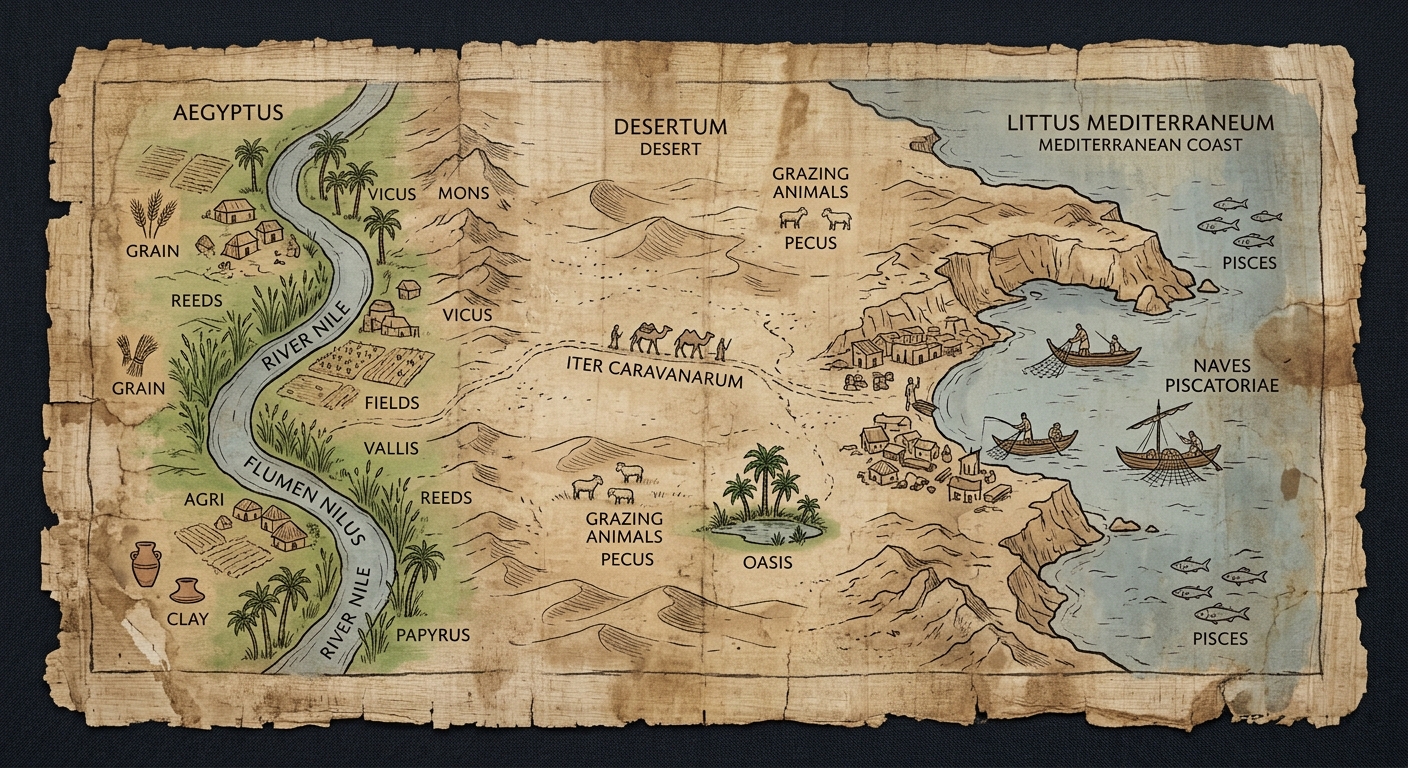
Using the document, which activity is BEST supported for people living closest to the coastline?
A student argues: “The river valley could support a more settled farming way of life than the desert.” Which evidence from the document BEST supports this argument?
Which inference is BEST supported by the document about how environments shape ways of life?
Use evidence from the document to describe TWO ways people might adapt to different environments (river valley, desert, coastline). For each environment you choose, cite at least ONE specific symbol or feature from the document as evidence.
A class is debating where a new settlement would have the best chance to grow: near the river valley, near the desert route, or near the coast. Choose ONE location and write a paragraph defending your choice using evidence from the document about resources and the environment.
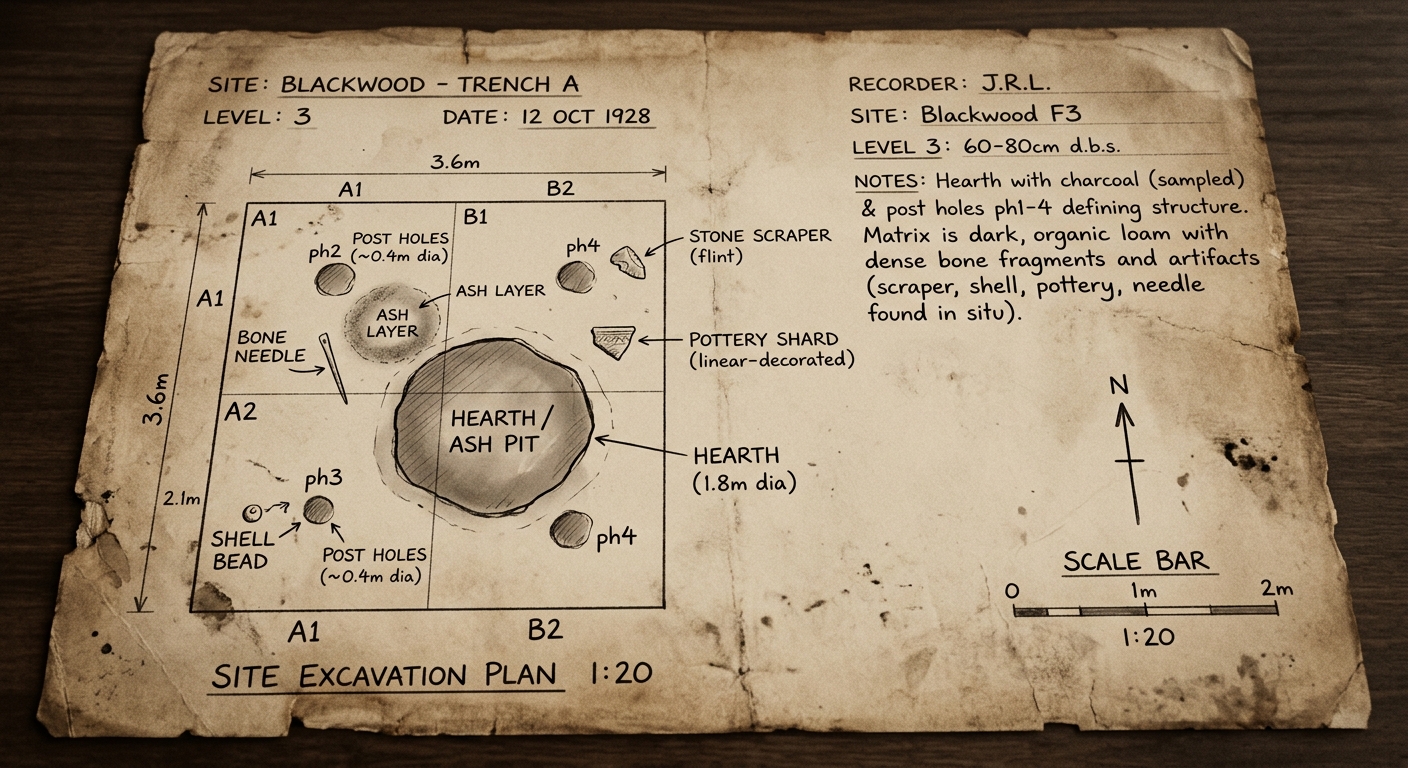
This field sketch records artifacts and features from one excavation square. Symbols show a hearth (ash pit), post holes, and items such as a stone scraper, bone needle, pottery shard, and shell bead. Use this evidence to infer how people lived and what they valued.

Using the document, which feature is the BEST evidence that people cooked food or produced heat at this site?
Which inference about daily life is BEST supported by the combination of a bone needle and a pottery shard in the document?
A student claims: “This excavation square probably included part of a shelter.” Which evidence from the document BEST supports that claim?
Use evidence from the document to explain what archaeologists could conclude about how people used this space. In your paragraph, cite at least TWO different types of evidence (an artifact and an archaeological feature).
The document is only one excavation square. Explain one limitation of using just this document to understand the entire settlement, and describe one additional type of evidence an archaeologist would look for to strengthen conclusions.
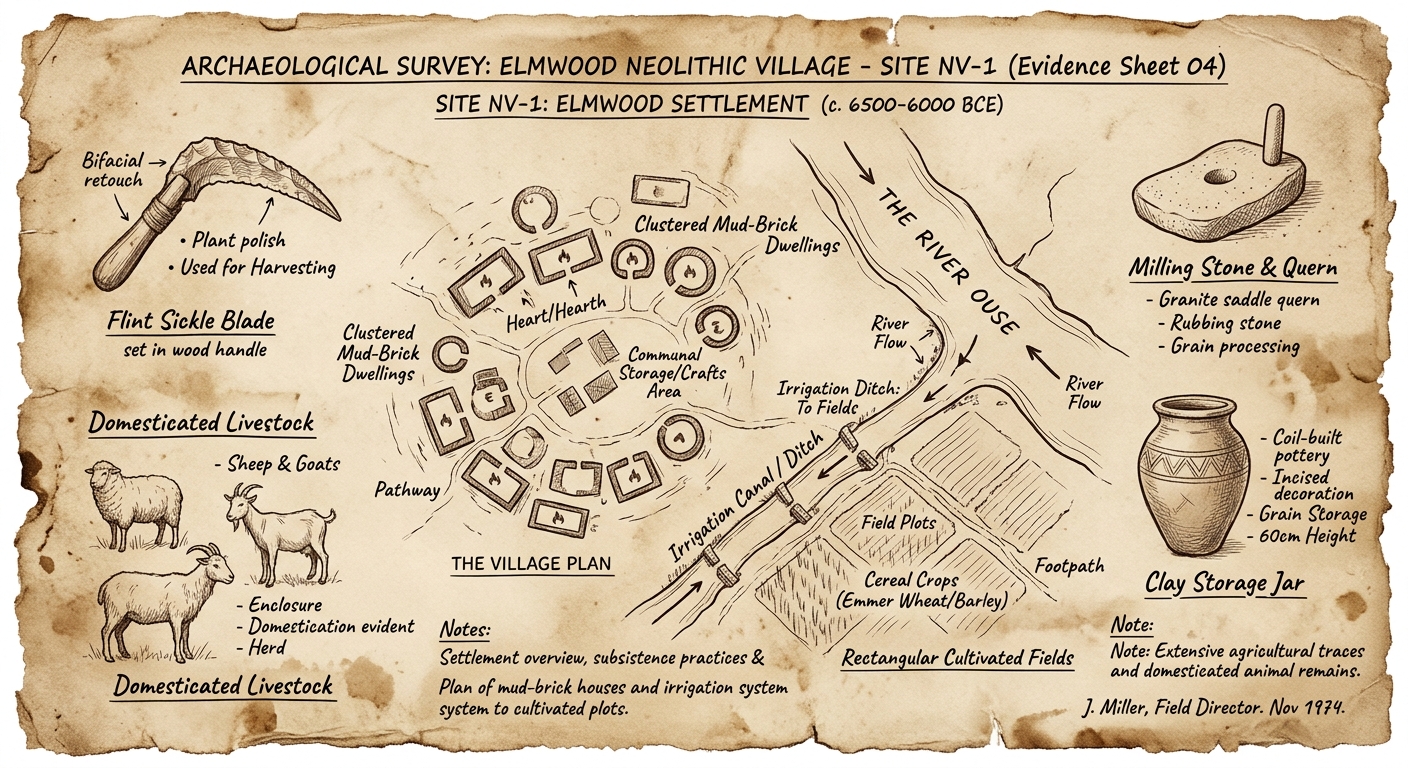
This evidence sheet summarizes finds from one Neolithic village site. Sketches show tools for harvesting and grinding grain, storage pottery, and domesticated animals. A small map shows houses grouped near fields and a ditch bringing water. Use the evidence to infer changes in how people lived.

Using the document, which piece of evidence BEST supports the idea that people produced food rather than only hunting and gathering?
A student says: “Even with farming, people in the document probably moved often and did not stay in one place.” Which evidence from the document most strongly CHALLENGES this statement?
Which inference is BEST supported by the document about why Neolithic communities developed new technologies?
Use evidence from the document to explain how technological advances in agriculture and domestication of animals could lead to a more permanent settlement. Cite at least TWO specific pieces of evidence from the document.
A student claims: “The most important change in the document is the irrigation ditch.” Using evidence from the document, evaluate this claim by explaining whether you agree or disagree. Support your answer with at least TWO pieces of evidence from the document.
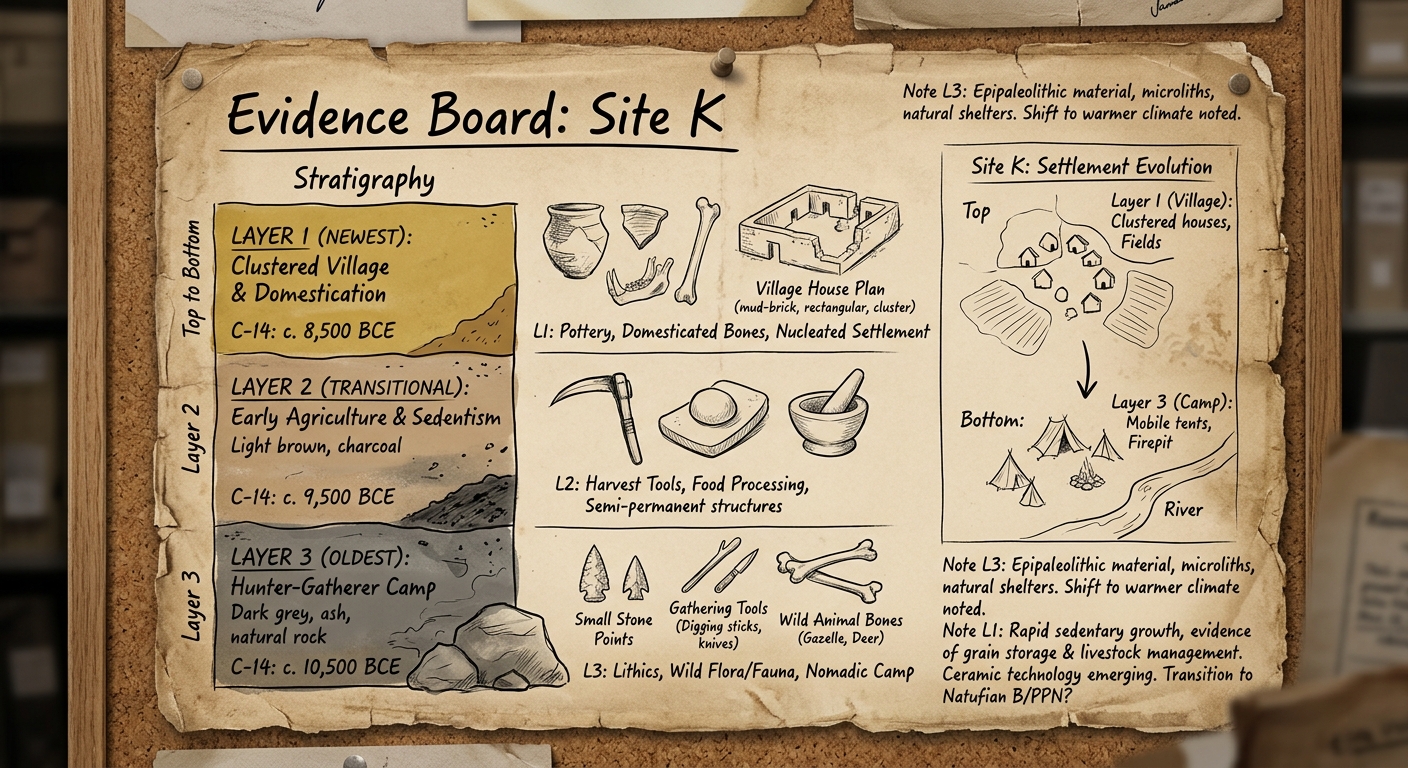
Historians compiled this evidence board from one site. Layers are ordered from oldest to newest. Dates and artifact changes help identify turning points—moments when life changed significantly. Use the layer evidence, artifacts, and map sketch to infer what changed and why.

Using the document, which layer provides the BEST evidence of a turning point toward a more settled farming way of life?
Which statement BEST explains why historians would call the changes shown in the document a turning point?
A historian claims: “The site changed from temporary camps to a permanent village.” Which additional evidence would BEST strengthen this claim, beyond what is already shown in the document?
Using the document, identify one turning point shown in the evidence and explain its significance.
Cite at least TWO specific pieces of evidence (for example, a dated layer, an artifact change, or the map sketch).
Two students disagree about what caused the changes shown in the document.
Student 1: “New tools caused people to settle.”
Student 2: “Settling in one place caused people to invent new tools.”
Using evidence from the document, choose which claim is better supported and explain why.
Cite at least TWO pieces of evidence.