Twa kɔ nsɛm atitiriw so
Log in
Sign up for FREE
arrow_back
Laabri

6.2c - First Humans Through Neolithic Revolution in the Eastern Hemisphere - Practices A through E

star
star
star
star
star
Last updated about 2 months ago
25 Nsɛmmisa
Hyɛ no nsow a efi ɔkyerɛwfo no hɔ:

Use the historical document(s) and the short readings in the left panel to answer the associated questions.

Use the historical document(s) and the short readings in the left panel to answer the associated questions.

6.2.c
DOK.SS.2
6.2.c
DOK.SS.2
6.2.c
DOK.SS.2
6.2.c
DOK.SS.2
6.2.c
DOK.SS.2
Ɛhia
2
6.2.c
DOK.SS.2
Ɛhia
1
6.2.c
DOK.SS.2
Ɛhia
2
6.2.c
DOK.SS.2
Ɛhia
1
6.2.c
DOK.SS.2
Ɛhia
1
6.2.c
DOK.SS.2
Ɛhia
2
6.2.c
DOK.SS.2
Ɛhia
1
6.2.c
DOK.SS.2
Ɛhia
1
6.2.c
DOK.SS.2
Ɛhia
2
6.2.c
DOK.SS.2
Ɛhia
1
6.2.c
DOK.SS.2
Ɛhia
2
6.2.c
DOK.SS.2
Ɛhia
2
6.2.c
DOK.SS.2
Ɛhia
1
6.2.c
DOK.SS.2
Ɛhia
1
6.2.c
DOK.SS.2
Ɛhia
1
6.2.c
DOK.SS.2
Ɛhia
1
6.2.c
DOK.SS.2
Ɛhia
1
6.2.c
DOK.SS.2
Ɛhia
2
6.2.c
DOK.SS.2
Ɛhia
1
6.2.c
DOK.SS.2
Ɛhia
2
6.2.c
DOK.SS.2
Ɛhia
2
6.2.c
DOK.SS.2
Ɛhia
2
6.2.c
DOK.SS.2
Ɛhia
1
6.2.c
DOK.SS.2
Ɛhia
1
6.2.c
DOK.SS.2
Ɛhia
1
6.2.c
DOK.SS.2

Historical Document

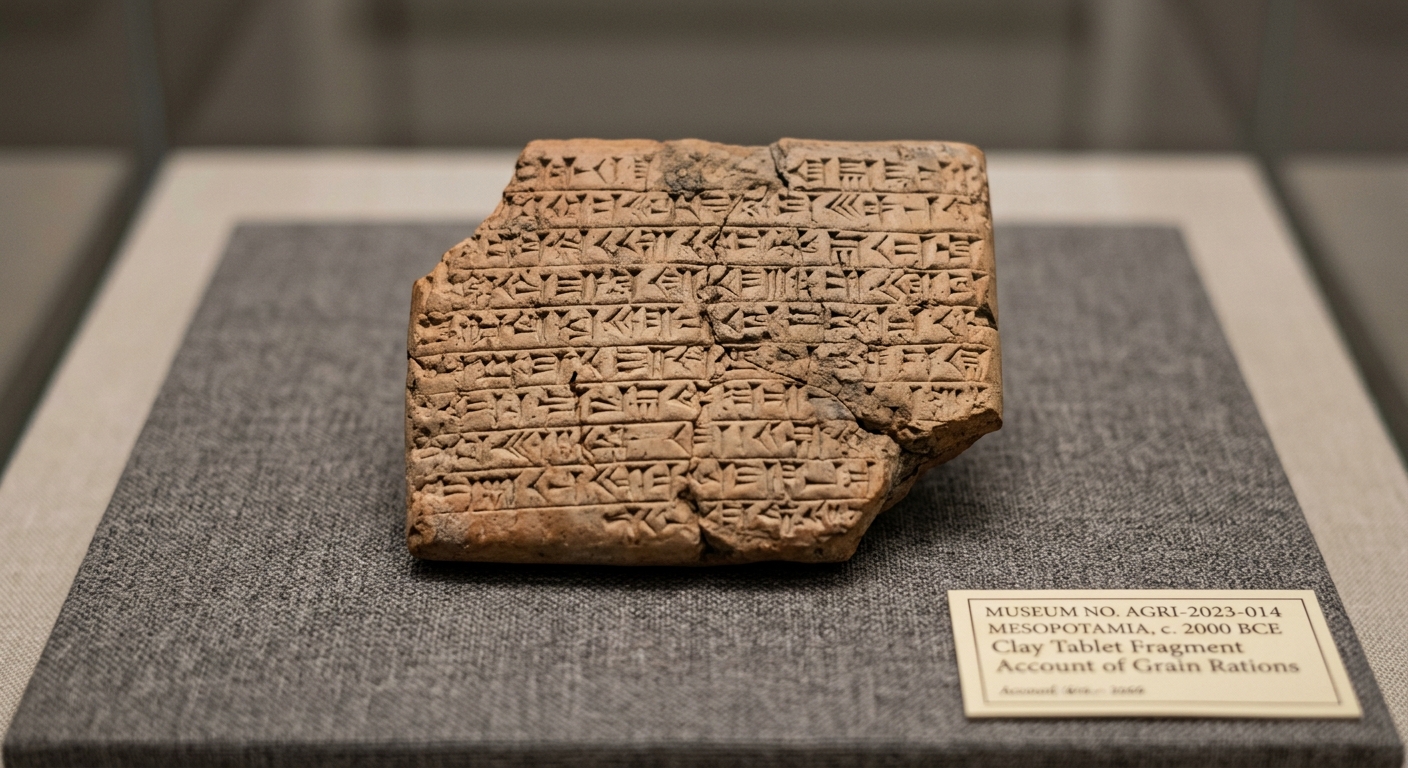
Photo of a clay tablet fragment with cuneiform-style markings on a museum display.


Record from a village storehouse: 12 baskets of barley received after harvest. 3 baskets issued to a family caring for goats. 2 baskets set aside as seed for next planting. The rest stored for winter. Marked by the keeper to show what was counted.
Asemmisa {{asɛmmisaAhyɛnsode}}
1.

Using two specific details from the document, explain how this artifact provides evidence of changes associated with the Neolithic Revolution (agriculture and domesticated animals).

Asemmisa {{asɛmmisaAhyɛnsode}}
2.

Which inference is best supported by the part of the document that says “2 baskets set aside as seed for next planting”?

Asemmisa {{asɛmmisaAhyɛnsode}}
3.

A student claims: “This document proves the people were still nomadic because it mentions goats.” Do you agree or disagree? Use evidence from the document to support your reasoning.

Asemmisa {{asɛmmisaAhyɛnsode}}
4.

Which detail from the document is the strongest evidence that this community practiced agriculture rather than only hunting and gathering?

Asemmisa {{asɛmmisaAhyɛnsode}}
5.

Which conclusion is most supported by the document’s emphasis on counting and recording baskets of barley?

Historical Document

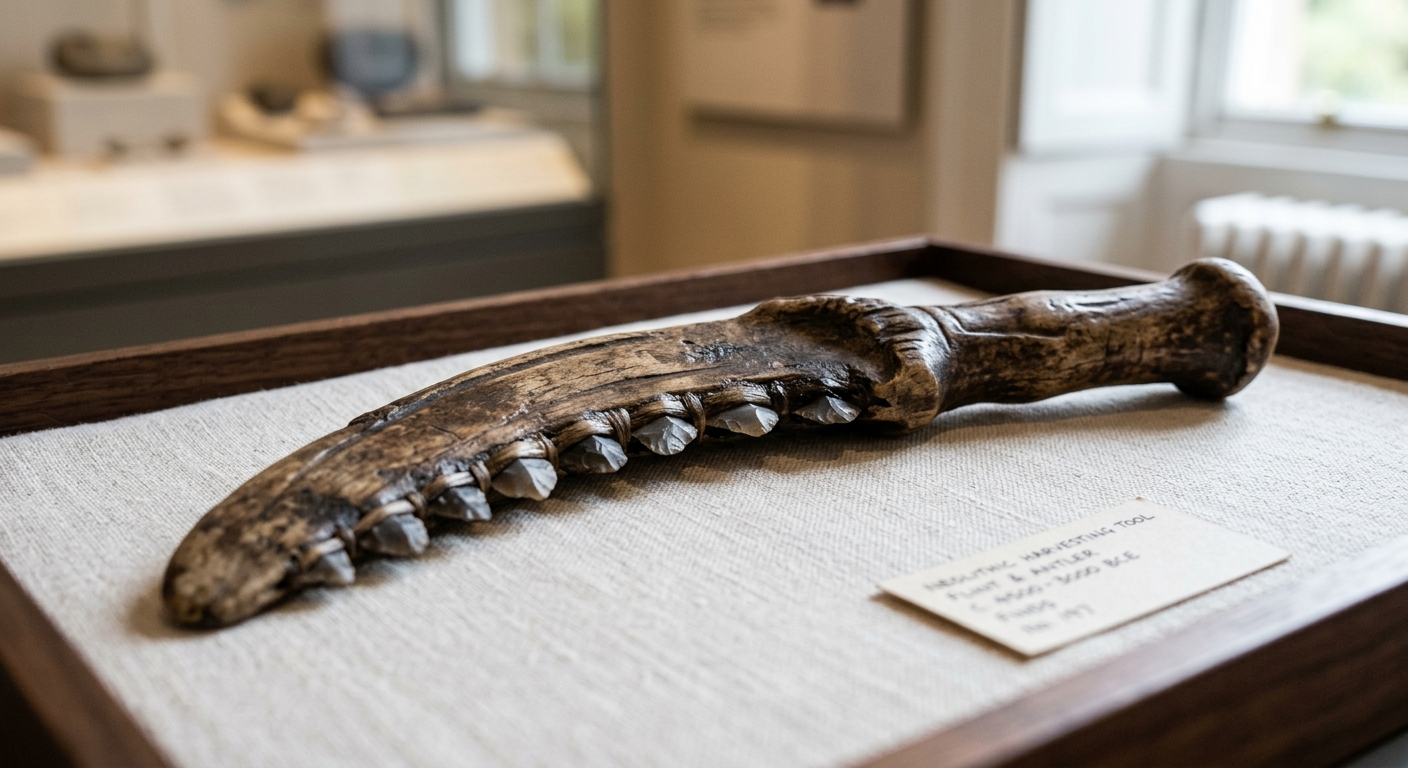
Photo of a Neolithic harvesting tool with small flint inserts on a museum tray.
Museum note: “Harvesting blade with flint inserts and heavy polish from cutting cereal stalks. Found near storage pits containing charred barley and wheat. Layers above show permanent mud-brick houses; deeper layers show temporary shelters. The tool helps date a shift from foraging to farming in this site.”

Asemmisa {{asɛmmisaAhyɛnsode}}
6.

Use two pieces of evidence from the reading stimulus to explain the sequence of changes at this site (earlier vs. later).

Asemmisa {{asɛmmisaAhyɛnsode}}
7.

A student argues: “Because the tool was found near storage pits, storage came before farming.” Which response best evaluates this argument using chronological reasoning?

Asemmisa {{asɛmmisaAhyɛnsode}}
8.

Which detail provides the strongest evidence for the chronological claim that the site changed over time?

Asemmisa {{asɛmmisaAhyɛnsode}}
9.

Explain how this artifact can be used to place the Neolithic Revolution on a timeline between hunter-gatherer life and settled farming communities.

Use evidence from the stimulus.

Asemmisa {{asɛmmisaAhyɛnsode}}
10.

Based on the reading stimulus, which development most likely happened after people began using this harvesting tool regularly?

Historical Document

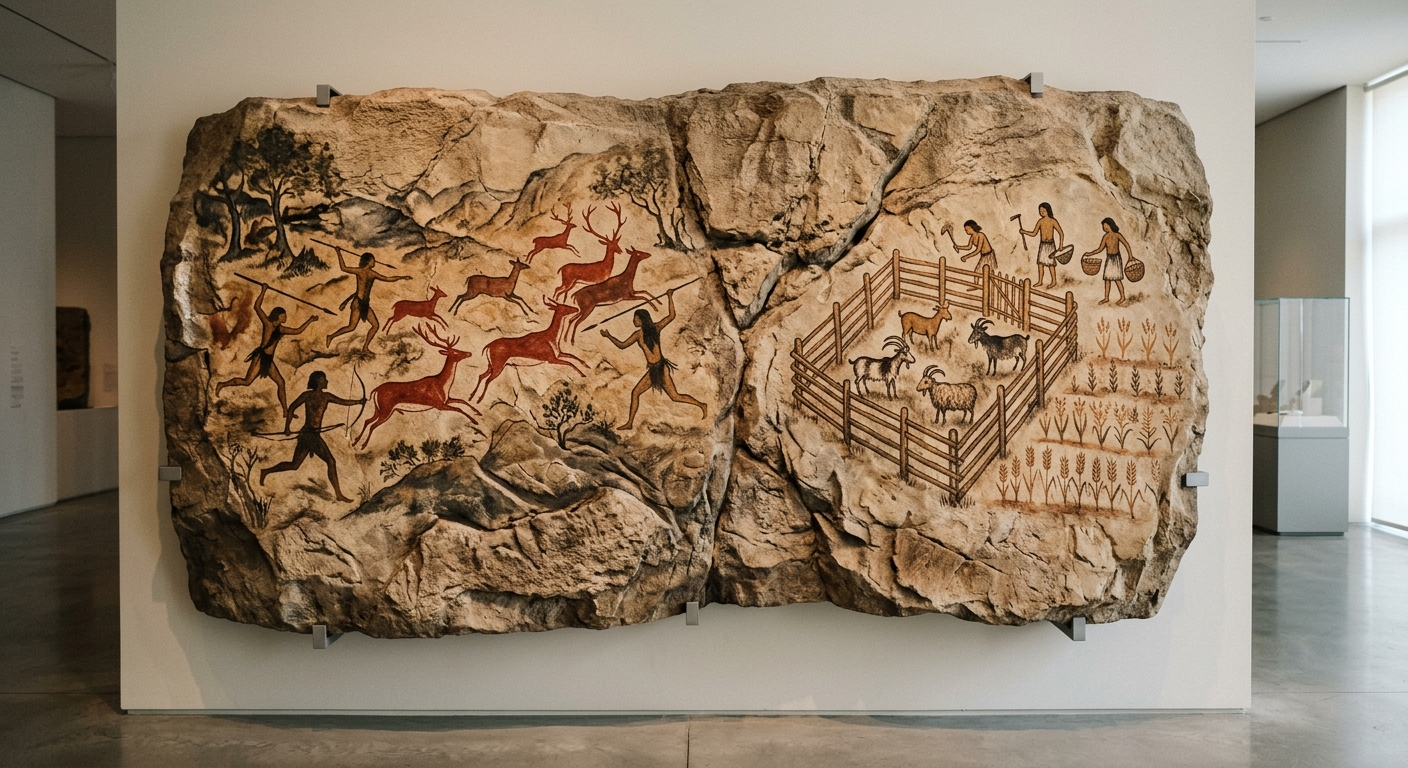
Museum photo of a replica wall painting showing hunting on one side and herding and farming on the other.
Museum label: “Wall painting (replica) from a Neolithic settlement. Left side shows hunters pursuing deer with spears. Right side shows goats inside an enclosure and people tending a small grain plot. Archaeologists use such images to compare older foraging practices with newer farming and herding.”

Asemmisa {{asɛmmisaAhyɛnsode}}
11.

Explain how a historian could use this document alongside a farming tool or storage record to build a stronger claim about changes during the Neolithic Revolution.

Use evidence from this document.

Asemmisa {{asɛmmisaAhyɛnsode}}
12.

Using two specific visual details from the painting (or label), compare how people got food in the two scenes.

Asemmisa {{asɛmmisaAhyɛnsode}}
13.

A student says: “This image proves people stopped hunting as soon as they began farming.” Which response best contextualizes and evaluates the claim using evidence from the document?

Asemmisa {{asɛmmisaAhyɛnsode}}
14.

Which comparison between the left and right sides of the painting is best supported by the document?

Asemmisa {{asɛmmisaAhyɛnsode}}
15.

Which detail is the strongest evidence that the right side of the painting represents a Neolithic (farming/herding) context rather than a Paleolithic (foraging) context?

Historical Document

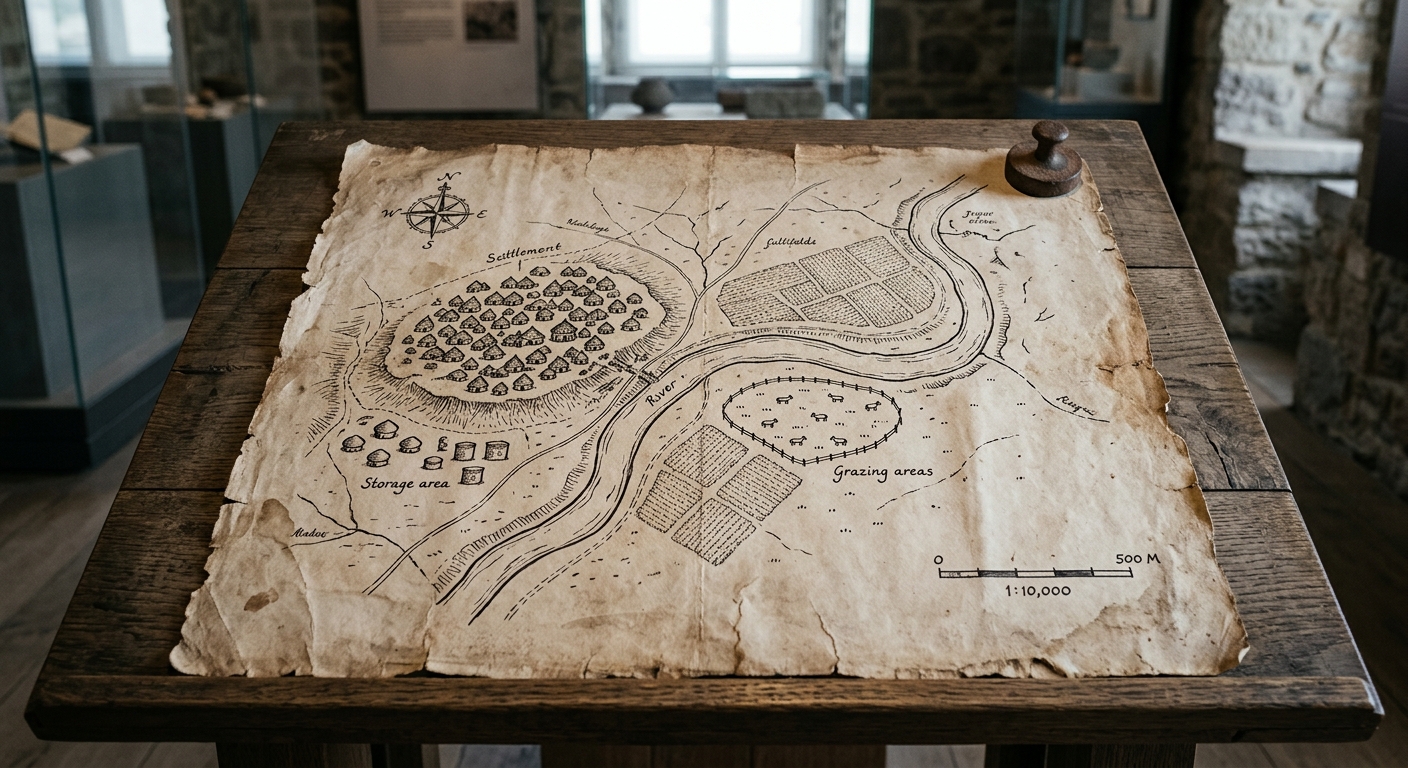
Museum photo of a site map showing a river, fields, grazing areas, and a settlement.
Field note: “Site map from a river valley settlement. Plots marked near the river show cultivated grain fields. Grazing areas lie on drier ground beyond the floodplain. A cluster of mud-brick houses sits on slightly higher land, with storage pits nearby, suggesting planned farming and herding.”

Asemmisa {{asɛmmisaAhyɛnsode}}
16.

Why might the houses be placed on slightly higher land rather than directly on the floodplain?

Asemmisa {{asɛmmisaAhyɛnsode}}
17.

Which inference best connects the map’s layout to the Neolithic Revolution described in the standard?

Asemmisa {{asɛmmisaAhyɛnsode}}
18.

Explain how the arrangement of fields, grazing areas, homes, and storage could make a community more likely to become sedentary.

Use evidence from the stimulus.

Asemmisa {{asɛmmisaAhyɛnsode}}
19.

Which location on the map would most directly support crop farming in a Neolithic settlement?

Asemmisa {{asɛmmisaAhyɛnsode}}
20.

Use two specific details from the field note/map description to explain how people adapted their land use to different physical environments (river valley vs. drier ground).

Historical Document

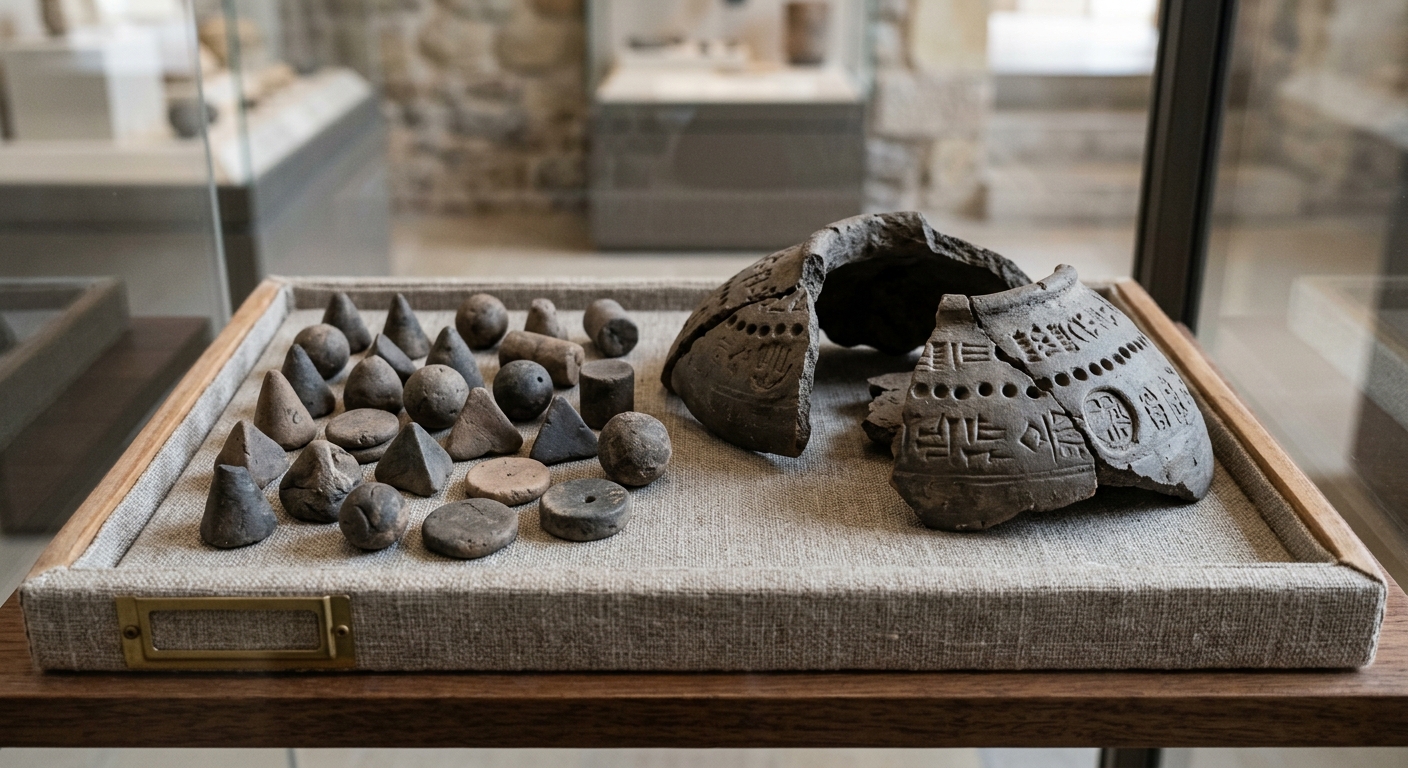
Museum photo of clay counting tokens and a broken clay bulla used for accounting.
Curator note: “Clay tokens and a broken bulla (sealed envelope) used to count goods. Tokens could represent measures of grain, oil, or animals owed or stored. Finds like this are linked to early farming villages, where surpluses, exchange, and shared storage required record-keeping.”

Asemmisa {{asɛmmisaAhyɛnsode}}
21.

Using two details from the curator note, explain how this artifact provides evidence of an economic system in an early farming village.

Asemmisa {{asɛmmisaAhyɛnsode}}
22.

Explain how increased food production (farming and domesticated animals) could lead to changes in labor and trade in a Neolithic settlement.

Use evidence from the stimulus to support your reasoning.

Asemmisa {{asɛmmisaAhyɛnsode}}
23.

A student claims: “These tokens prove the community had a money-based economy like today.” Which response best evaluates the claim using evidence and context?

Asemmisa {{asɛmmisaAhyɛnsode}}
24.

Which inference best explains why record-keeping became more necessary in many Neolithic communities?

Asemmisa {{asɛmmisaAhyɛnsode}}
25.

Which economic activity is best supported by the artifact and curator note?